The Anxious Generation by Jonathan Haidt

I recently finished reading Haidt’s, “The Anxious Generation”. I was curious about this book as I have struggled to help my teenager with their depression. I am fascinated how their older sister (six years apart) had such a different experience in her teenage years than my younger child. Haidt makes some compelling arguments supported with a ton of data and research. The book’s website also offers additional data and research.

Haidt gives some reasons for depression including:

  • Genes-predisposed to depression
  • Thought patterns (can be learned and unlearned)
  • Social and environmental conditions

But he contends that the biggest difference is how society is focused on a “phone-based childhood vs play- based childhood”. Essentially playing outside and with friends has been replaced with the virtual world. I have definitely seen this difference between my two kids. Another dramatic difference is how parents are overprotective in real life and under protected online.

Haidt explains that the prevailing wisdom of parents today is that kids need to be supervised constantly and parents should not let their kids roam independently like we did when we were children. There is no longer the mantra of “come home when it gets dark.” And laws are even in place to report parents that are seemingly being irresponsible by allowing their kids some freedom. Essentially we have created so many guardrails kids do not experience any hardship or failure which in turn prevents them from developing resilience and grit.

Our phone-based culture has created four harms:

  • #1: Social deprivation -kids are connected to everyone in the world and disconnected from the people around them.
  • #2: Sleep deprivation-there has been tons of research on how our devices disrupt our sleeping patterns.
  • #3: Attention fragmentation-notifications and disruptions happen constantly which leaves us with about five minutes to focus on any task or though before we are interrupted once again.
  • #4: Addiction- “The smartphone is the modern-day hypodermic needle delivering digital dopamine 24/7 for the wired generation”.

This book, its message and all the thorough research really resonated with me. I do agree with Haidt that if we as a society do not address the negative effects of social media and the virtual world, we will create a very different, fragmented world that what we have enjoyed thus far. Certainly putting down the phones, getting out in nature and making more time for real play for our kids can make a difference if we all lean in and make it happen.
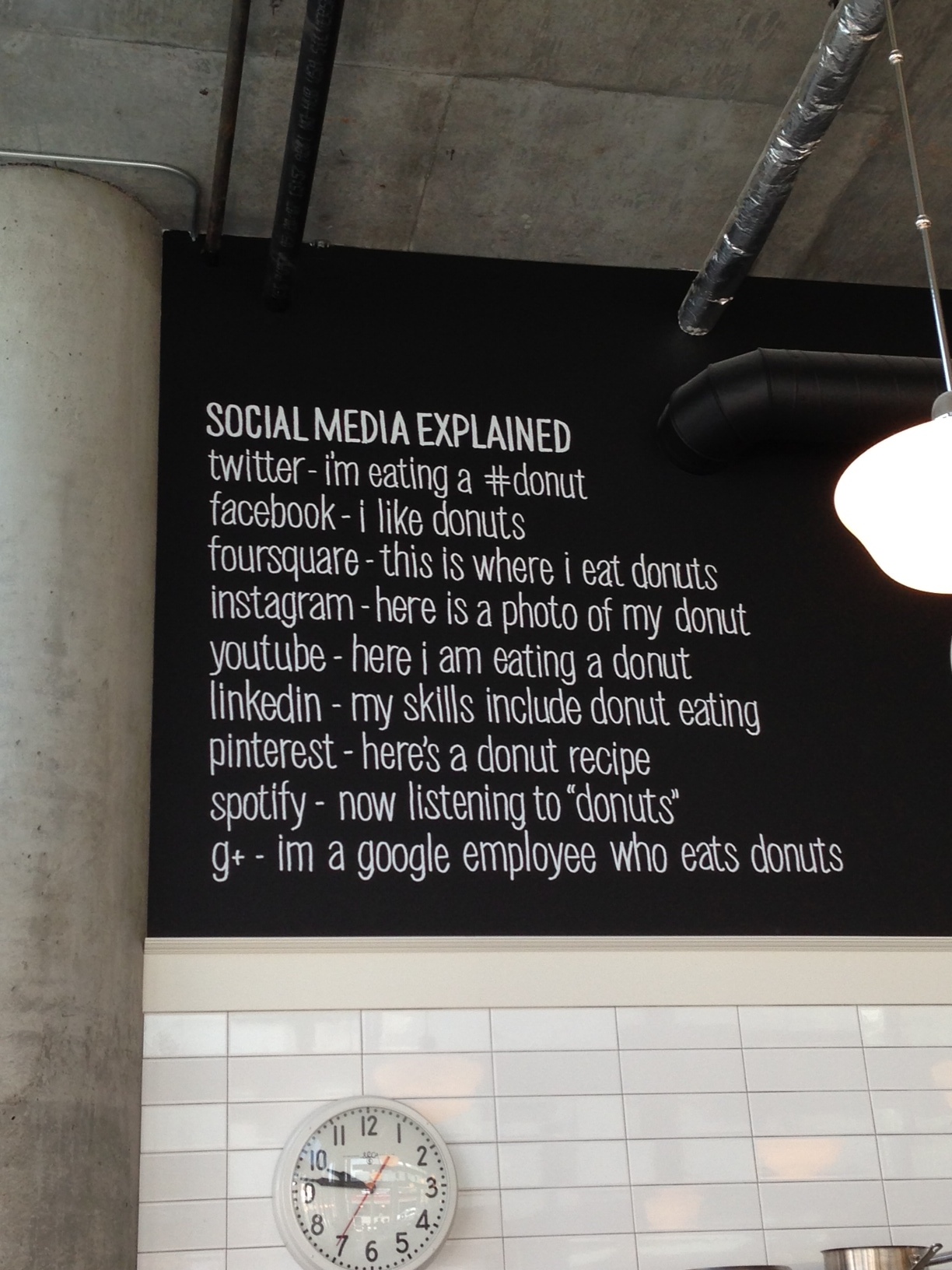
Social Media and Training

I recently developed some on boarding materials for a new hire group, and like any other job, quick productivity on the job was crucial. I suggested that we engage some social media tools to help with the quick integration. New hires would have access to information, get to know people and start contributing sooner.

Some ideas for the new hire group:
1. YouTube for video feeds for connections, just in time training.
2. Blog for coaching or informal mentoring. Could include a hub of information such as curriculum, materials and resources.
3. A private LinkedIn group so that new hires could share tips and insights.
4. After every training session, a LinkedIn discussion question could be posted.
5. Learners can get points as part of an overall incentive plan for responding to the post.
6. Learners could also get points for starting their own discussion threads. Makes it fun and helps to form a habit!
7. Facebook page as a companion to training-share ideas, best practices, successes in the role, industry news, announcements.
8. Pinterest or Instagram to share ideas, collaboration or just funny stuff to build relationships.

All this allows new hires to start contributing, adding value and building relationships immediately upon matriculation of on boarding program.

What have you tried? What has worked?

Social Media as Change Catalyst

In the December 2012 issue of Talent Management magazine, there was a great article titled, “Social Media as Change Catalyst”.   Its premise is that organizational change can be enhanced by using social media tools.  What is interesting is that in a current project I am working on, I suggested this very thing, but received a lukewarm response.  Why not allow the super users the opportunity to post tips, tricks and key information to begin the conversation about these software enhancements?  Users can post questions, concerns and even their own tips to help everyone learn the new system and processes and quickly and efficiently as possible.

Choo, et al, suggest that social media can enhance change initiatives by:

  • “Sharing experiences across a knowledge network
  • Building a collaborative culture
  •  Creating targeted and timely learning
  • Improving employee engagement.”

It is no secret that employees are faced with a tremendous amount of change in their daily organizational life…new policies, software enhancements, job reductions and management changes all play a significant role in the amount of change and information an employee must take in.  Change is the “new normal” and with that comes creating a shared vision, gaining buy-in and learning the new product or process.  So it makes sense that connecting employees to be able to share experiences and learning will benefit everyone.  Furthermore, it will be easier for management to gauge how the change is being accepted and implemented in the employees’ daily lives.  Even more importantly, are the pitfalls or mishaps that need to be addressed immediately in order to continue to ensure the change takes hold.  Social media tools allow for “real-time exchange of ideas”.

The article suggests that management play a role in the dialogue, too.  Not only should management be active participants, they should be available to dispel incorrect information during the online exchange of ideas and experiences.  Management can also keep the messages focused.  It is no secret that learning needs to be more focused, targeted and learner-driven.  Social media allows those three things to happen by allowing employees to teach and/or get the specific information they are looking for quickly and easily.  Ultimately, social media tools help information to “flow in multiple directions” which alleviates the common issue of little or poor communication during a change initiative.

Read the full article.