National Center for Civil and Human Rights

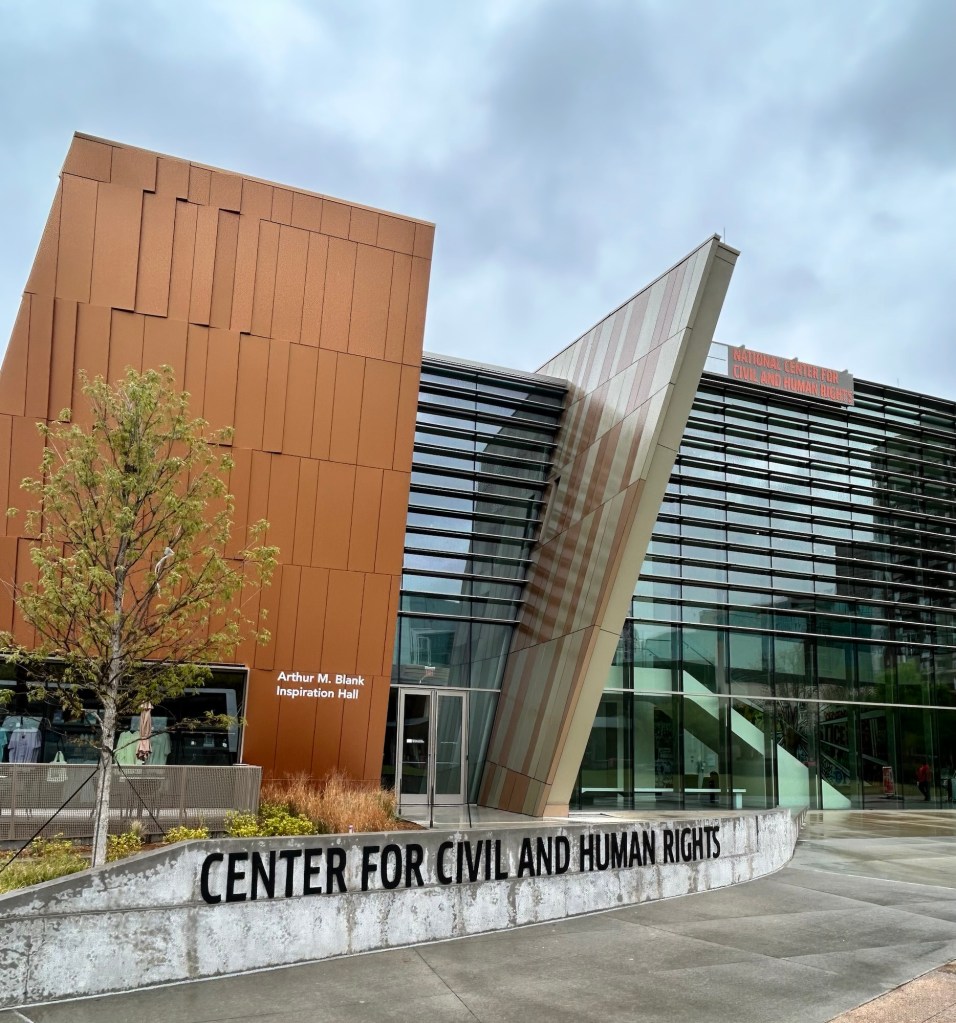
Entrance

Today I visited another amazing museum. I’ll be honest I didn’t have high expectations after the Legacy Sites in Montgomery. After visiting so many civil rights museums, I do really enjoy seeing the different ways of presenting information and the power and impact those messages can make.

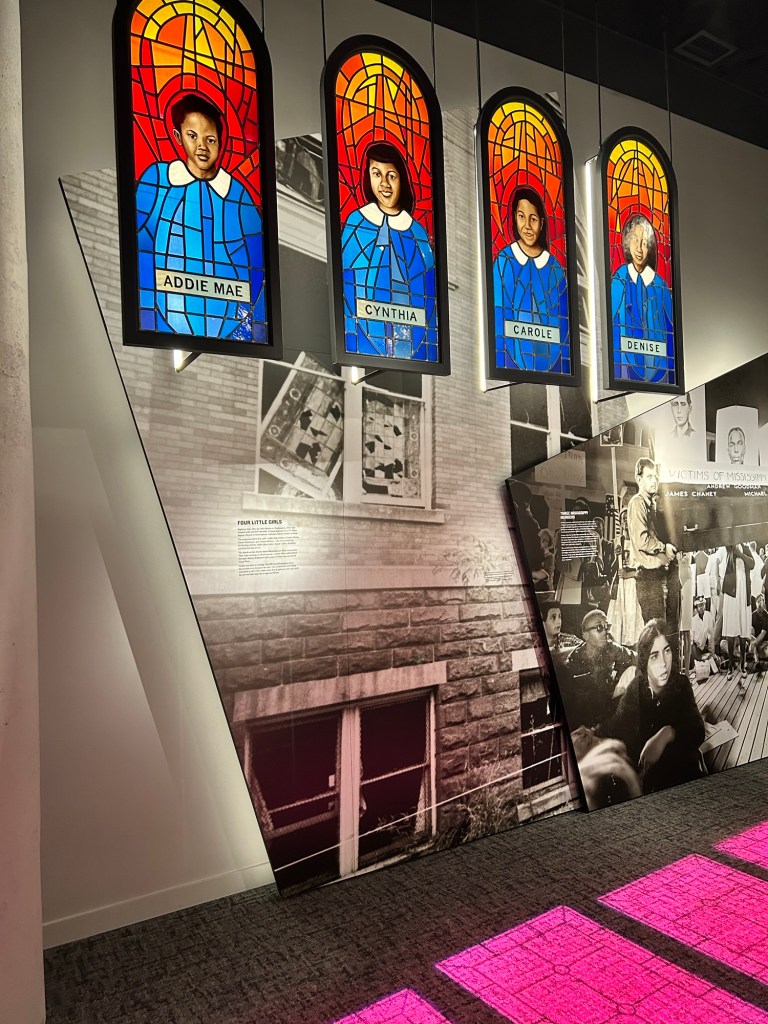
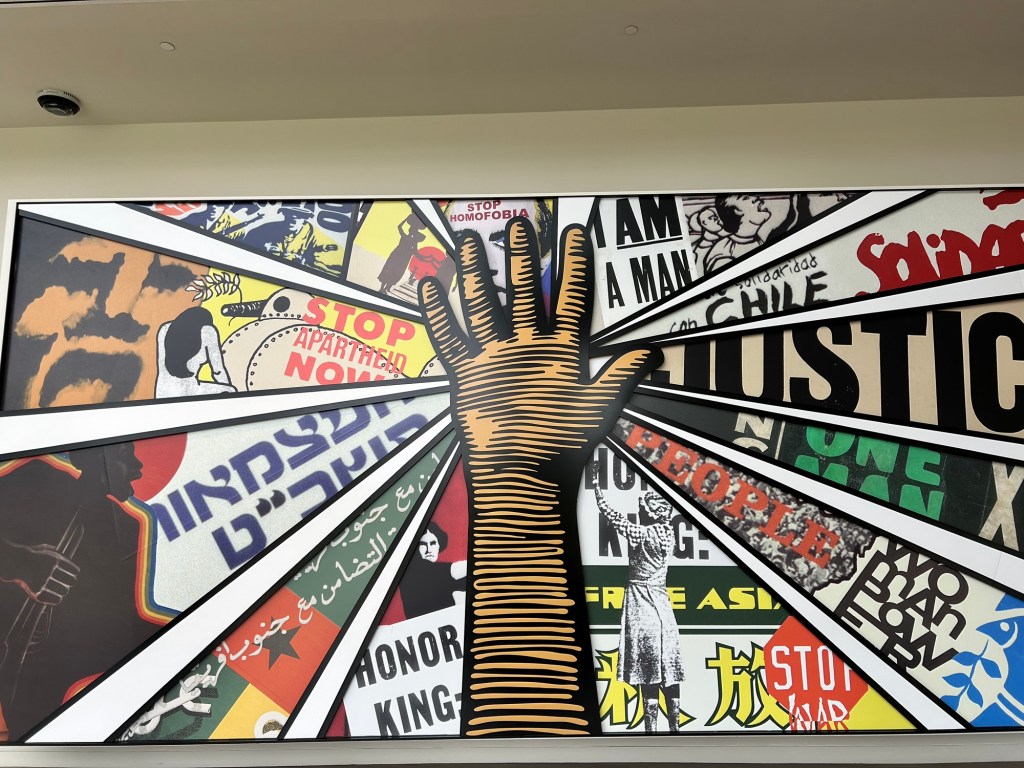
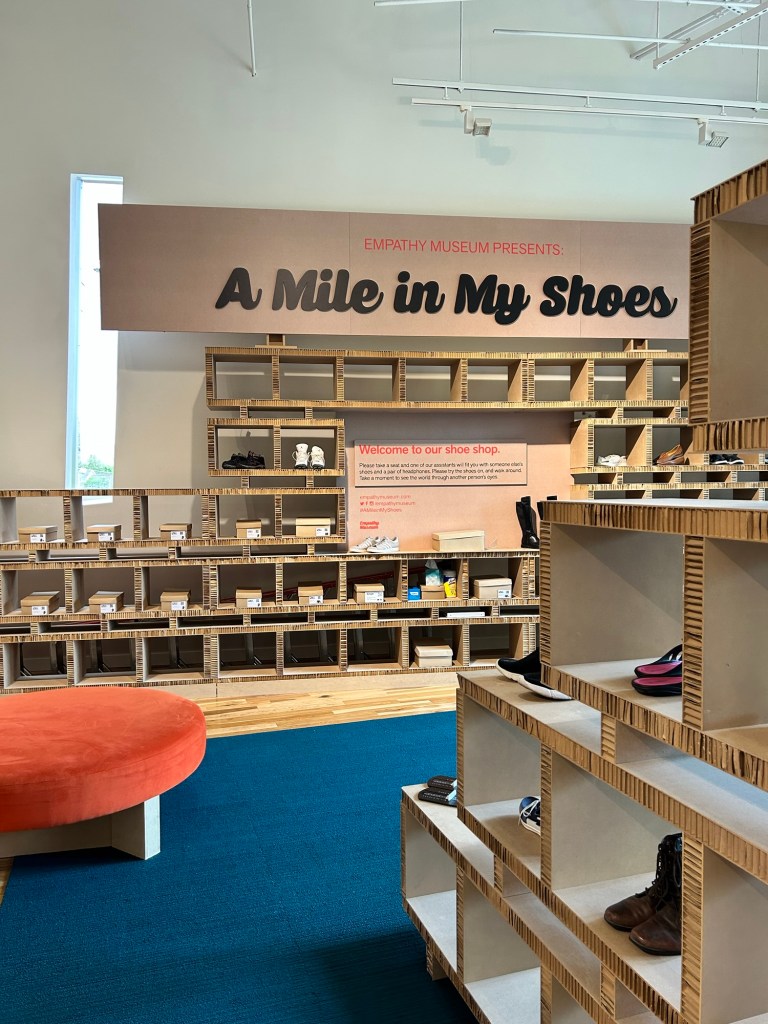
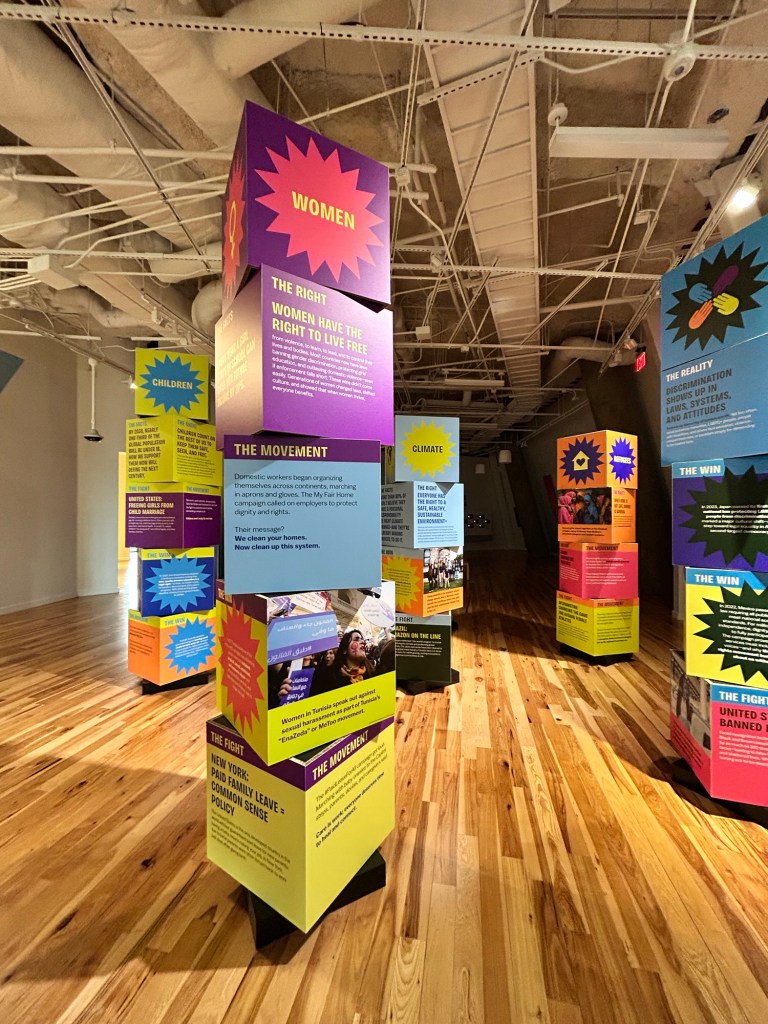
This museum decided to address human rights, in addition to, civil rights. Upon entry, the civil rights section was really crowded so I decided to go upstairs and do the human rights section first. I’ll admit I got emotional almost immediately. This museum leads with powerful stories and shares how average, ordinary people took risks to promote human rights. The exhibit “A Mile in My Shoes” was particularly powerful as I listened to personal stories of complete strangers. Each story is linked to a real pair of shoes worn by the person you’re listening to. This delivery really humanizes their experiences.

The second floor also housed the Action Lab. Of course, I’m incredibly action oriented and so this exhibit definitely struck me. The visitor learns about a variety of issues and causes, and then is given ways to find resources and opportunities to be involved with that cause.

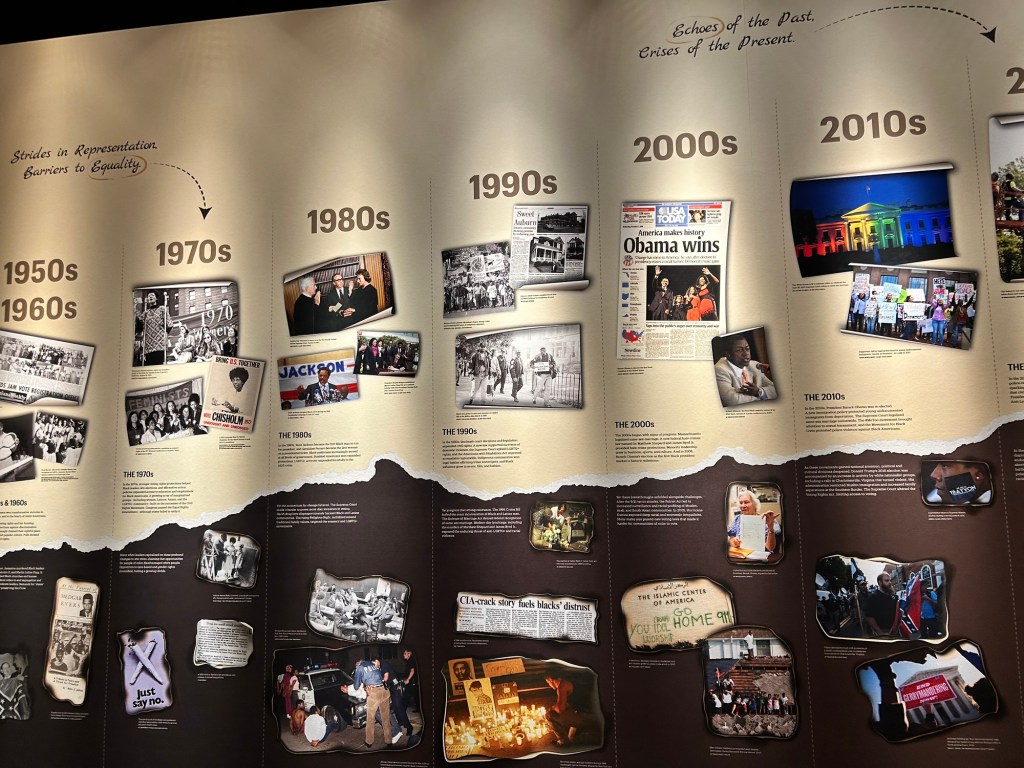
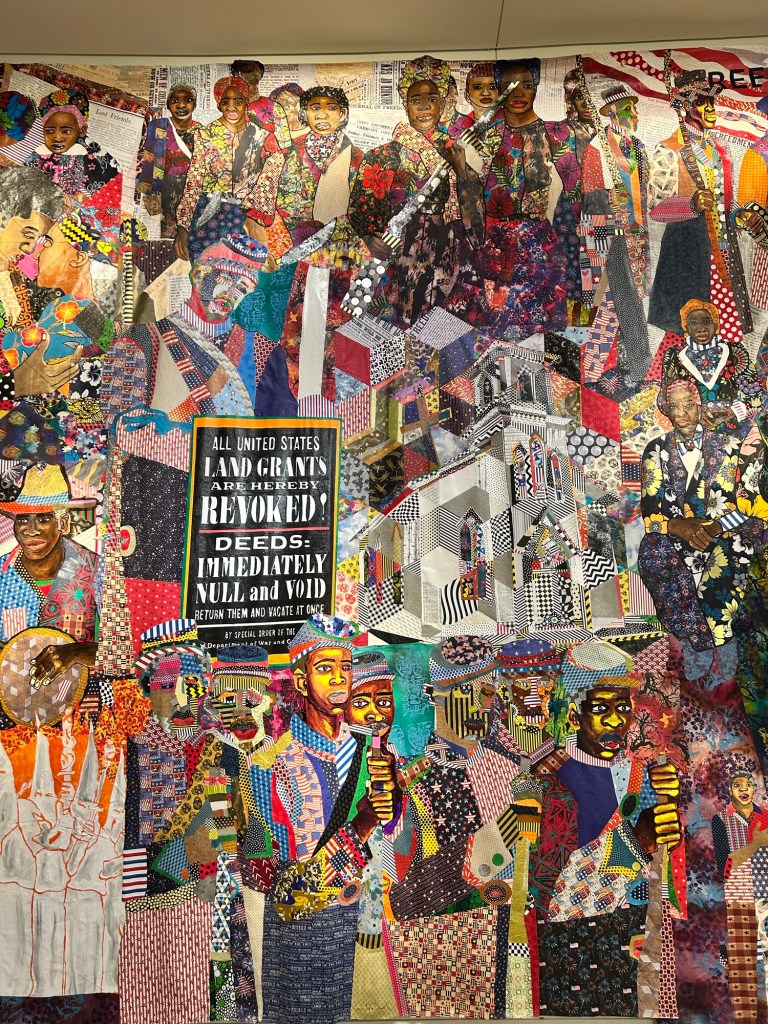
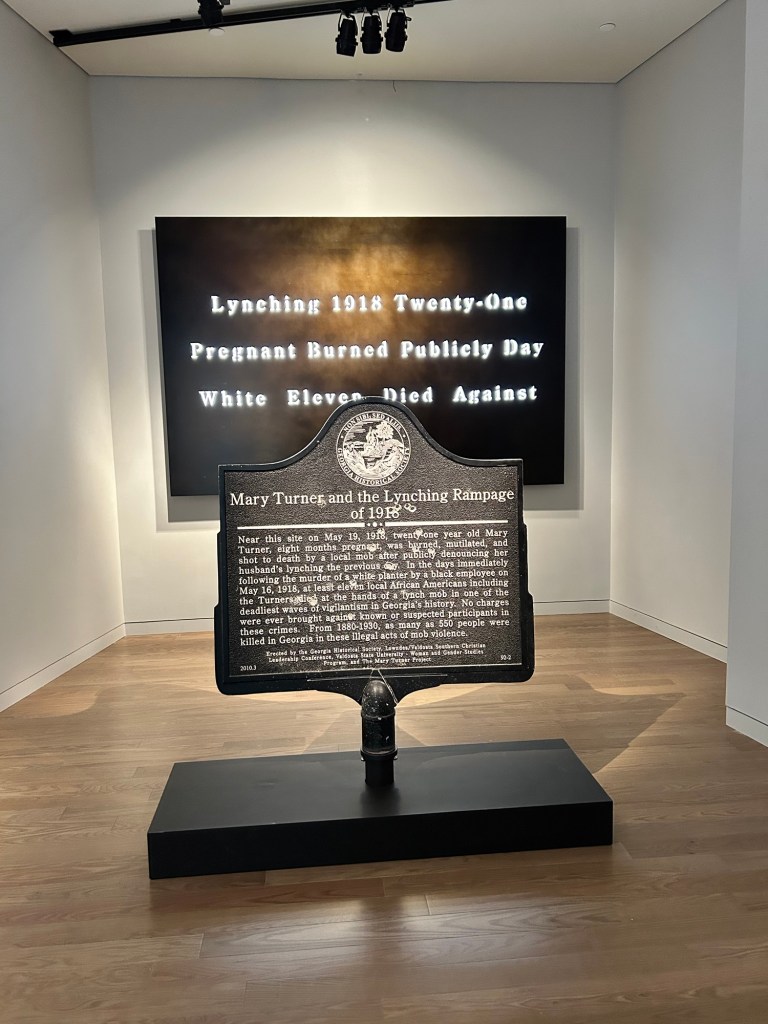
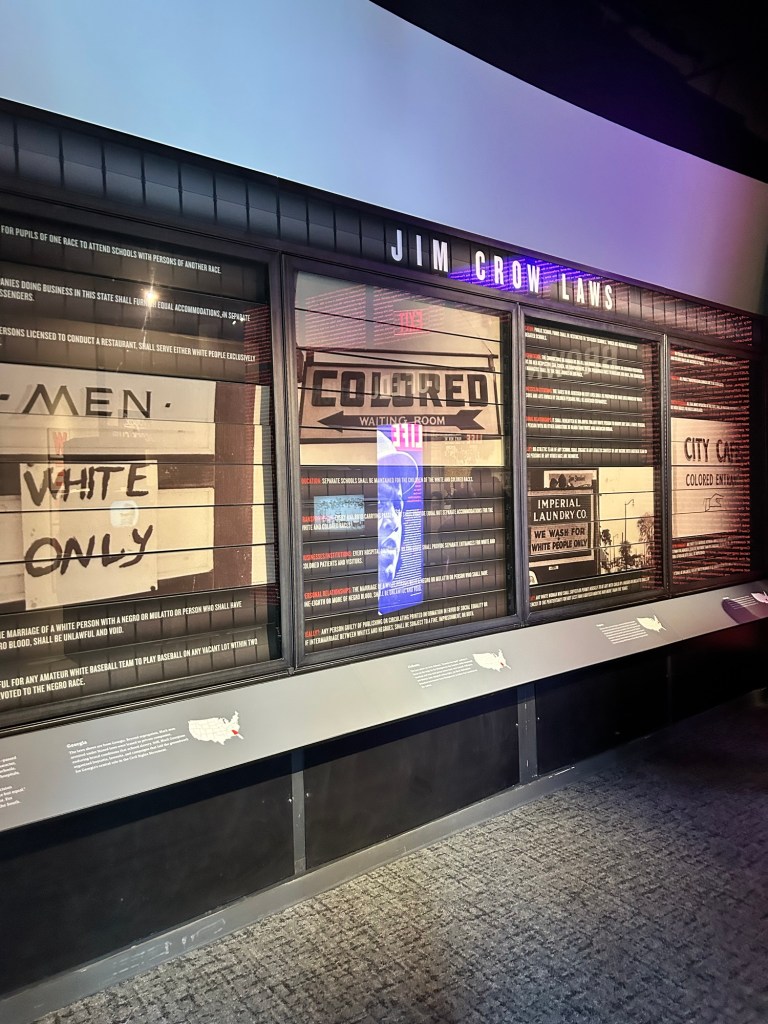
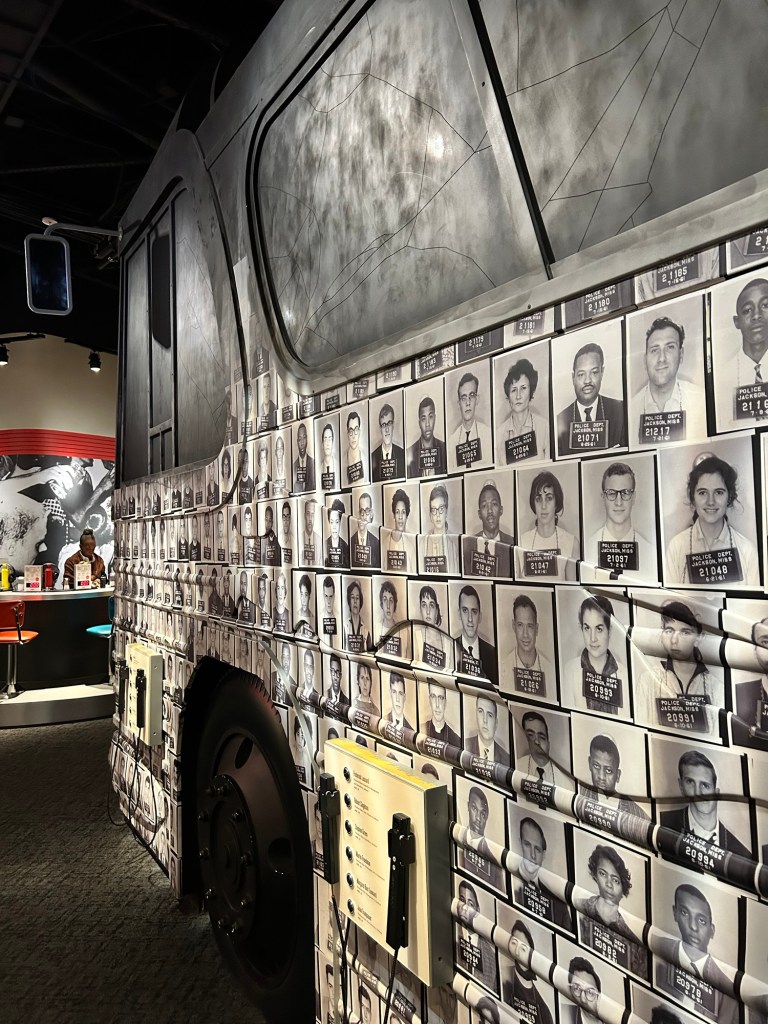
Downstairs is focused on civil rights. There was a ton of information, pictures, videos, and other multimedia that presented details about civil rights. For example, there was a full sized depiction of the Freedom Riders bus with all the pictures of the Freedom Riders. You could pick up a phone and listen to their stories. There was also 1,100 books from Dr. Martin Luther King’s personal library. And two quilts from Gee’s Bend!

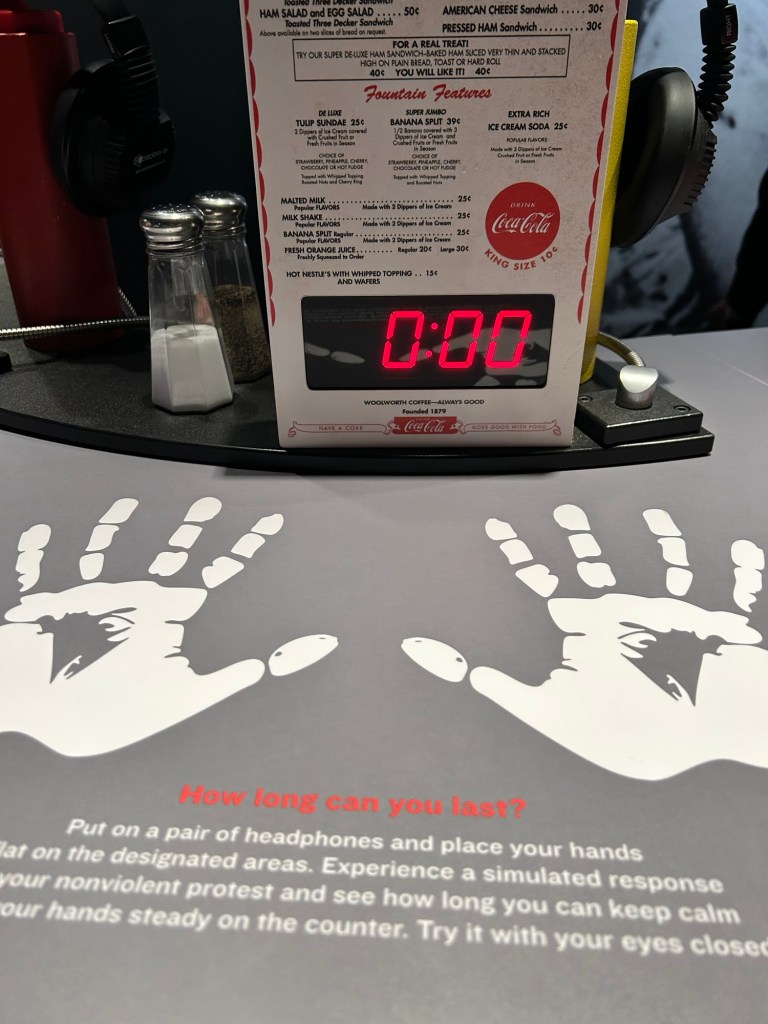
But the most powerful thing in this museum was the lunch counter sit-in. Museum visitors are invited to sit at the lunch counter with a menu in front of them and place headphones over their ears, close their eyes and place their hands on the lunch counter. Audio begins and depicts what folks at the lunch counter heard and experienced. The sound quality of the audio was really amazing. I could literally hear somebody breathing in my right ear. I felt that there was somebody right behind me and the screaming was truly scary. The audio lasted one minute and 25 seconds and mimics being at the lunch counter. It is an experience I will not forget. And it really showed me how courageous the college students were that sat at these lunch counters.

There are so many layers to this museum and I loved how it coupled civil rights with human rights. If you’re in Atlanta definitely visit this museum.
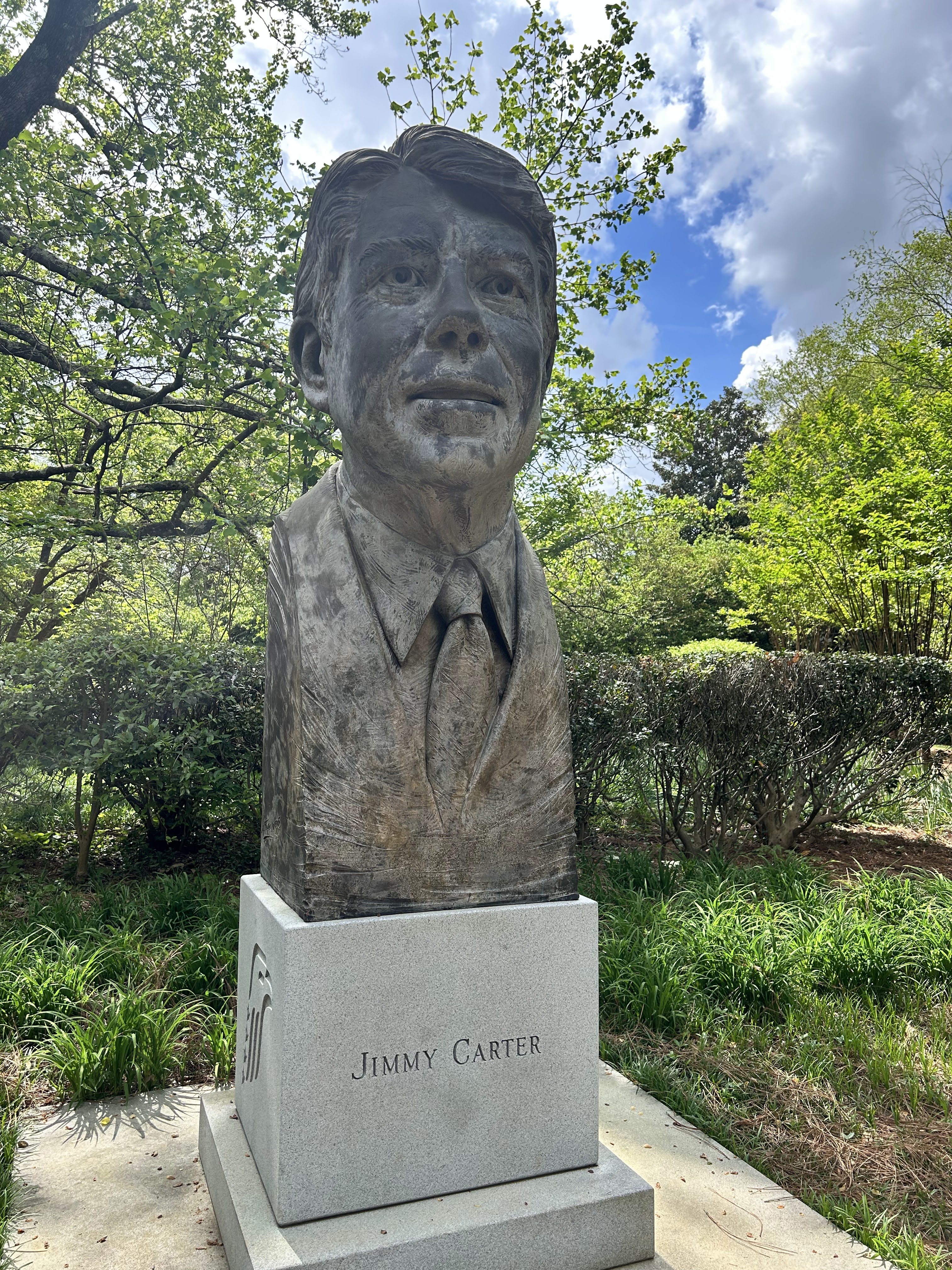
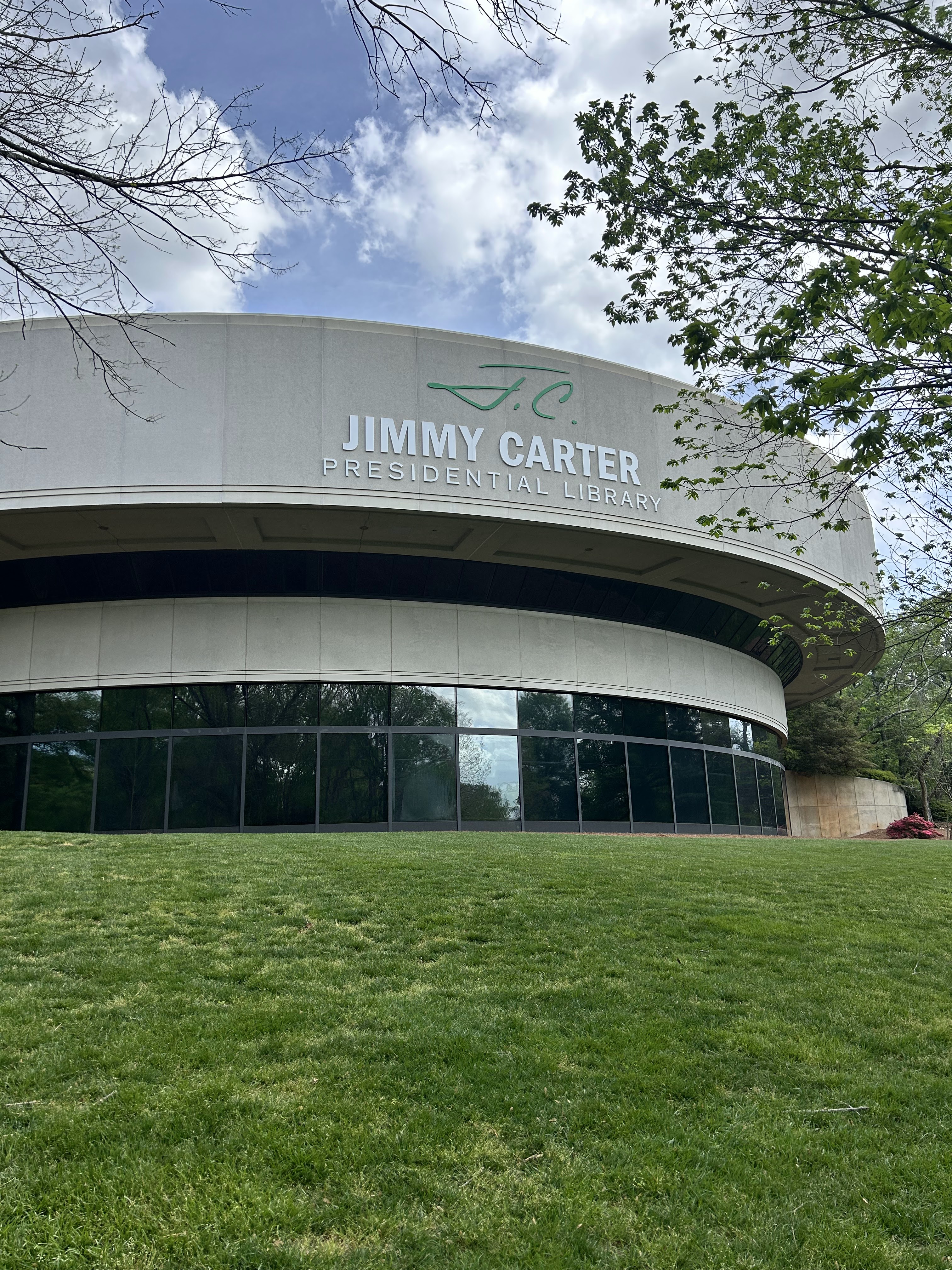
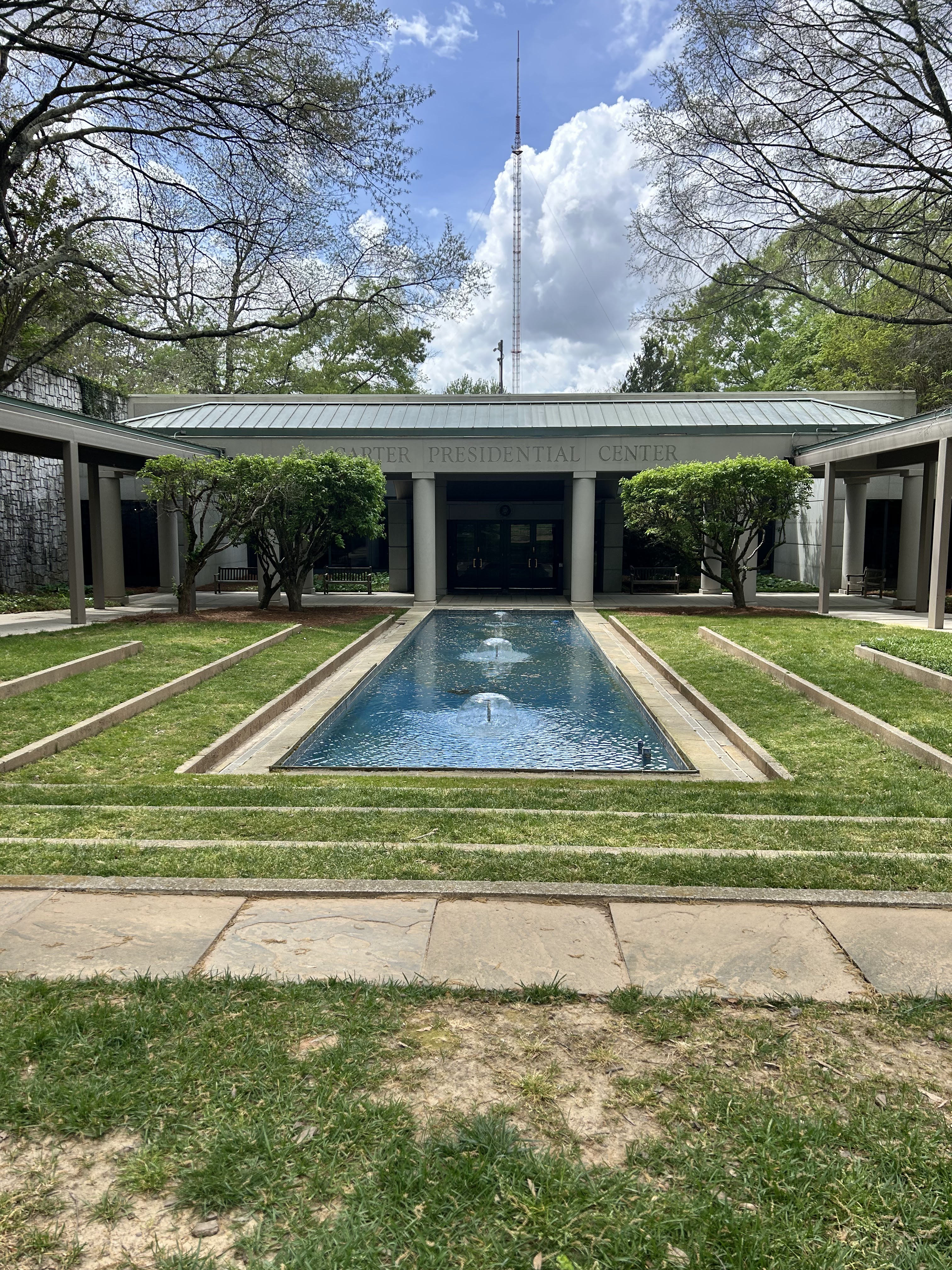
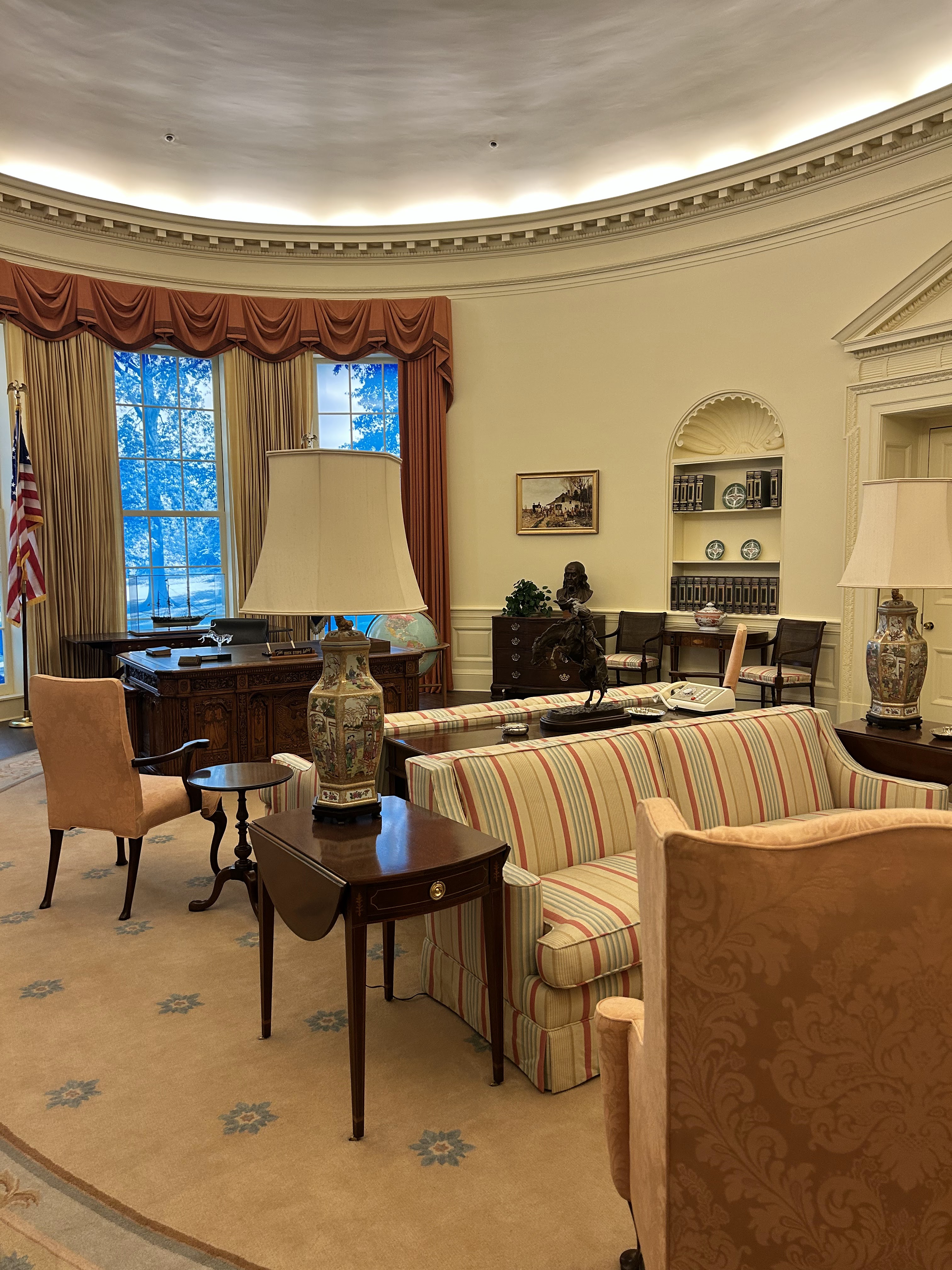
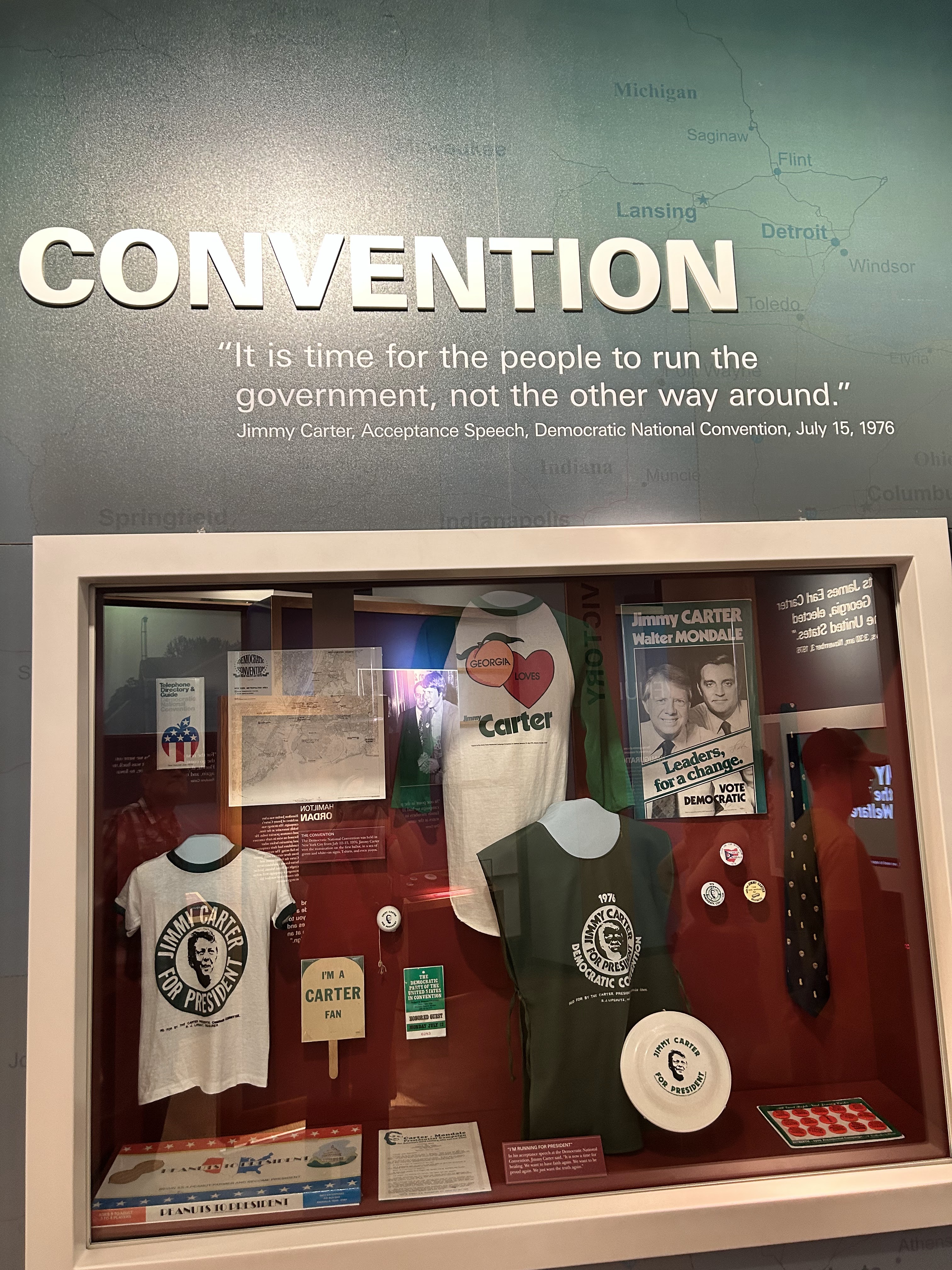
Jimmy Carter Presidential Library and Museum

Today I visited the Jimmy Carter Museum and made a day of it by walking the Atlanta Beltline and eating lunch at one of my favorite restaurants in Atlanta. I met up with two college friends, that even though they have lived here 35 years, had never visited the museum.

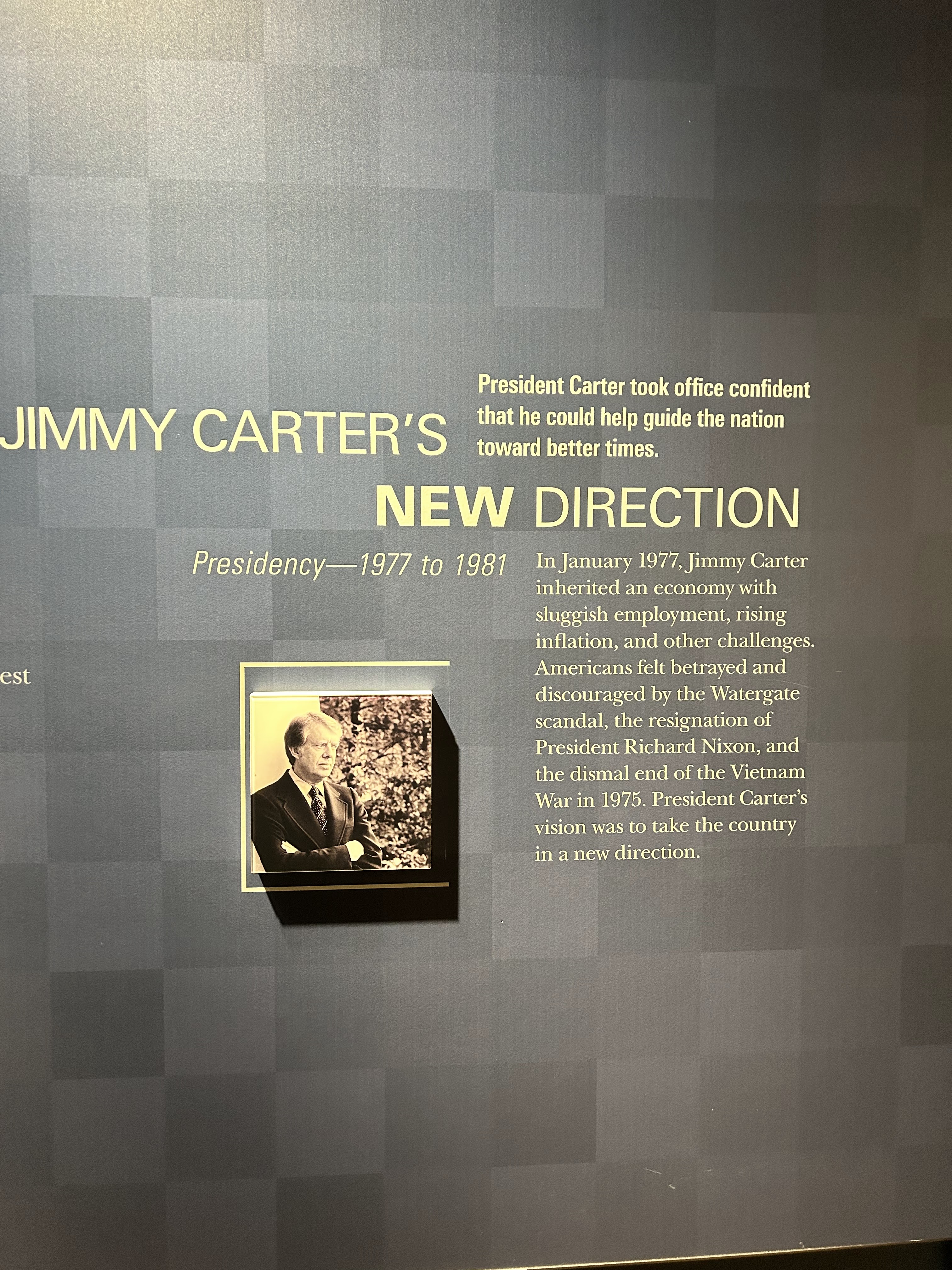
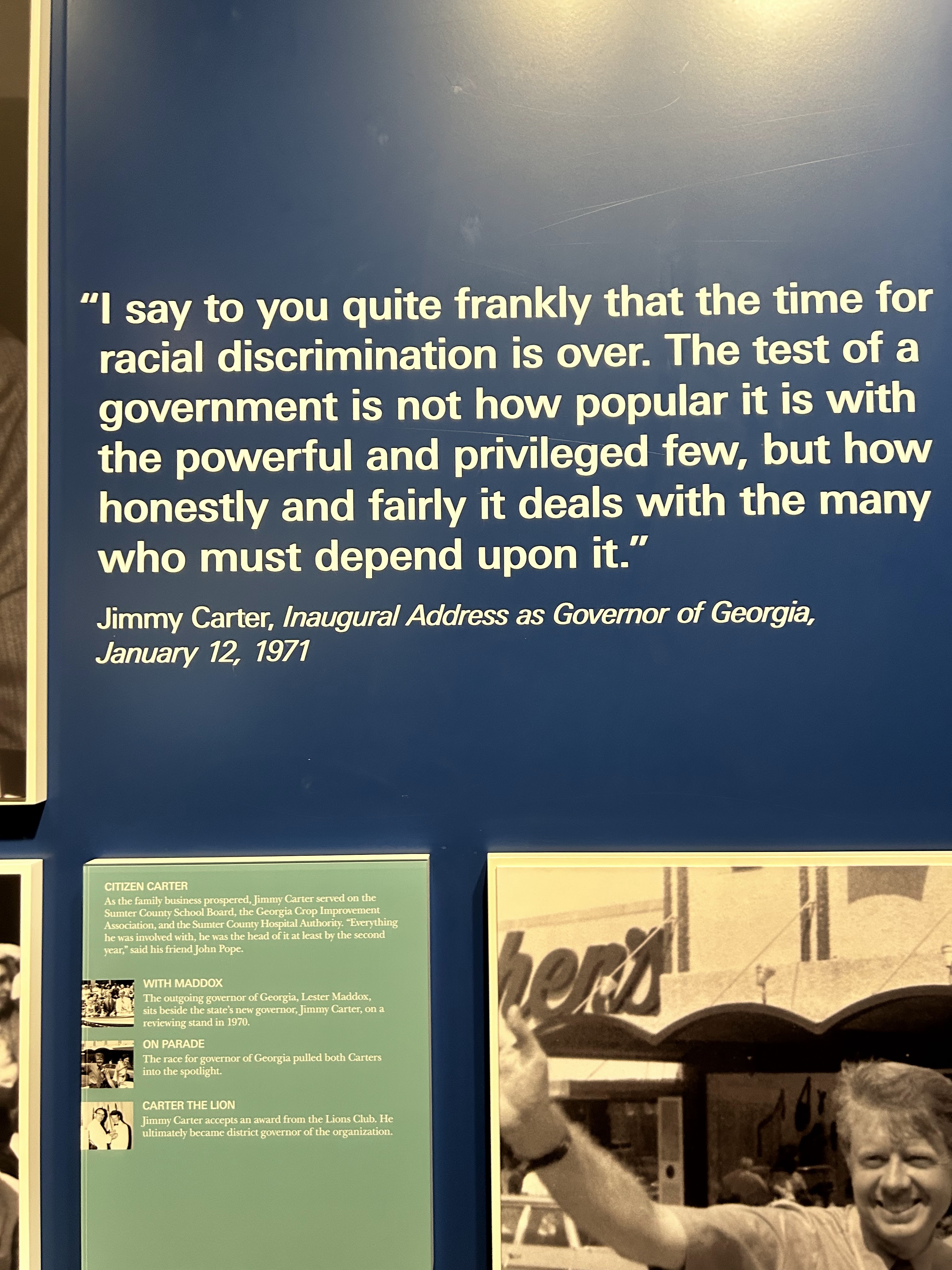
Jimmy Carter was president when I was ten years old so I learned a ton about his background and accomplishments. He grew up in Plains, GA and his father was a peanut farmer and strict segregationist. His mother was a nurse and believed everyone was equal. Carter joined the Navy but soon realized he would have more impact on the world in politics. He was a senator for two terms, then the Governor and finally a U.S. president for one term in 1977.

He created the Energy Department, the Panama Canal Treaty and the Egypt/Israel Peace Treaty. He also led a country healing from the atrocities of Vietnam and Watergate. Civil rights, human rights and compassion were most important to him and he relied on his wife, Rosalynn Carter, to be his confidante and advisor while leading.

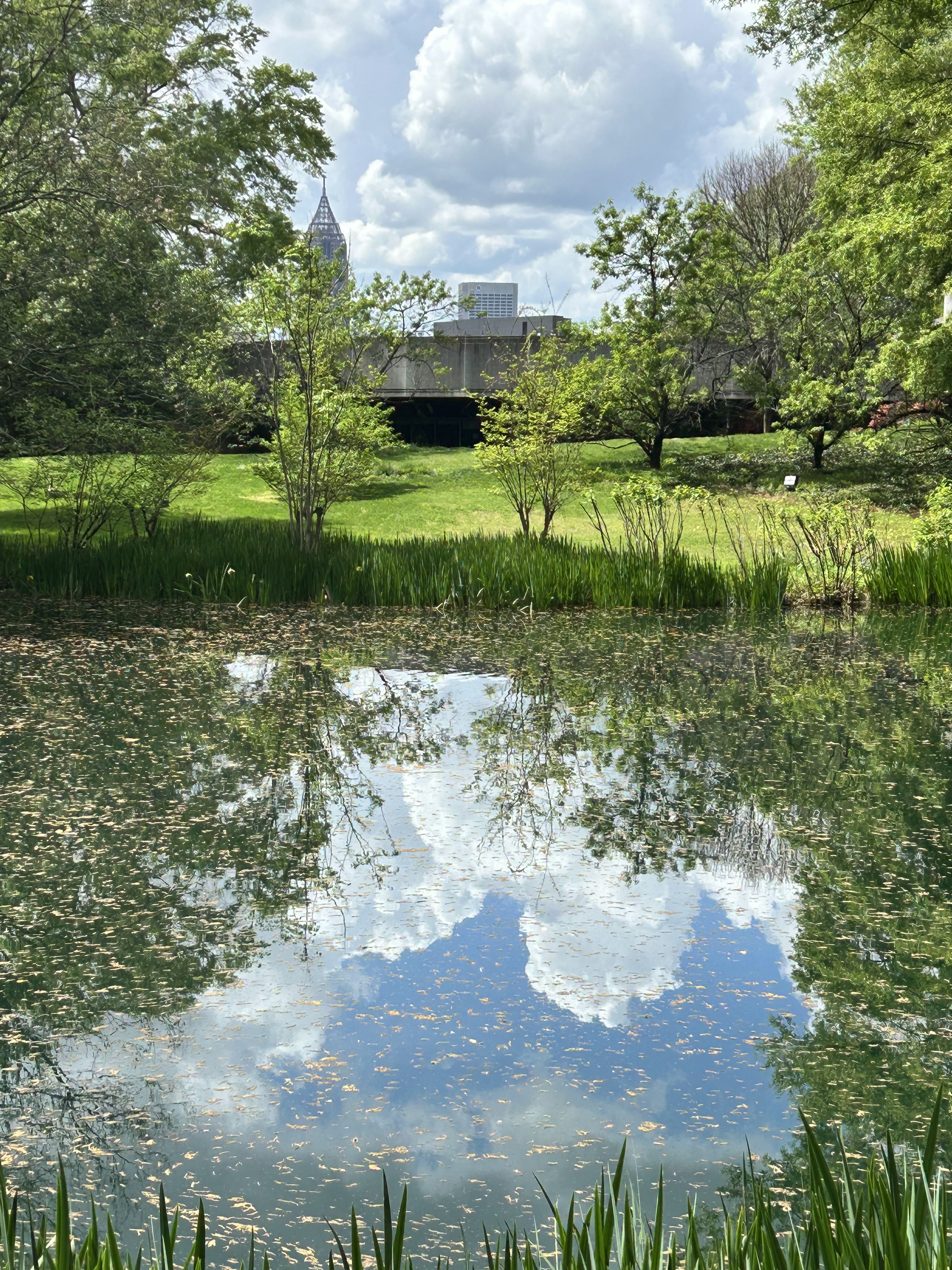
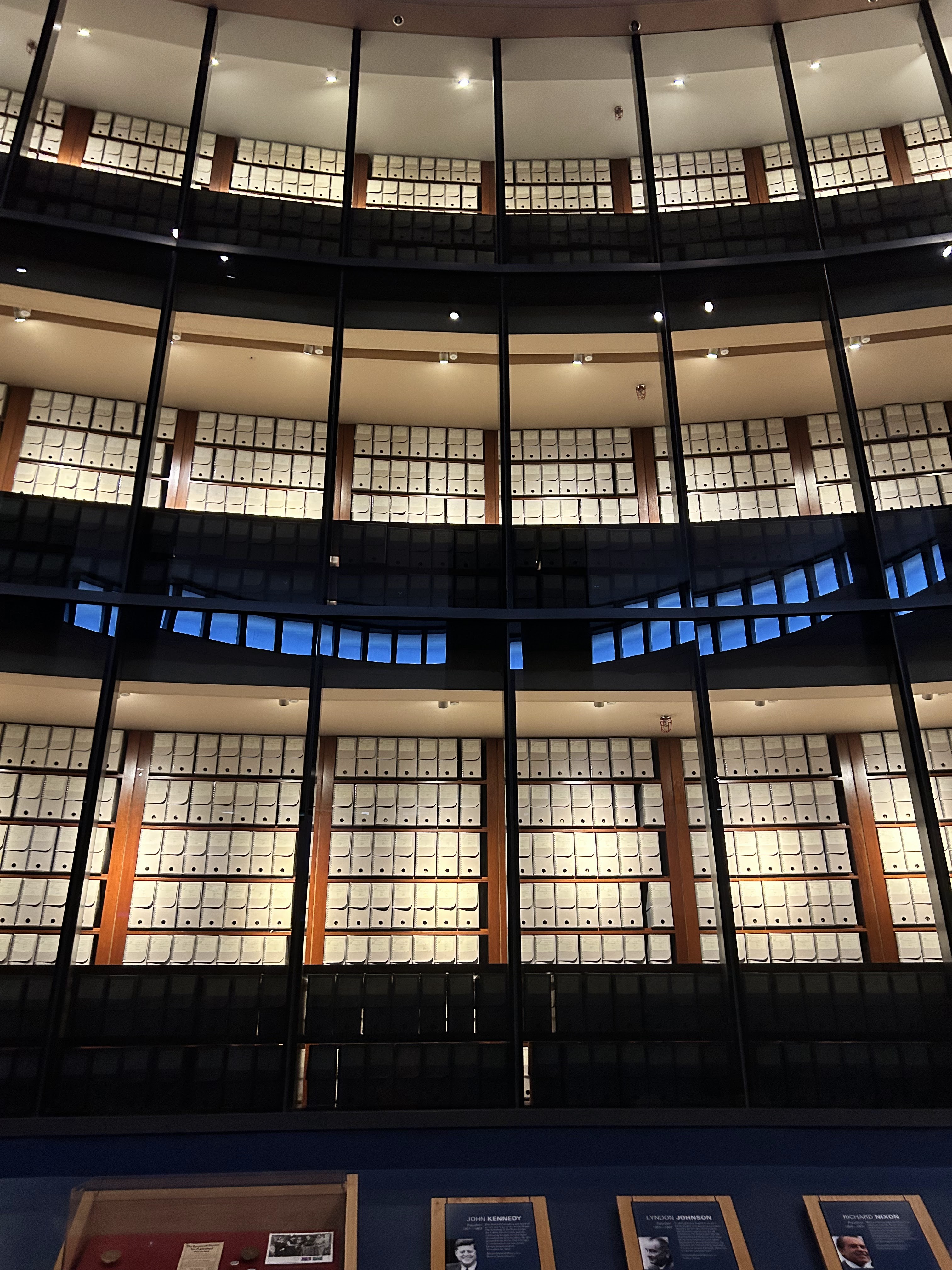
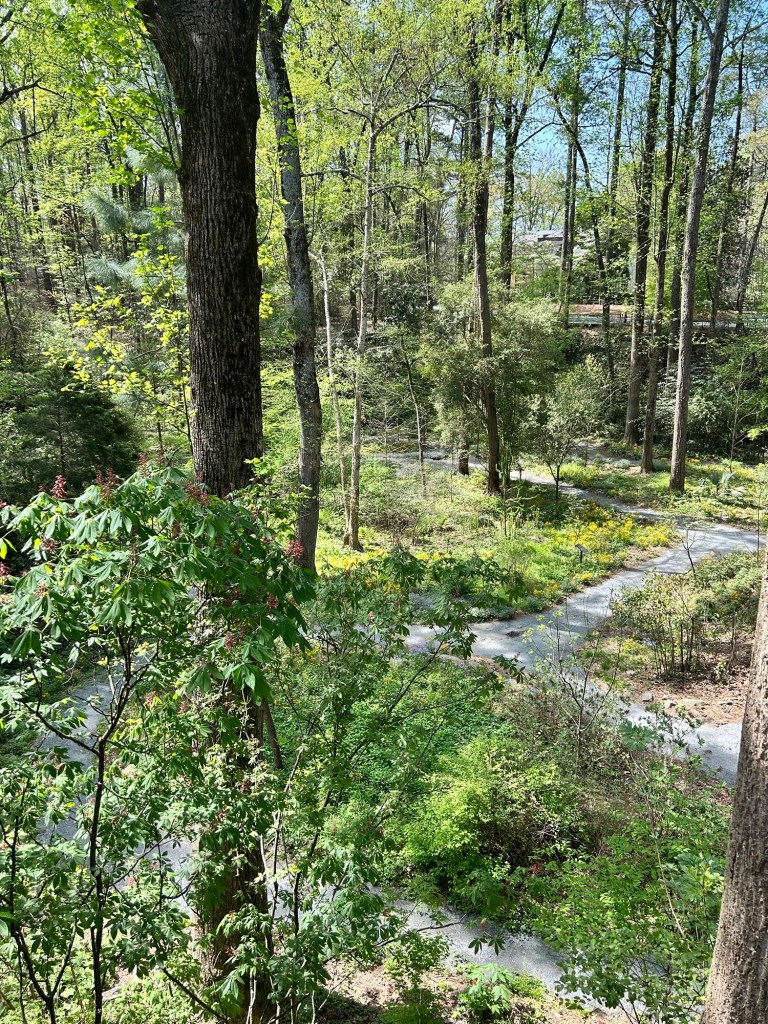
The museum also houses a conflict center. The gardens were in full bloom and beautiful. The area is peaceful even though it is very close to the Beltline and a lively area of Atlanta. The museum used films, interactive displays, photos and memorabilia to share a great deal of information and certainly was worth visiting.

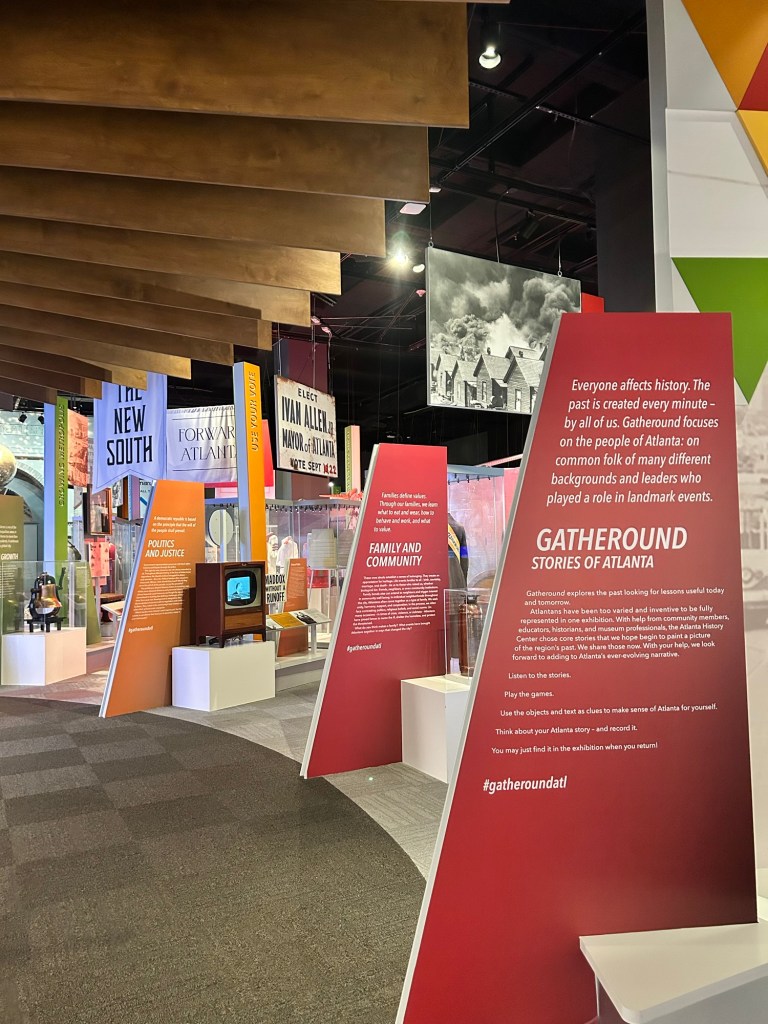
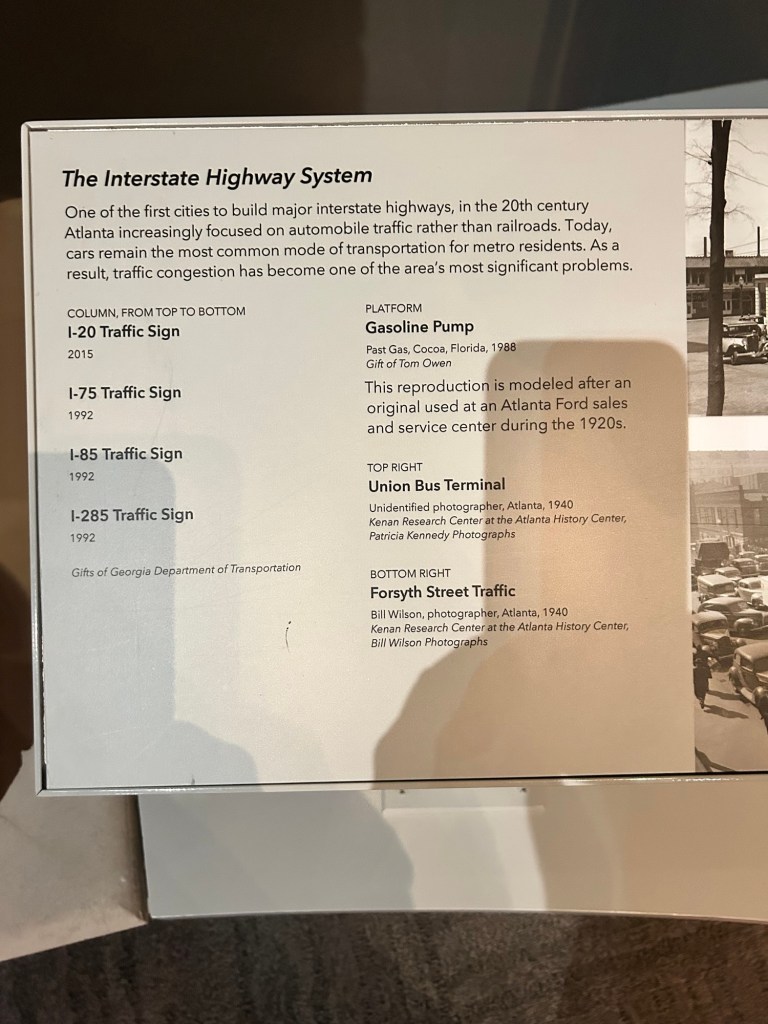
Atlanta History Center

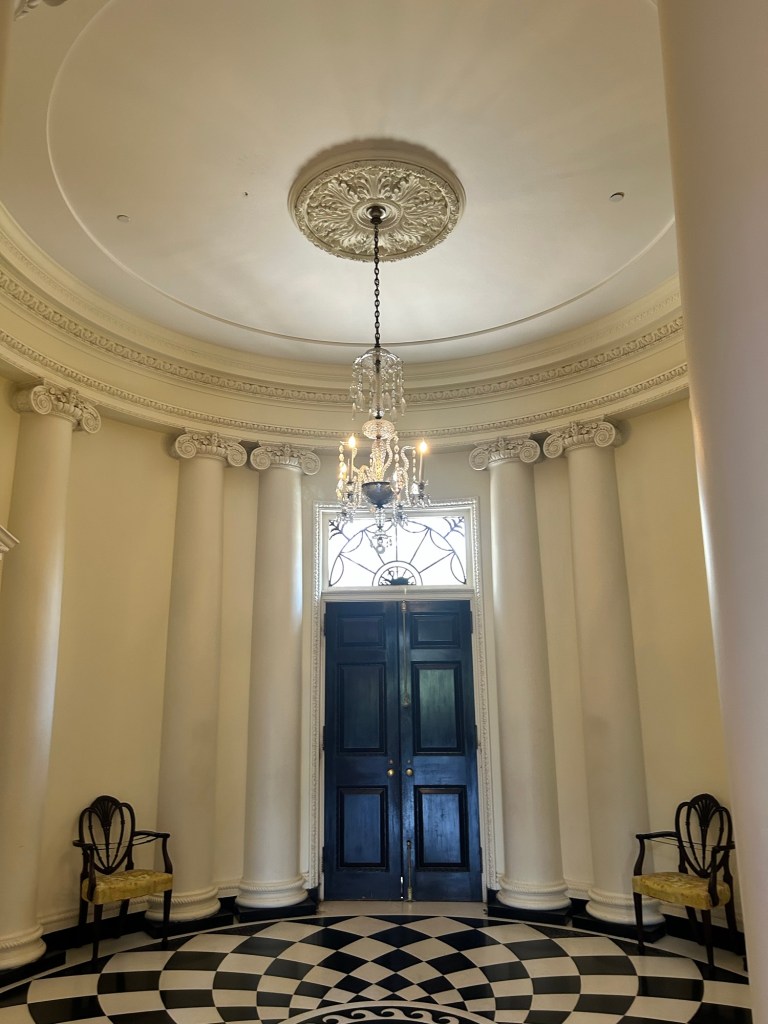
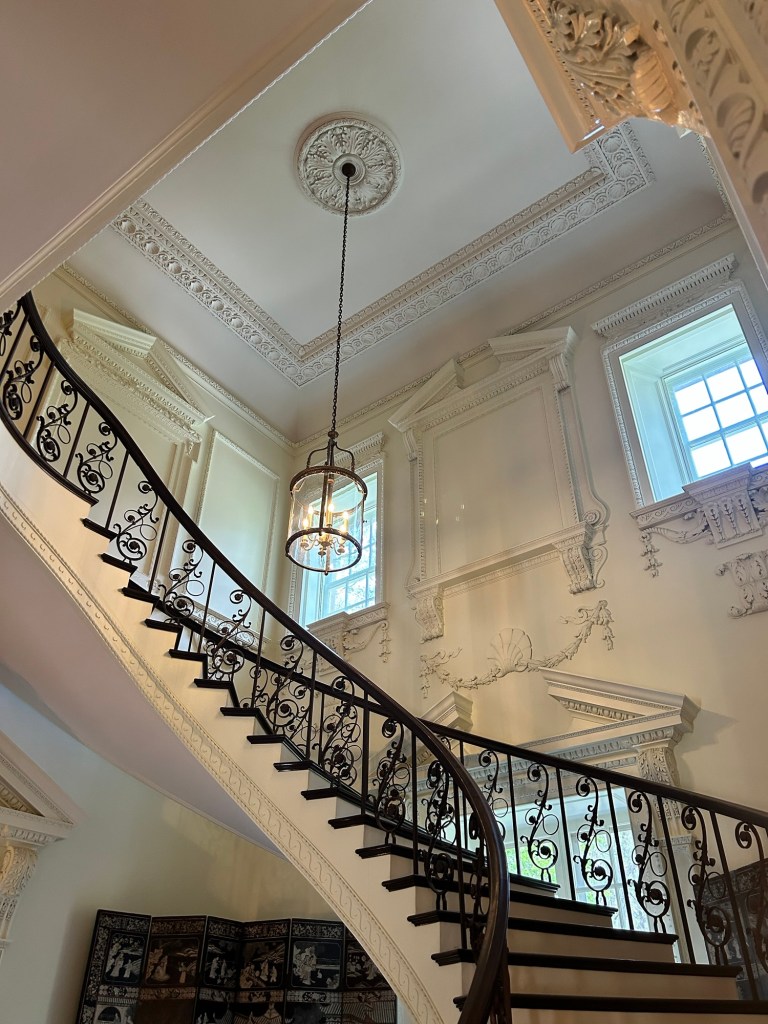
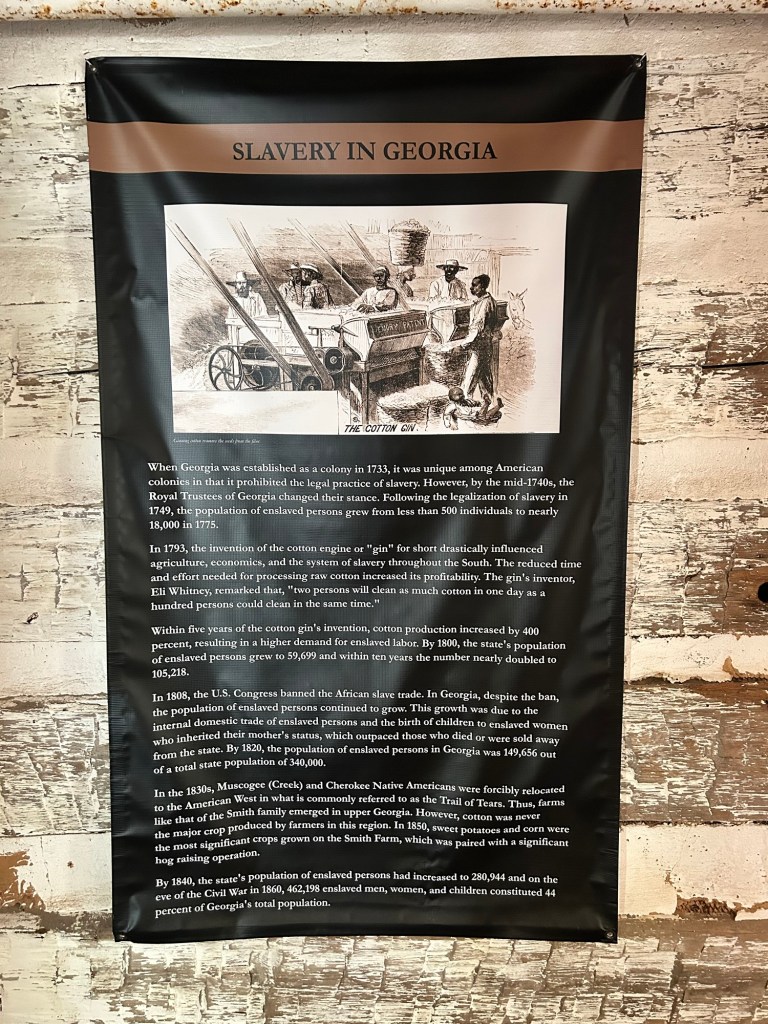
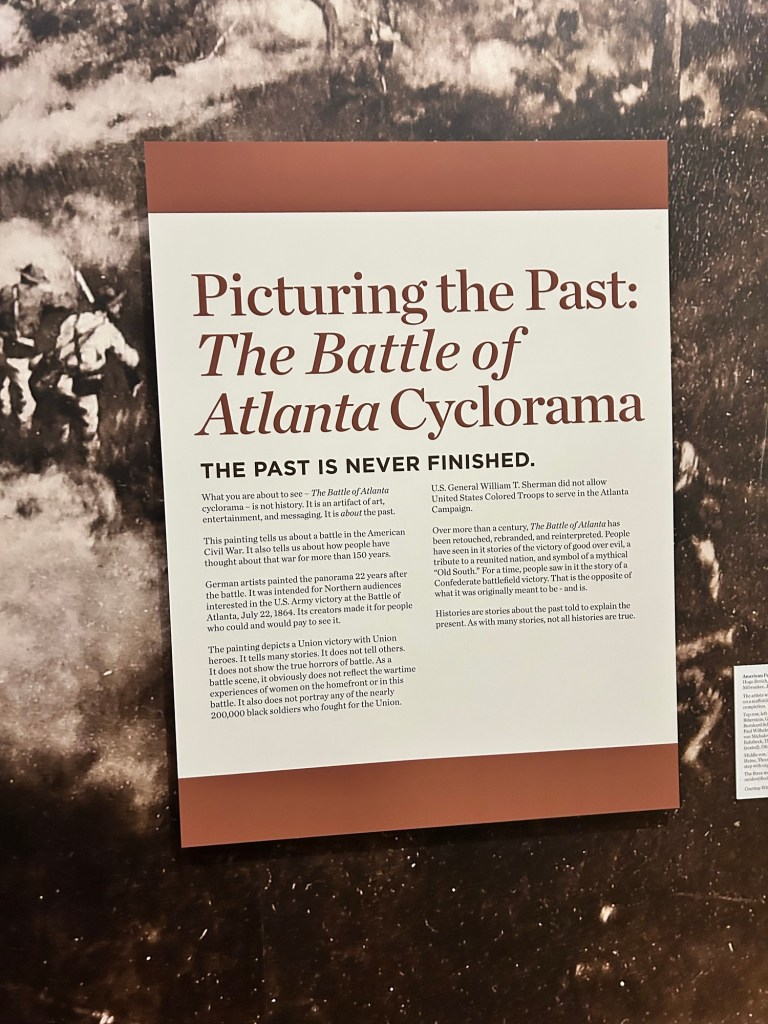
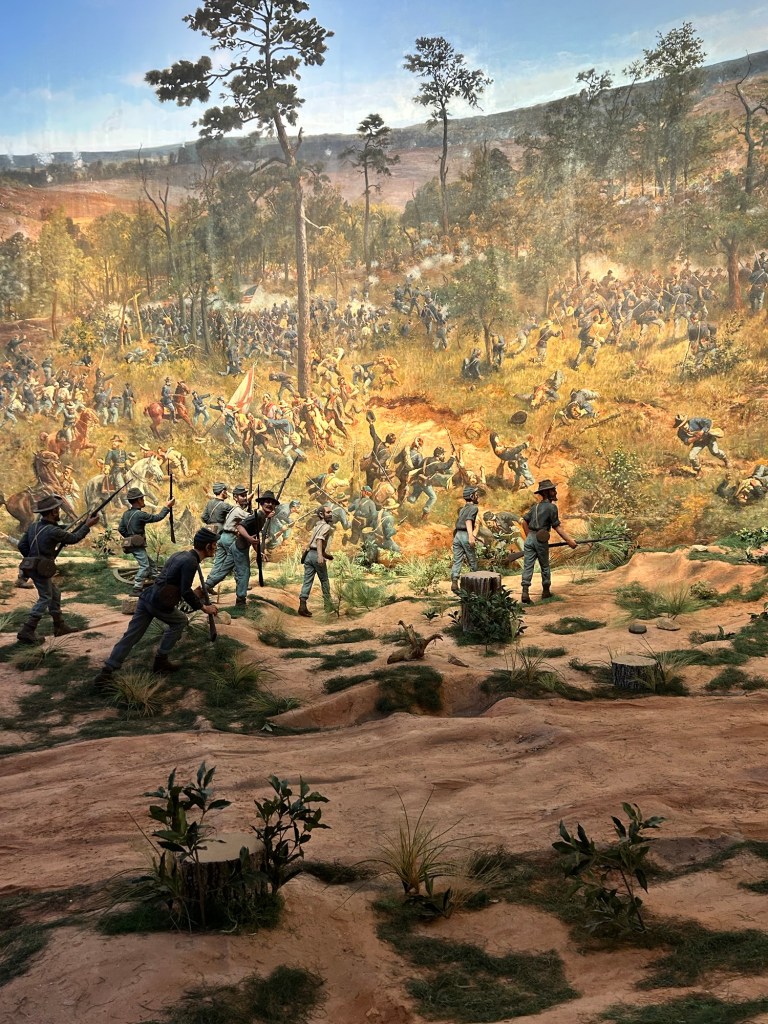
Today I visited the The Atlanta History Center. It is one of the most varied museums I’ve seen with a large museum, three historic houses, and 33 acres of gardens and trails. Key things to see include the iconic Cyclorama painting, the elegant Swan House mansion, and the interactive Smith Family Farm.

Why Difference is Such a Great Teacher

I recently recorded my first podcast with an interview with Unstoppable Mindset’s Michael Hingson. Not only was it a good challenge for me, Michael is a force to be reckoned with. Look up his story and sign up for his podcasts. He interviews a very diverse, eclectic cast of professionals and I was lucky to be invited to share my perspective. I will say after the recording (done in one take) I, of course, thought of a million other things I could have said…we really are our own worst critics. Anyway, I thought I would write a few posts on my site about the various topics we discussed…and so the title of this post.

Difference forces us to ask questions. For example, if someone does a task differently from you, it is a great opportunity for you to learn another perspective and then ask questions to continue the learning. We often jump to, “that’s the wrong way to do it” when instead we should relish the fresh perspective and lens.

Traveling is another great opportunity to ask, “Why?” To immerse yourself in a new culture and the joy of the unknown alley is where growth happens. Hang out with a toddler for even 30 minutes and you will get asked “Why” a million times. Why to we stop asking, “Why?” We should keep our eyes that wide and that question in our back pocket for our entire lifetimes.

I love trying new foods, not knowing the language and the general discomfort of not knowing what is around the bend. That doesn’t mean I don’t get sweaty palms and perhaps an increased heart rate, but those reactions certainly prove I am ALIVE and fully immersed in the task at hand.

Two Weeks in Japan and Vietnam

I just returned from a fabulous trip in Japan and Vietnam.  I am posting the two countries separately for easier reading.  The two countries could not be further apart in experiences.  Both countries are great and incredibly different.  Japan is orderly, polite, clean and very interesting.  I visited Tokyo, Kyoto and Osaka.  The trains are super efficient (and very reasonably priced).  They take their toilets pretty seriously (check out the photo of the control panel).  And although Japan has a reputation for being very expensive it is pretty easy to eat on a budget and most tourist attractions are no cost.  A week in Japan is certainly not enough time but was enough to whet my appetite for a return visit!

Love Learning, Love Change

I love to learn new things.  I love change.  That point of discomfort is when I know I am forcing myself out of “comfort zone”.  I know that most people try to stay as far away as possible from that discomfort zone, but I guarantee that if you are willing to color outside the lines once in a while, you will be amazed at how many new things you can learn. 

Here are some ways that I try to erase the ordinary, both at work and in my personal life:

  • I try at least two new recipes a week.
  • I try to have lunch or coffee with someone I haven’t met at least once a month.
  • I have a list of things I want to learn how to make.  I have mastered cheese, yogurt and bread and my next thing is roasting my own coffee beans.  I will be able to check that item of my list next Saturday, by the way!
  • I read voraciously and read a varied reading list.
  • I volunteer a lot and with a variety of organizations with various missions.
  • I have eclectic interests which means I have an eclectic group of friends and acquaintances which means I am exposed to a wide variety of views, interests and knowledge.
  • I love to travel.  Nothing will get you out of your comfort zone faster than going somewhere that doesn’t speak English!
  • I attend all sorts of webinars on a variety of topics…they cost nothing but my time and I usually garner at least one new nugget of information, thought or idea.

10 Forces Shaping the Workplace of the Future

Given the time of the year, I thought it might be interesting to share what I am reading regarding the future.  In the October 2011 Talent Management Magazine, David Rasmus wrote an article titled “10 Forces Shaping the Workplace of the Future.”  Read on to see if you are experiencing any of these trends.  First of all, fluid models and the ability to adapt are paramount. 

Rasmus explains that the first concept is Transparency and Trust.  Call me crazy, but I thought trust was a constant (not a new model!)  Out-tasking is the second concept.  In other words, outsourcing is dead.  Managing various resources takes a lot of effort and organization on the company’s part.  They will need to figure out how to manage external resources more effectively.  Needless to say, online reputations are increasingly important.  In the same vane, contractors will be seen as extensions of the organization, rather than independents.

Contract-to-Hire might be the happy medium between renting talent and filling a full-time employee position.  This is an effective way for an organization to “test a new market, experiment with a new technology or evaluate the difference between insourcing and outsourcing.”

Another concept set to evolve is On-boarding.  With increased distributed and global employees, organizations are going to have to reconsider how they onboard new hires.  Other changing concepts are:  Parallel promotions, Hire-to-automate, Business continuity, as well as, Demographic shifts.

 Finally, another huge force is Virtual Work.  As the standard becomes more and more virtual work, location will not be as important.  People will be hired based on knowledge and skills rather than where they are located.  Virtual work also will change how performance management is addressed.  Lots of things to think about as we progress in the working world!

Tech Tools of 2012

November’s  Chief Learning Officer, “Tech Tools in 2012”  caught my eye.   Apparently investment in learning technologies continues to be a priority.  Content development and learning strategy also made the list of priorities.  This means that beyond the LMS, companies want to invest in mobile learning and collaboration tools including social networking tools.  After several years of declining spending, this is good news!

Not surprising, the ability to align all the competing priorities of the organizations is a focus.  CLO’s are focused on the goals of their organization and how to align it with the performance of its employees.  This includes informal learning, leadership training, overall skill development and overall productivity.

Technical tools are still a focus, especially those tools that are more “mainstream” such as learning management systems, elearning content tools and virtual classroom environments.  The jury is still out on how to use social networking, iPads and mobile devices for training.  As these tools demonstrate success and the ability to truly change behavior, I suspect the investment will follow.

Another article that shares the need for training as a continued priority was in Fast Company‘s blog post on training to close the skills gaps that employers whine so often about.  According to the post, many jobs remain unfilled because companies cannot find qualified people.  The old adage “hire for attitude, train for the job” seems to be forgotten.  It is easy to point the finger at our schools, but ultimately companies are going to have to create their own “schools” or universities to address the missing skills that job candidates need.