The Anxious Generation by Jonathan Haidt

I recently finished reading Haidt’s, “The Anxious Generation”. I was curious about this book as I have struggled to help my teenager with their depression. I am fascinated how their older sister (six years apart) had such a different experience in her teenage years than my younger child. Haidt makes some compelling arguments supported with a ton of data and research. The book’s website also offers additional data and research.

Haidt gives some reasons for depression including:

  • Genes-predisposed to depression
  • Thought patterns (can be learned and unlearned)
  • Social and environmental conditions

But he contends that the biggest difference is how society is focused on a “phone-based childhood vs play- based childhood”. Essentially playing outside and with friends has been replaced with the virtual world. I have definitely seen this difference between my two kids. Another dramatic difference is how parents are overprotective in real life and under protected online.

Haidt explains that the prevailing wisdom of parents today is that kids need to be supervised constantly and parents should not let their kids roam independently like we did when we were children. There is no longer the mantra of “come home when it gets dark.” And laws are even in place to report parents that are seemingly being irresponsible by allowing their kids some freedom. Essentially we have created so many guardrails kids do not experience any hardship or failure which in turn prevents them from developing resilience and grit.

Our phone-based culture has created four harms:

  • #1: Social deprivation -kids are connected to everyone in the world and disconnected from the people around them.
  • #2: Sleep deprivation-there has been tons of research on how our devices disrupt our sleeping patterns.
  • #3: Attention fragmentation-notifications and disruptions happen constantly which leaves us with about five minutes to focus on any task or though before we are interrupted once again.
  • #4: Addiction- “The smartphone is the modern-day hypodermic needle delivering digital dopamine 24/7 for the wired generation”.

This book, its message and all the thorough research really resonated with me. I do agree with Haidt that if we as a society do not address the negative effects of social media and the virtual world, we will create a very different, fragmented world that what we have enjoyed thus far. Certainly putting down the phones, getting out in nature and making more time for real play for our kids can make a difference if we all lean in and make it happen.
Last Day in Dubrovnik

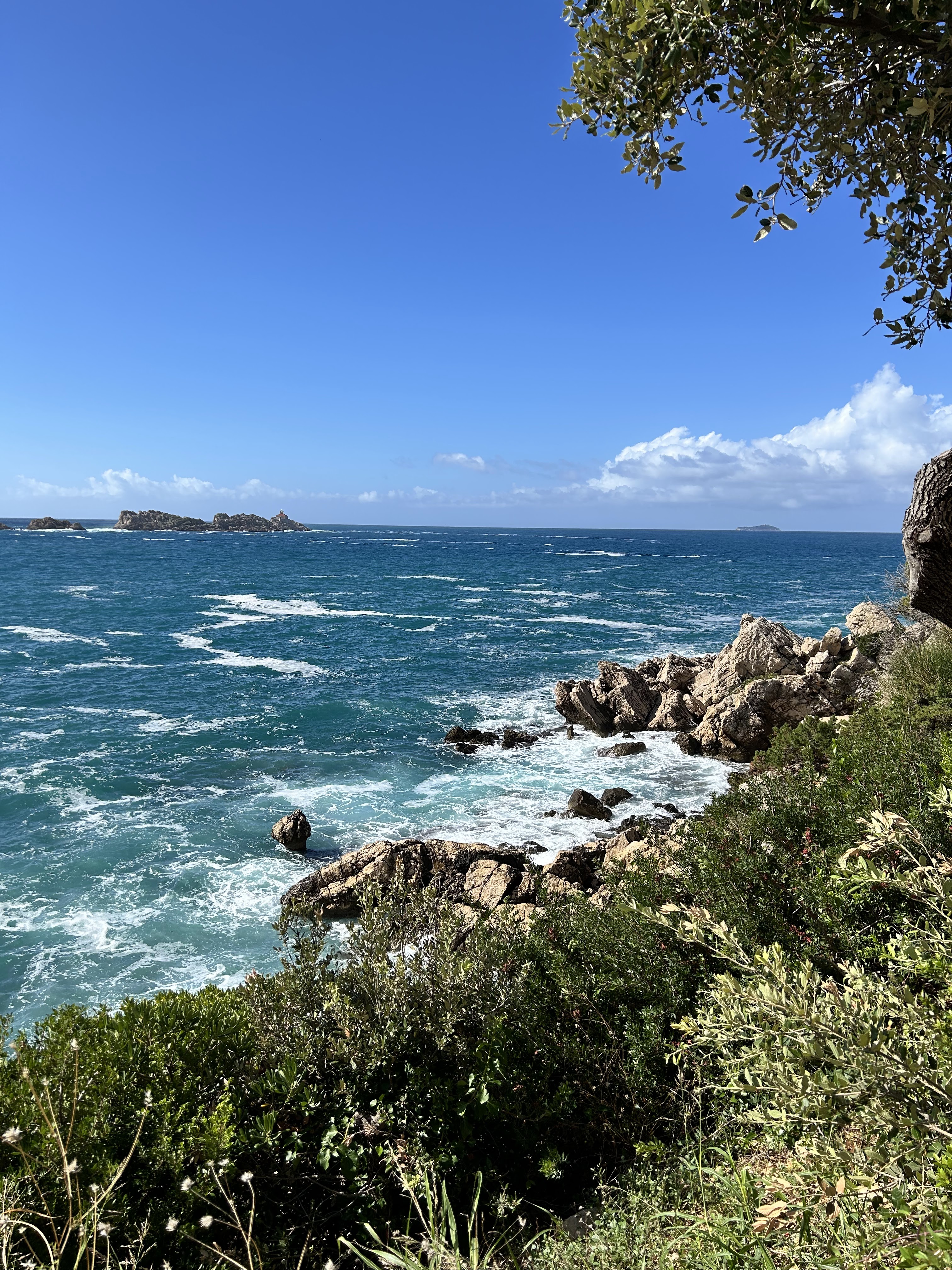
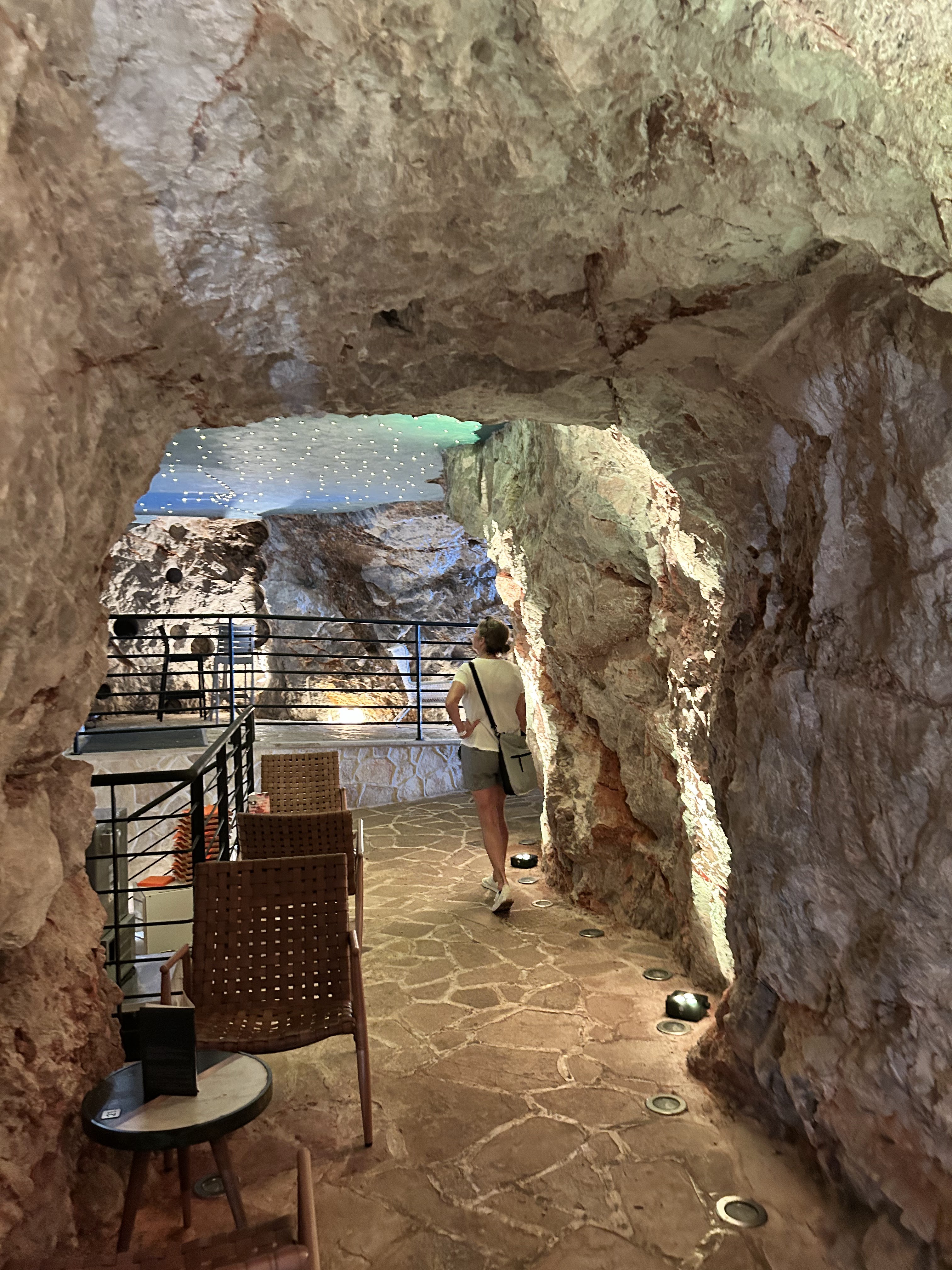
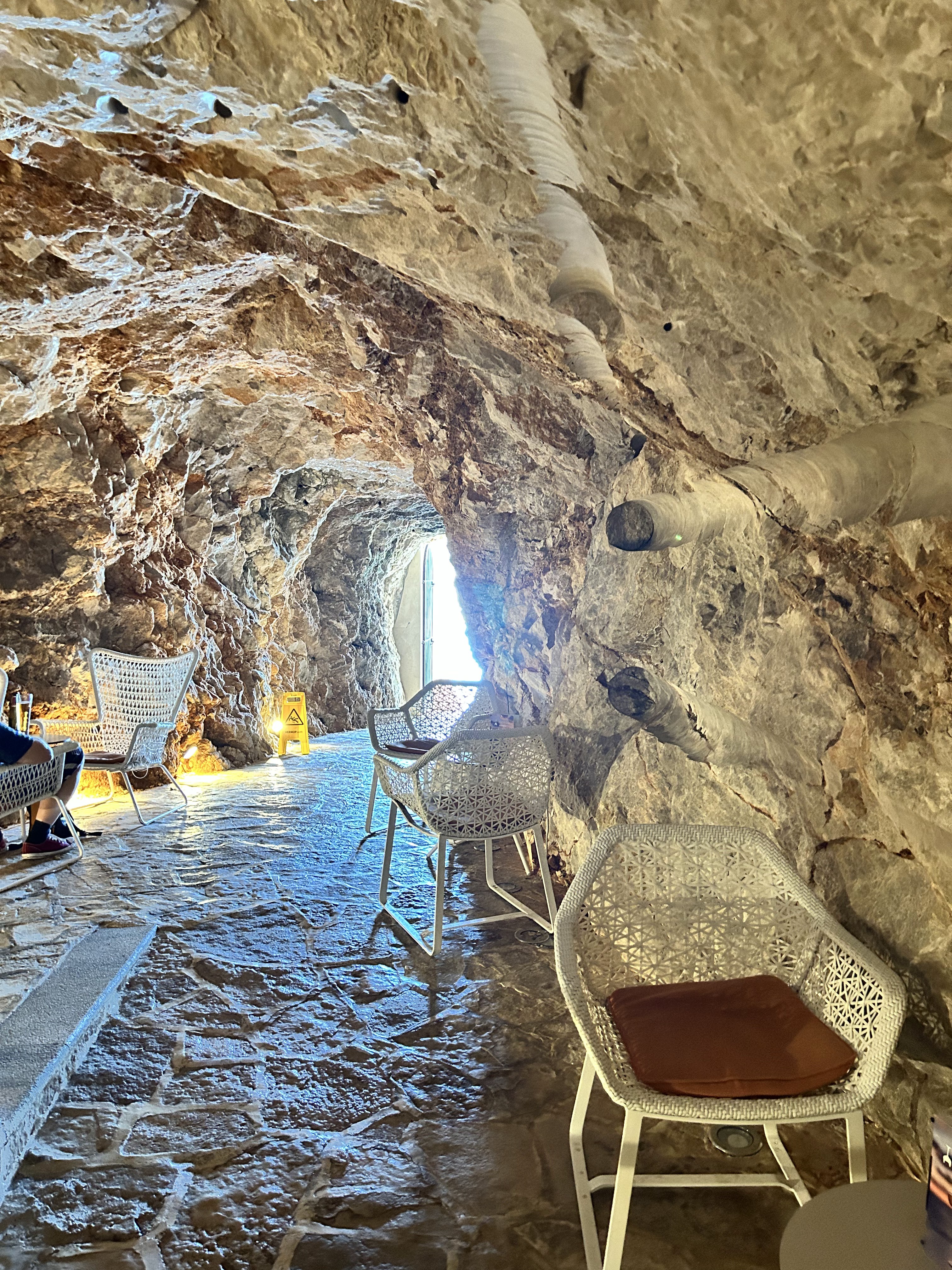
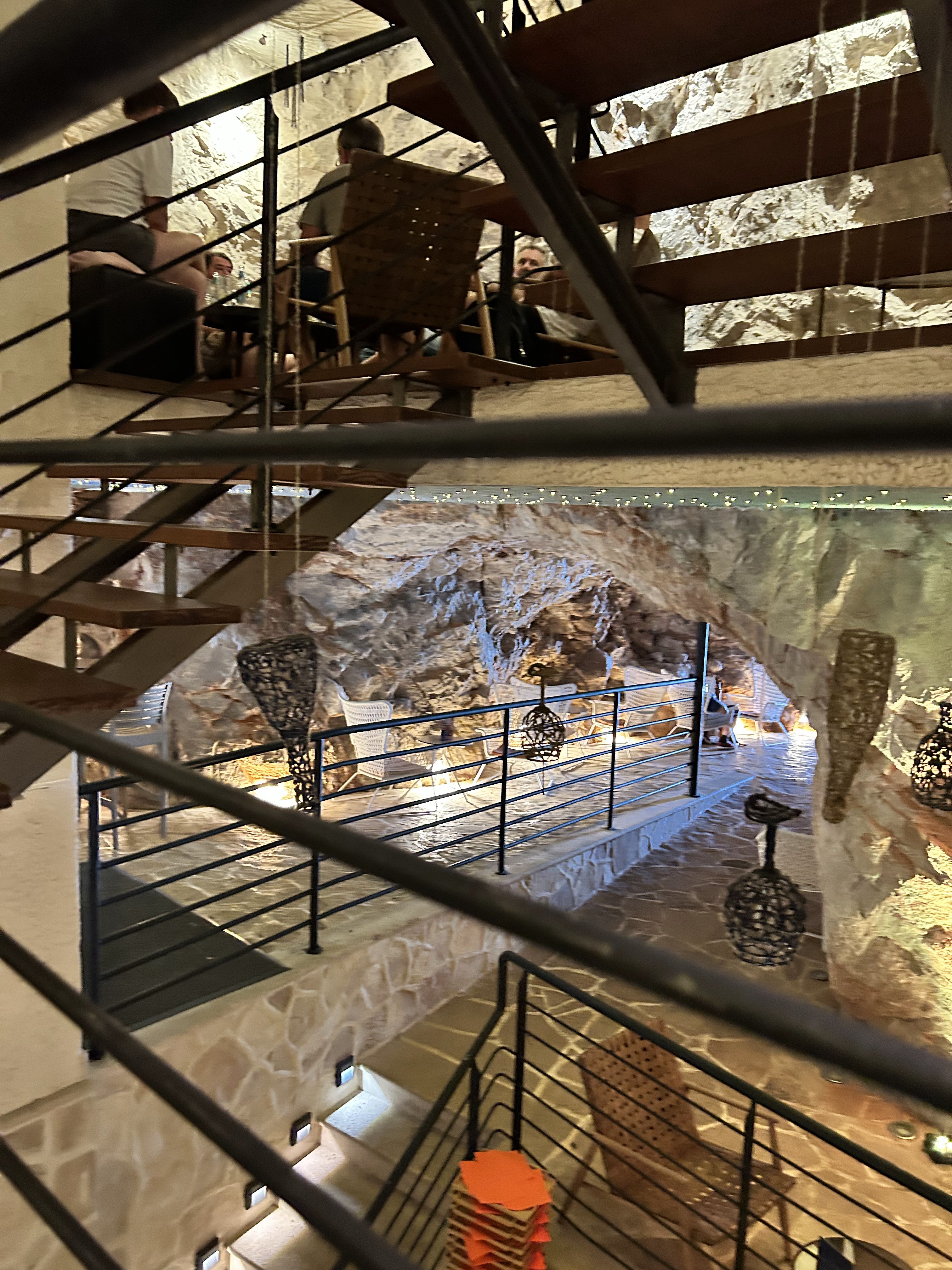
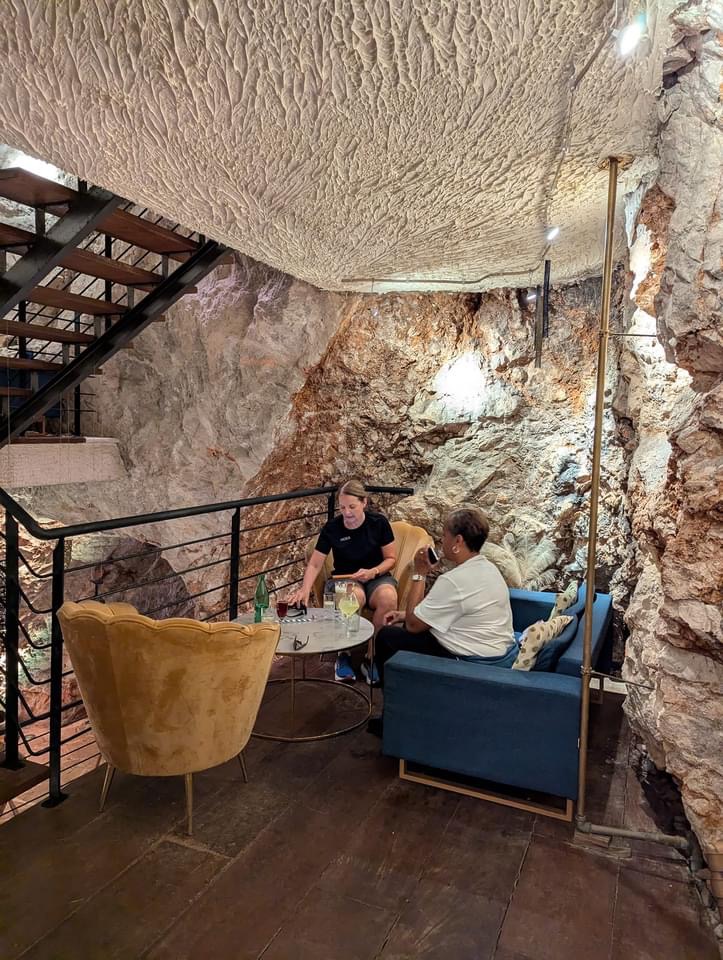
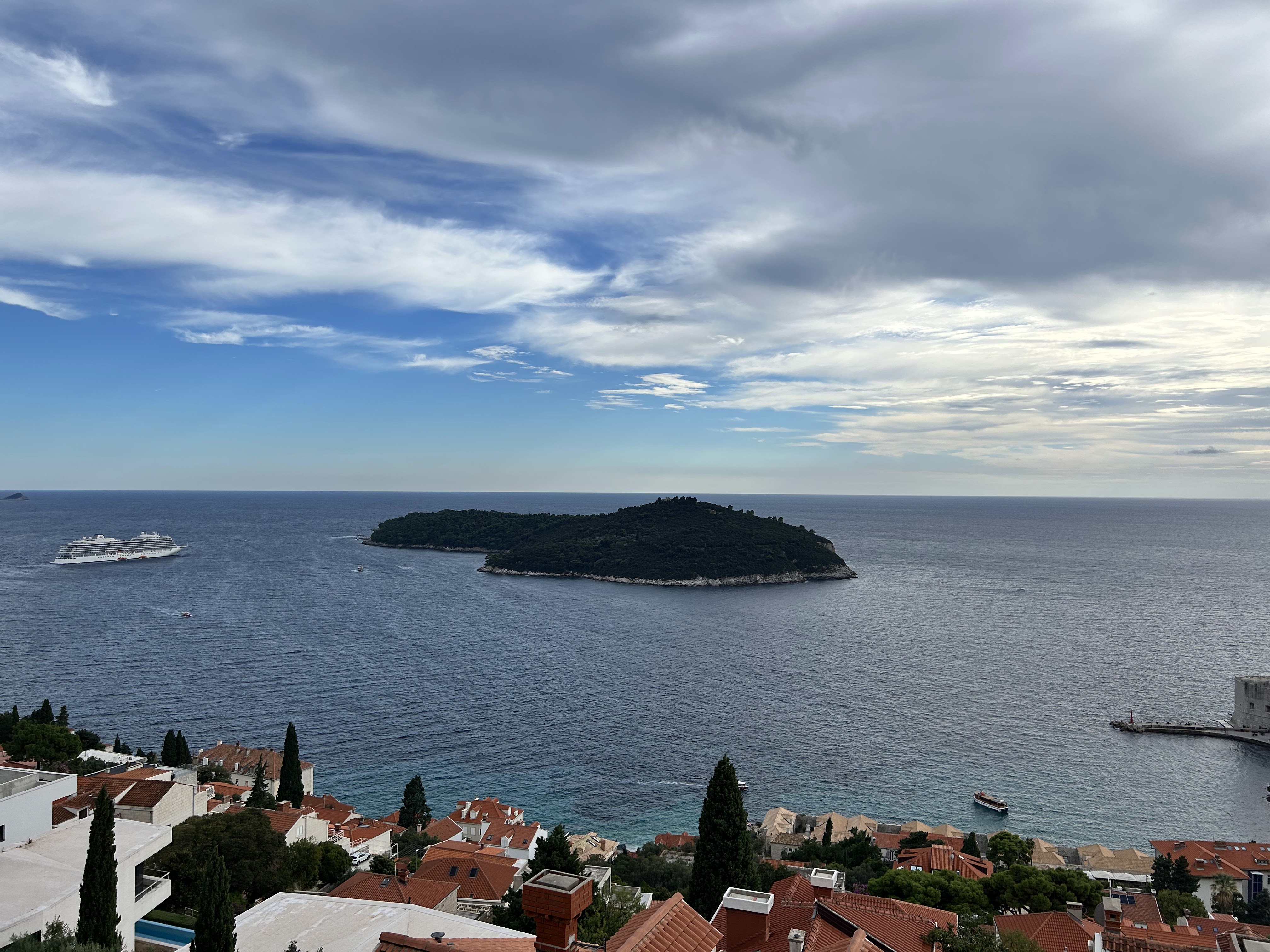
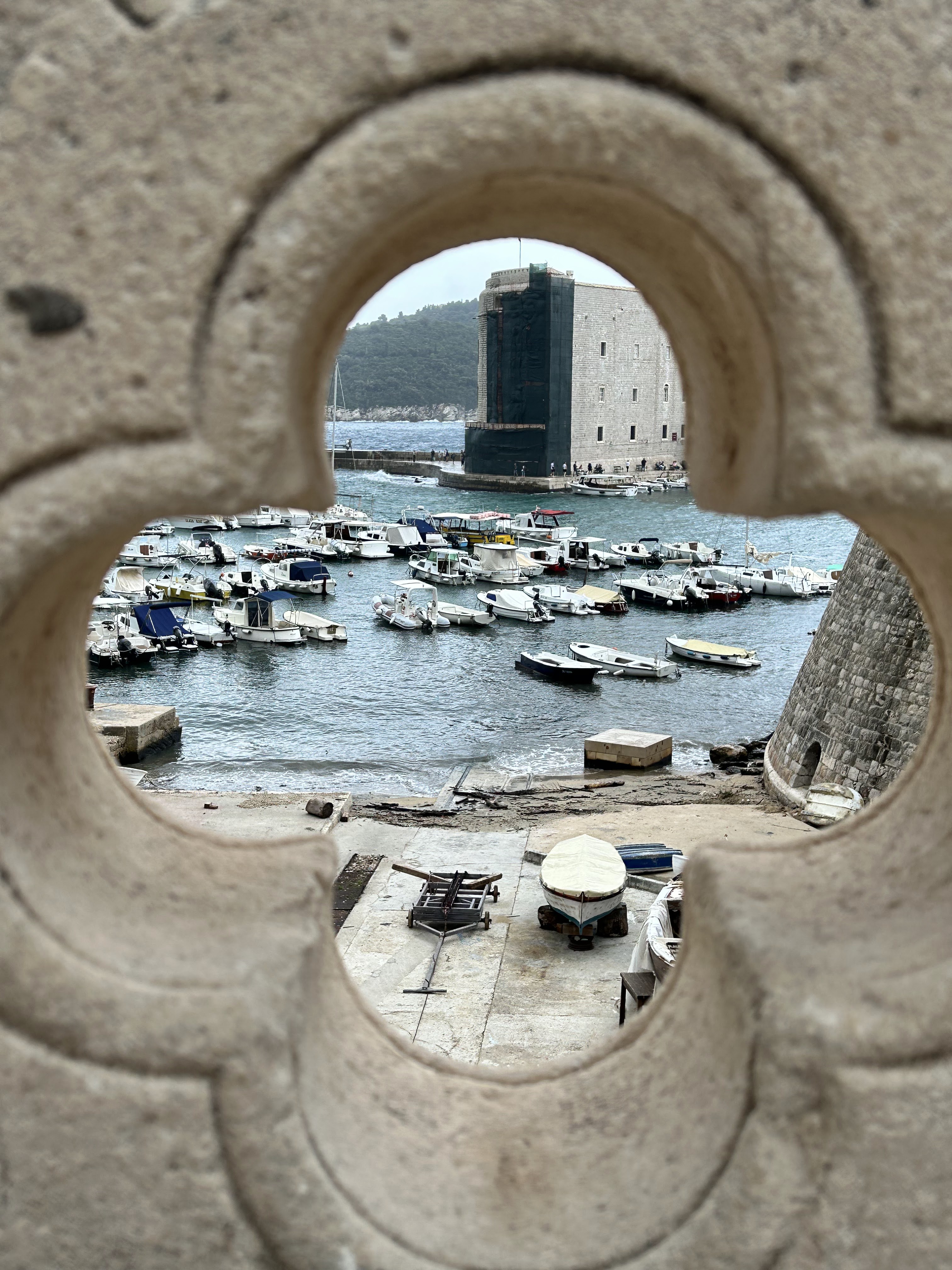
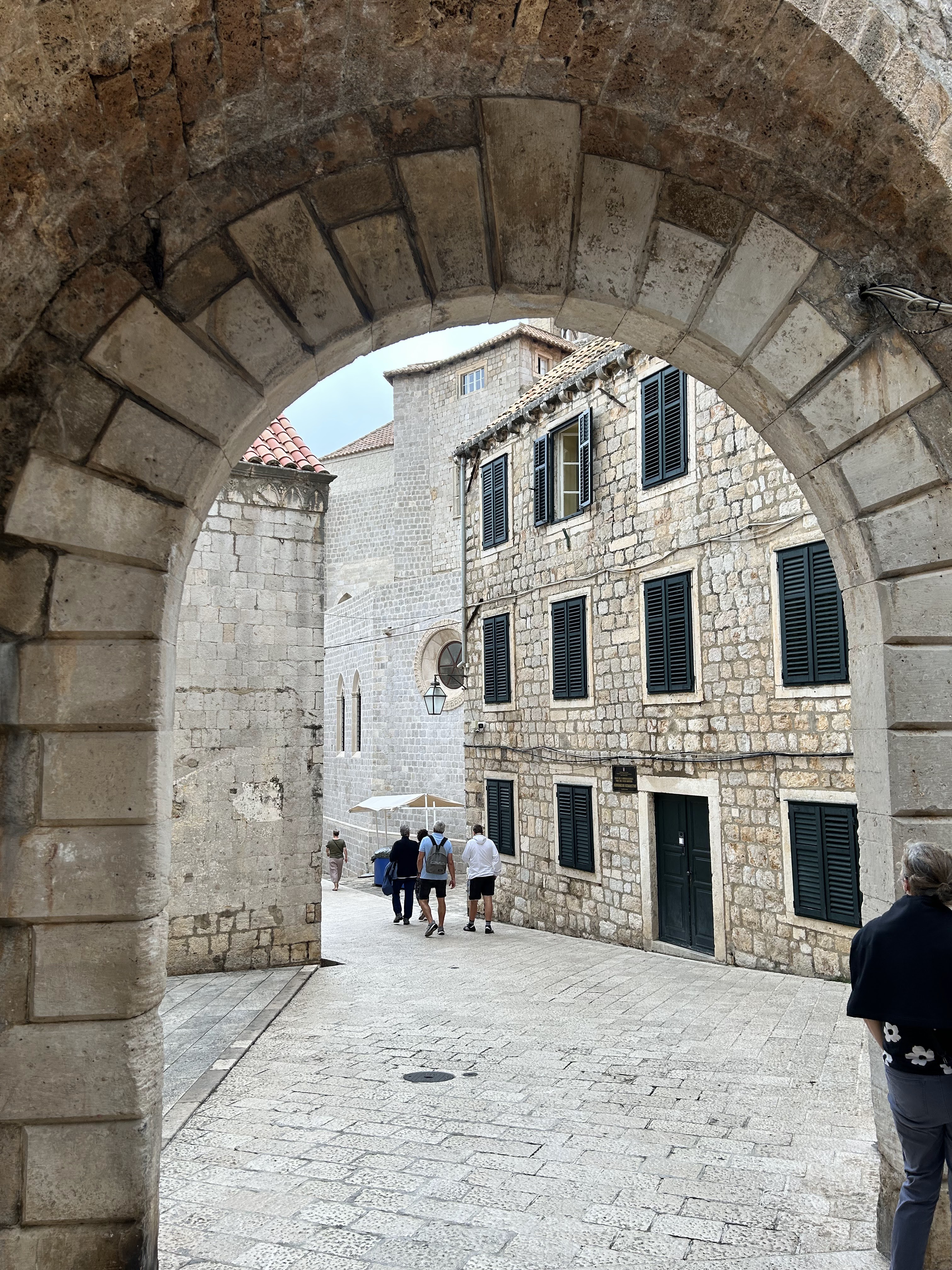
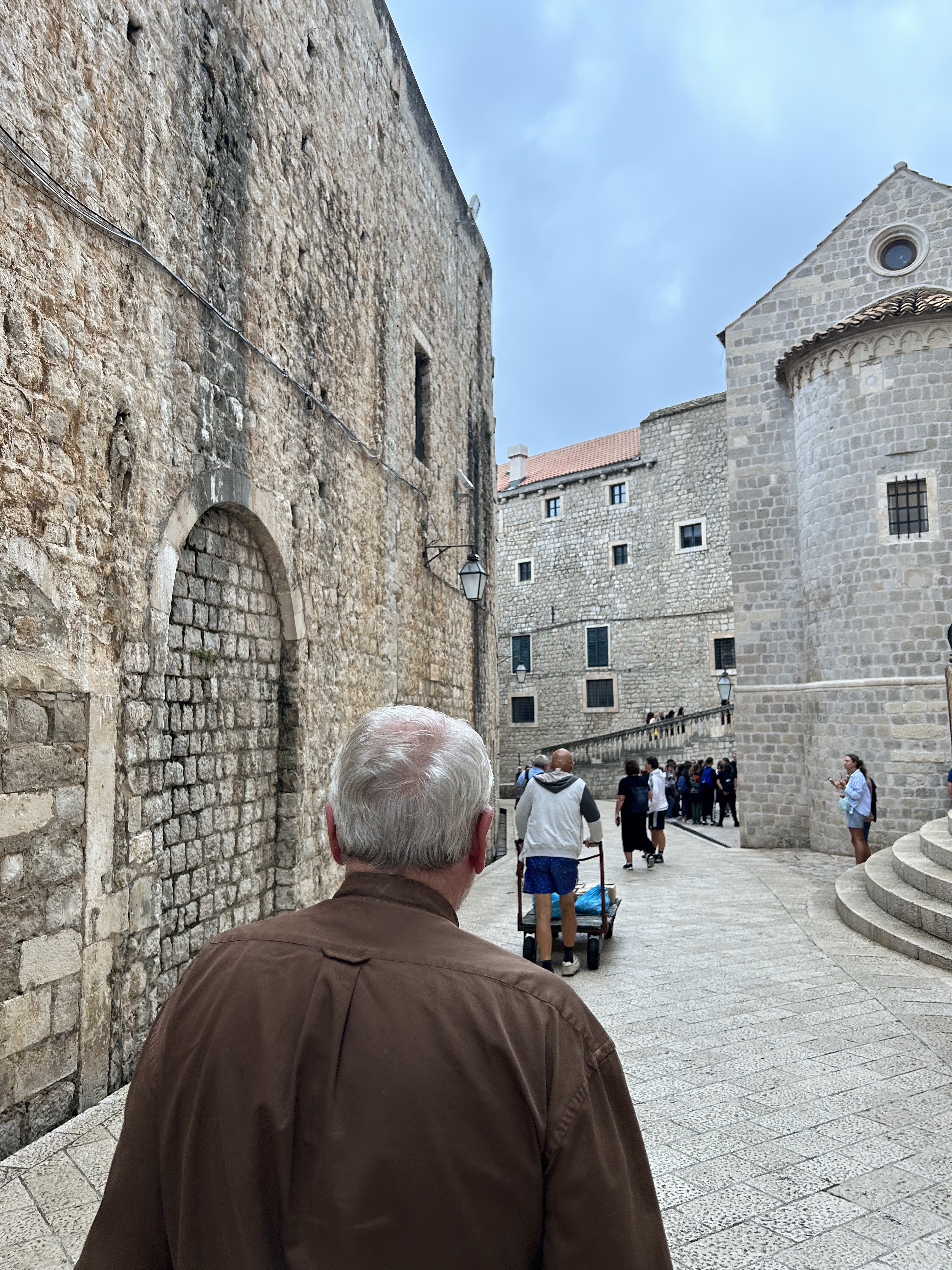
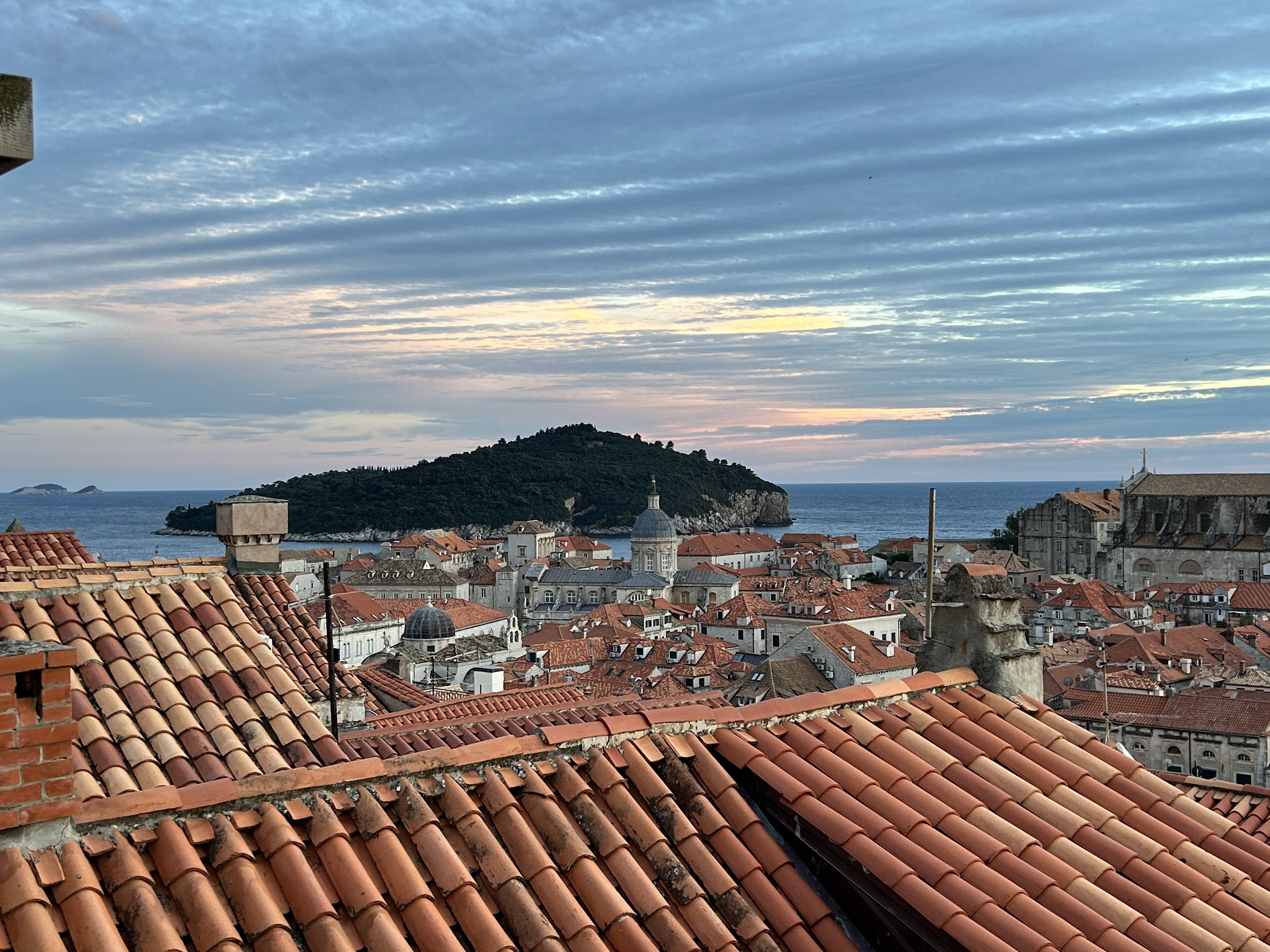
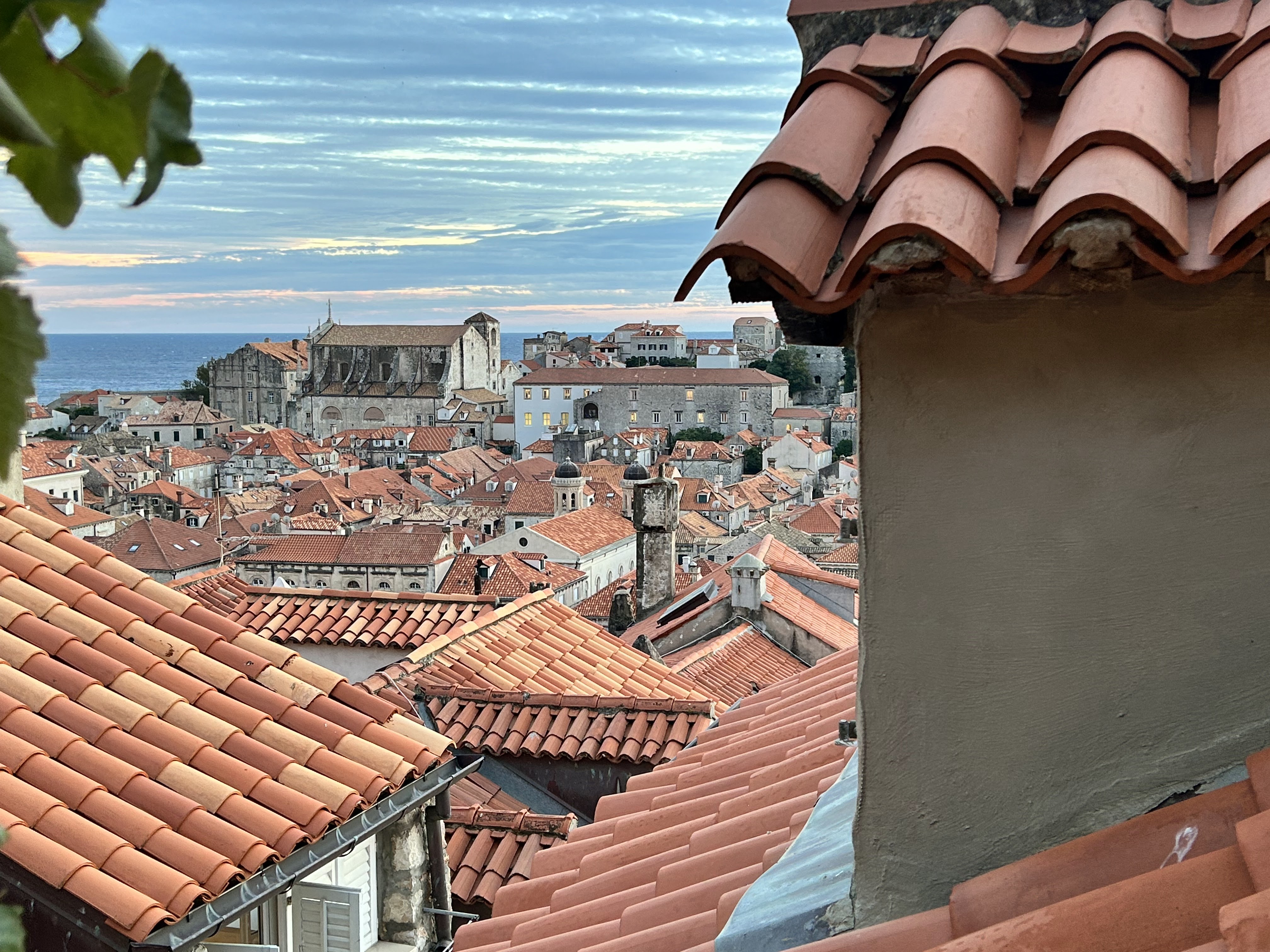
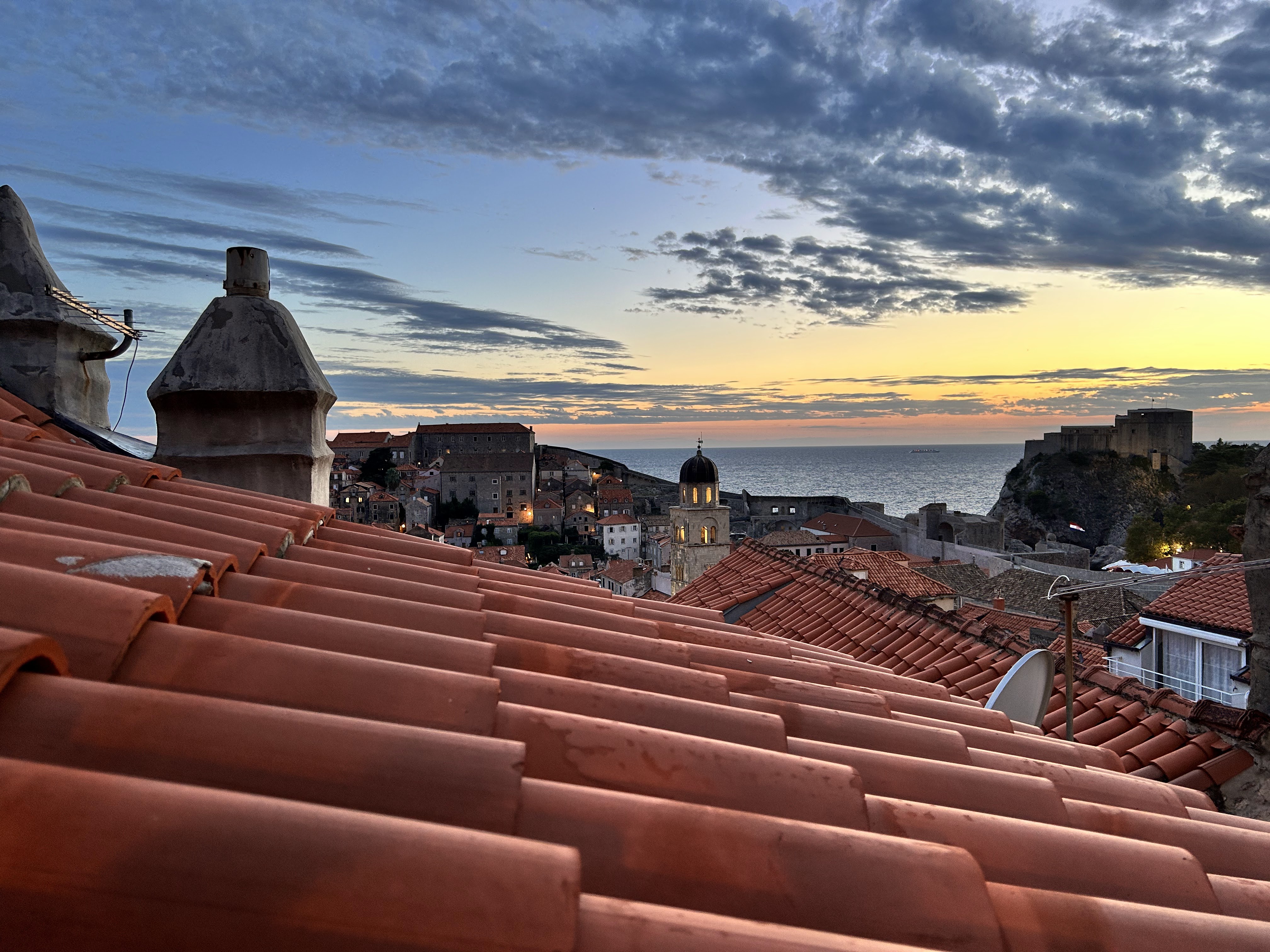
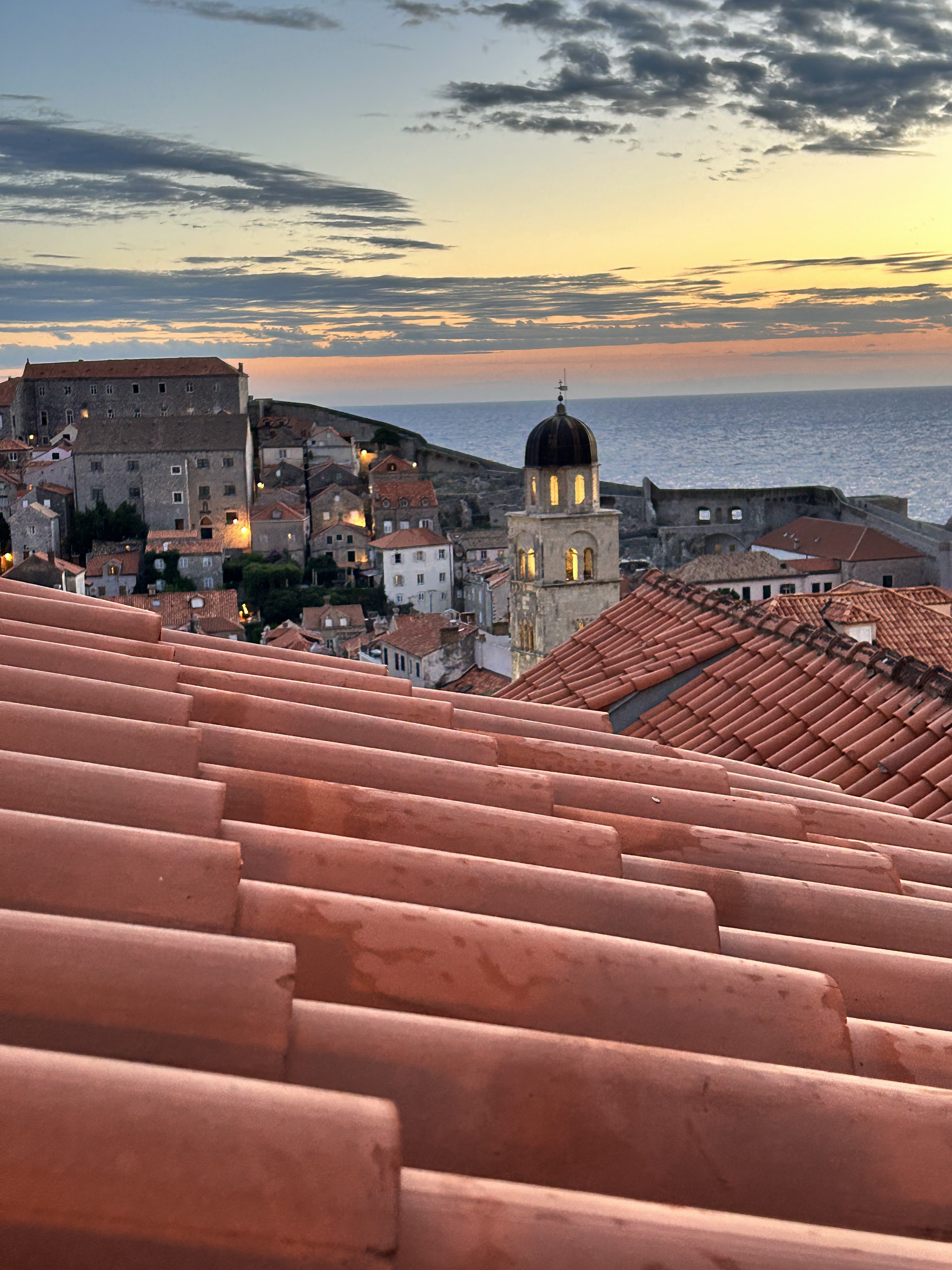
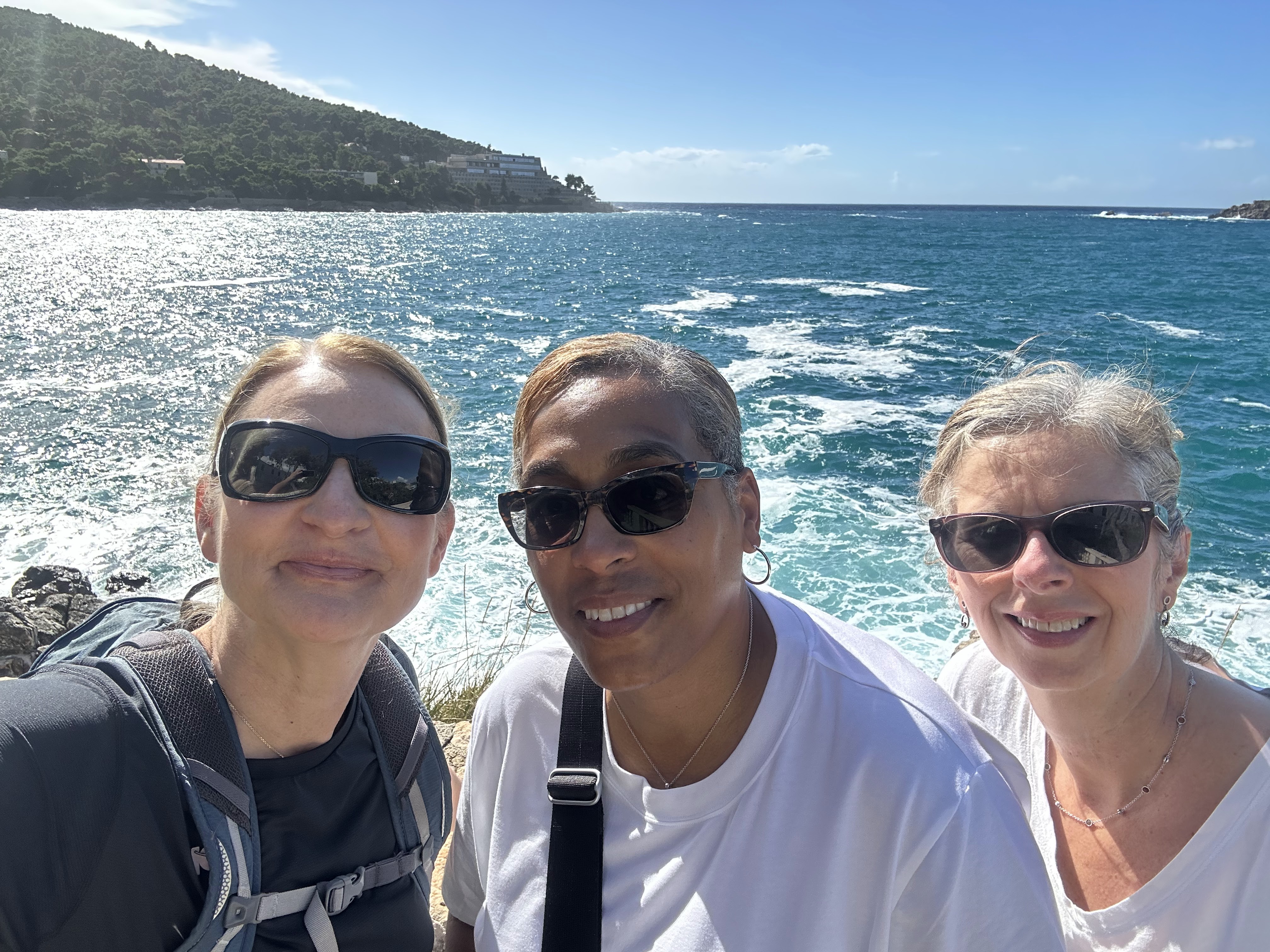
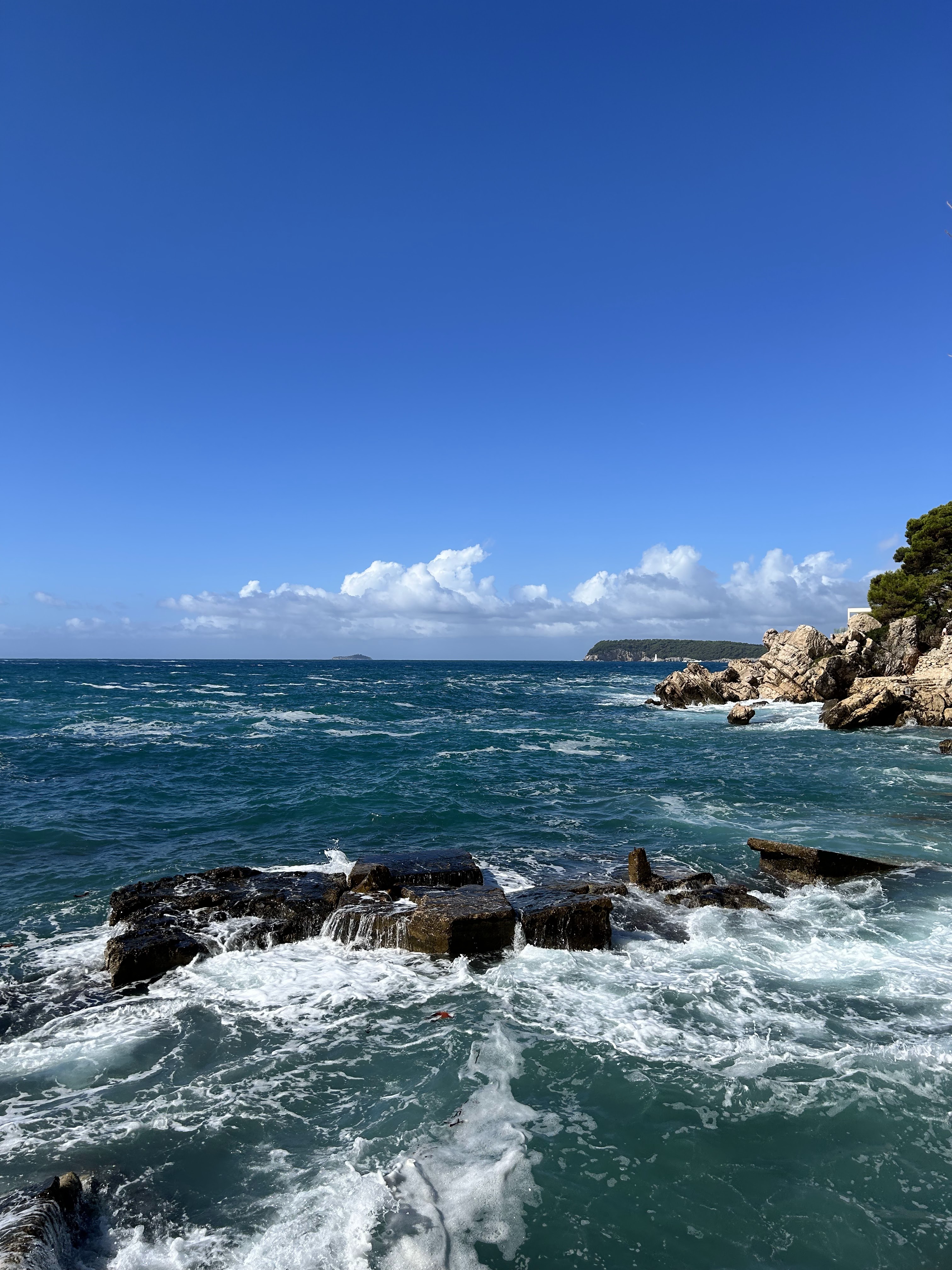
It is said that Dubrovnik is the most over-touristed city in Europe and even though we went in off season, it was still very crowded. The rain cleared out by 8 a.m. which allowed for a pretty nice last day. I wanted to get out of the crowds and so we decided to head to Lapad. Lapad has a beautiful promenade that follows the Adriatic Sea. We walked this and stopped at a Cave Bar. It was a fun, unique environment.

After lunch we headed back to Old Town since my friends wanted to do some souvenir shopping. We then hoofed it back up the hill to our apartment for a few hours of rest. And finished the evening with another splendid dinner and fantastic bottle of local wine.

That’s a wrap on my amazing Slovenian and Croatian getaway. I love the spirit of travel and the ability to learn about new cultures. And I will always happily eat my way through any country! 🙂

Dubrovnik Day Two

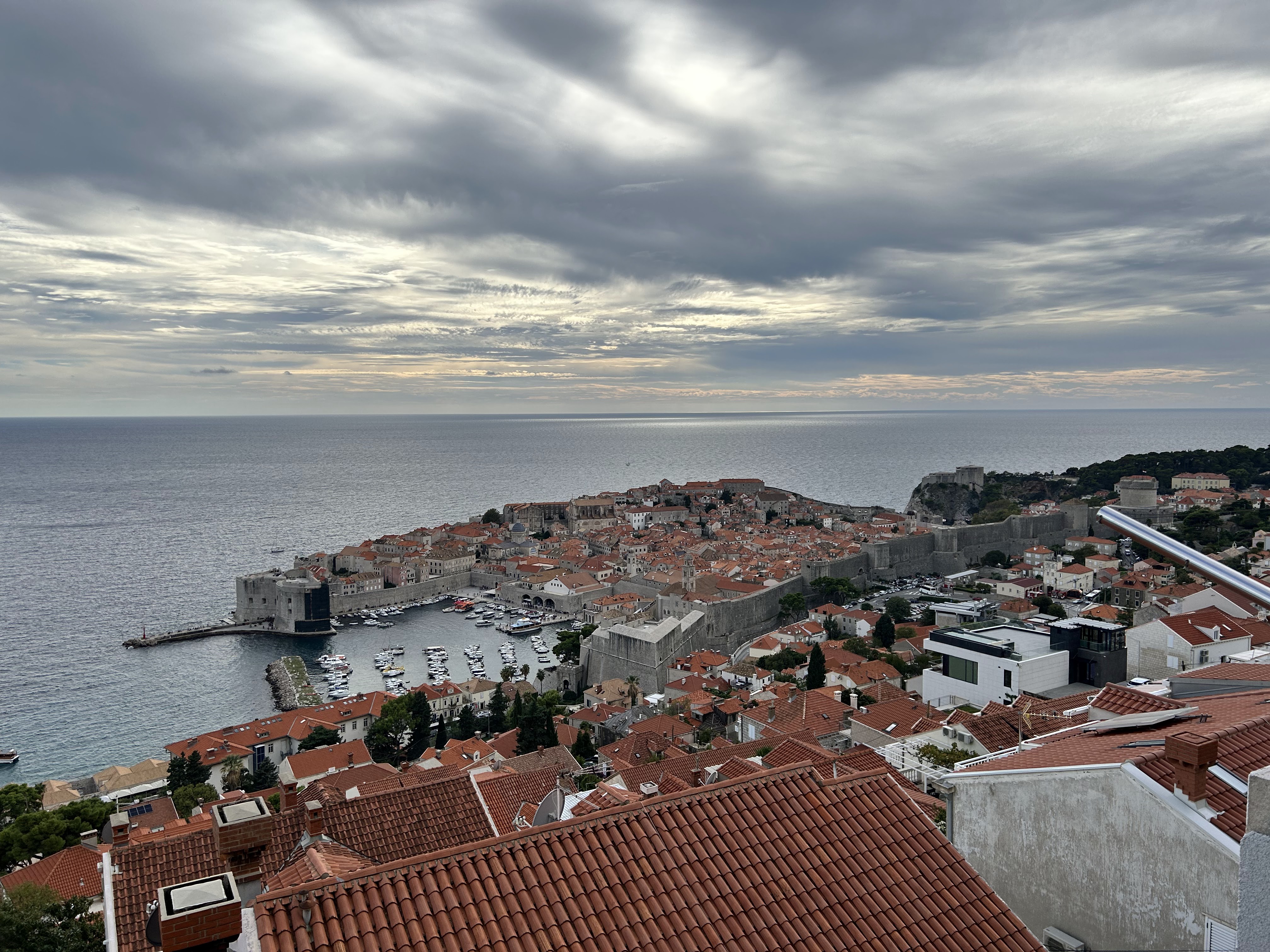
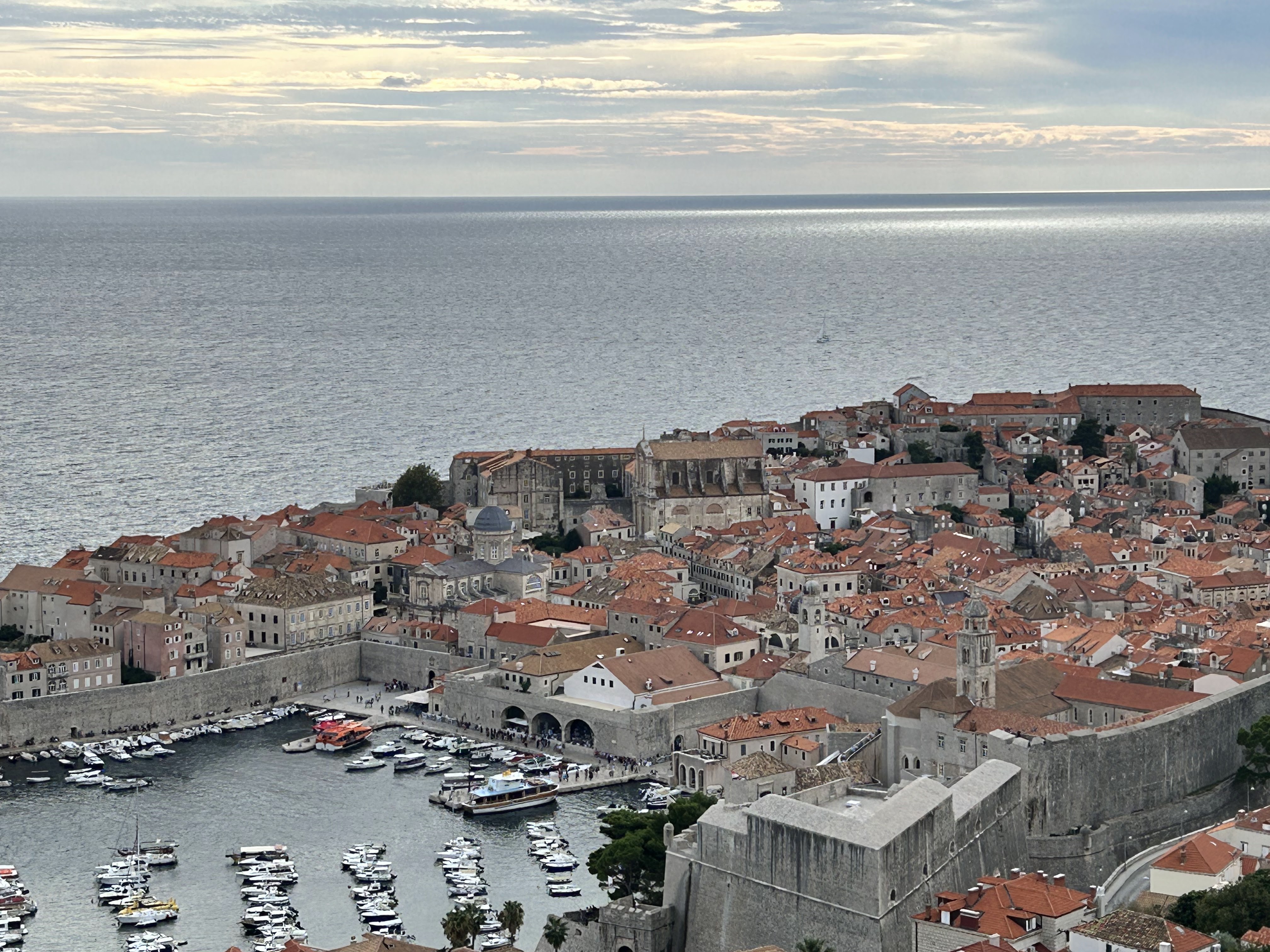
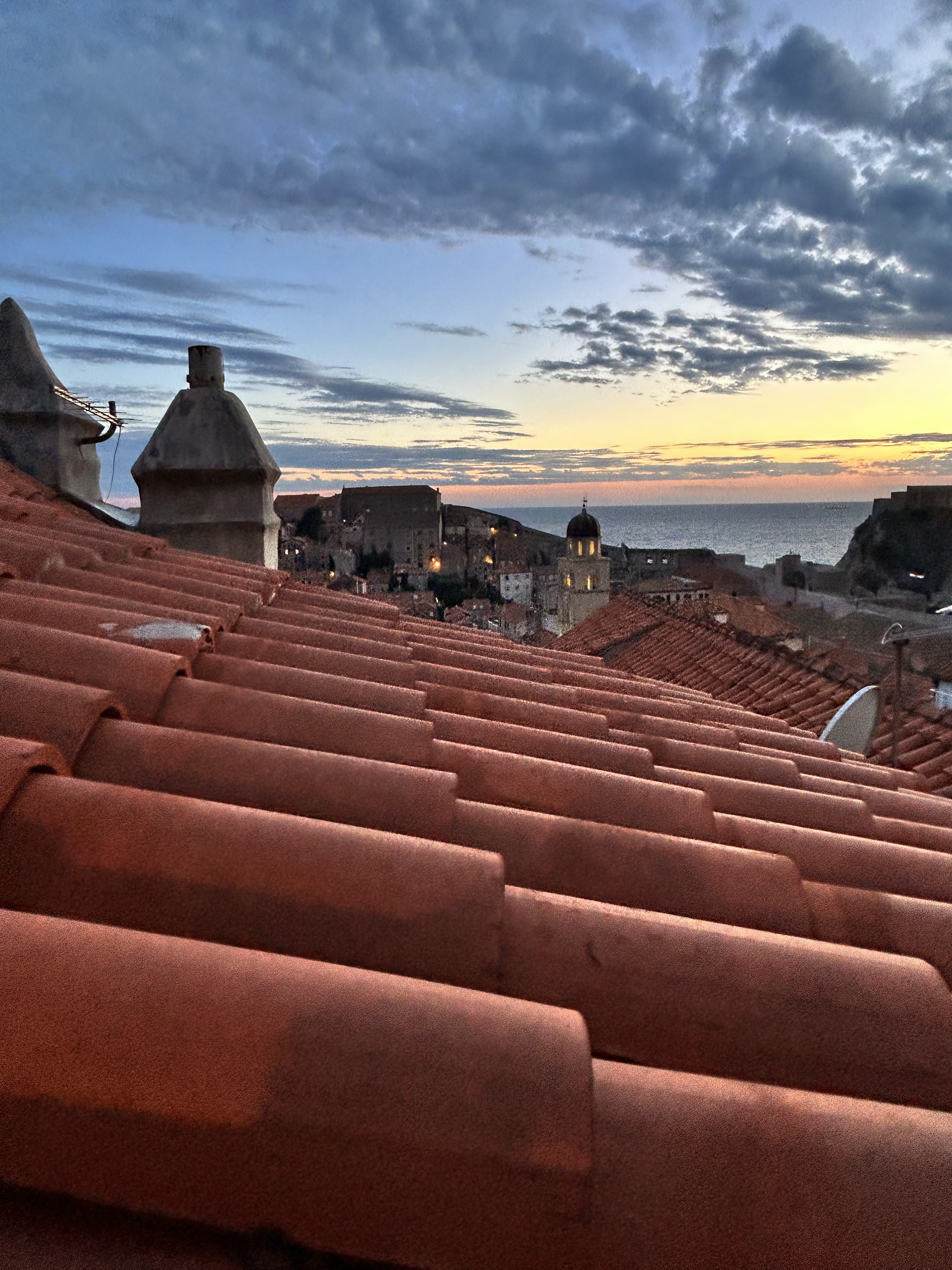
We stayed outside of Old Town which was about a ten minute walk but all uphill. The steepness is crazy but it also provided a great view of Old Town from our apartment.

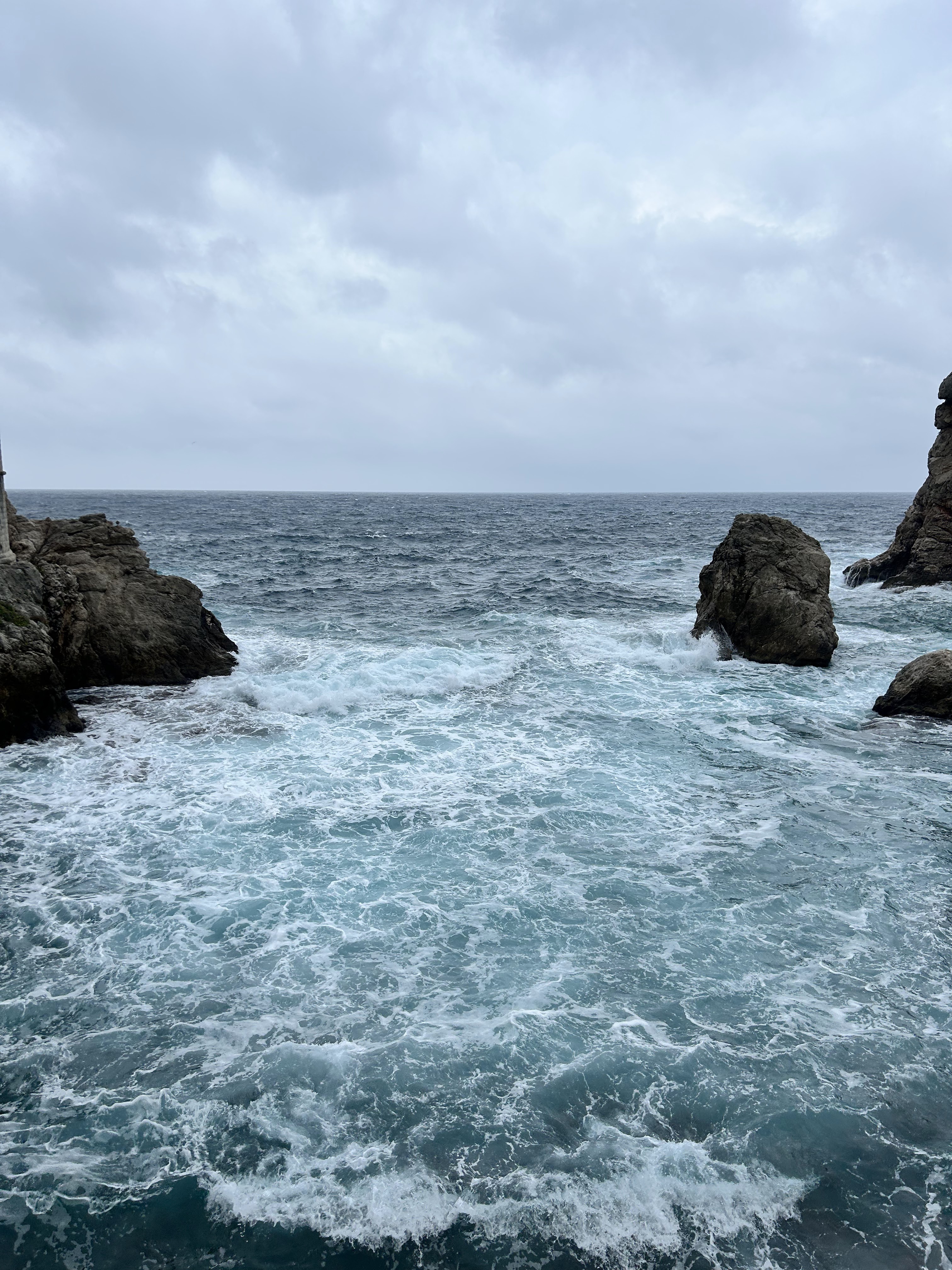
The weather was predicted to be rainy and windy so we decided to get out earlier than usual to wander Old Town again. The waves were coming over the city walls but we managed to enjoy ourselves, eat lunch and pick up something to take back to the apartment for dinner, since we guessed it would be too nasty to go out.
Last Stop…Dubrovnik

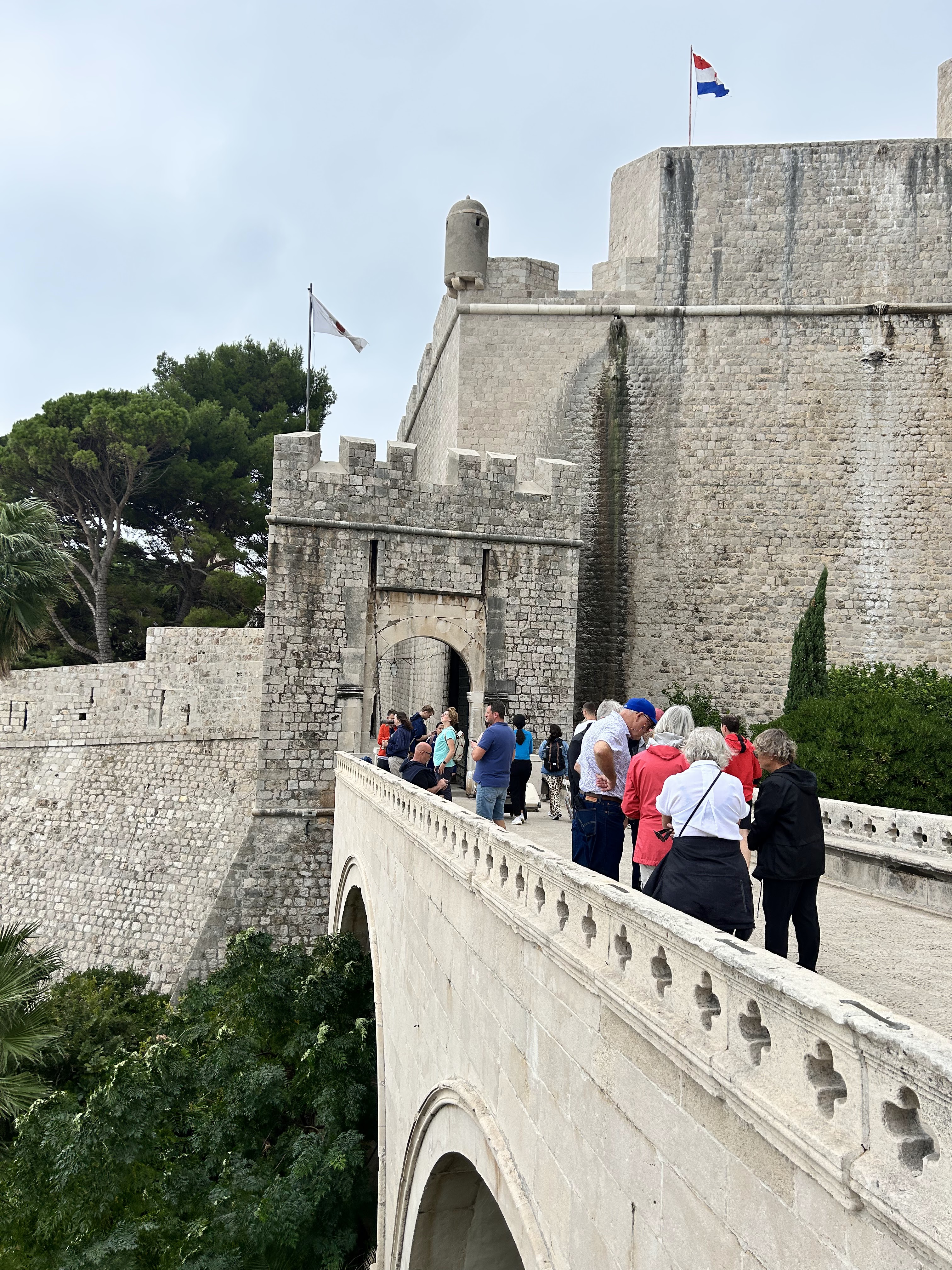
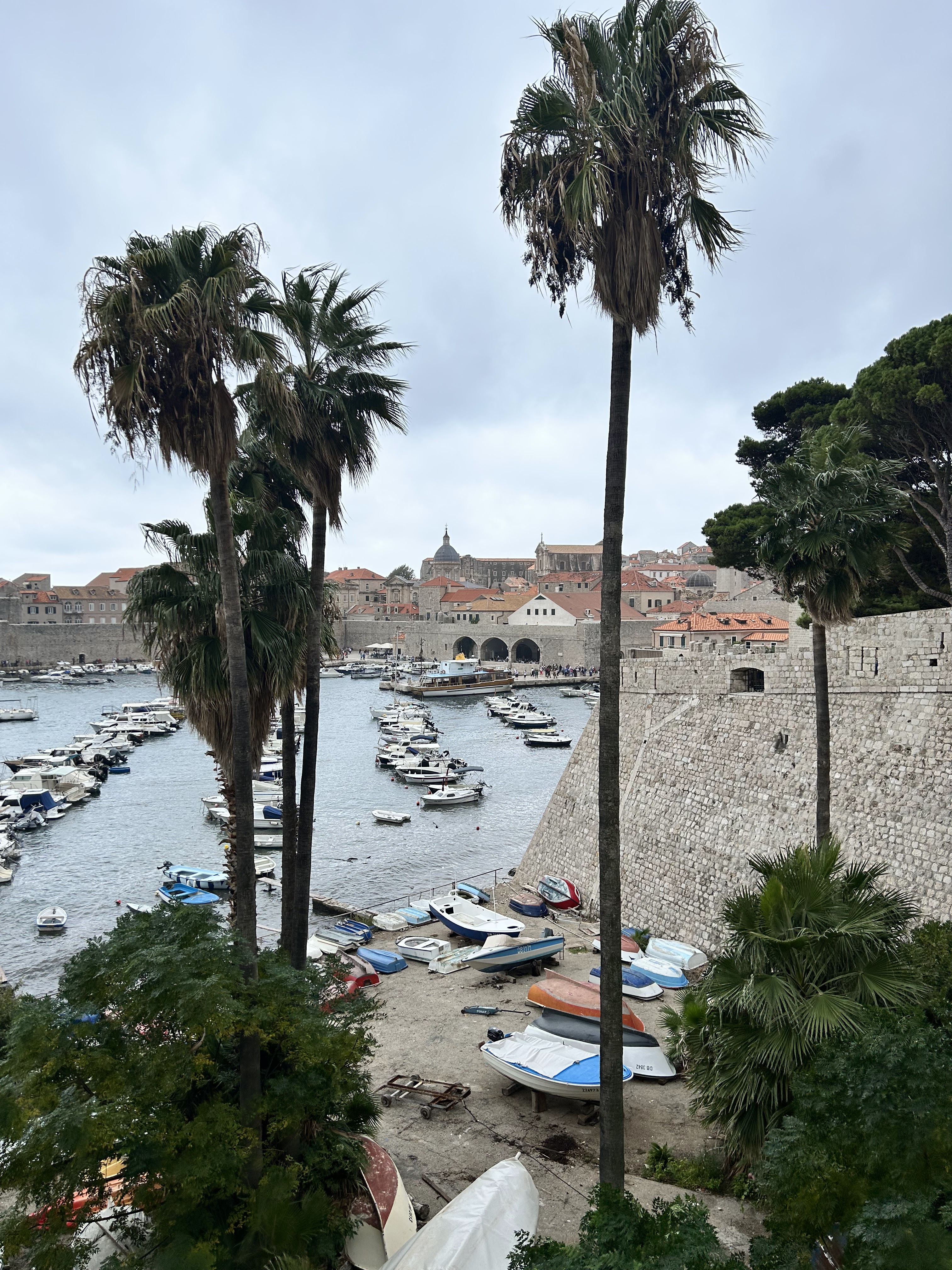
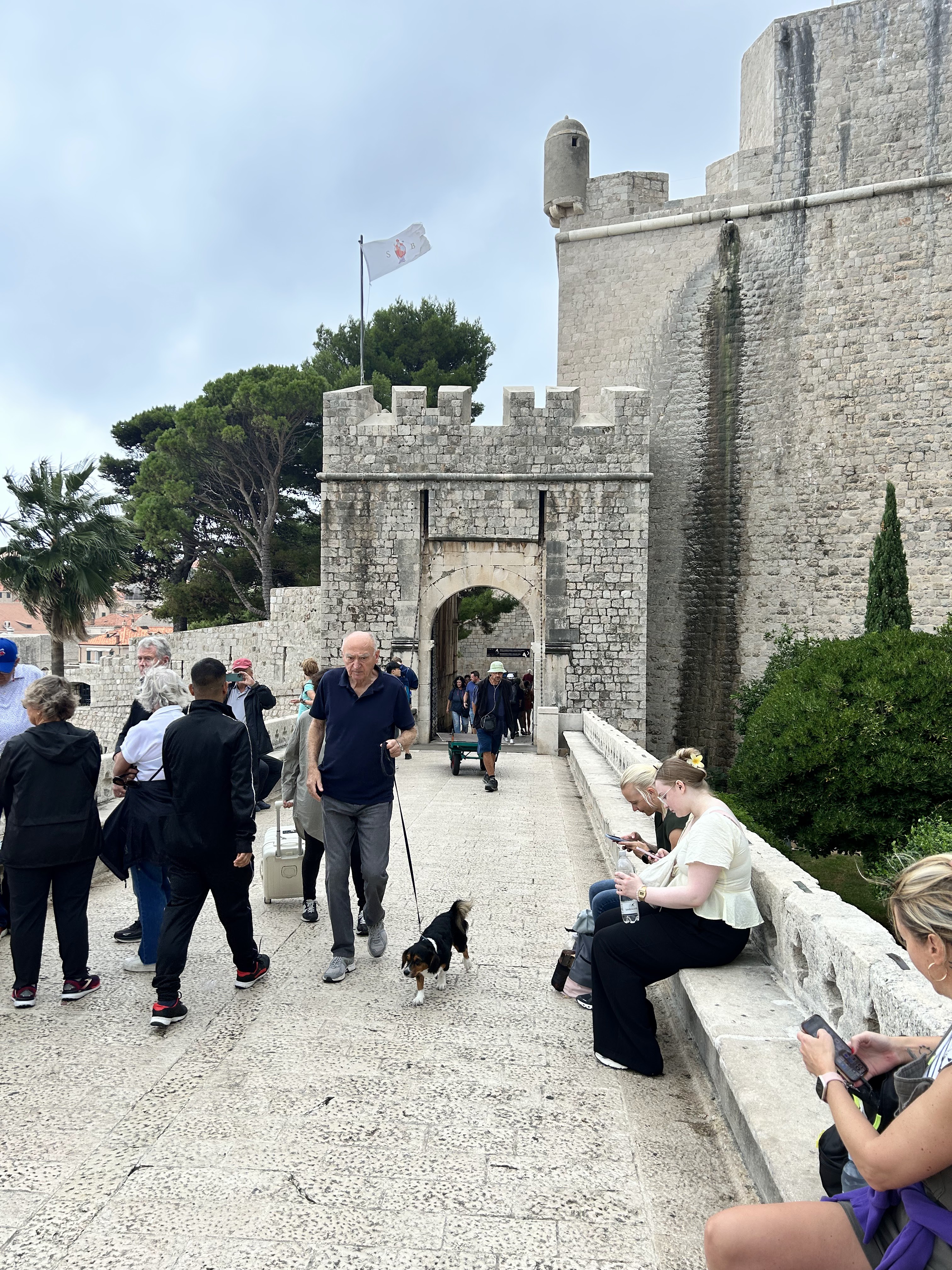
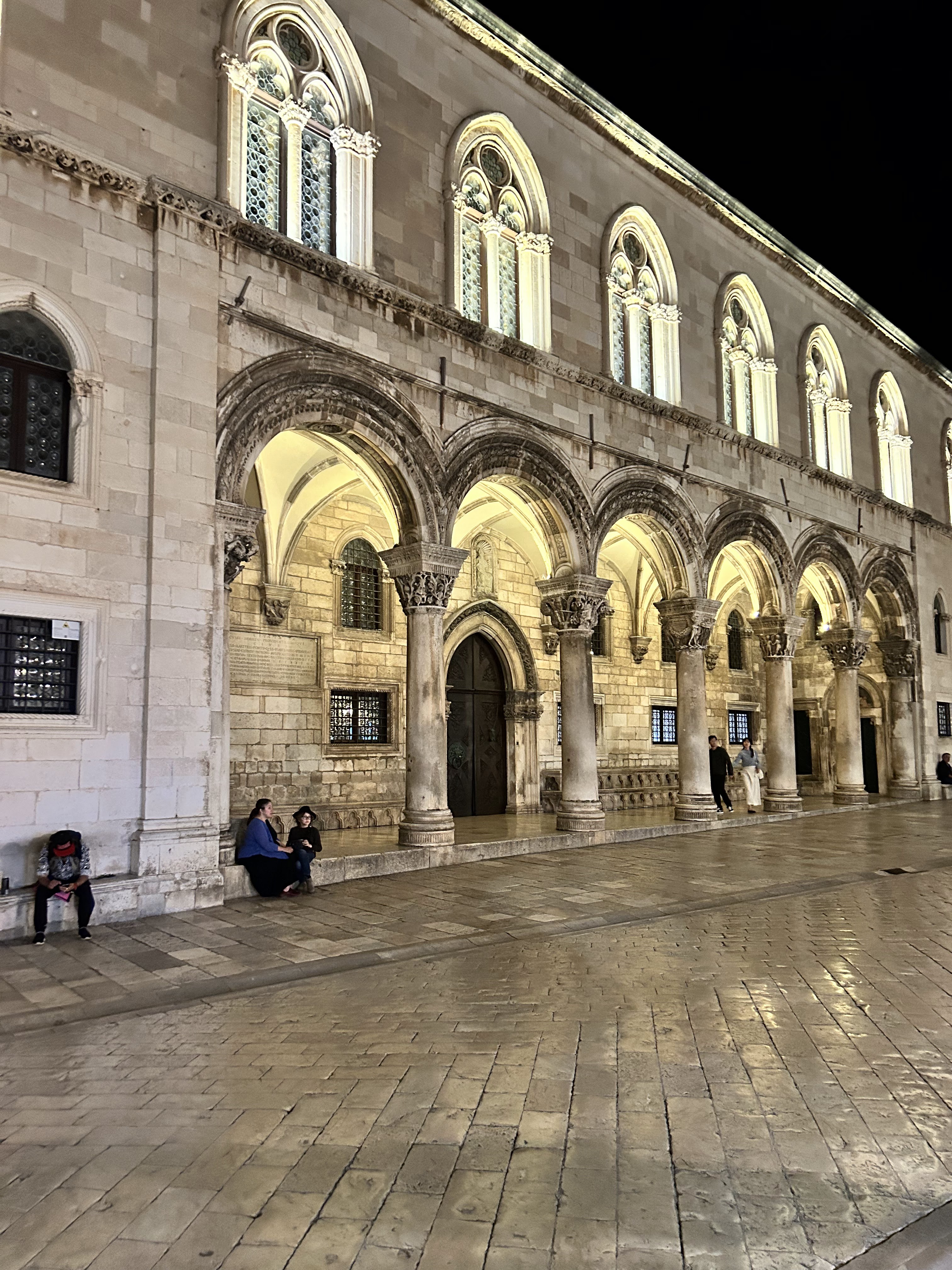
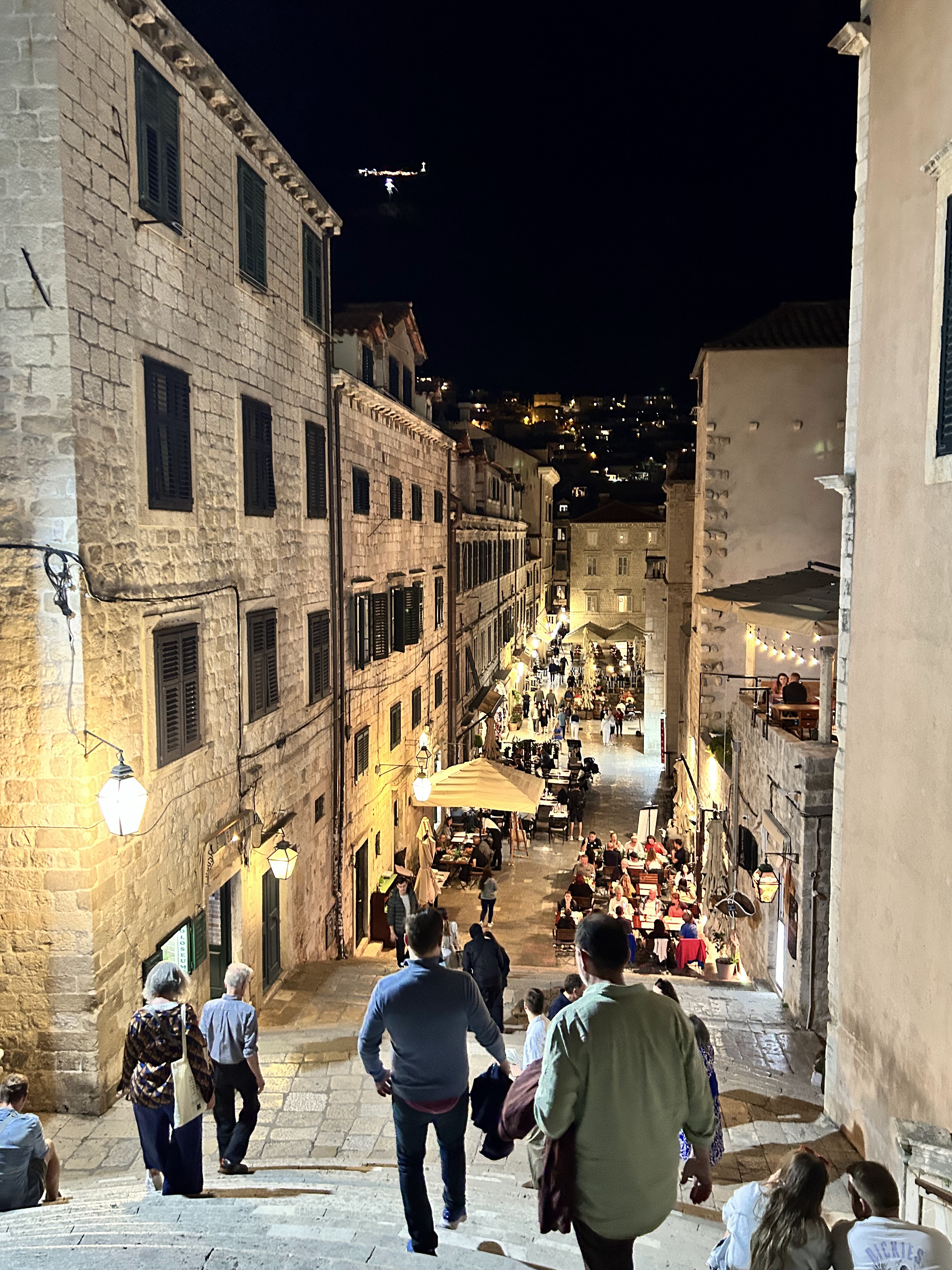
Old Town Dubrovnik is truly beautiful. There are amazing old buildings, a main artery filled with people and shops and the sea air circulating through everything. We wandered and decided on an early dinner at Lady Pi Pi, which ended up being really smart because the line up of would-be diners showed up shortly after we were seated. We were lucky enough to get a table on the upper terrace which boasts a roof top view of the old town. We ordered the seafood platter which is grilled right across from our table in a large, open grill.

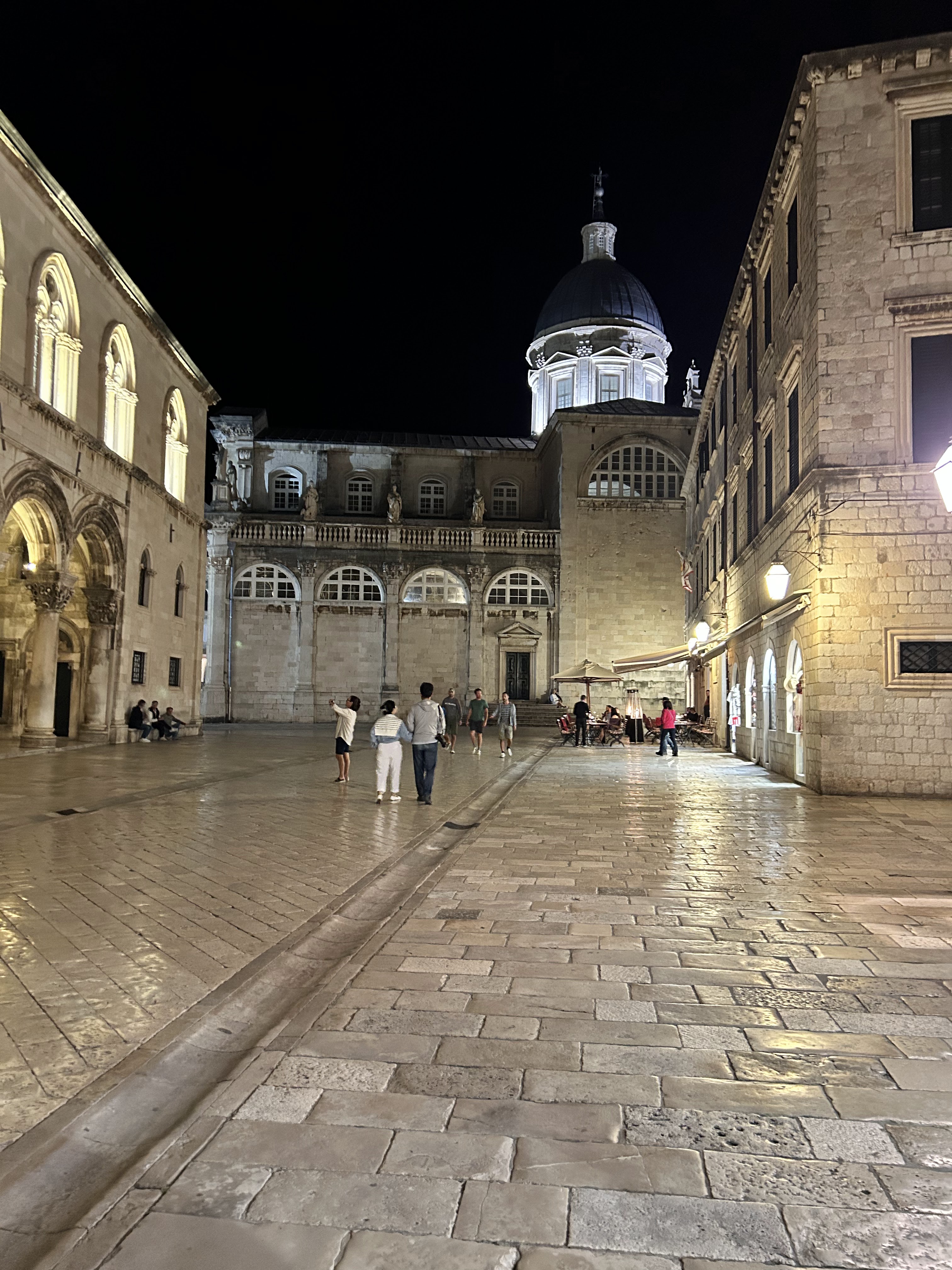
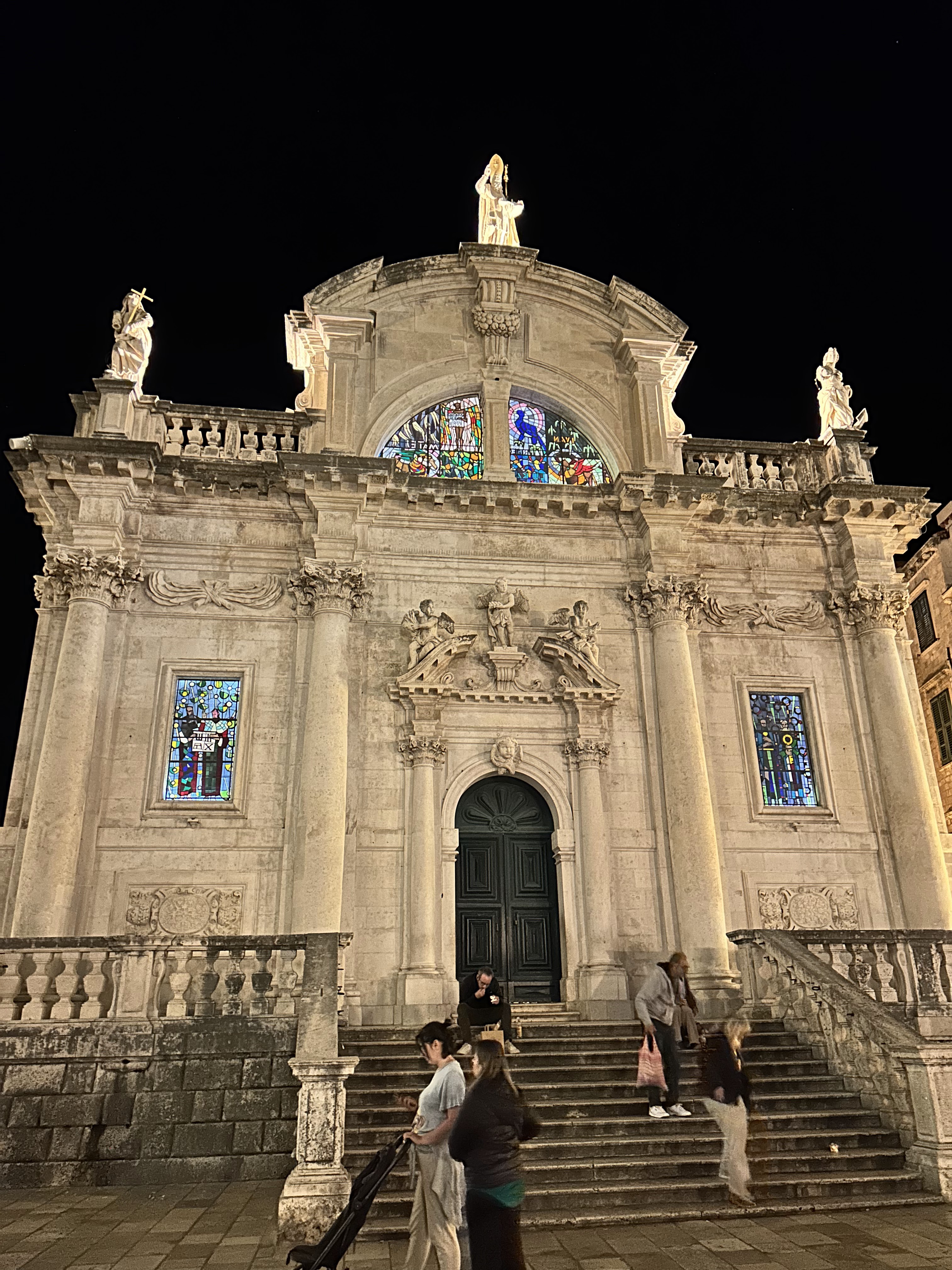
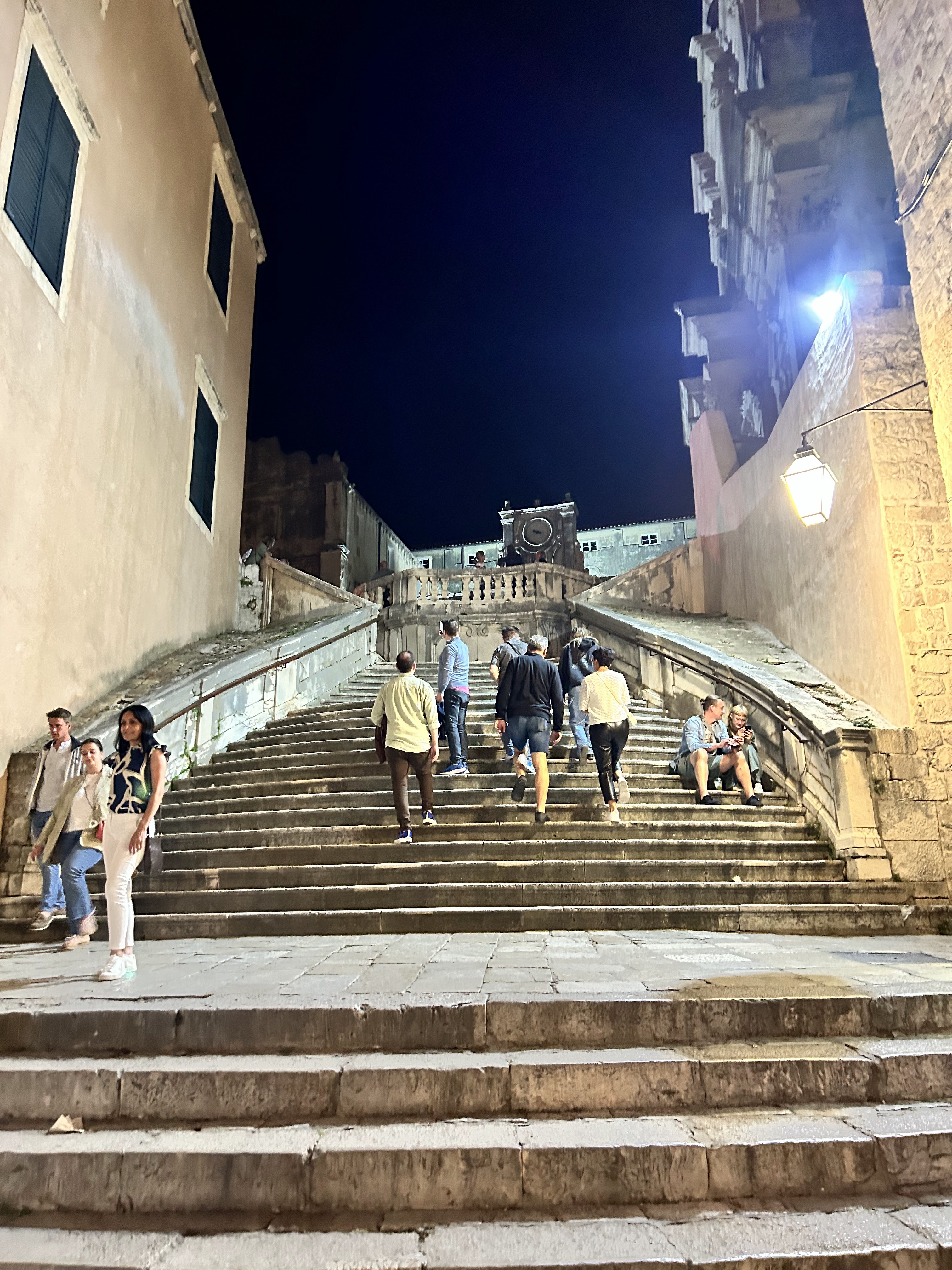
After dinner we wandered Old Town at night, which was just as picturesque. I don’t watch Game of Thrones but apparently lots of scenes were filmed in this area.

Next Stop Korcula

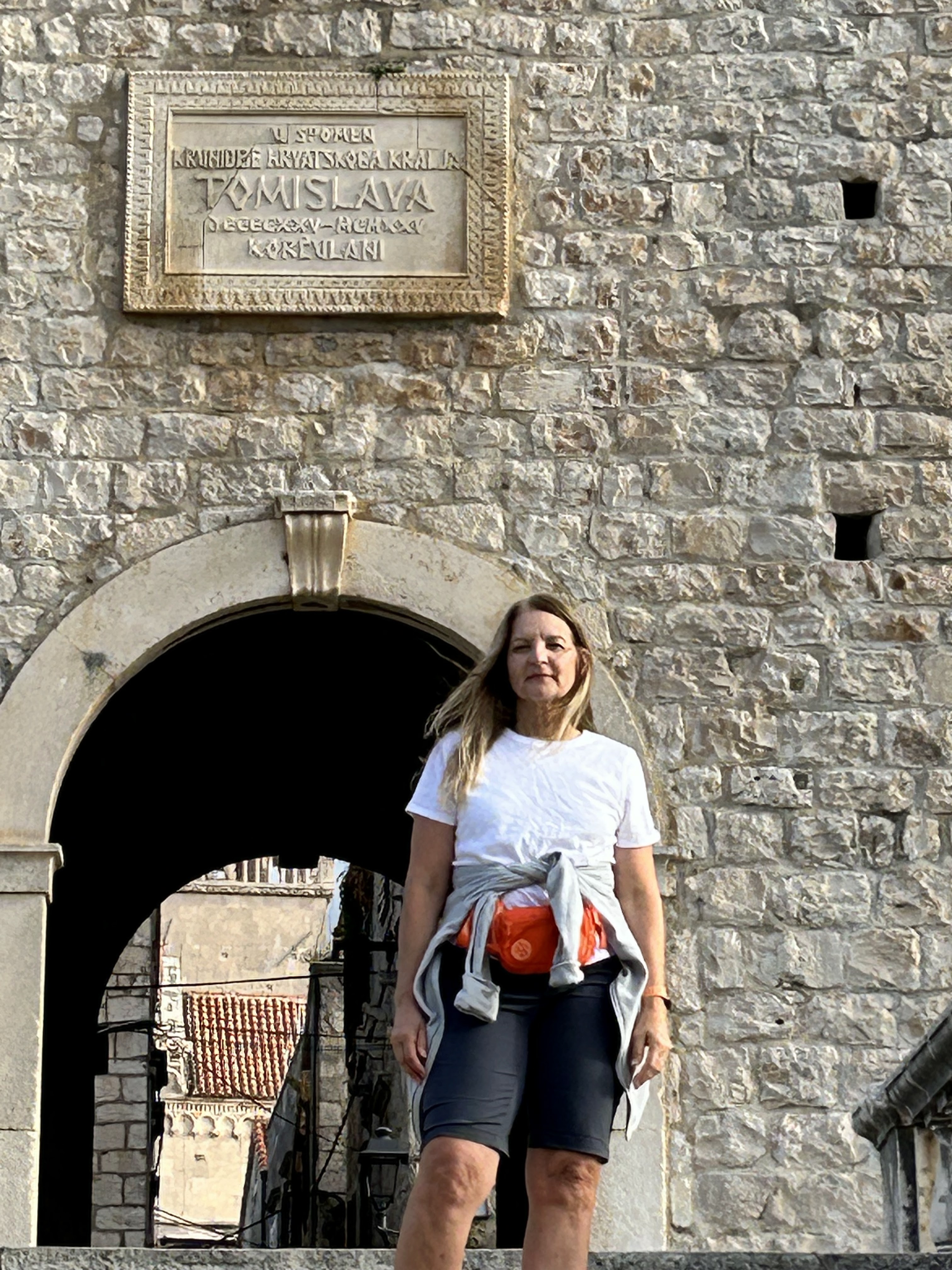
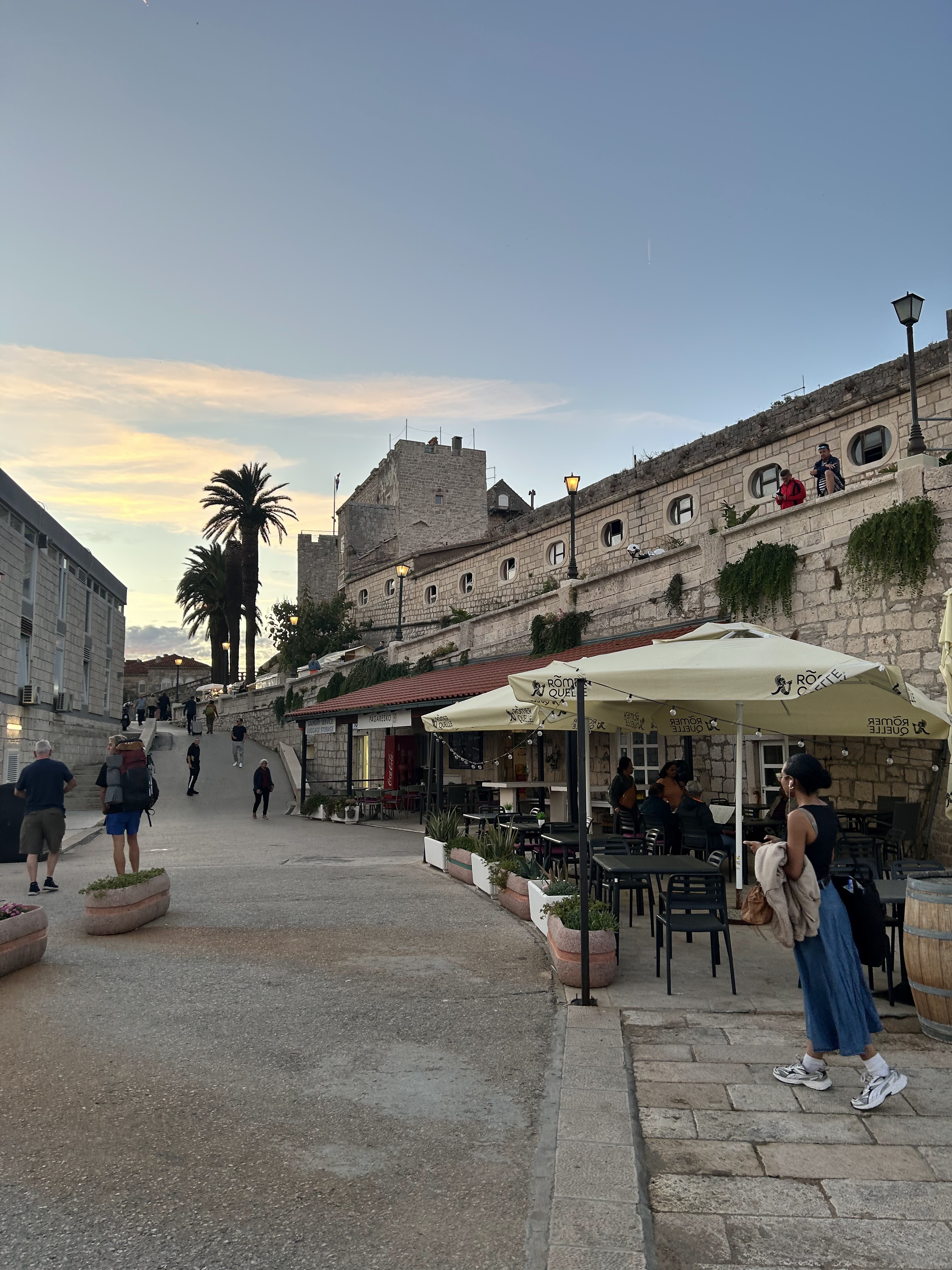
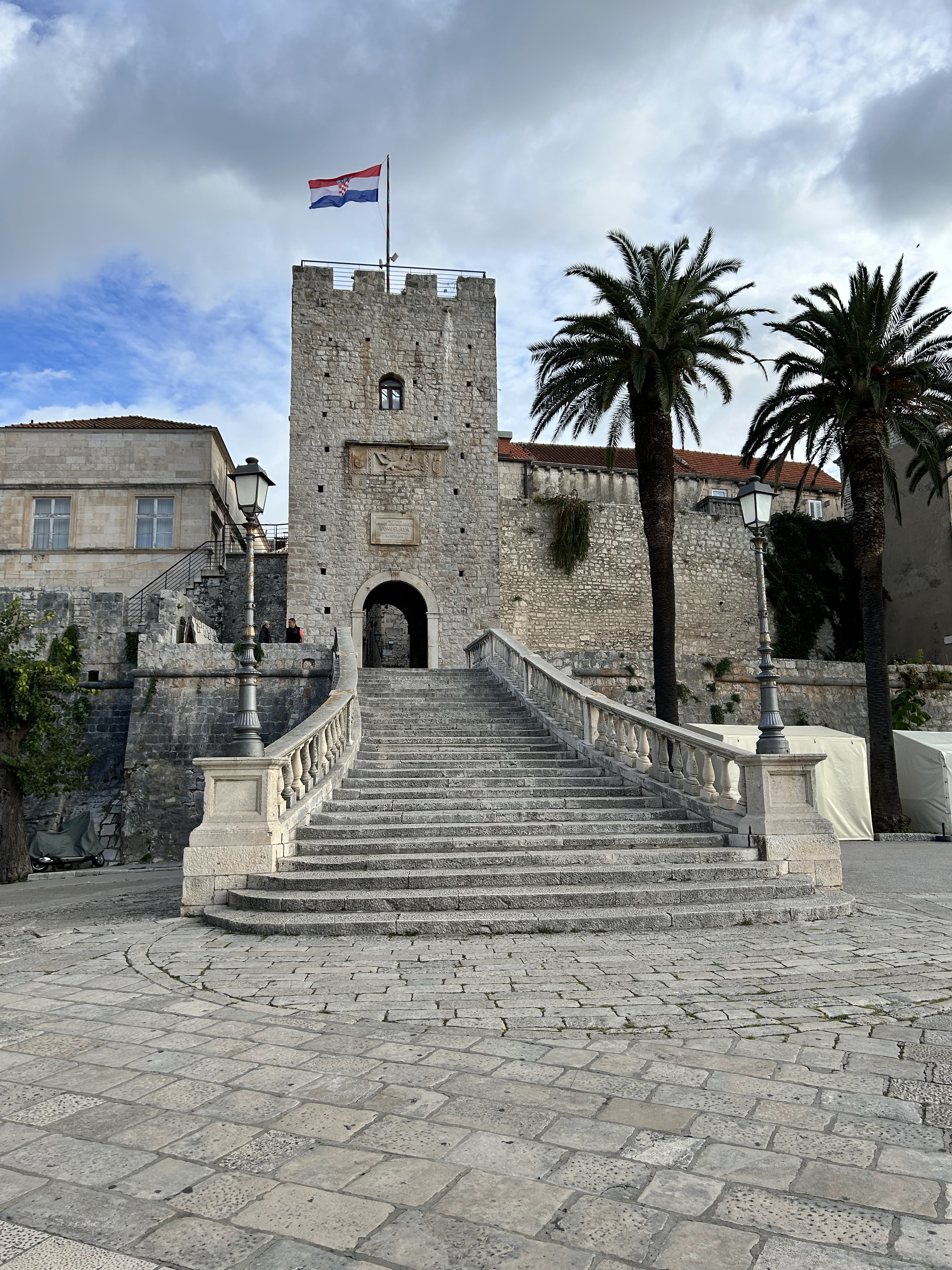
We took the ferry from Hvar to Korcula for a very quick overnight trip. Korcula Town was a sleepy, quaint old town that’s claim to fame is being Marco Polo’s birthplace. After wandering a bit, we found this tiny stone building that now houses cult-like art for sale. Korcula is known for its vineyards, none of which we had time to see. But we did walk the pretty waterfront, wander through the old alleyways and of course, see many old, old buildings and landmarks. Although nice to see another island, I think the time would have been better spent as an extra day in Hvar.

Hvar

Hvar Town was my favorite spot in Croatia. Granted the high season was over and we heard over and over again from restaurant staff that they only had ten more days until shutting down. These exclamations must have warned off the throngs of tourists because although busy, the crowds were not like other locations we visited.

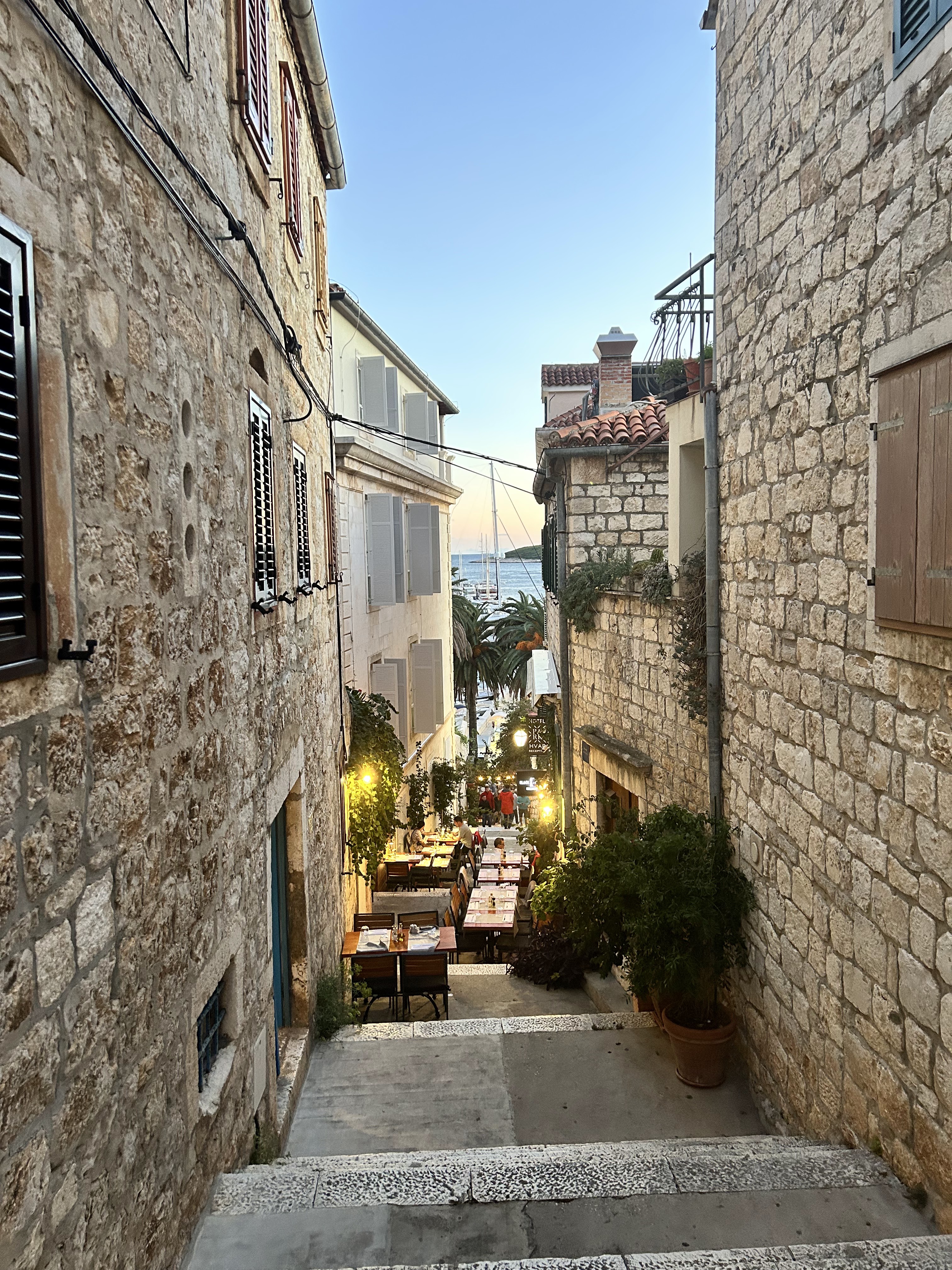
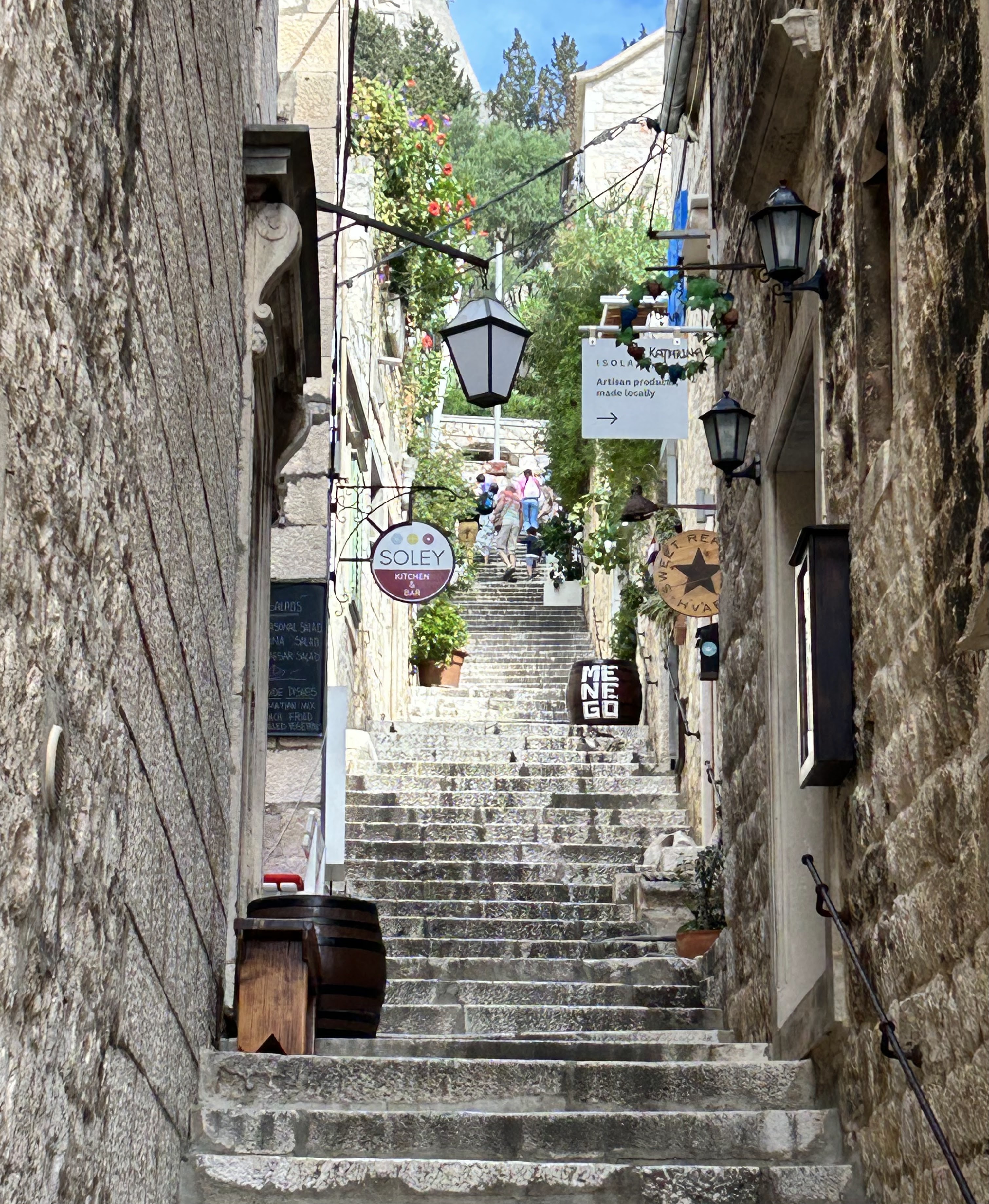
Our rental was right off the main promenade but had the requisite steep steps, of course. We wandered the alleyways and found many restaurants and bars lining the alleys. We landed at a very hip bar that had cushioned seating in the alley. We tried another local wine, which was as good as all the other local wines we had been drinking. We found dinner and then called it a night.

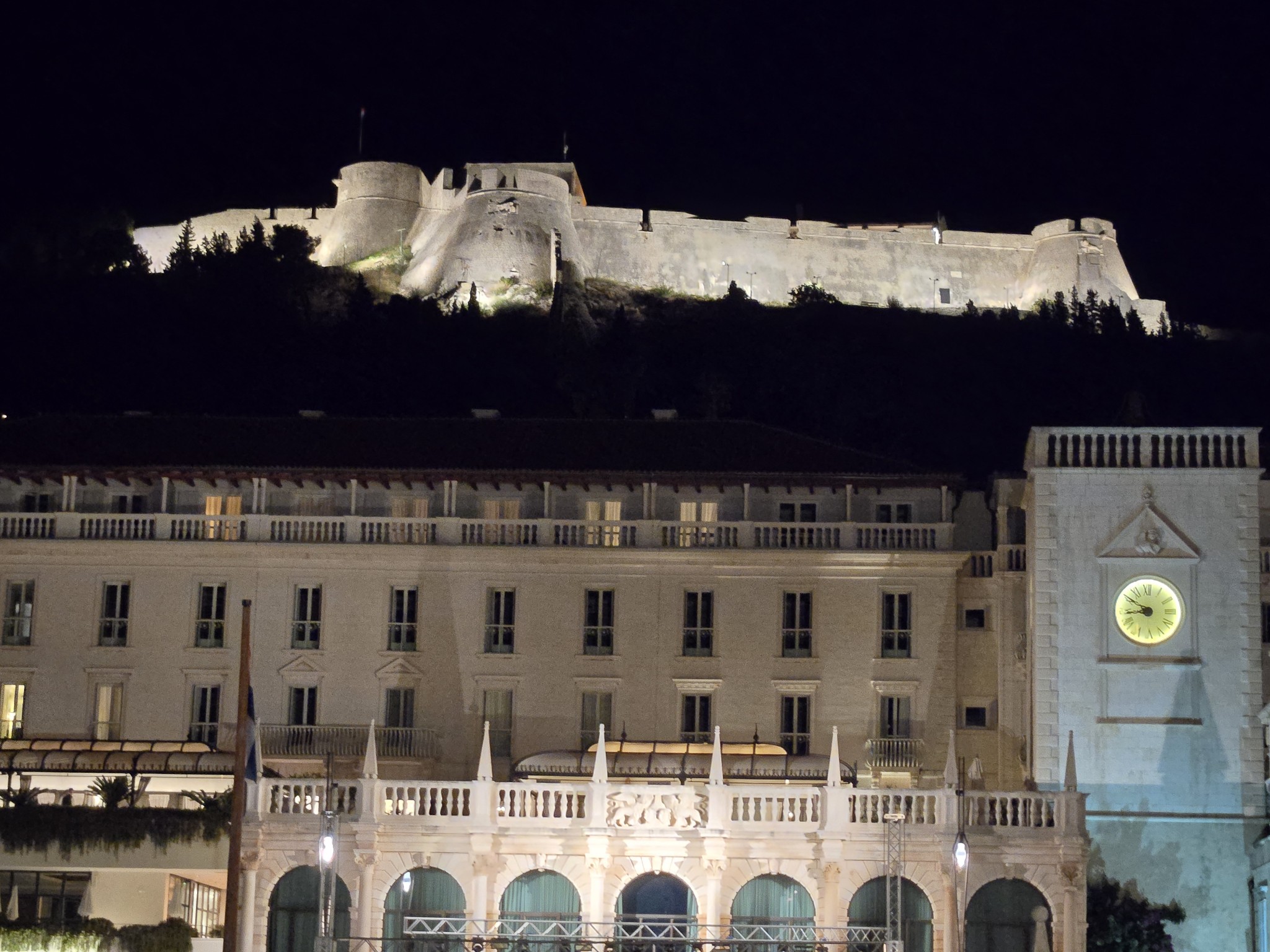
The next morning we stopped at Coffee Snob for the morning coffee and croissant. I liked the name of the shop but the offering was nothing unique. We then headed up to the fortress that overlooks the city. The fortress dates from the 16th century (and its foundation dates back to the 1st millennium BC) and is a symbol of a turbulent time in the city’s history. It sits on a picturesque location overseeing the city and looking onto the sea. It is well-preserved.

In the afternoon we took the bus to another significant town on the island, Stari Grad. This town is considered the oldest town in Europe and was built by the Greeks. We visited Petar Hektorovic’s home/museum. He was an influential poet for Croatia. We mis-read the bus schedule and realized there was no return bus to Hvar Town so we ended up triple paying for a taxi…the joys and surprises of travel!

Split

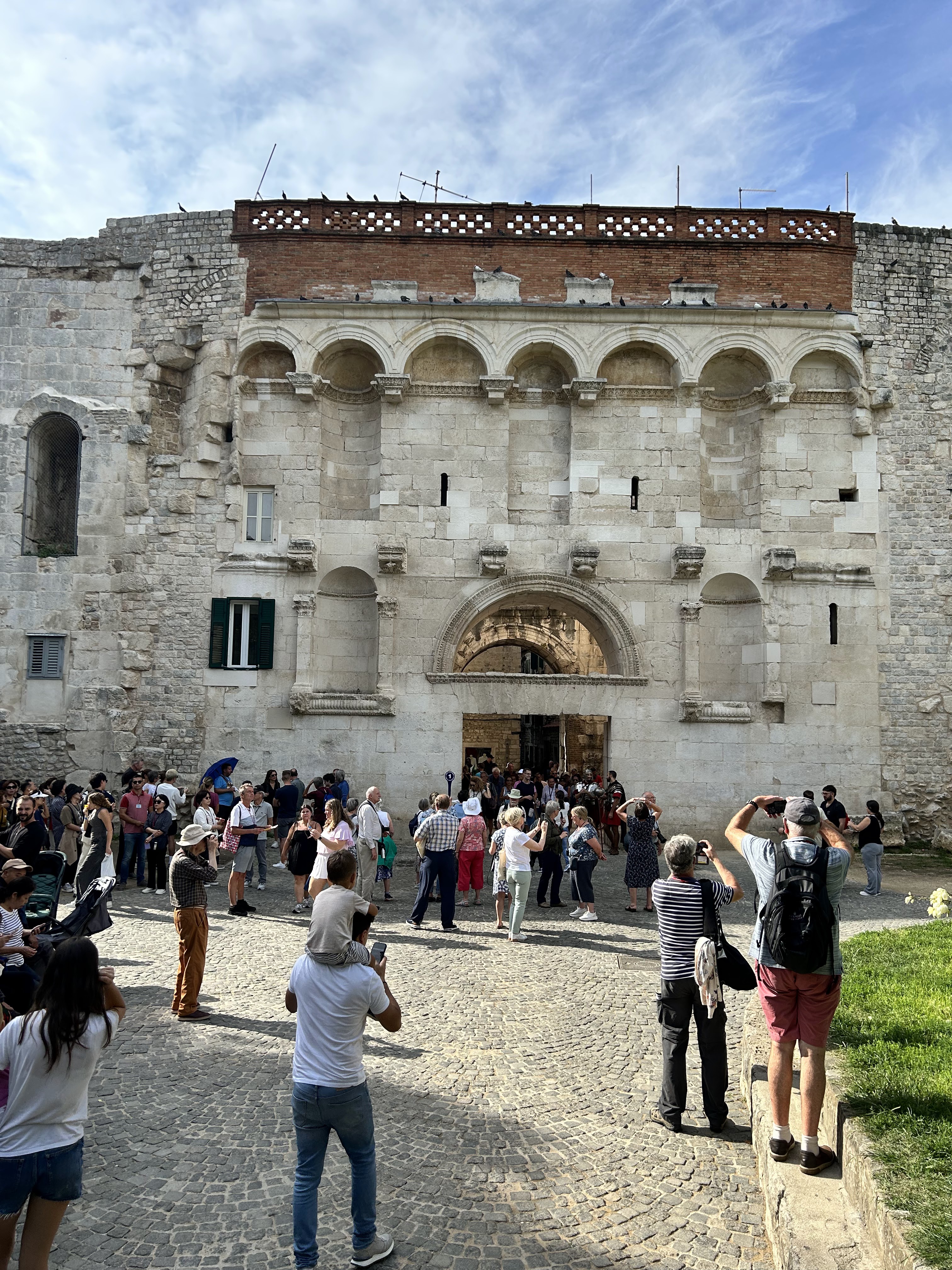
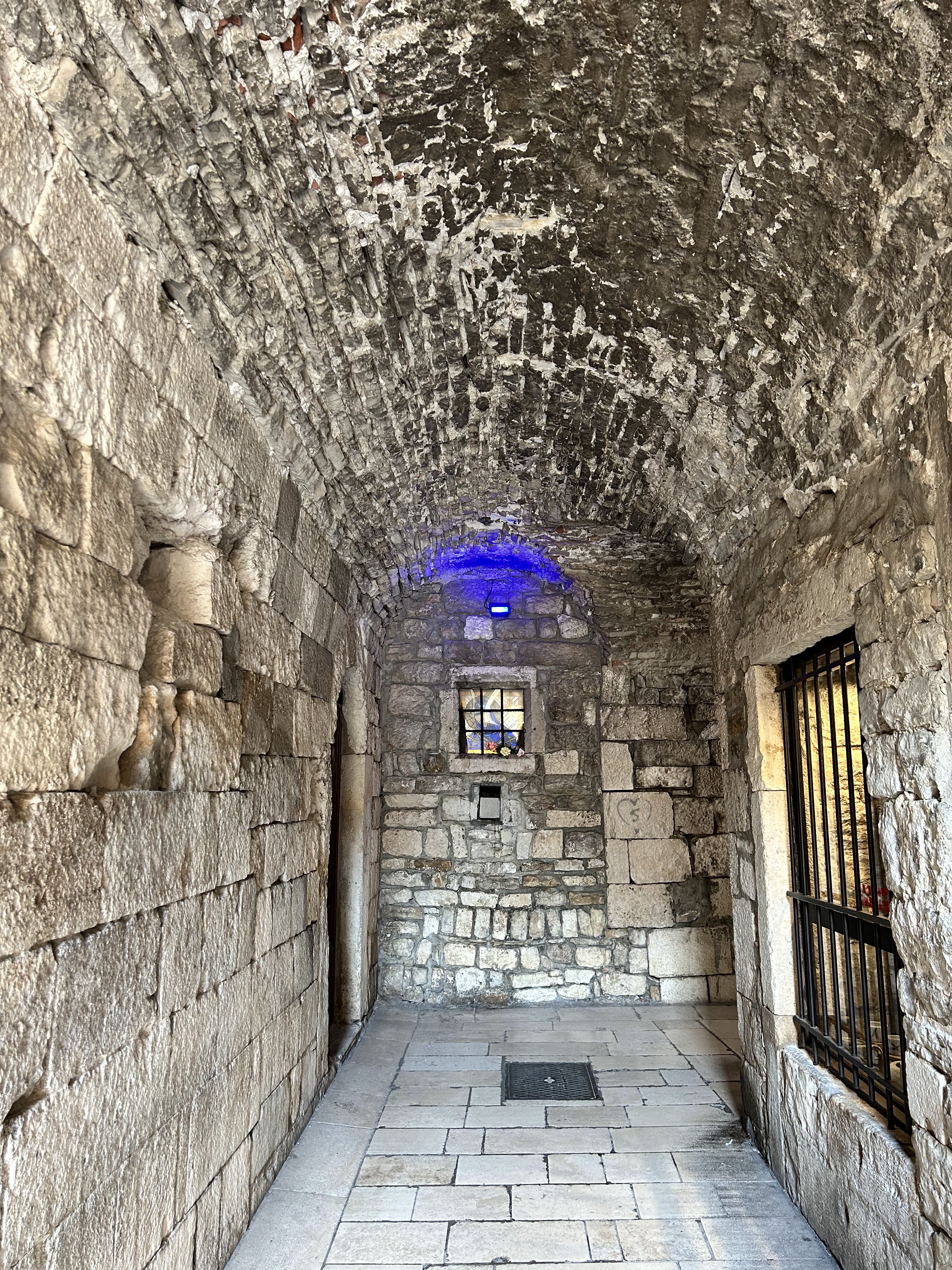
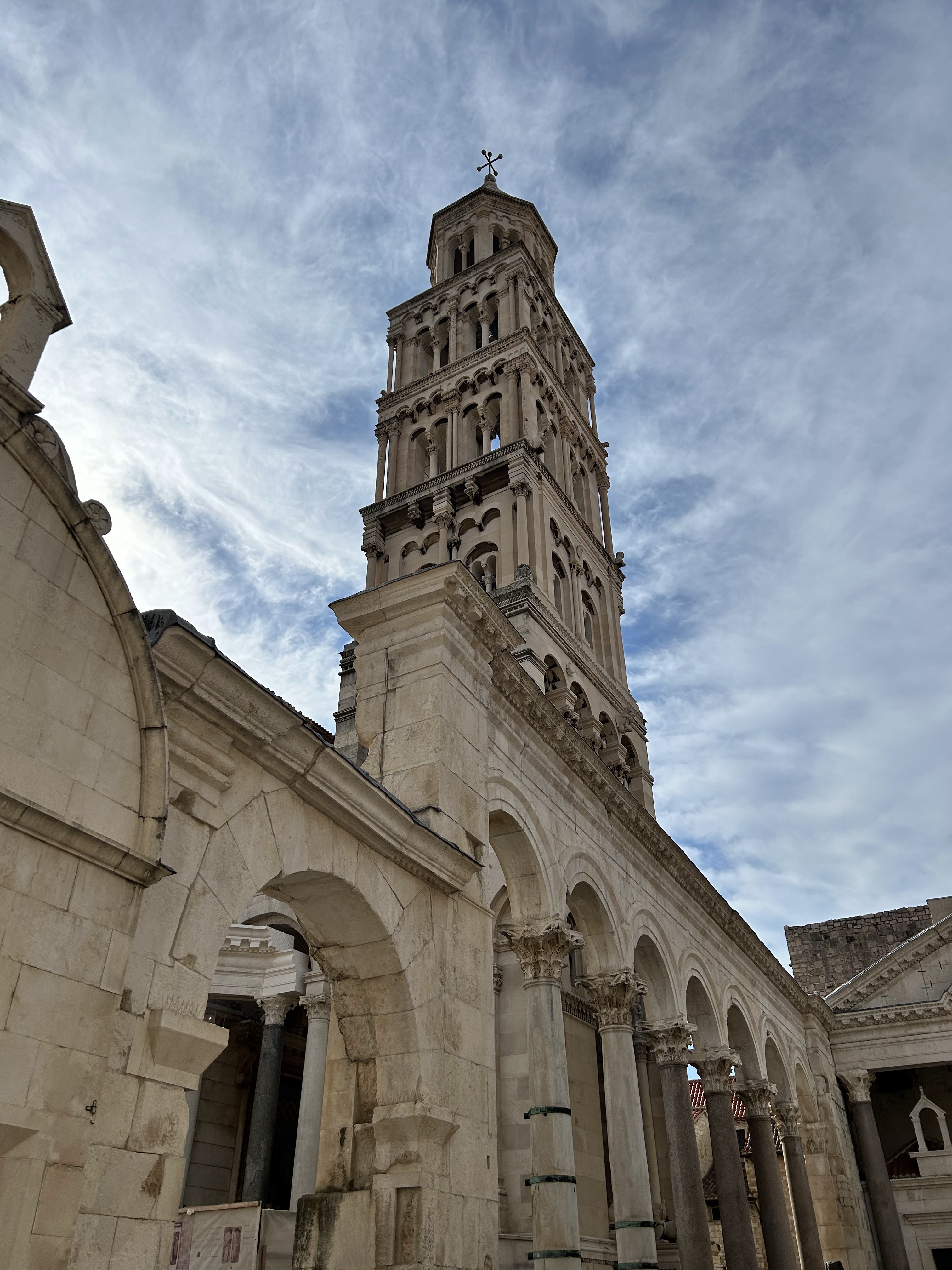
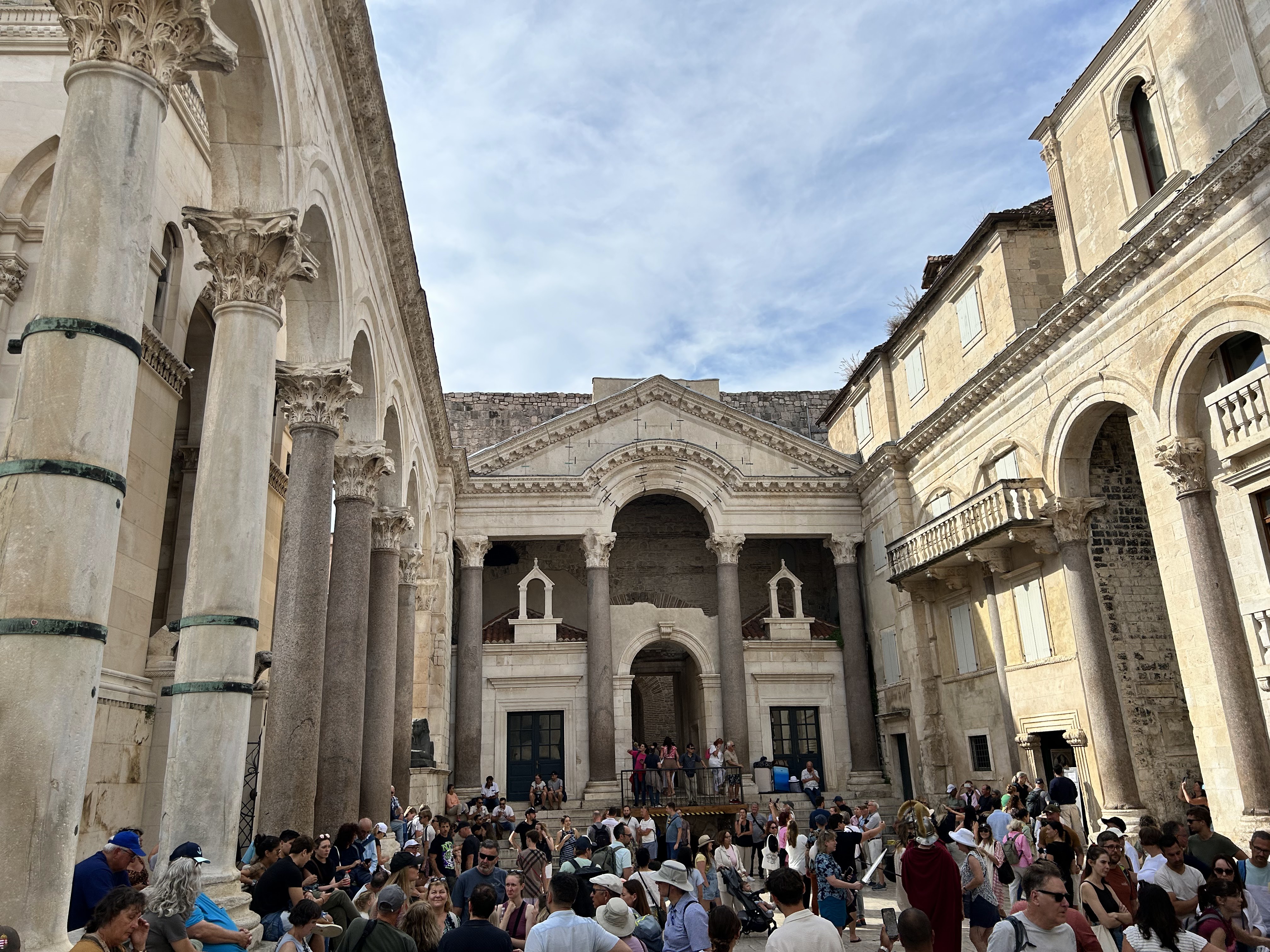
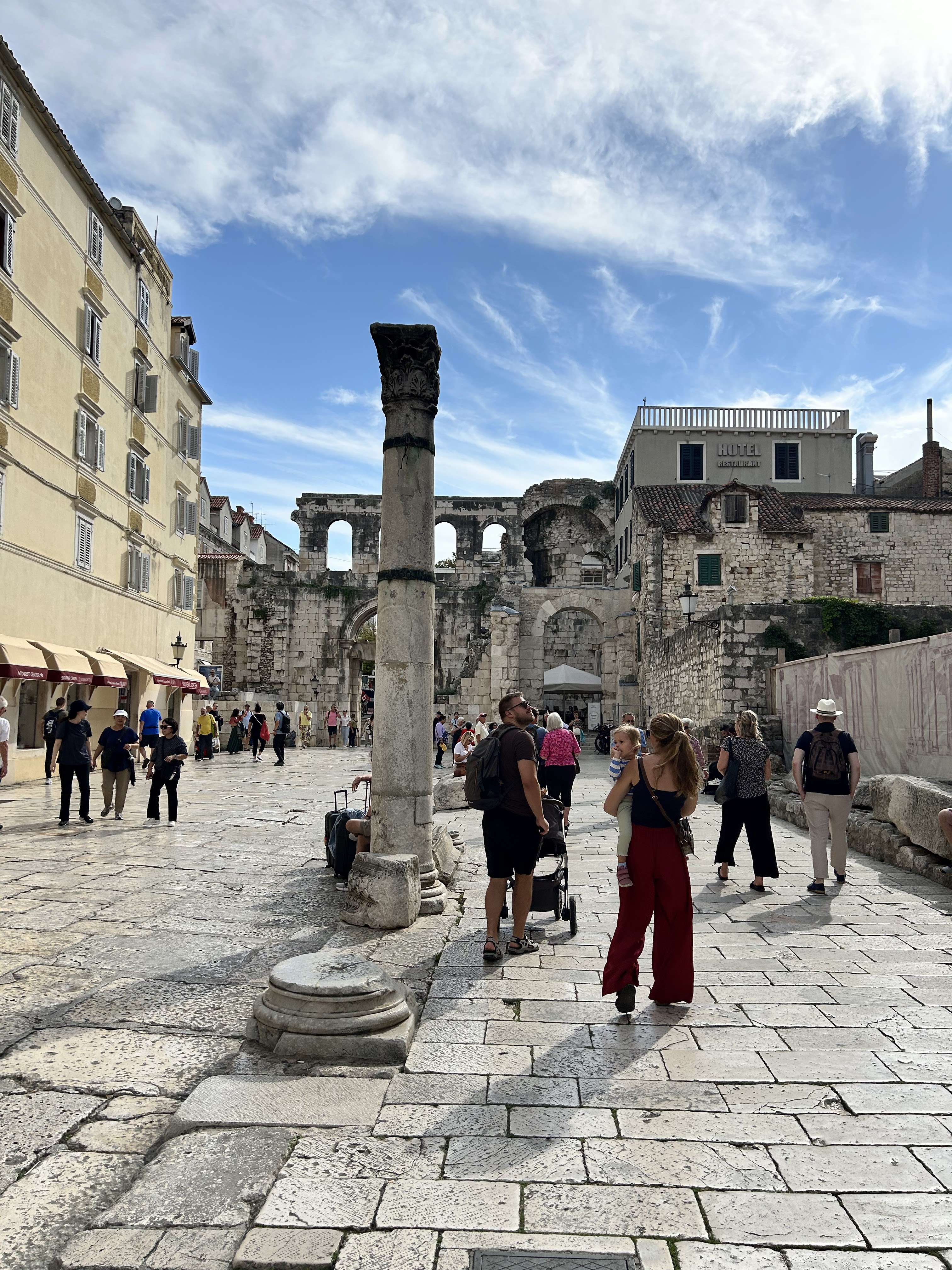
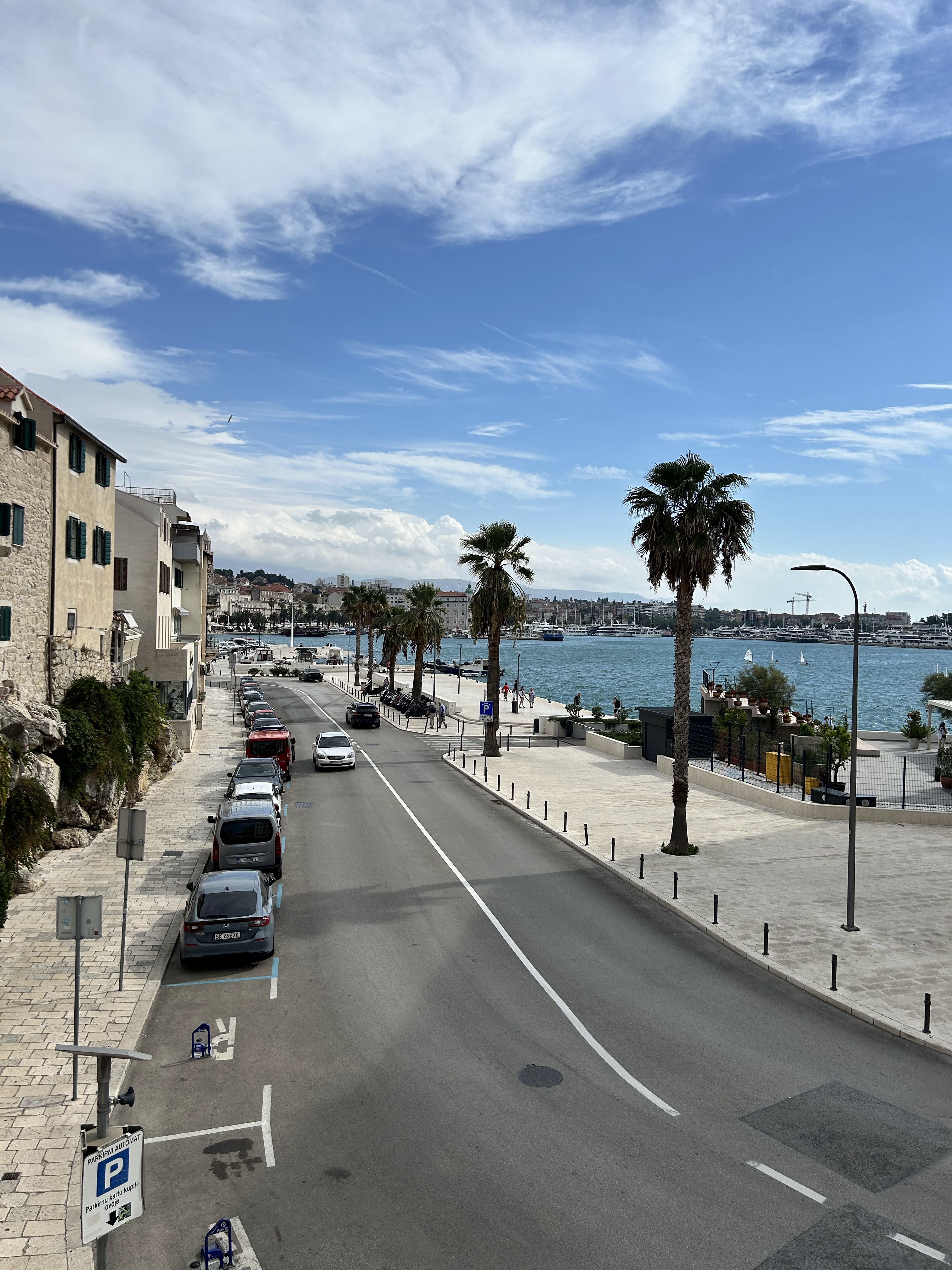
We arrived in Split late, found our rental and then found dinner, which was another great meal and local wine that did not disappoint. The next day we explored the historic Old Town, a UNESCO World Heritage Site, which included the iconic Diocletian’s Palace, built by the Roman Emperor Diocletian in the 4th century. We wandered through the charming, narrow streets and alleys filled with shops, restaurants and cafes and strolled the riva (promenade). Again, it was crowded and didn’t feel much like low season. We hired a car to take us to Trogir, another small waterside town and experienced a torrential downpour that flooded the streets…all a part of the travel experience!

We walked up Marjan Hill (a large park in the city) for stunning views of the Adriatic Sea. Steep steps are part of the Croatian experience and we certainly walked our share of them! I also had my best meal of the trip in Split at Konoba Laganini. It was my most expensive meal but the sea bass on the fennel puree was delicious and if it had been proper etiquette, I would have licked the plate!


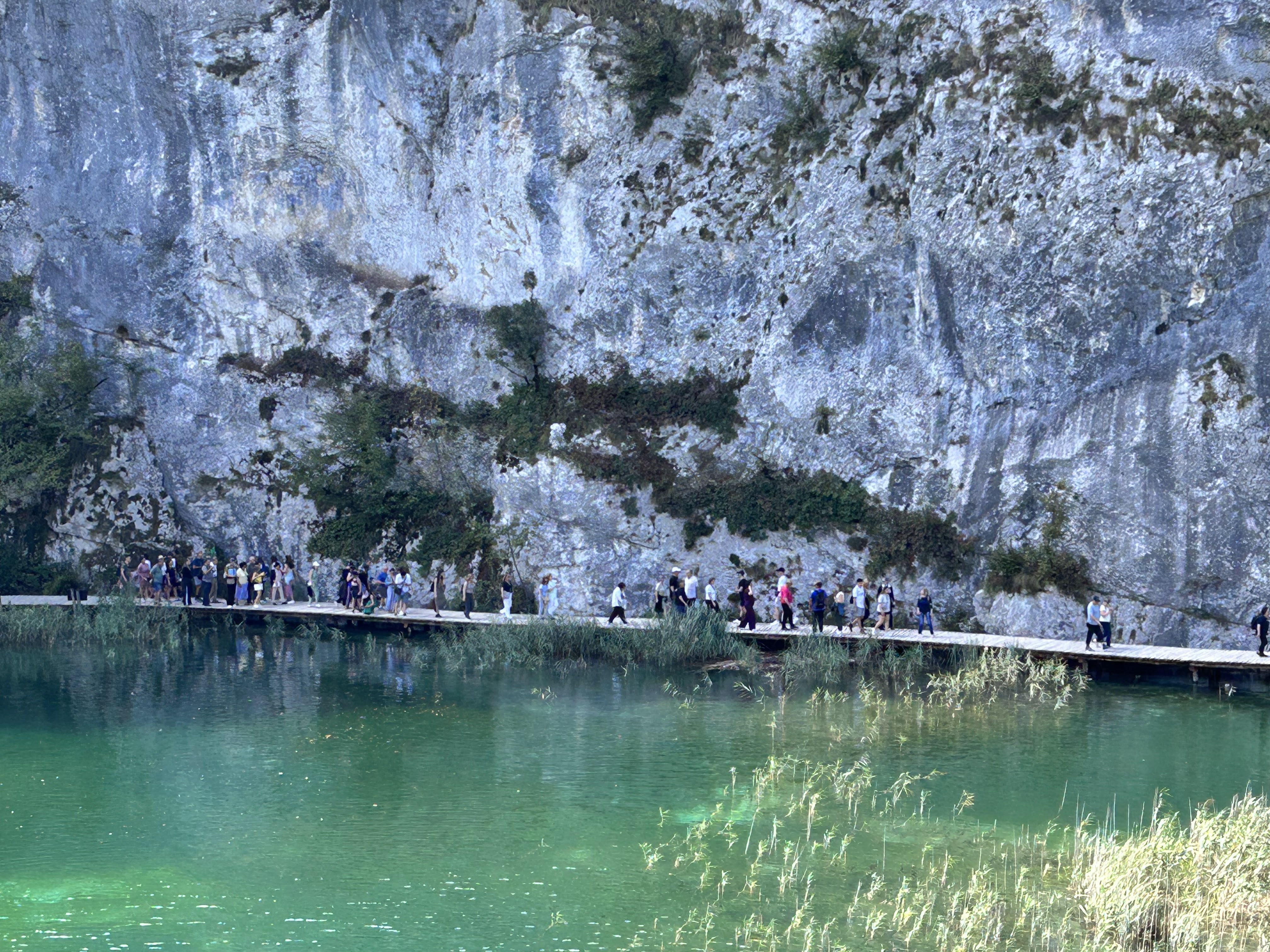
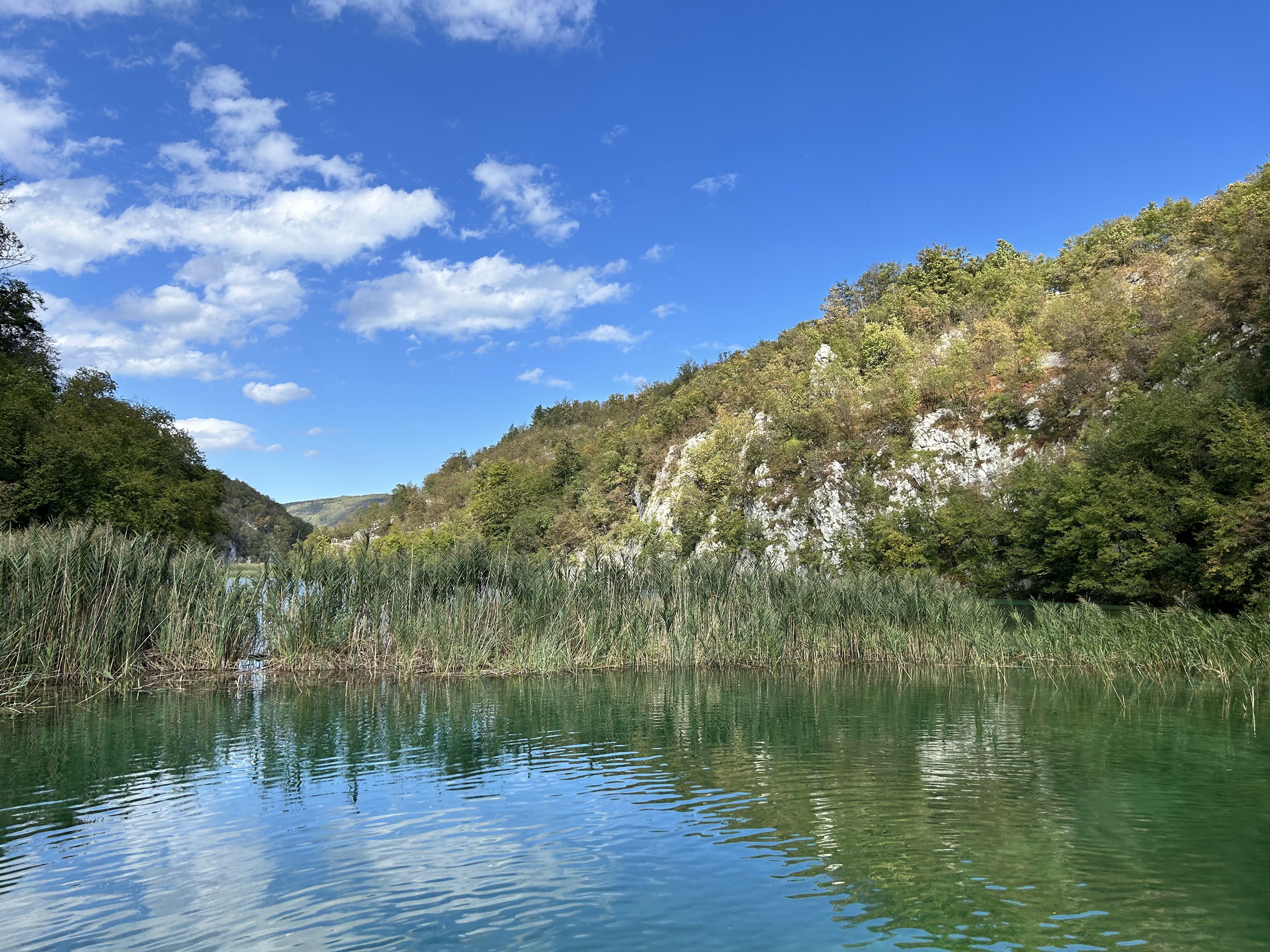
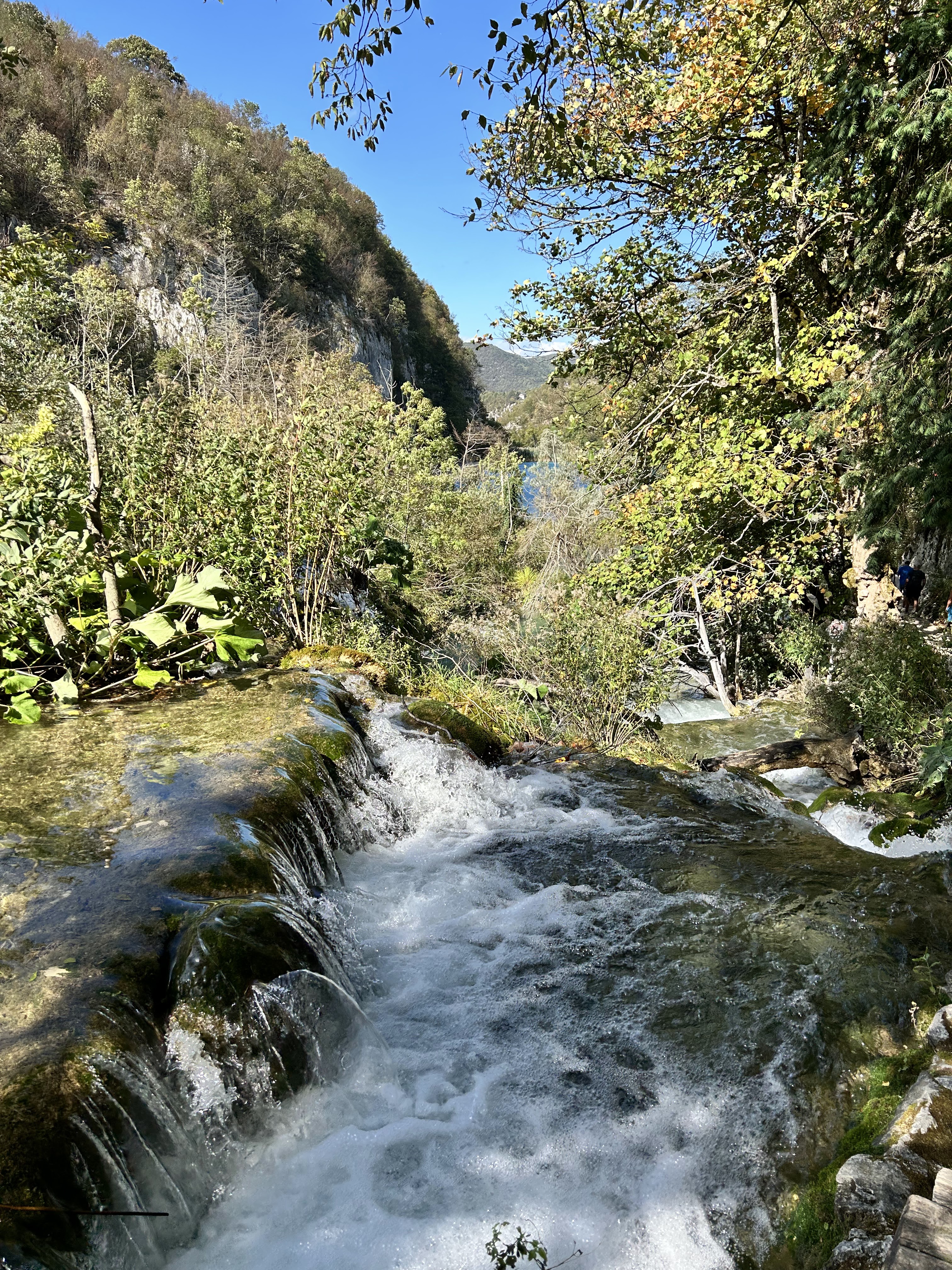
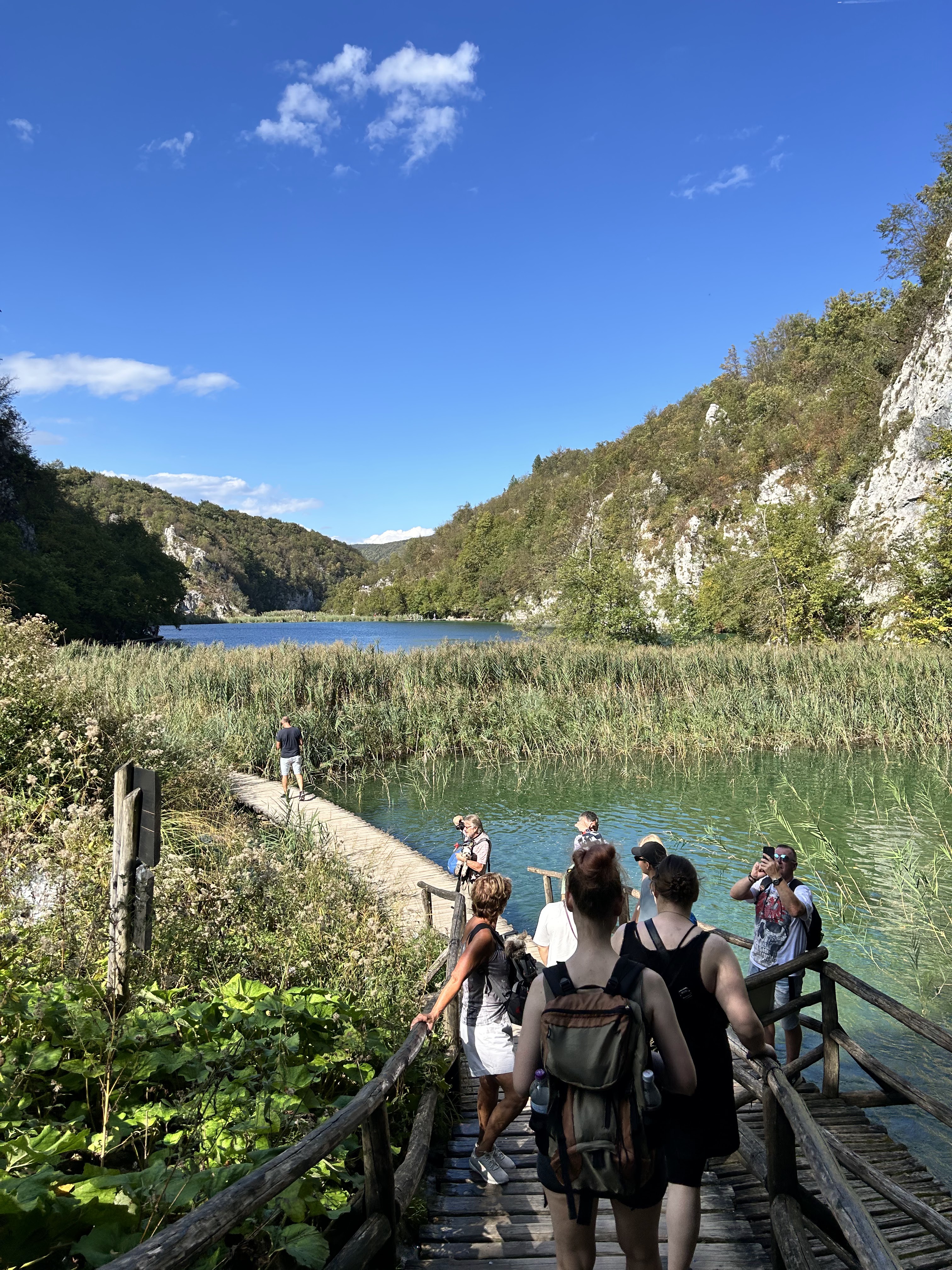
Plitvice Lakes National Park

Today we drove three and a half hours to Plitvice Lakes National Park. We arrived around noon, which I had read everywhere was not ideal given the crowds. This proved to be true, even though we technically were in the “off season”. The entry fee was $40 Euros plus $6 Euros to park. It ended up being the most expensive activity I did during this two week trip! For the entry fee, I would have expected a limit on the number of people allowed to enter…but no such luck. Every single place was packed with people which detracted from the natural beauty of the area.

The views and boardwalk were nice and if the line had not been so long, I would have loved to take a boat ride on one of the lakes included in my ticket price. But it was just too crowded. Perhaps because I live in Oregon and hike a ton, the waterfalls were expected. But I truly think that if it had not been so crowded I might have been more “wowed”. Nonetheless, it was great to see and then we then drove three hours to arrive in Split for the next several days.

Slovenia

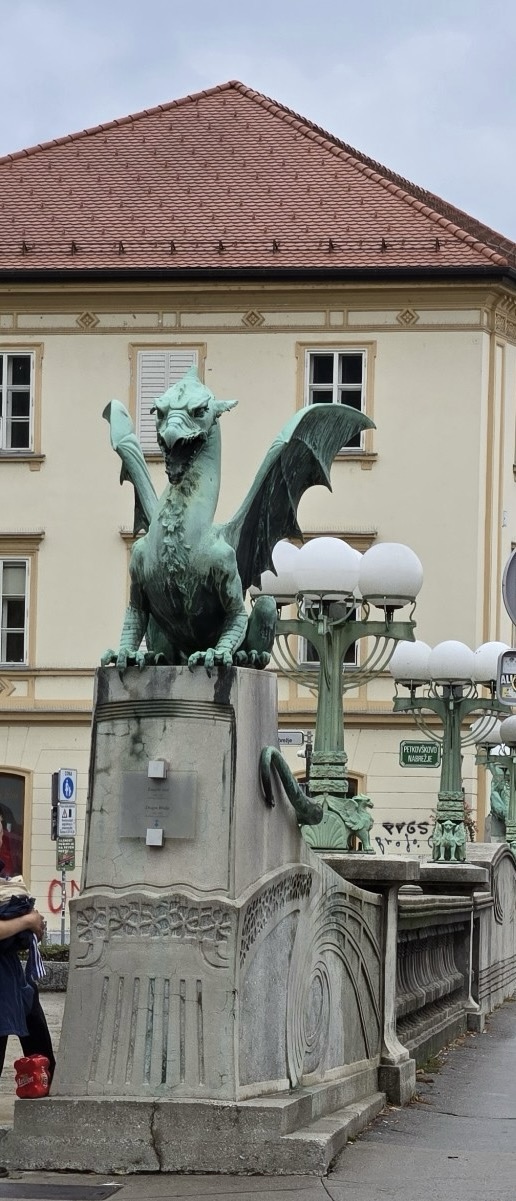
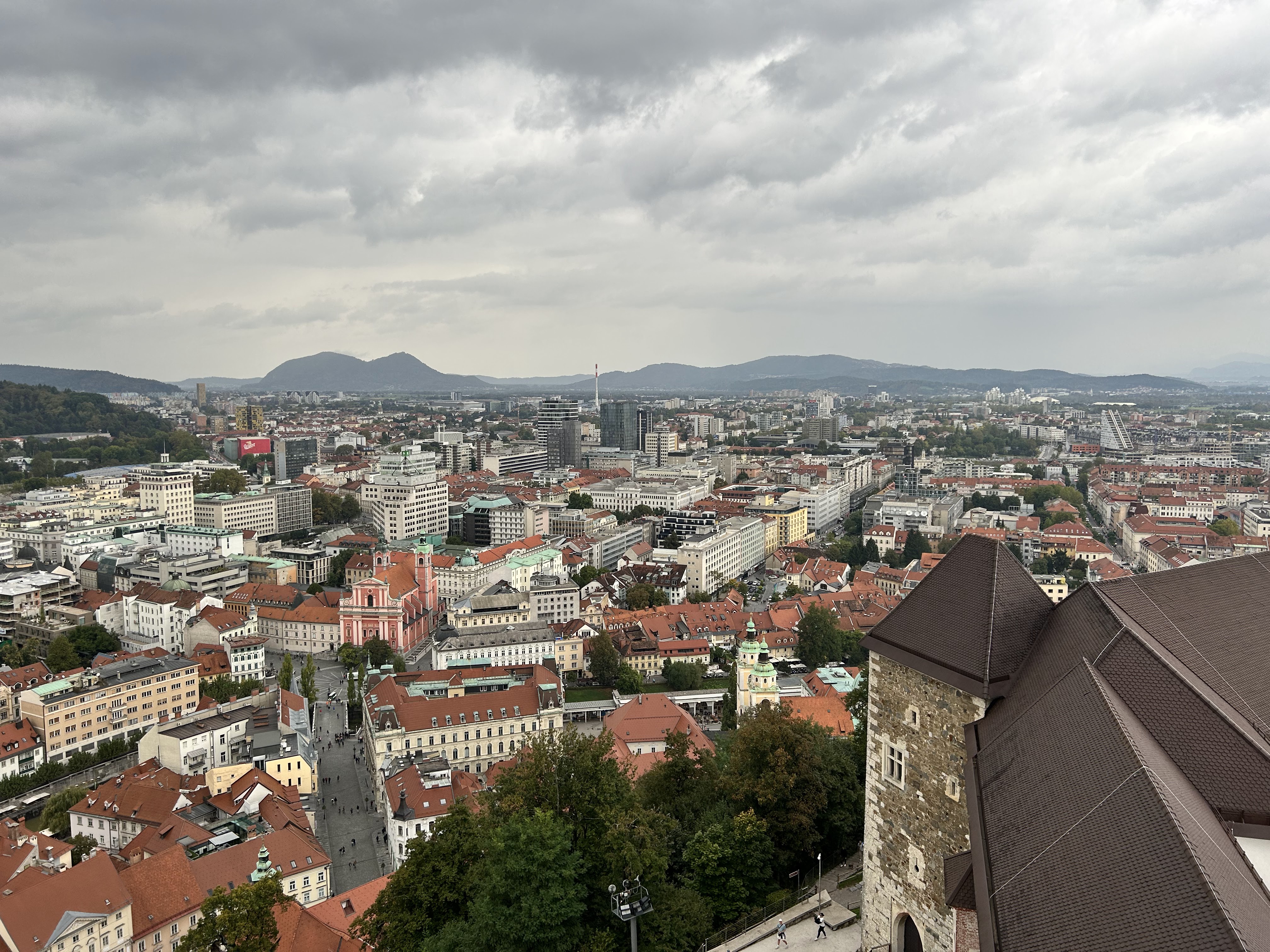
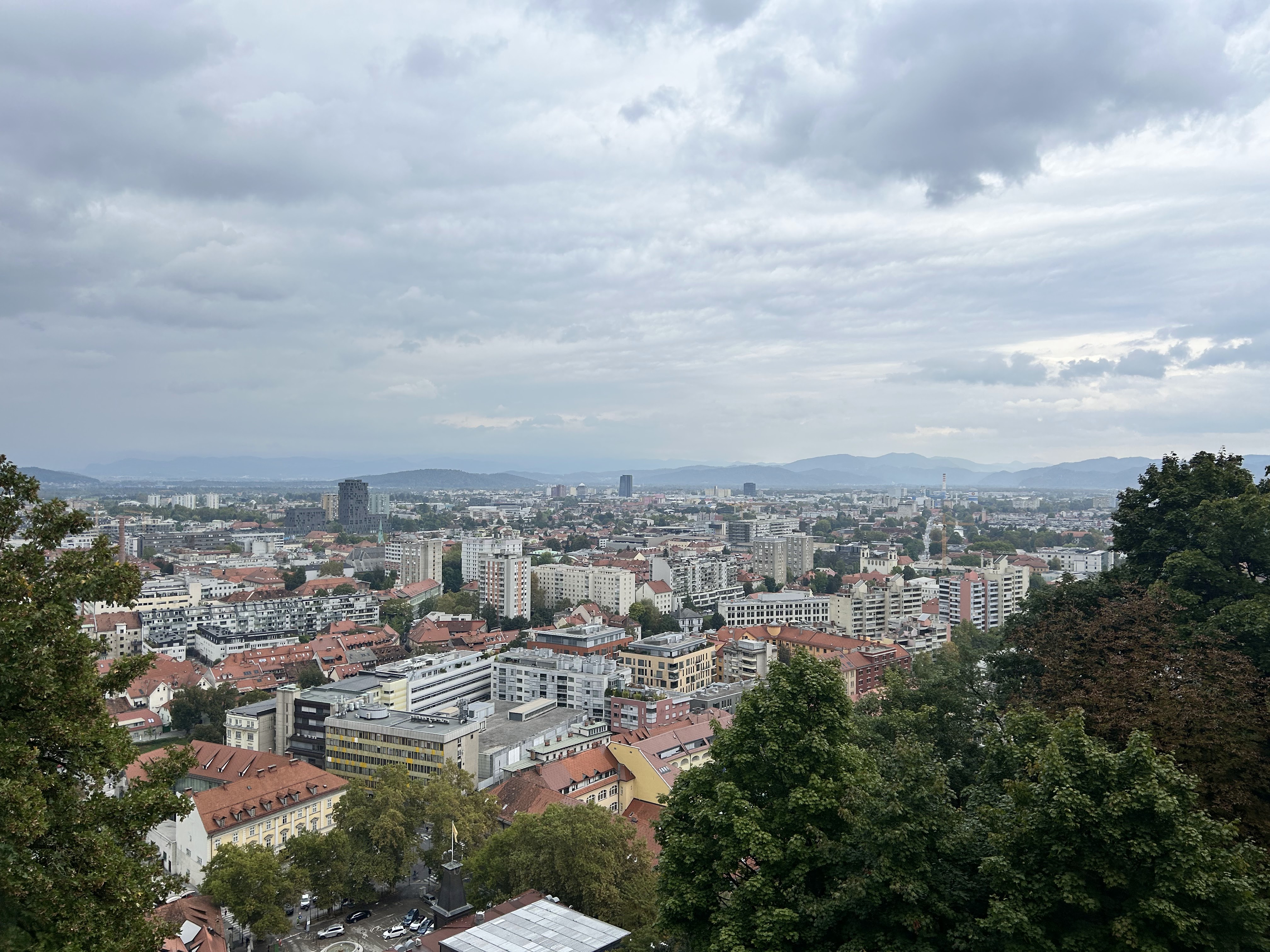
After a day in Zagreb, we did the hour and half drive to Ljubljana, Slovenia’s capital. I loved this city! The Ljubjanica river runs through it and is flanked with a market and cafes on each side. The city is clean and easy to navigate and the architecture is beautiful. It seems the city has been very thoughtful about creating lots of green spaces throughout the city.

  • Ljubljana’s historic Old Town is where many of the city’s famous attractions are located.
  • Triple Bridge from Preseren Square. This triple bridge is a city emblem, stitching the modern center and the old town.
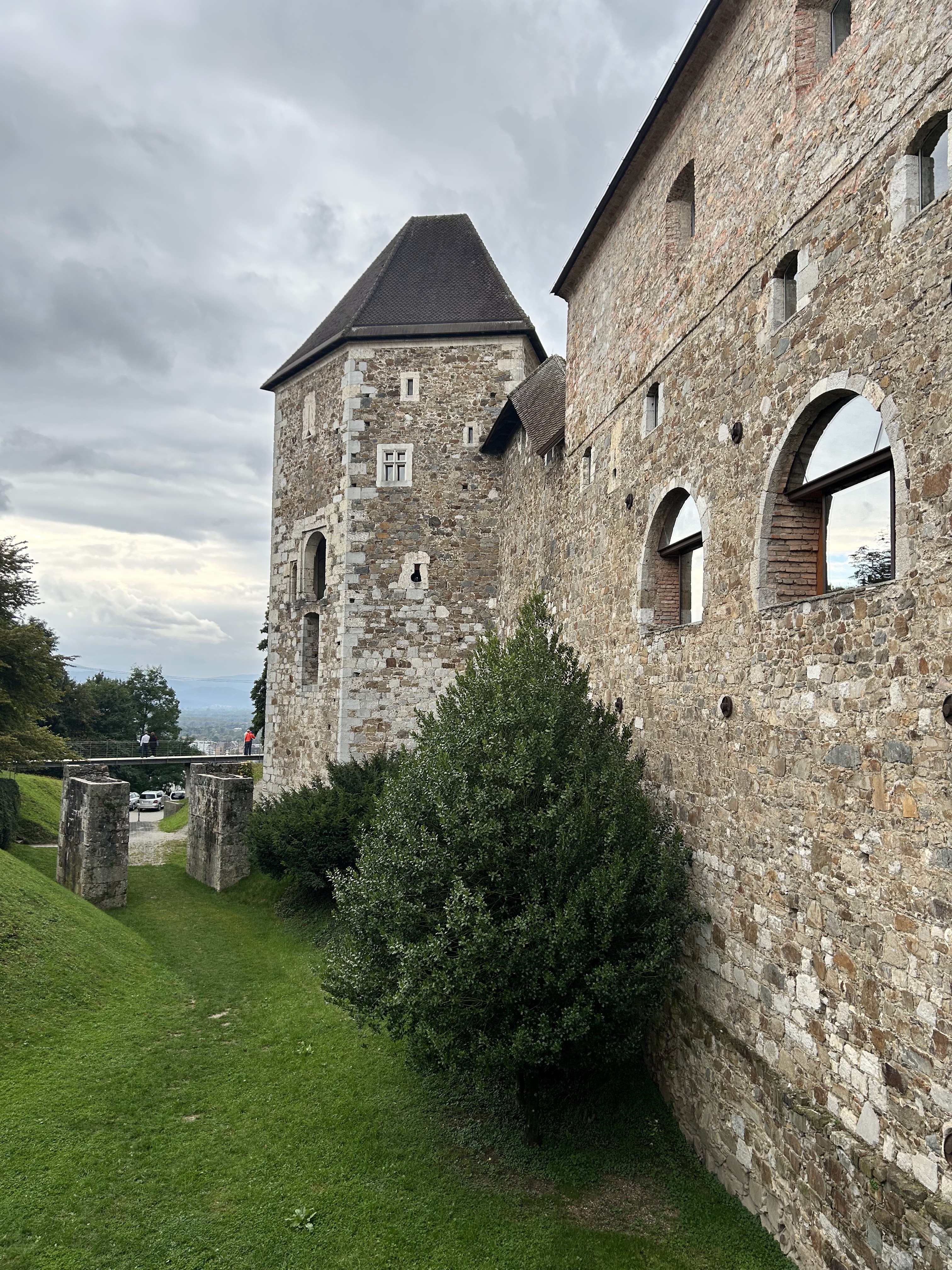
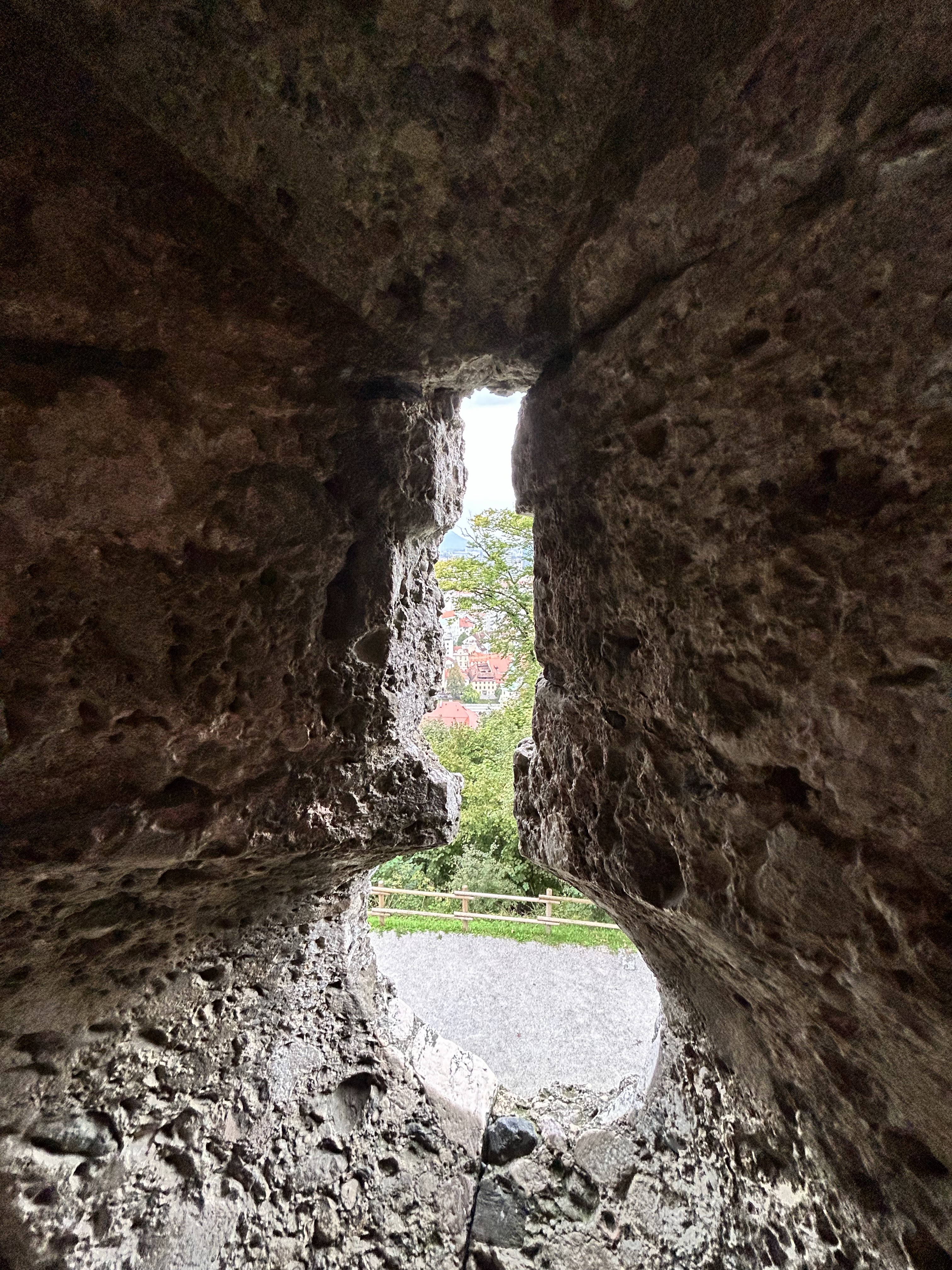
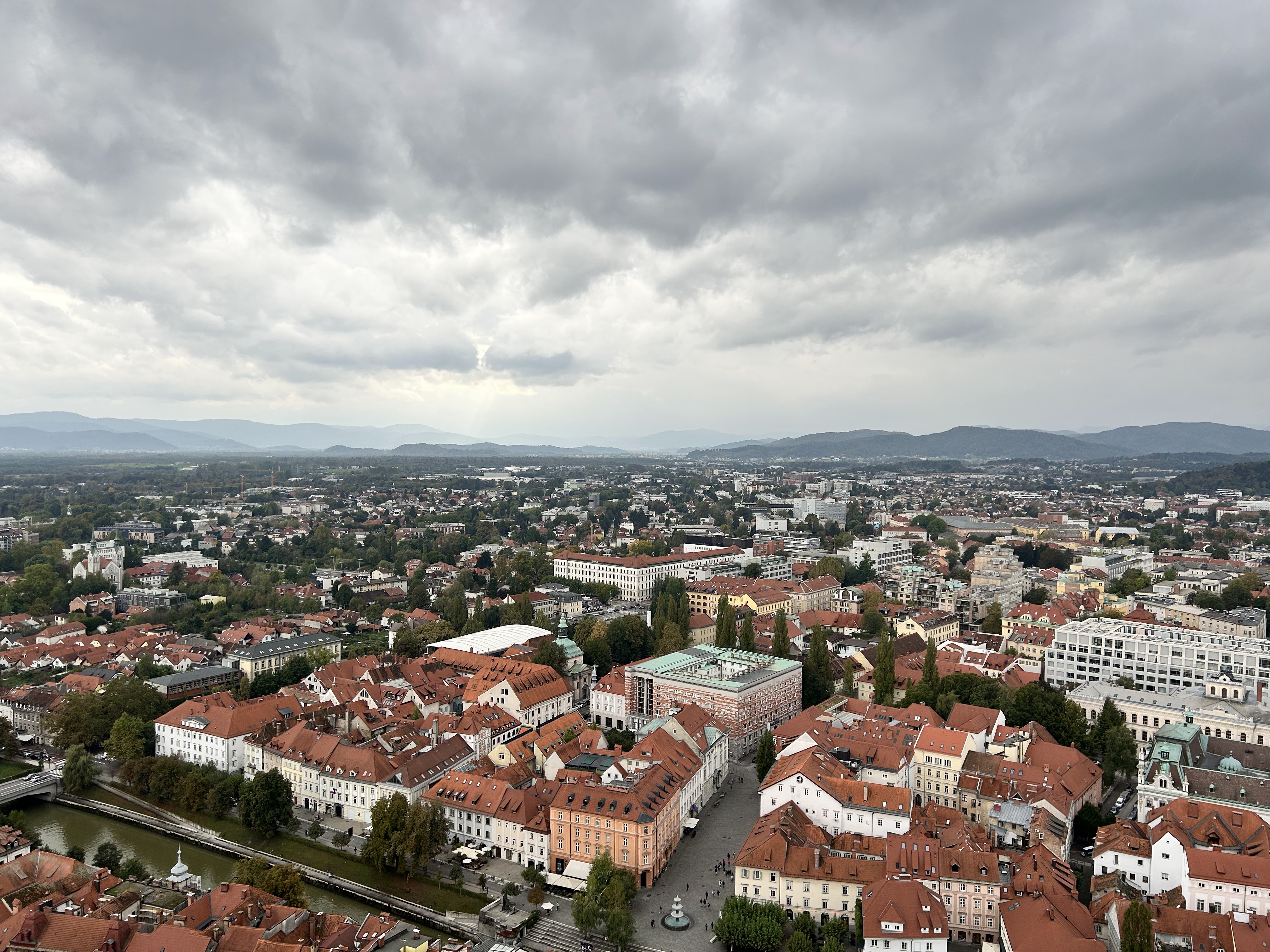
  • Ljubljana Castle. Houses several museums and exhibitions, a sweet little chapel and provided unbeatable panoramic views of the city and the old town in particular. I felt the castle was fairly commercialized but the view at the top of the tower was worth the ticket of entry.
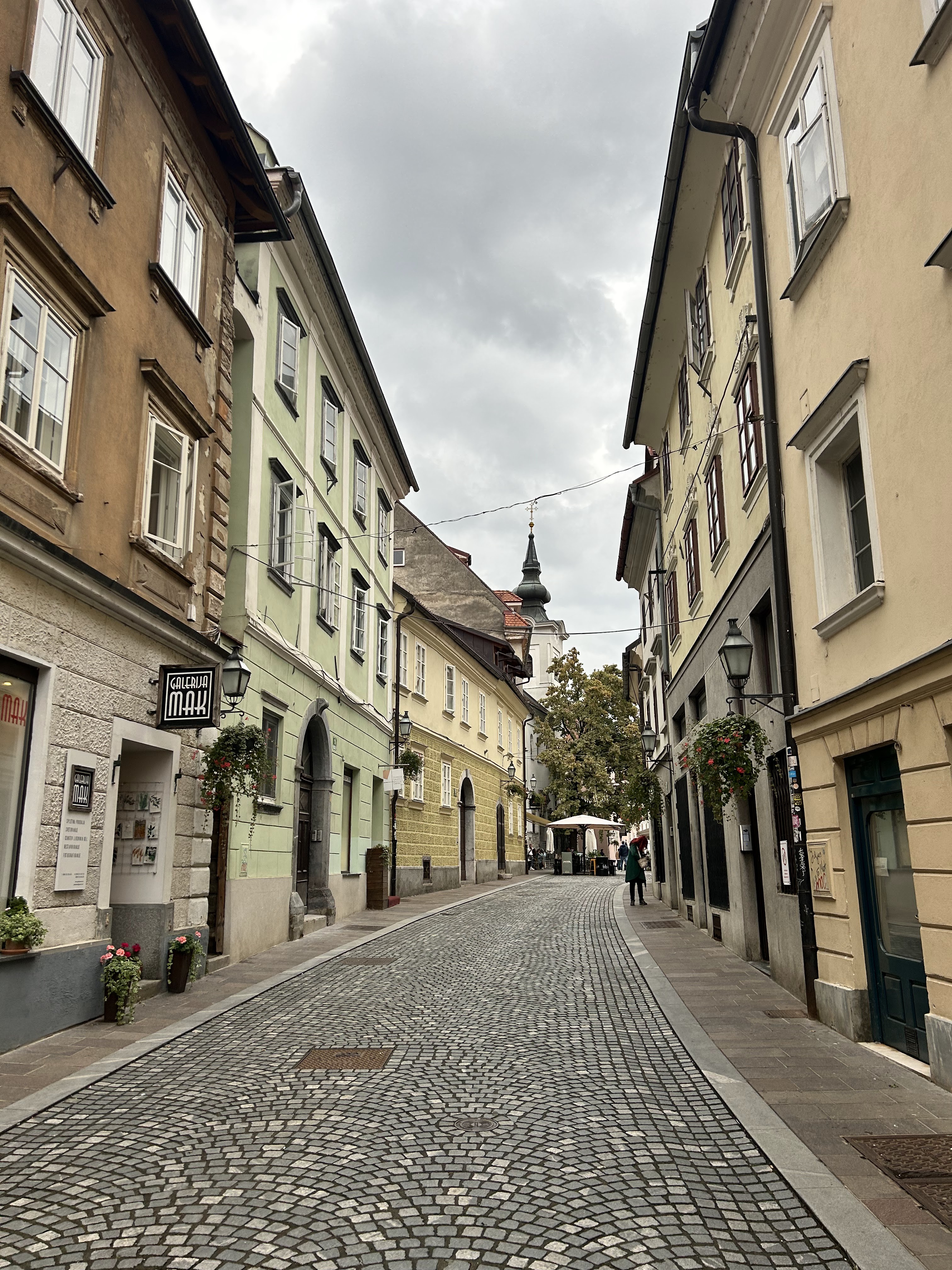
  • After the castle tour, go down to one end of the Old Town, and stroll along its main street, known as Stari trg in one section and Mestni trg in another. This street, adorned with elegant buildings, also boasts intriguing and quirky little shops.
  • The Central Market has food vendors selling everything from fresh fruits and veggies to textile goods and souvenirs.
  • I ate lunch at the always-packed Julija Restaurant. It serves quintessential Slovenian food and although I don’t eat meat, I still managed to eat well. Slovenian wine is quite good and cheap, too!

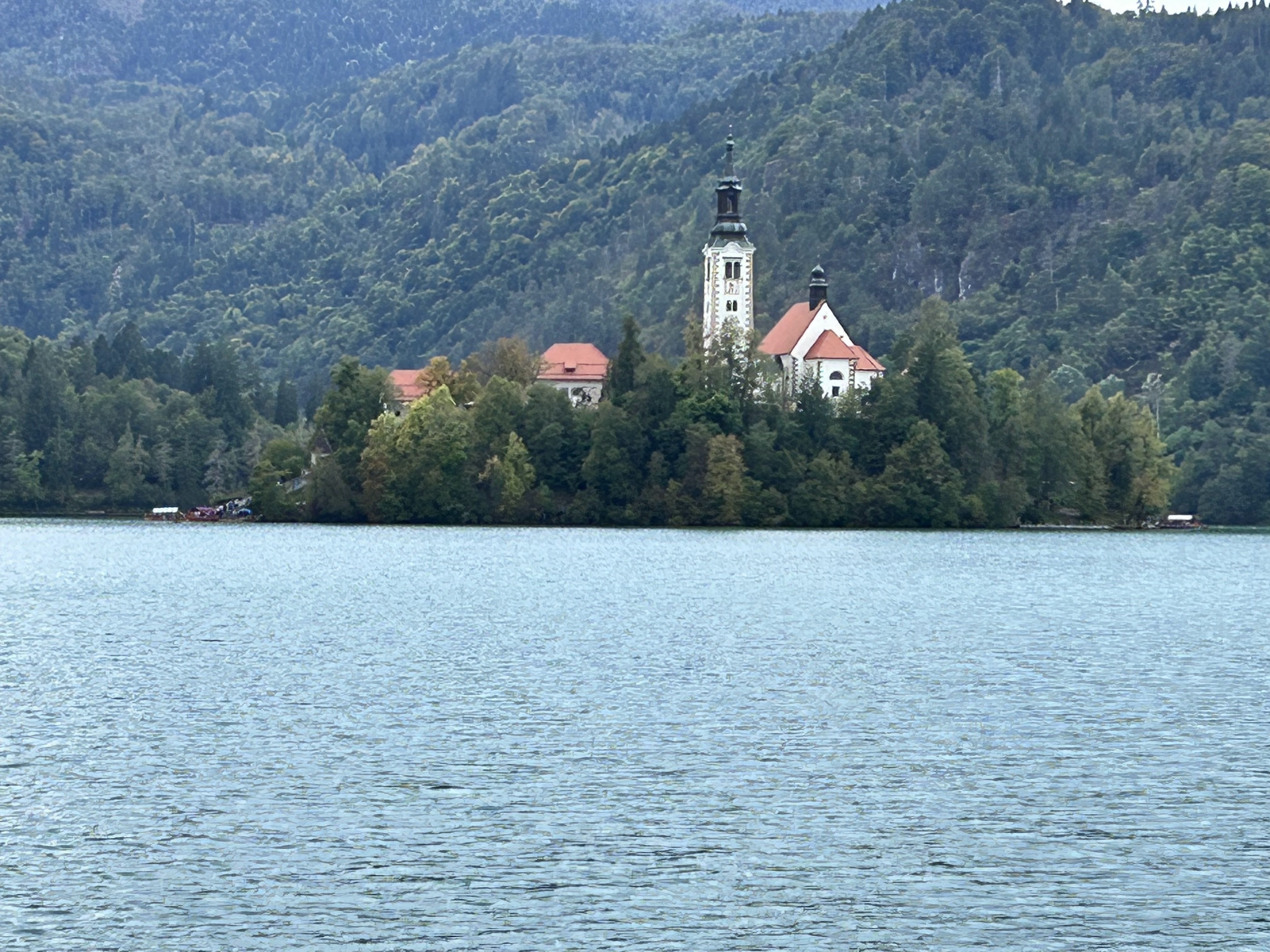
We also drove an hour to Lake Bled. This lake is the picturesque and likely on every post you have seen of Slovenia. We were there on off season, so it was crowd-free. We walked around the lake and also visited St. Martin’s Church. We opted to not pay the $17 Euros to go inside the Bled Castle since we visited the Ljubljana Castle.

Croatia and Slovenia 2024

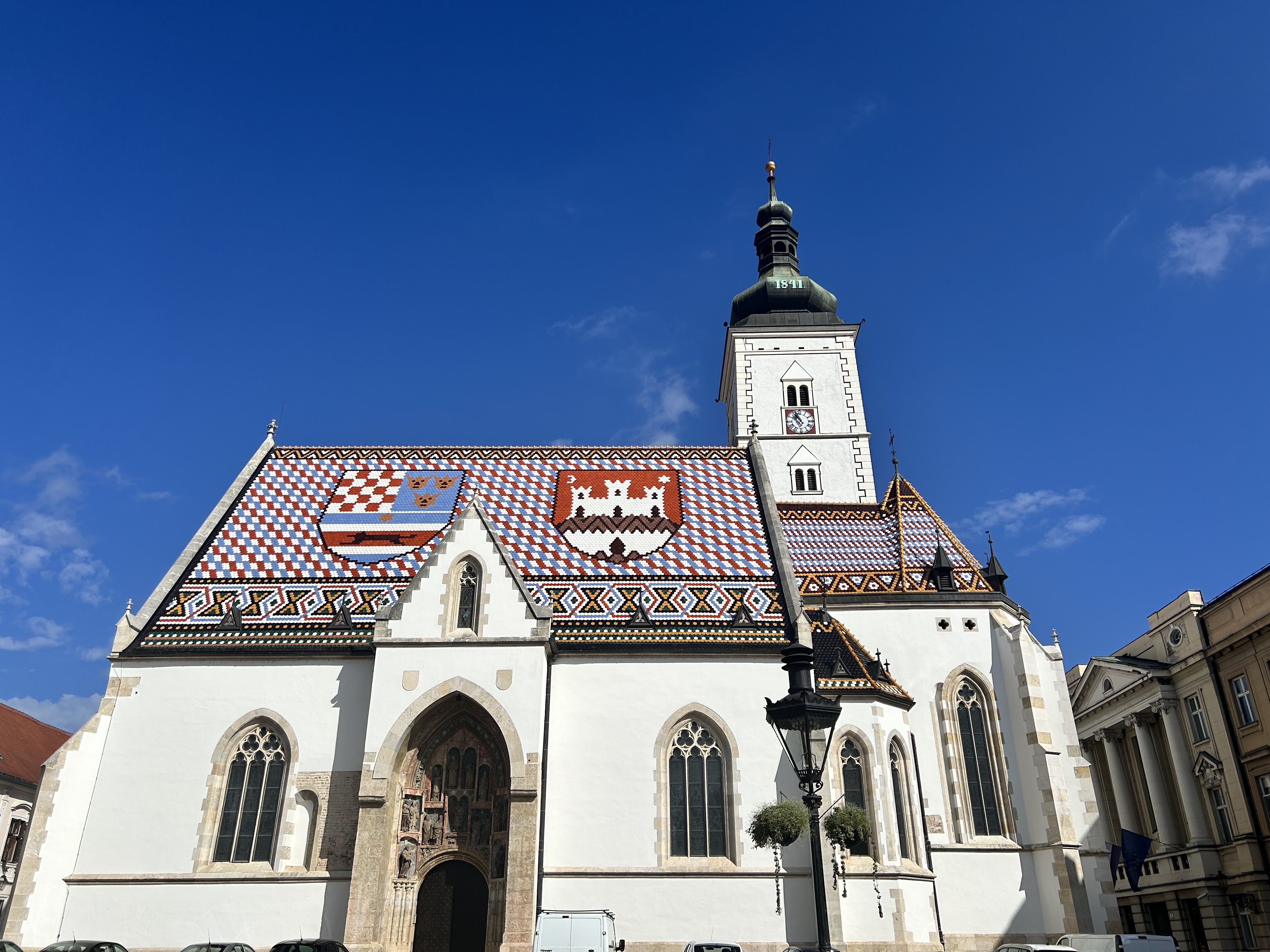
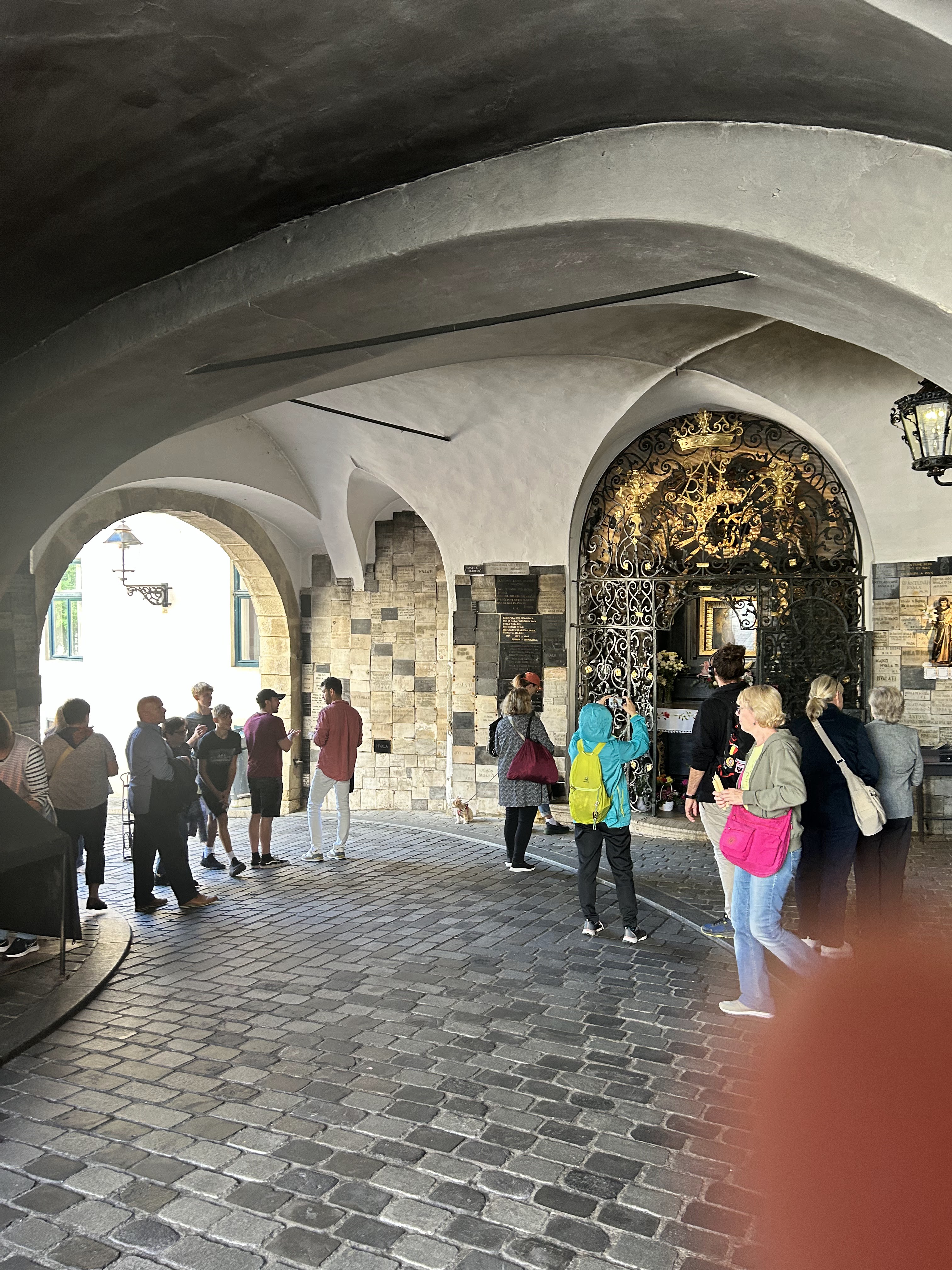
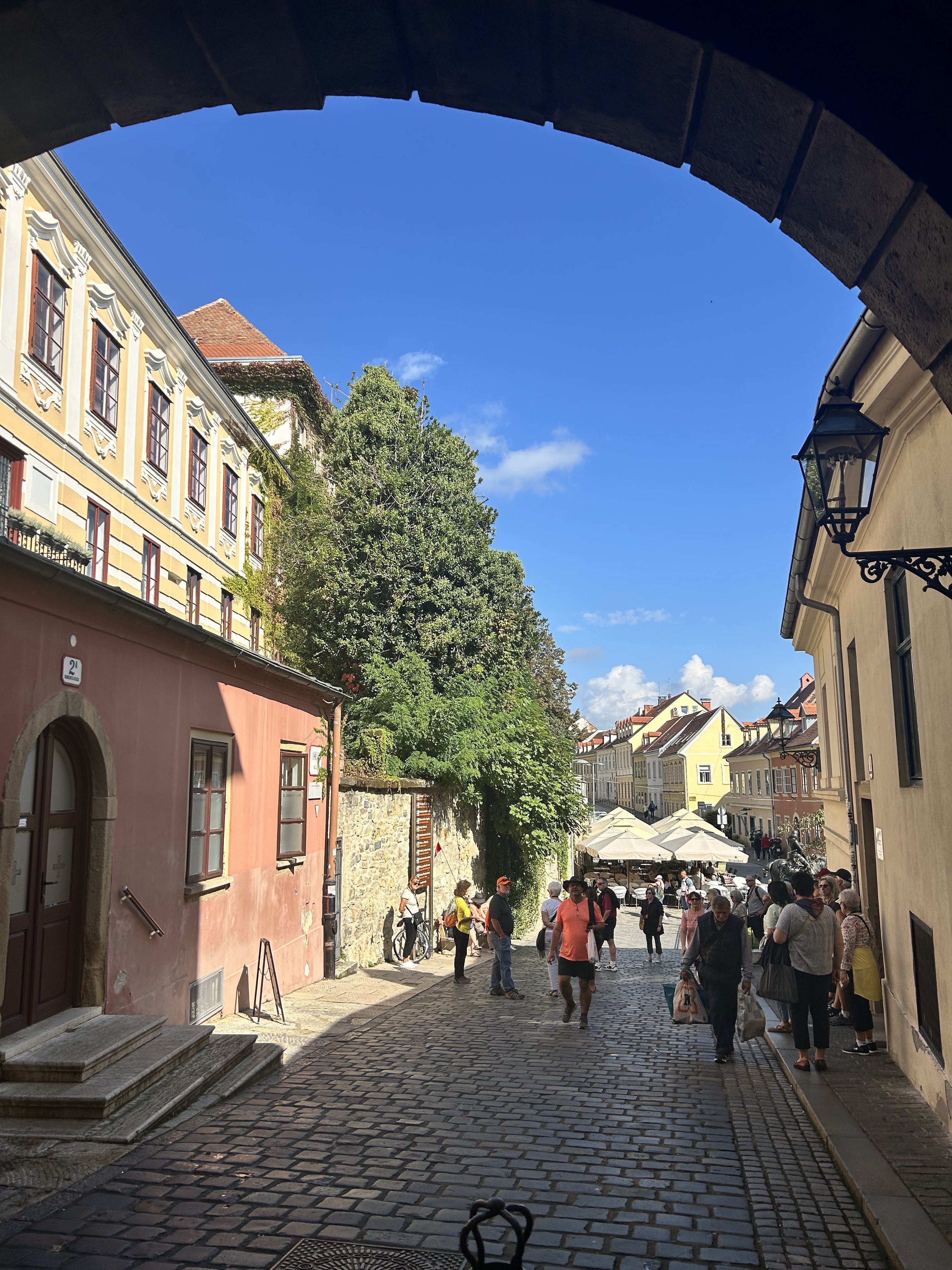
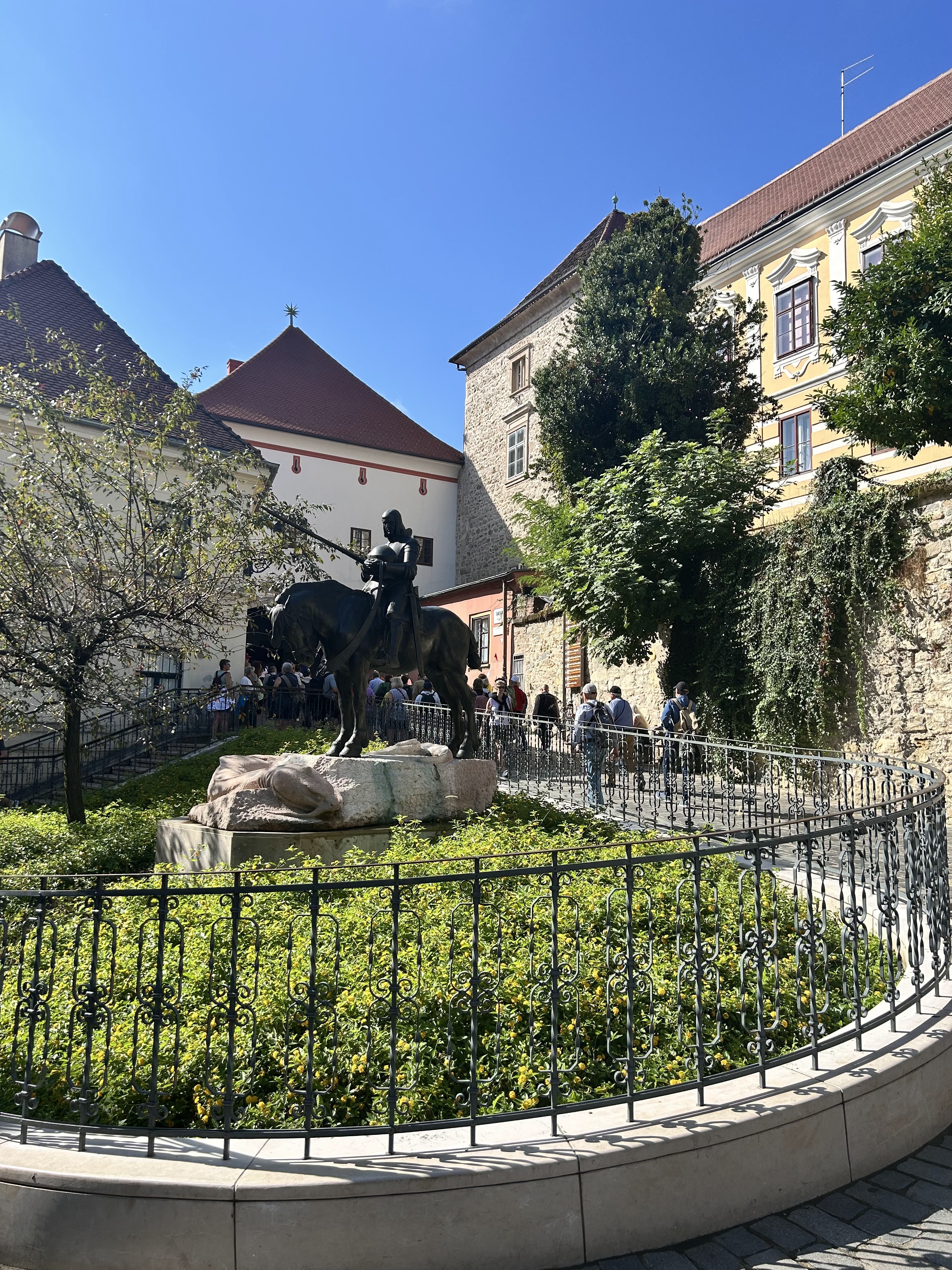
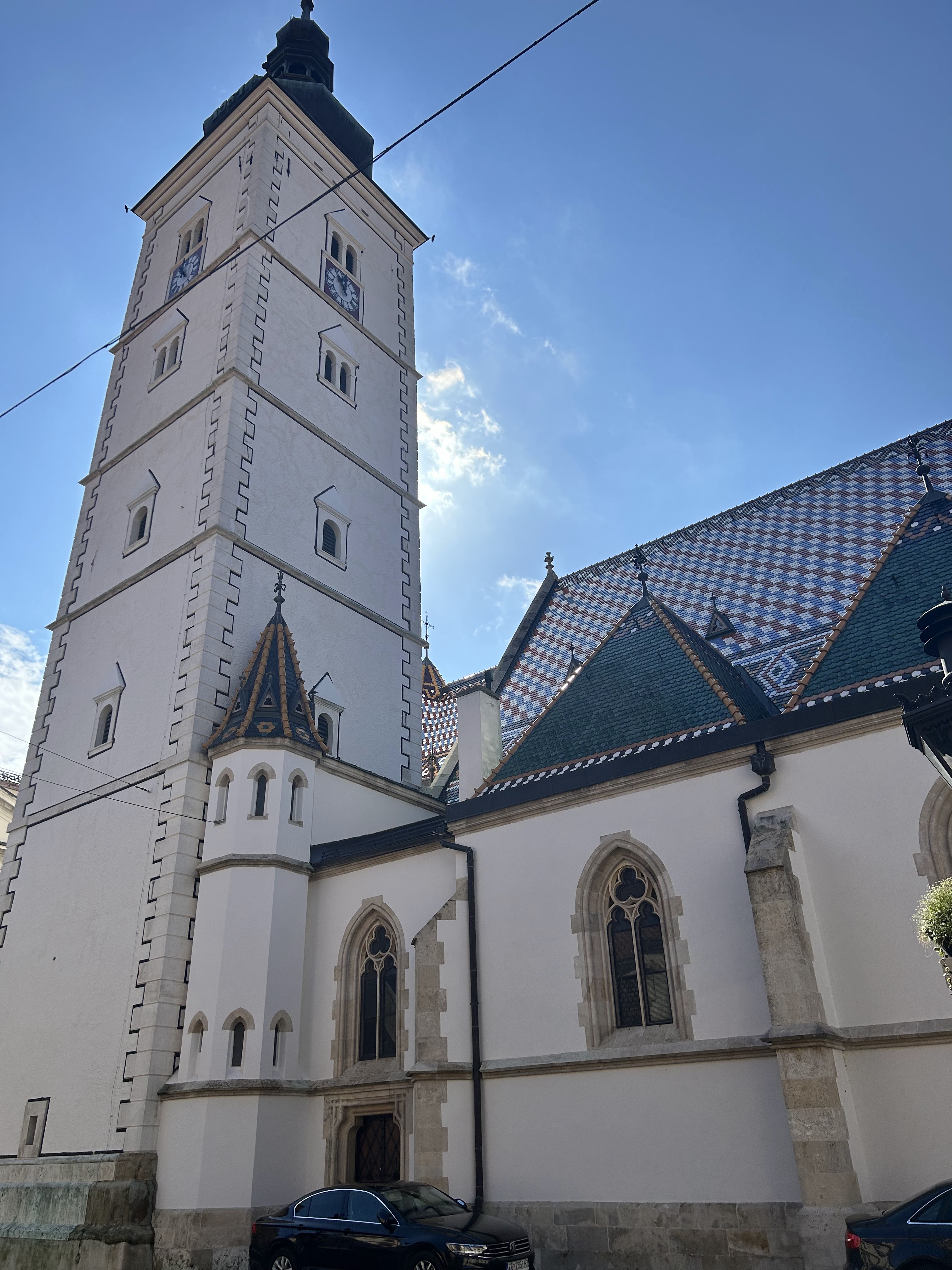
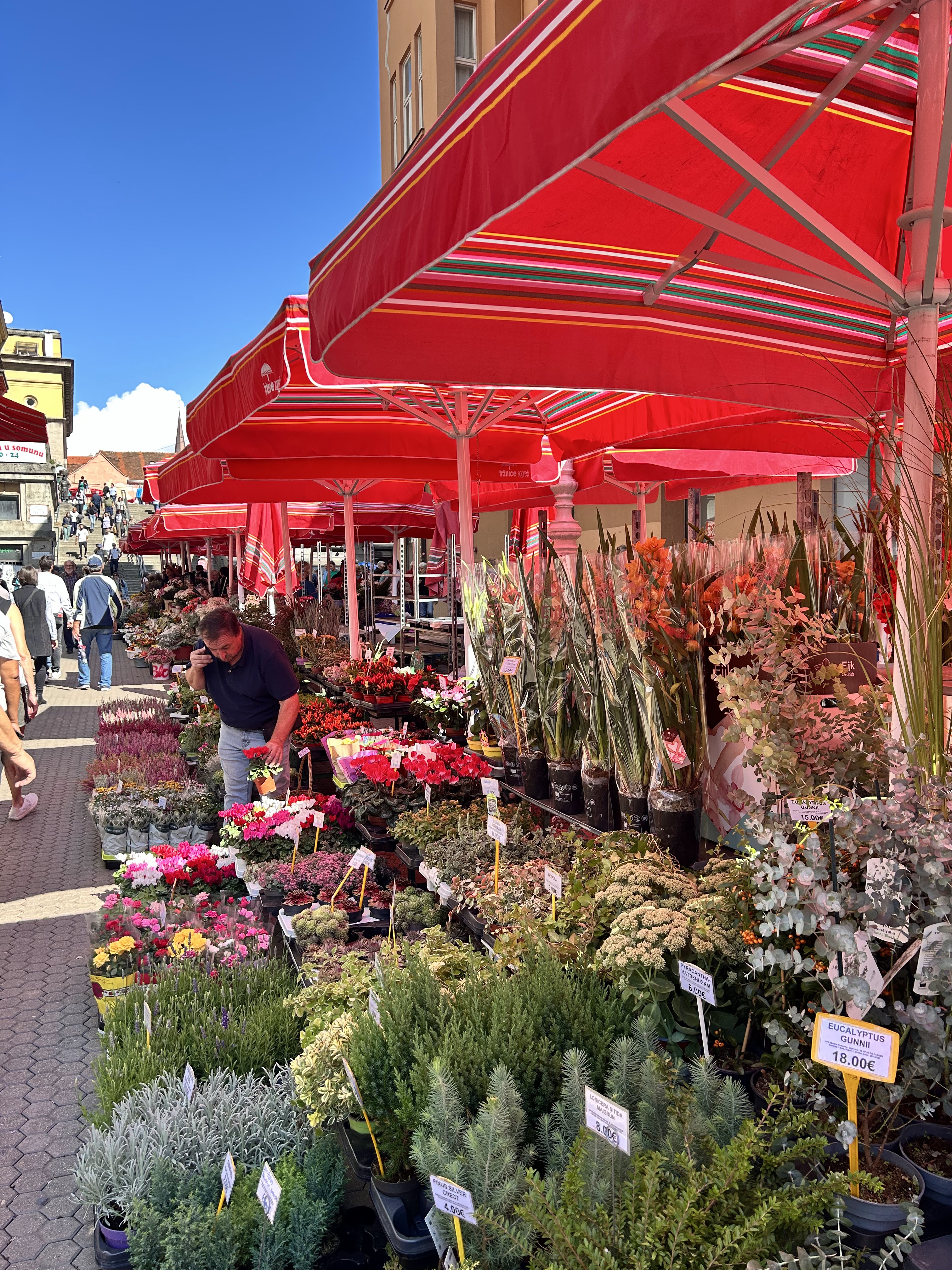
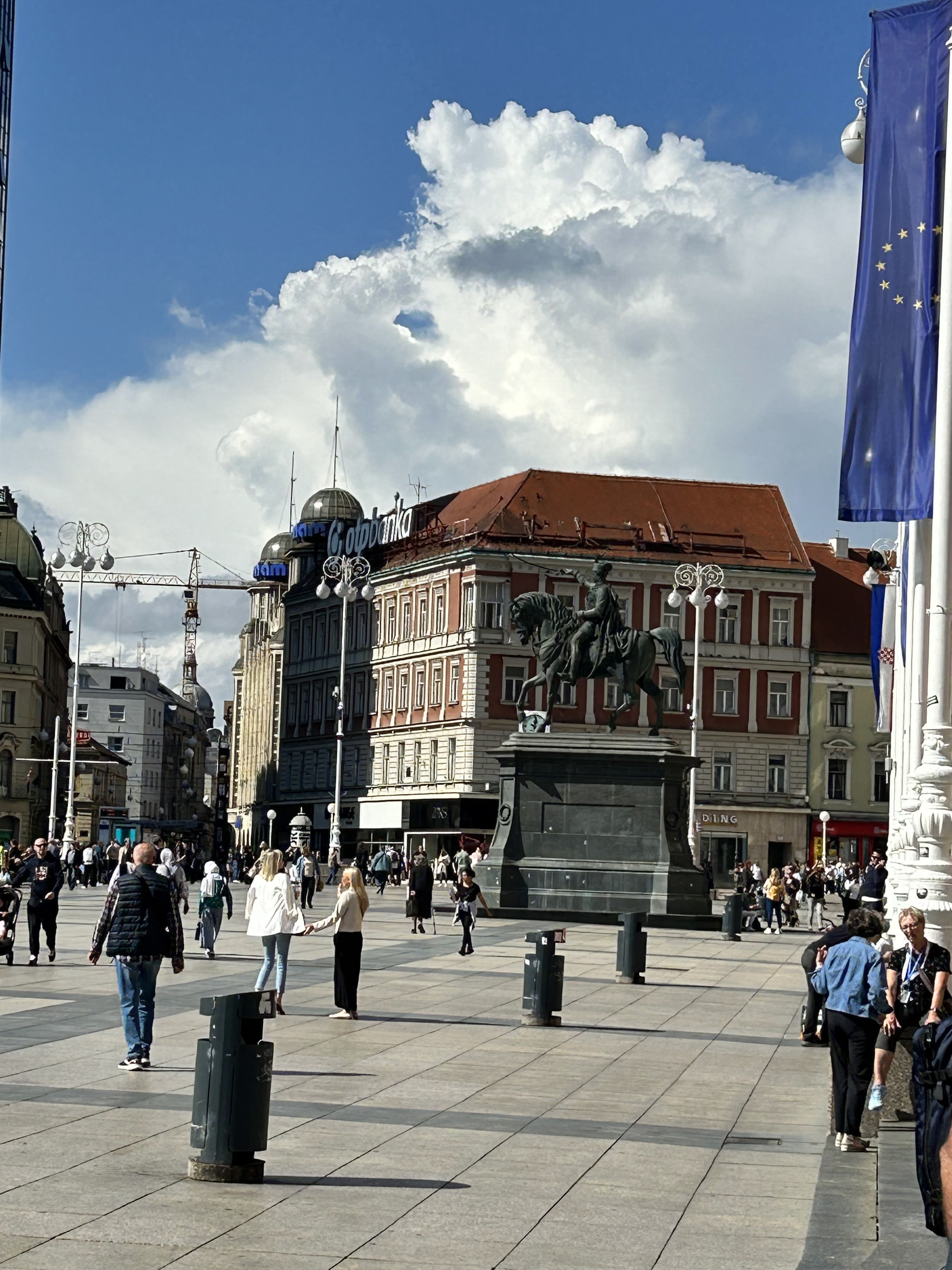
I just returned from wandering Croatia and Slovenia and still have a smile on my face. My itinerary was ambitious but do-able. I flew into Zagreb, the capital of Croatia. Zagreb was a great entry point into Croatia as it was easy to navigate, incredibly clean and English-speaking locals were plentiful. Zagreb has a nice old city to walk and is divided by Upper Town (Gornji Grad) and Lower Town (Donji Grad). I visited the Zagreb Cathedral, St. Mark’s Church, The Stone Gate and the Dolac Market. I also went to the Museum of Broken Relationships, which was a quirky, interesting way to spend an hour and $7 Euros. Be sure to walk through the beautiful parks like Maksimir Park or Jarun Lake.  I stayed at Hotel Jagerhorn, which had comfortable rooms, a friendly staff and a great breakfast included. On day two, I picked up the rental car so that I could head up to Slovenia for a few days.