“How to Die with Zero” by Bill Perkins.

Bill Perkins challenges us to rethink things…really big things.  By aiming to die with zero, you will forever change your autopilot focus from earning, saving and maximizing your wealth to living the best life you possibly can.  Perkins builds a case through examples from his own life  when he was solely focused on making money but not truly living his life.  He explains to the reader that experiences give us memory dividends that work does not provide.    I agree with him that we should be rich in things that include:

  • Rich in experiences
  • Rich is adventures
  • Rich in memories.

And so Perkins asks the reader to critically think about what meaningful and memorable experiences do you want to have?  Once you know this, start mapping out time buckets in five-to-ten-year increments and list your desired experiences.  Perkins helps with the math and addresses that people often fear running out of money or we operate on autopilot to continue to work and amass money that in the end we will never spend.  He suggests that you donate to your beloved charities now and spend time and money on your kids and people you love now.  Don’t be fooled to think you must continue to work and accumulate and then when you are finally able to retire, you no longer have the health to spend all that money you accumulated.

At the end of the day, Perkins asks, why people fear running out of money more that wasting their lives…a very good question indeed. Some concepts in the book include:

  • Look at your fears and what is holding you back.
  • Take more chances when you are younger.
  • Every moment is a choice. Choices reflect priorities.  Be intentional.  Health and the ability to enjoy experiences.
  • Fear wasting your life and your time.
  • Peak ages are 45-60…so use it wisely.  Plan accordingly.  Peak is a specific date tied to your biological age instead of thinking peak as a dollar amount.
  • Cost to live times number of years left to live.
  • Overly delayed gratification and regret.  People on their deathbeds regret not doing things, not spending time with loved ones etc., not working more or making more etc.
  • Shifting balance of health, time and money.  Young= great health, lots of time and less money.  Middle age (31-60) time, money and health equal.  61+ money and time high, health low.

Life goal is not about maximizing your income and wealth but instead maximizing your life experiences and fulfillment and lasting memories of those experiences.

https://www.diewithzerobook.com/welcome

The 5 Types of Wealth by Sahil Bloom

According to Bloom there are five types of wealth that ideally work in harmony that enable you to live your best life. “You’ve been lied to. Throughout your life, you’ve been slowly indoctrinated to believe that money is the only type of wealth,” Bloom said in an interview with People. “In reality, your wealthy life may involve money, but in the end, it will be defined by everything else.”

  • Time Wealth: How many moments do you have with your remaining loved ones? This section teaches how to prioritize energy-saving tasks to unlock more time in the day.
  • Social Wealth: Who will be sitting in the front row at your funeral? Learn how to create deeper bonds and build a powerful network.
  • Mental Wealth: What would your 10-year-old self say to you today? This teaches how to engage your purpose, and spark constant growth.
  • Physical Wealth: Will you be dancing at your 80th birthday party? Get advice on how to maximize health and vitality through three simple principles of movement, nutrition and recovery.
  • Financial Wealth: What is your definition of enough? Learn how to achieve financial independence and define your version of “enough.”

The book is filled with helpful questionnaires, charts and examples to help the reader consume the ample information.  But as in all things, taking action is what makes the difference so I suggest bite-sized goals to bring the tools to life. The book gives the reader a game plan for forming deeper bonds to grow networks, engaging purpose, maximizing health, and achieving financial independence. Some of the ideas in the book you already know, other concepts will be new and worth thinking about and possibly incorporating into your life.

Which wealth do you want to grow?

Tackle Financial Discipline in 2024

I recently met a friend for a hike and she shared that she made $35K more in 2023 than she expected. Great news…you would think. The challenge was that she had nothing to show for the additional income. In other words she spent every cent of it plus some. She asked my advice on how she could do better. Here’s what I told her:

  • Live below your means. In other words, act like you make a lot less than you do. Too often we garner a larger paycheck and instead of “paying ourselves” we literally go on a shopping spree of life…bigger house, nicer car, the latest phone etc. Ask yourself, “What do I really need?” and “Does all that stuff really make me happier, anyway?”
  • Put all her various accounts into one investment account. Every time she left a job, she left her 401k with her previous employer. It essentially sits there and is forgotten. If she pulled all of them together, she could create a wholistic plan and be more strategic with her money. I am sure you’ve heard the mantra of being diversified in your portfolio. Well an easy way to accomplish this is to know what you have and have easy access to it…all of it.
  • Shopping…many a person’s downfall. And my friend is no exception. I suggested that she pause…when she sees something instead of immediately buying it, walk away. Think about it. Check out what is already in her closet. Determine how much she will really wear it. And after all that analysis, if she still wants it or “needs” it, then buy it! More likely she will have moved on and forgotten that must-have item.
  • Have a plan and work your plan. Have an end game and then work towards it. All of this financial responsibility should be working towards a goal so I suggested to her that she needs to know what her goal is.
  • Live a little, too. All work and no play would make life pretty boring and dry and there is nothing wrong with a reward here and there. Instead of a bunch of little rewards (clothing, coffee, etc.) how about one really big, glorious reward like a fabulous trip?!

Share your ideas in the comments!

The Power of Personal Mission Statements

Personal mission statements are powerful. They keep you honest and true to where you should be spending your valuable, precious, irreplaceable TIME. People that know me have heard me say a million times, “We spend the majority of our days on what I call the daily minutiae of crap.” In other words, stuff that sucks up our time but frankly is pretty worthless in the grand scheme of things. When you have a personal mission statement it serves as your beacon to not only provide a litmus test of where and when to spend your time but it also allows you to measure things against your values…where you work, your personal relationships, your volunteer efforts and so much more.

A personal mission statement defines who you are as a person (or as a team member where you work) and identifies your purpose, whether that’s in the office or simply in life. It explains how you aim to pursue that purpose, and why it matters so much to you.

A meaningful personal mission statement contains two basic elements. The first is what you want to do – what you want to accomplish, what contributions you want to make. The second is what you want to be – what character strengths you want to have, what qualities you want to develop.

Examples:

“To be a leader to my team, live a balanced life and make a difference.”

“To inspire others to achieve great things.”

“To thrive in my journey through life and learn life’s lessons along the way.”

“To be kind to others and myself.

My personal mission statement: To leave anything I touch better than I found it through courage, curiosity and kindness.

So from my mission statement you can see a few values that are important to me are courage, curiosity and kindness. A few other values are helping others and competence. Family, friends and health are also high on my value list. Another important things to note about mission statements are they are not set in stone! They can change and evolve over time…it’s totally a working document while it guides you through life and work.

So what’s your mission statement?

Fear and My Most Pivotal Moments

Fear holds us back. Fear keeps us from welcoming difference. Fear also forces us out of our comfort zones. I think back on the most pivotal moments in my life and realize that fear held me back but also moved me forward. Some scenarios where fear moved me forward were:

-having a child

-leaving a job

-getting married

-traveling oversees the first time solo

-speaking up when no one else would

-getting divorced

-adopting a child

-saying “yes” to something that I had no idea how to do.

But I believe that if you keep doing things as you always do, things will be guaranteed to stay the same and do we really want a life of sameness??!! Yes there is an inherent risk to pushing your boundaries because you are being pushed into the unknown…and often the outcome turns out to be better than I could have possibly imagined. Hard…yes. Painful…sometimes. But ultimately…better. We have to believe that or we would never move forward and evolve.

Killen Creek Mt. Adams Hike

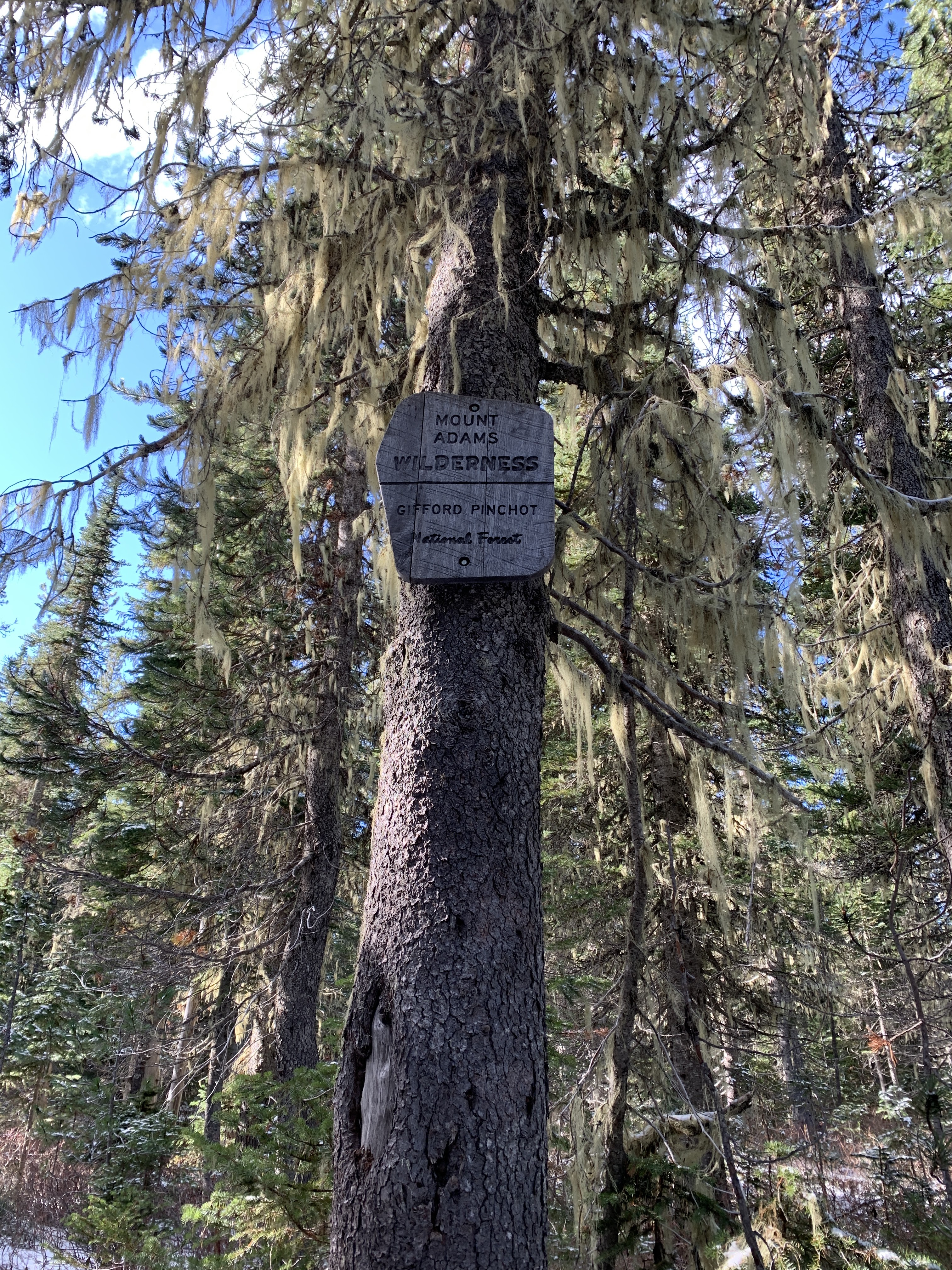
I hiked Killen Creek trail to Mt. Adams on a beautiful fall day. The Killen Creek trailhead was about a 2.5 hour drive from Portland. The trail is 3.1 miles with elevation gains of about 1400 feet. The trail ends at the Pacific Coast Trail (PCT) junction. The Killen Creek trail is fairly well groomed just an uphill hoof with a beautiful meadow and first glimpse of Mt. Adams that will make you want to keep going!

Once you get to the PCT trail and hike to the High Camp trail, you will quickly realize the first 3.1 miles was a piece of cake compared to what is next. The rocks are pretty steep and a little slick given the snow that was present. We made it, though, and landed on a beautiful glacier. With the right equipment and bravado, it would have been fun to get to the top but we felt good with what we accomplished! And 6900 foot elevation was certainly something to celebrate.

Everyone has a Story

Everyone has a story. 

My eight-year-old daughter was happily splashing in the community pool last Friday in her weekly swim class when a fellow mom sat next to me.  She was Korean and we started talking about nothing really.  We touched on parenting challenges when she disclosed that she was adopted.  Her adoptive parents were from Idaho; they had a birth son and then adopted her.  Shortly after integrating into their family, her adoptive father died.  For whatever reason, her adoptive mom and her did not get along.  She ended up being sent to a boarding school.  It was a painful time.

And it is still painful.  As an adult, now with two kids of her own, she wondered why her relationship with her mom did not work.  And why her birth mother might have given her away.  To complicate matters, she had a friend who recently found her birth mother back in Korea and finally knew why she was given away.  The woman I met desperately want that closure, too.  Why was she left on the street corner as a baby?  Where did she “really” come from?  Did her personality resemble her birth mother at all?

How about the arborist that grinds tree stumps all day but really moved to Portland for the art?

Or the father dealing with his three-year old’s bout of cancer.  Not quite understanding why a three year gets cancer but having a new appreciation for the health of his family.

Or the student saddled with student debt but excited about her new job that required her to leave her hometown for the first time and truly experience being an adult.

Or the Uber driver, James, I met recently.  He’s lived in the Pacific Northwest for the last 47 years and recently became an Uber driver so that he had something to do while his wife hiked with her weekly Tuesday hike group of women-friends.  He just wanted a little spending money and to meet interesting people and hear their stories.

Some stories are shocking.  Some are interesting.  Most are very personal.

Oh yes, everyone has a story.  You just need to stop and listen.