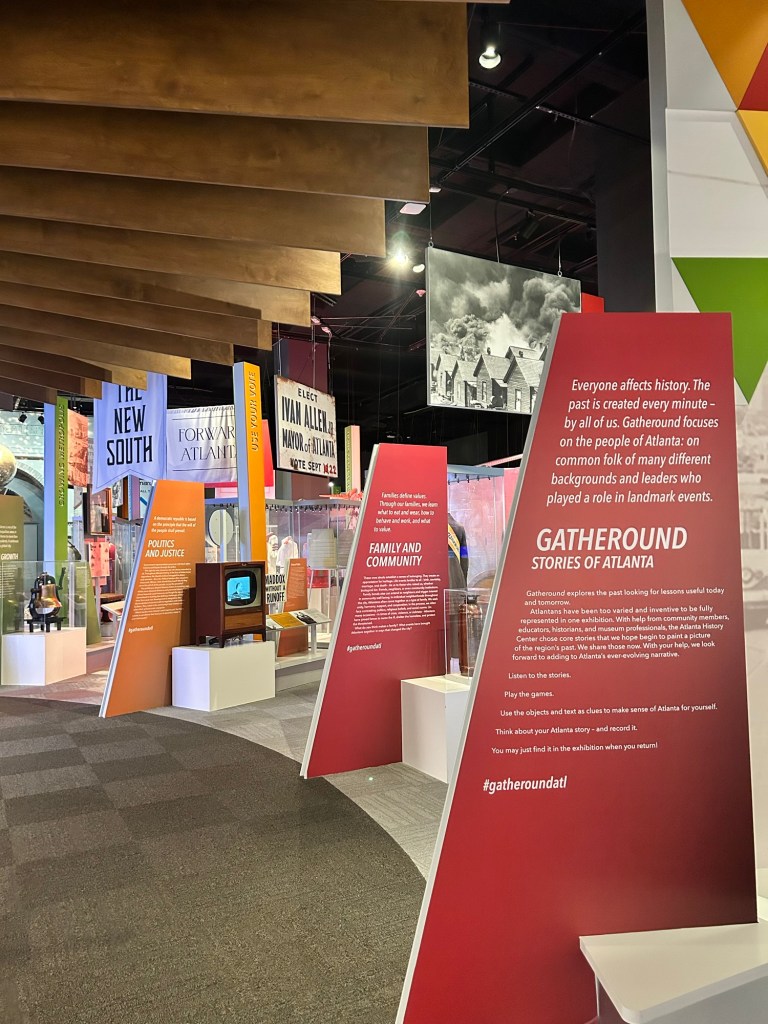
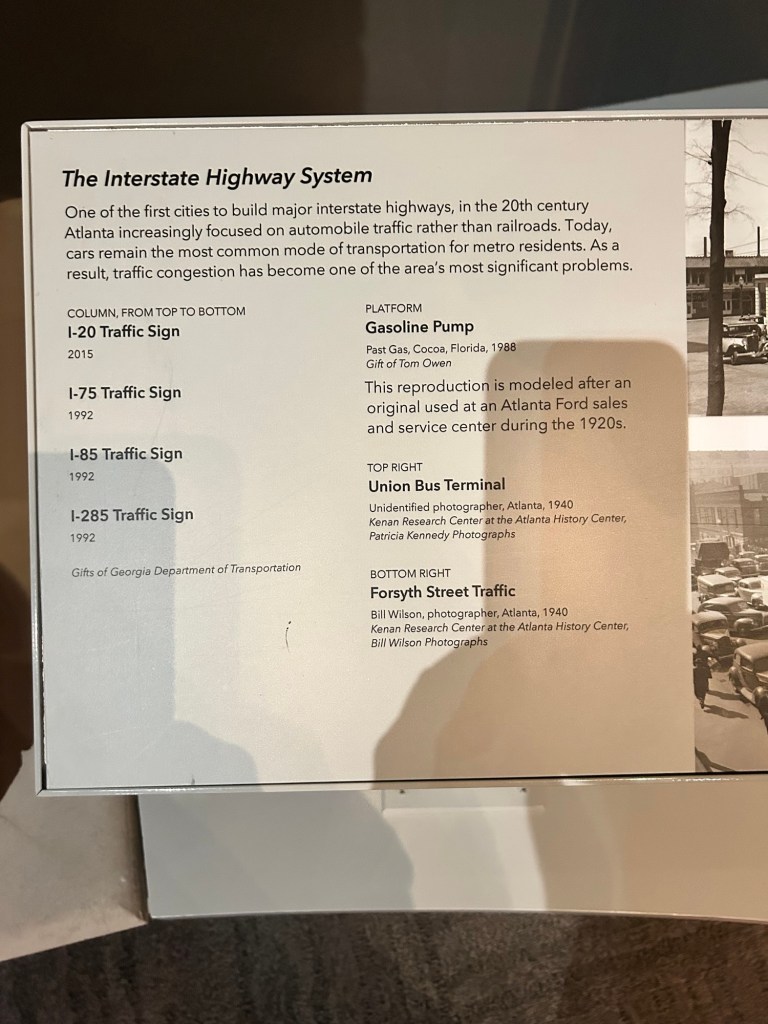
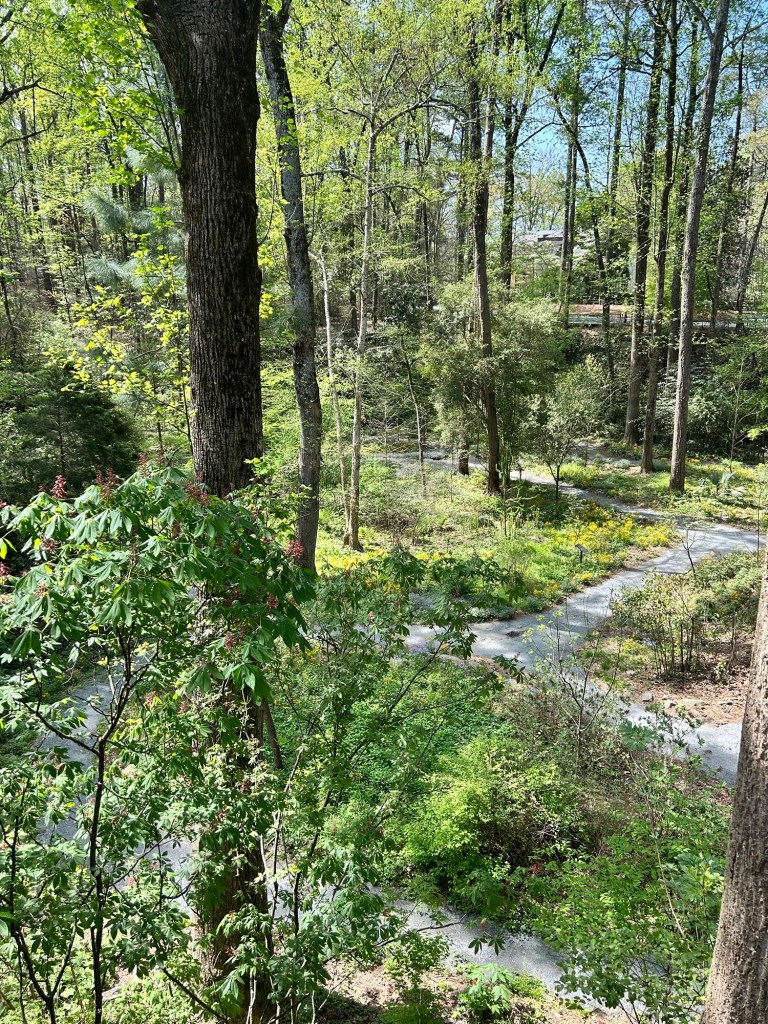
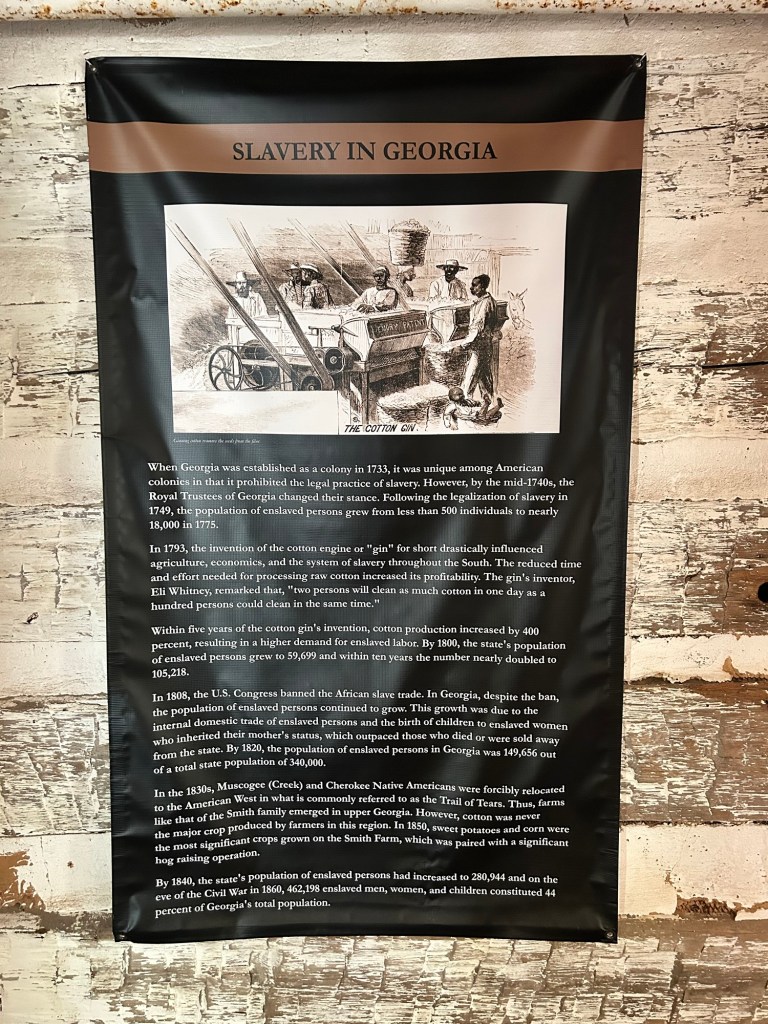
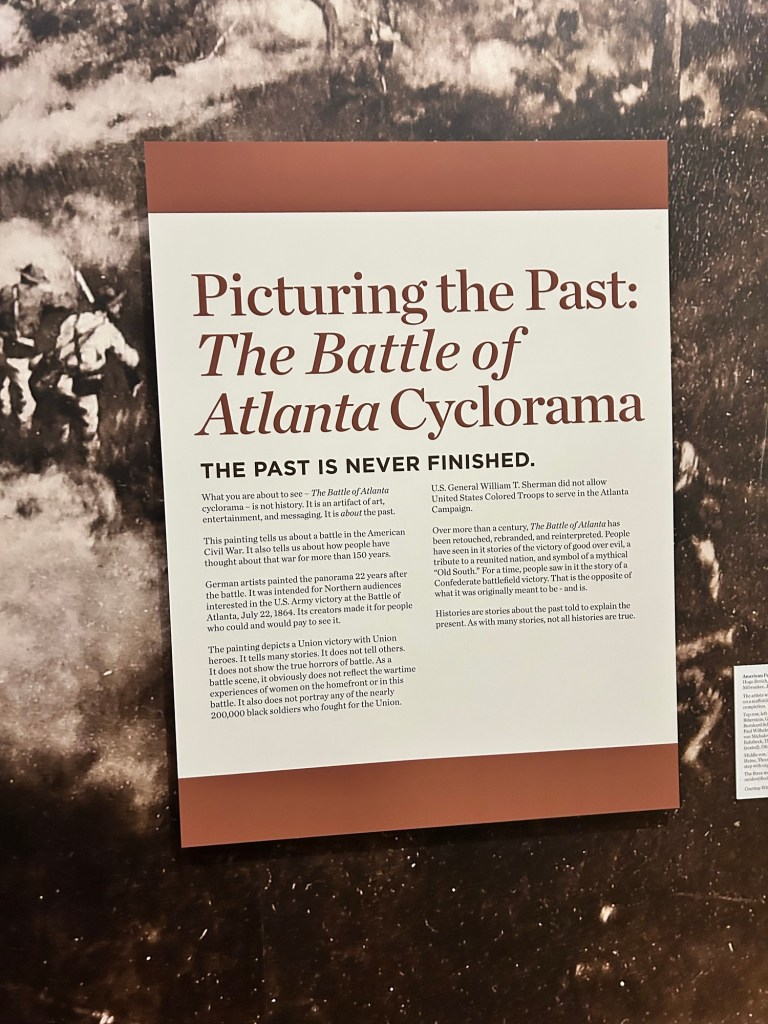
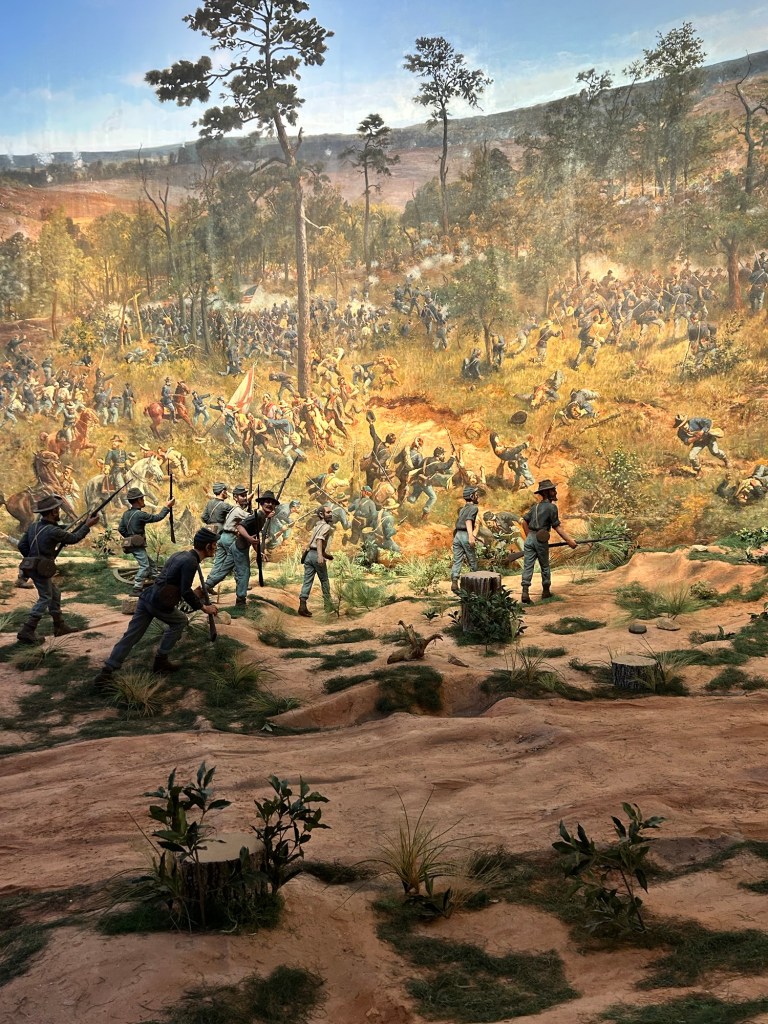
Today I visited the The Atlanta History Center. It is one of the most varied museums I’ve seen with a large museum, three historic houses, and 33 acres of gardens and trails. Key things to see include the iconic Cyclorama painting, the elegant Swan House mansion, and the interactive Smith Family Farm.
“Slavery is the next thing to hell.” Harriet Tubman
I visited The Legacy Sites today in Montgomery, Alabama. The sites include the Legacy Museum, The National Memorial for Peace and Justice and the Freedom Monument Sculpture Park. I started with the Legacy Museum where no pictures were allowed but the stories contained in the modern building were powerful and sobering. The museum begins with enslavement, moves to racial terrorism, segregation and finally to mass incarceration. One fact that stood out was that from the years 1783 to 1861 enslavement increased 5 times over creating extraordinary wealth for some in the U.S.
In the wing covering mass incarceration, I was able to pick up the phone and listen to an inmate’s story while watching the video of the inmate. It mimicked sitting on the opposing side of glass and it was a powerful way to bring jail to life for me. Another section, asked the visitor to take the voter questionnaire in order to register to vote. The questions were impossible to answer and the intention of not being able to register to vote was loud and clear. For example some of the questions:
How many seeds are in a watermelon?
If a person charged with treason denied their guilt, how many persons must testify against them before they can be convicted?
How many bubbles are in a bar of soap?
How may a county seat be changed under the constitution of your state?
Print a word that looks the same whether it is printed frontwards or backwards.
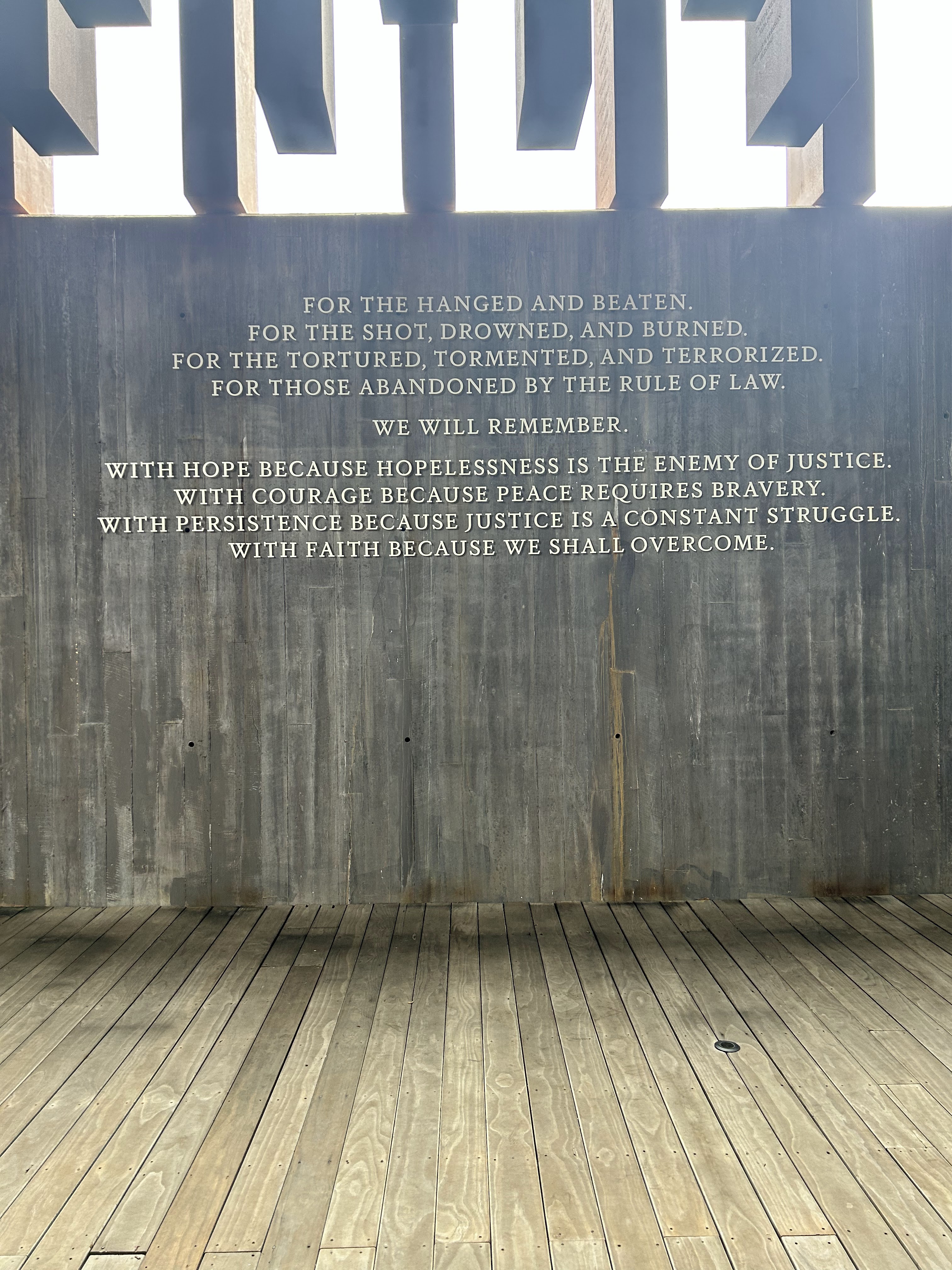
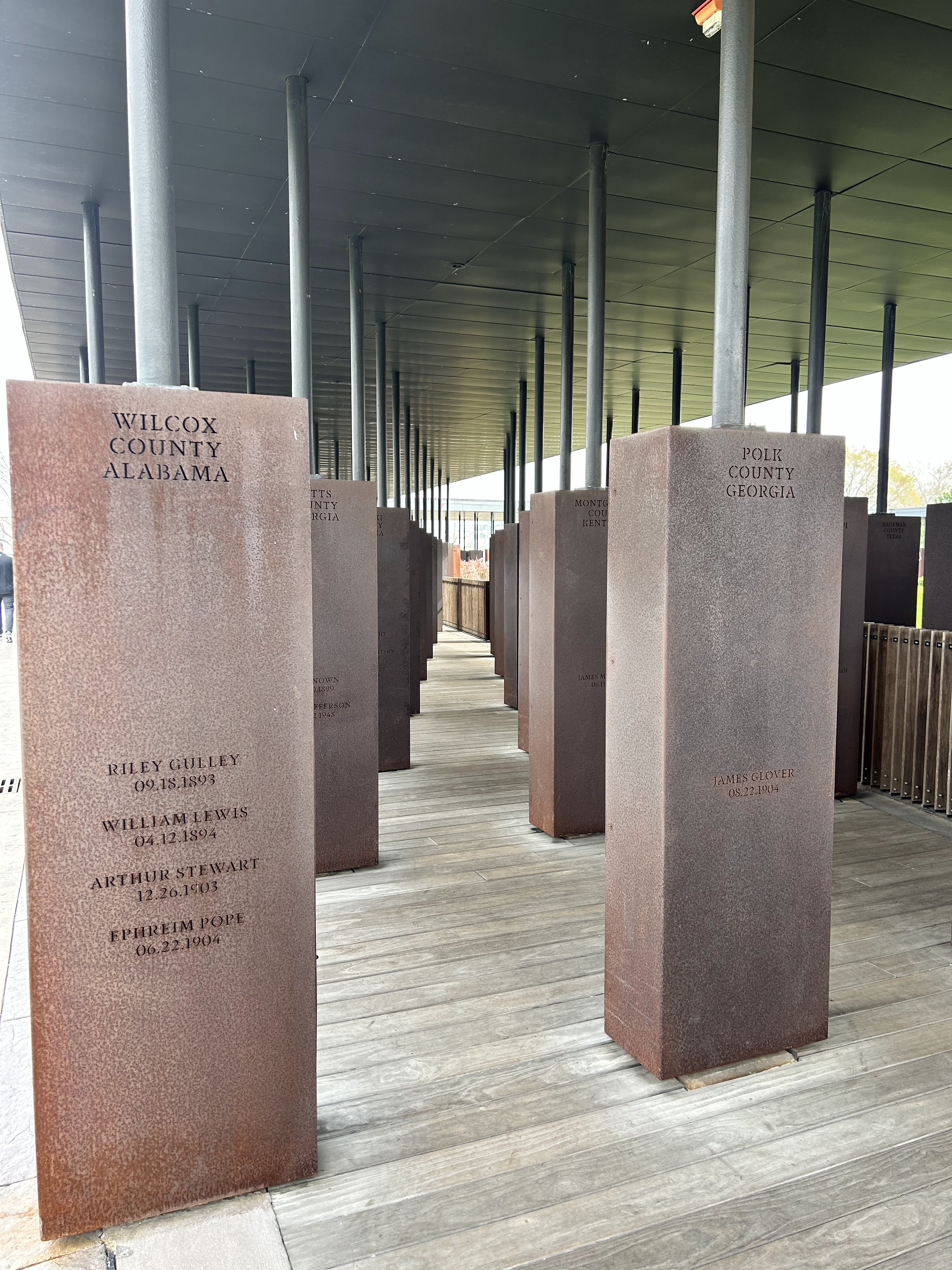
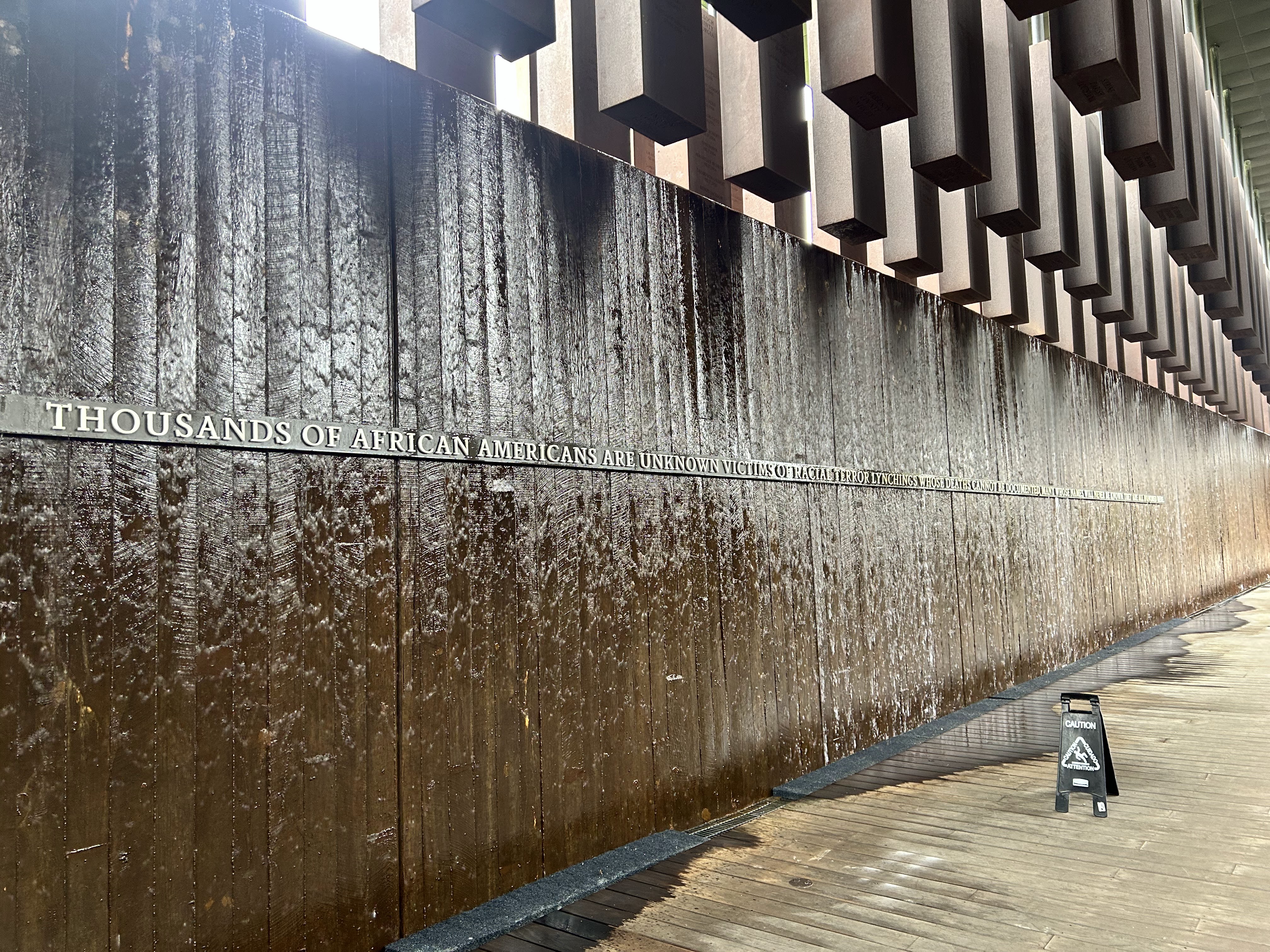
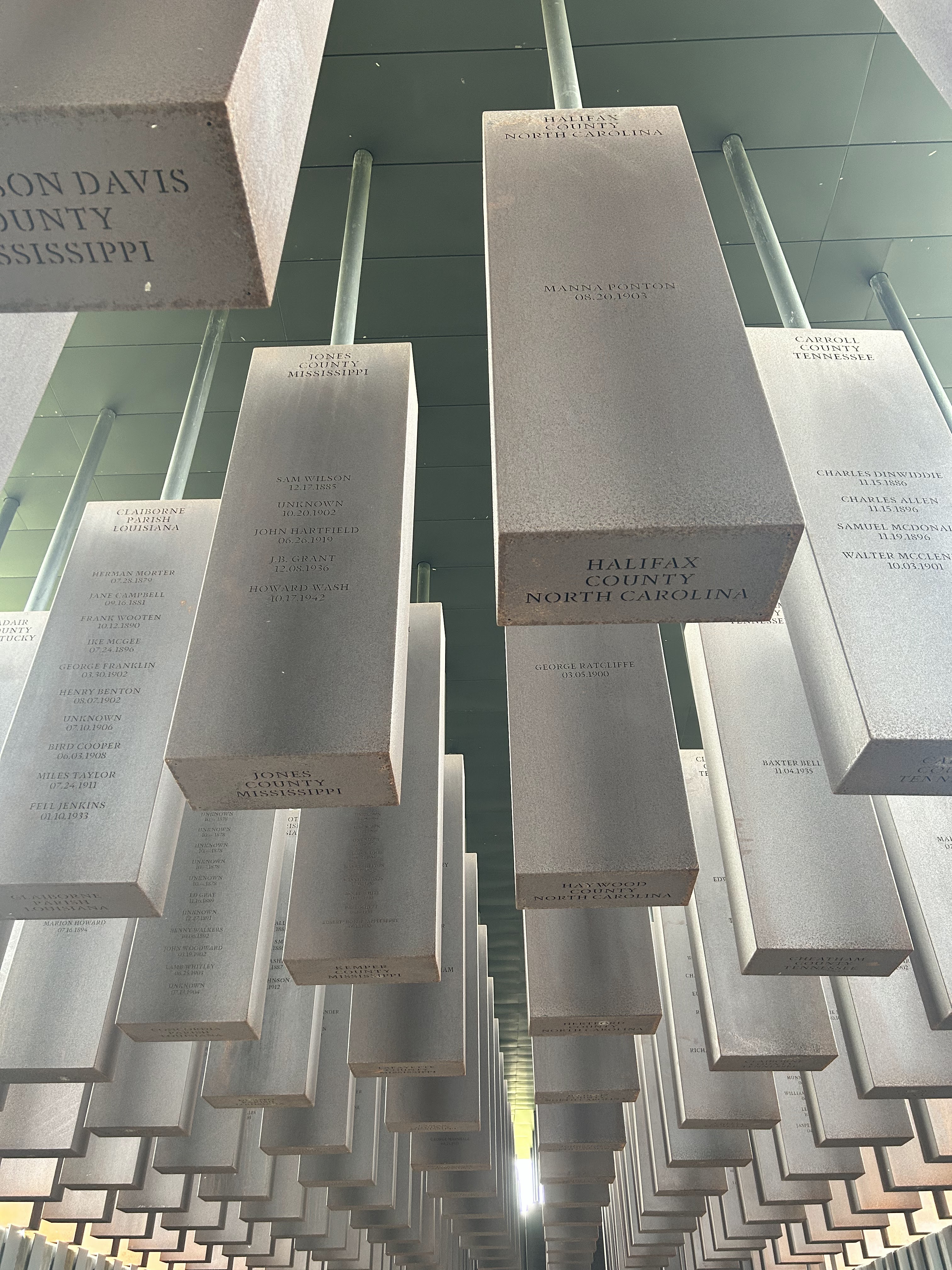
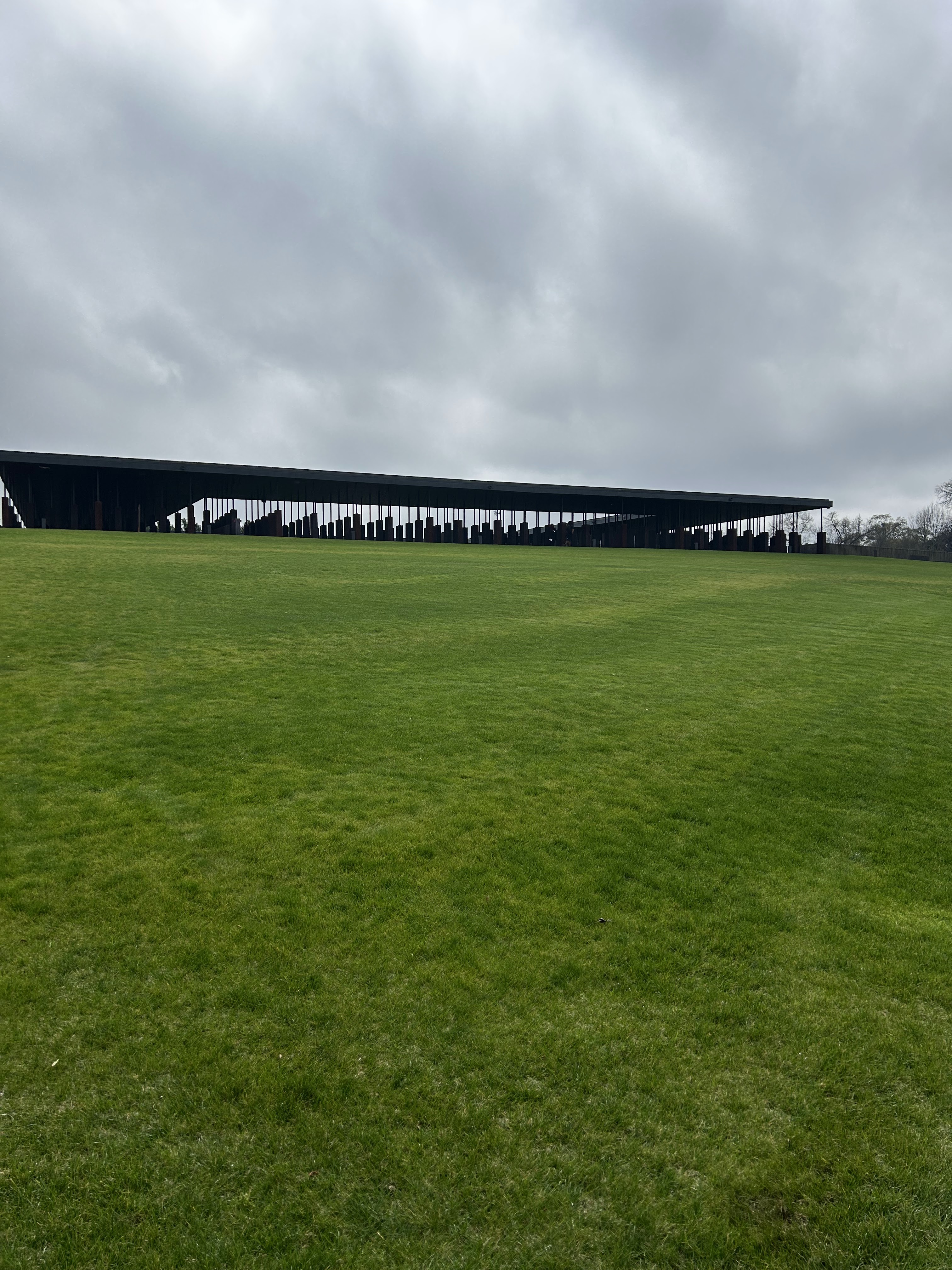
The last room in the building was a gallery with amazing art including two quilts from Gee’s Bend! The National Memorial for Peace and Justice was a six acre outdoor memorial dedicated to lynching. The grounds were pristine and the metal towers had the various locations and number of lynchings in that state or county. There were another set of metal structures that simulated coffins and a large water feature to honor the unnamed victims.
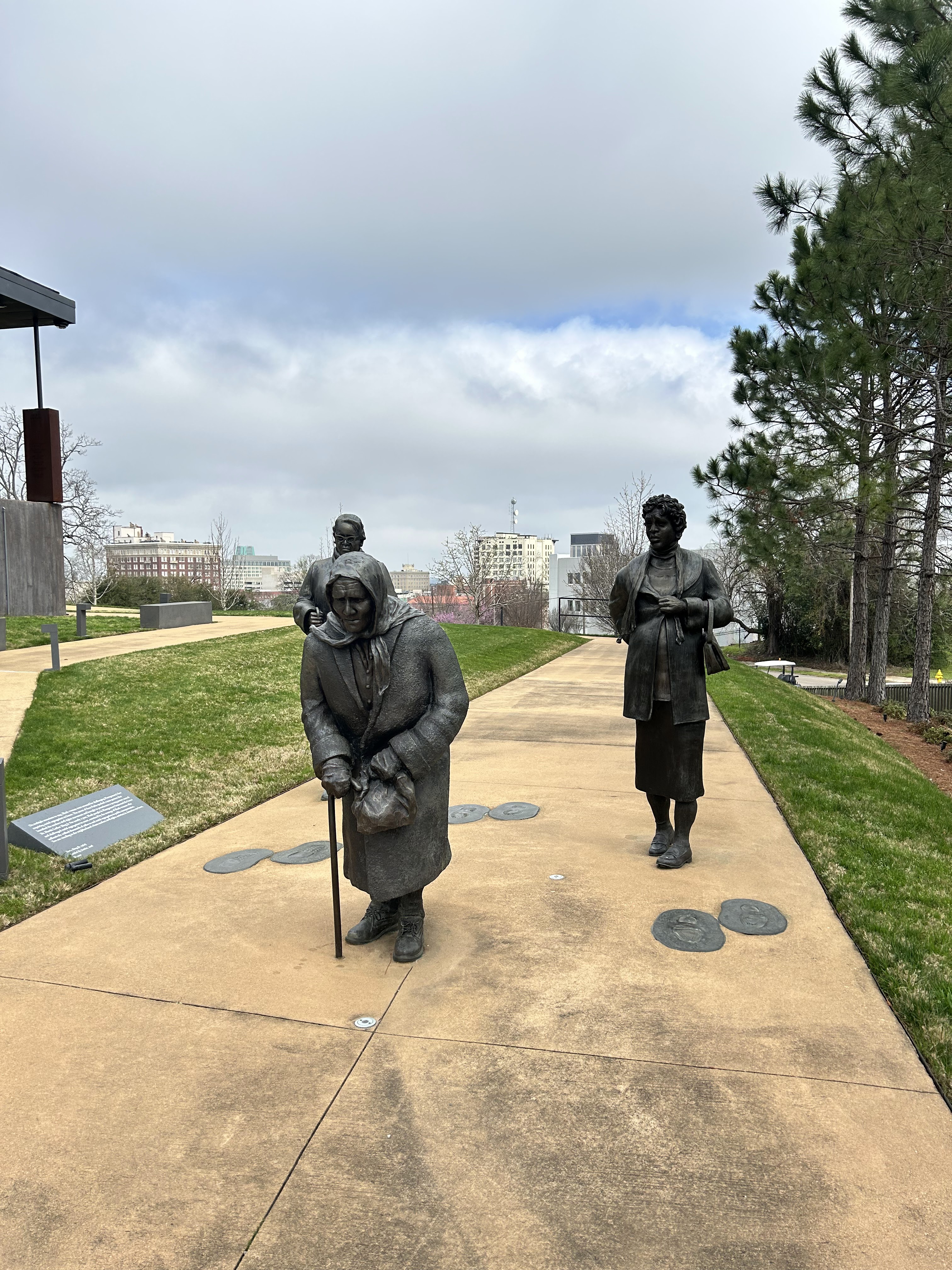
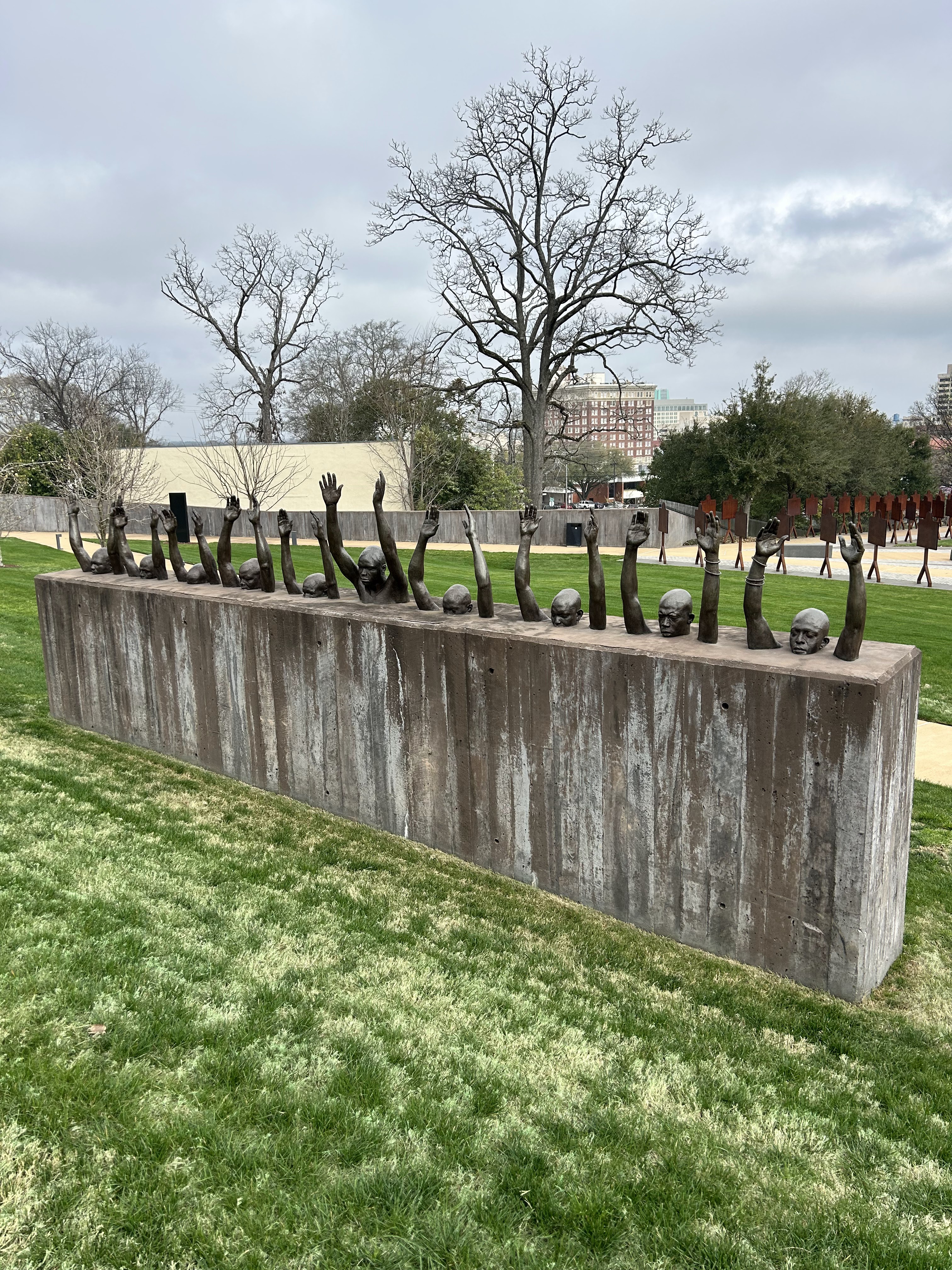
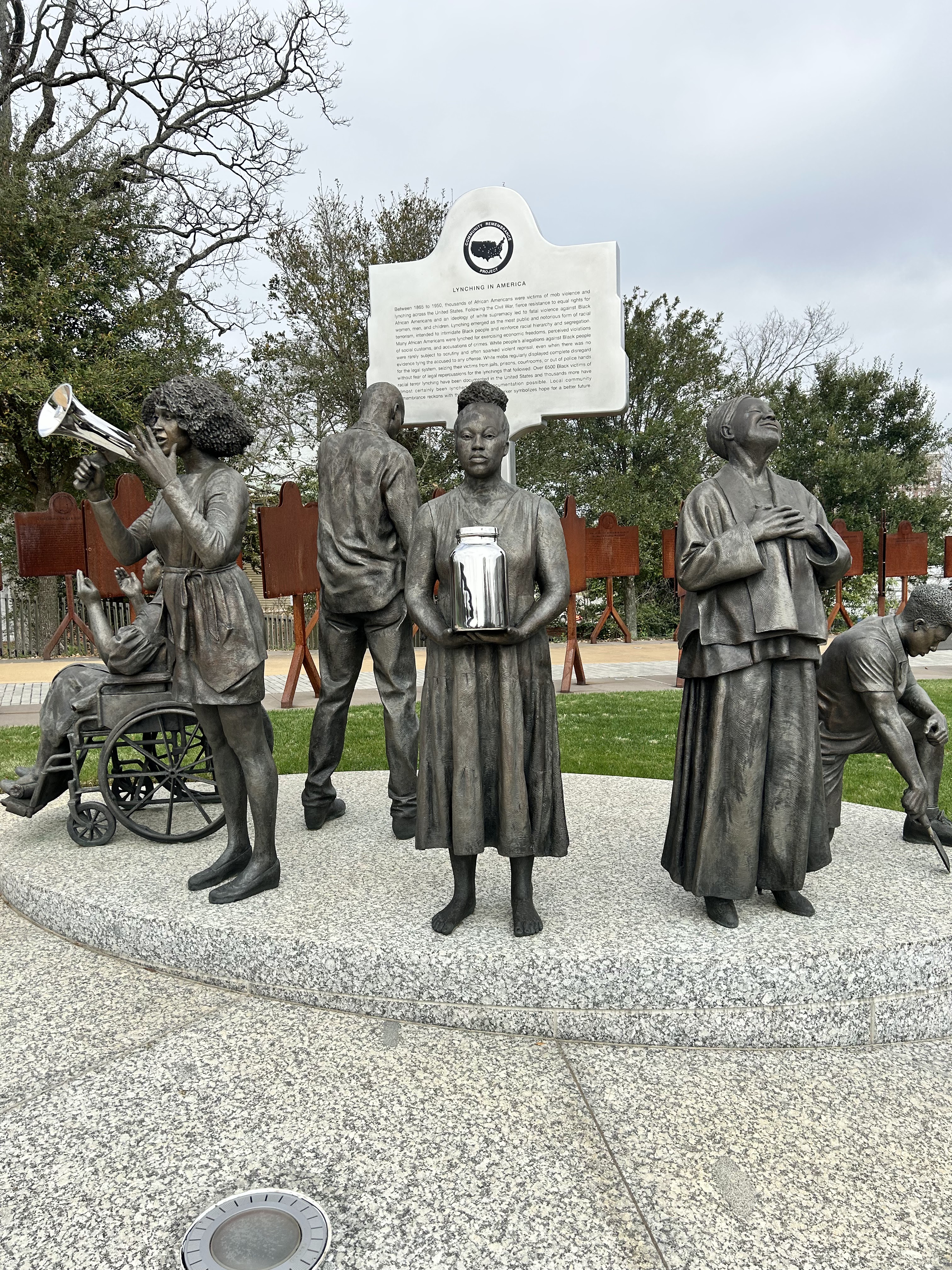
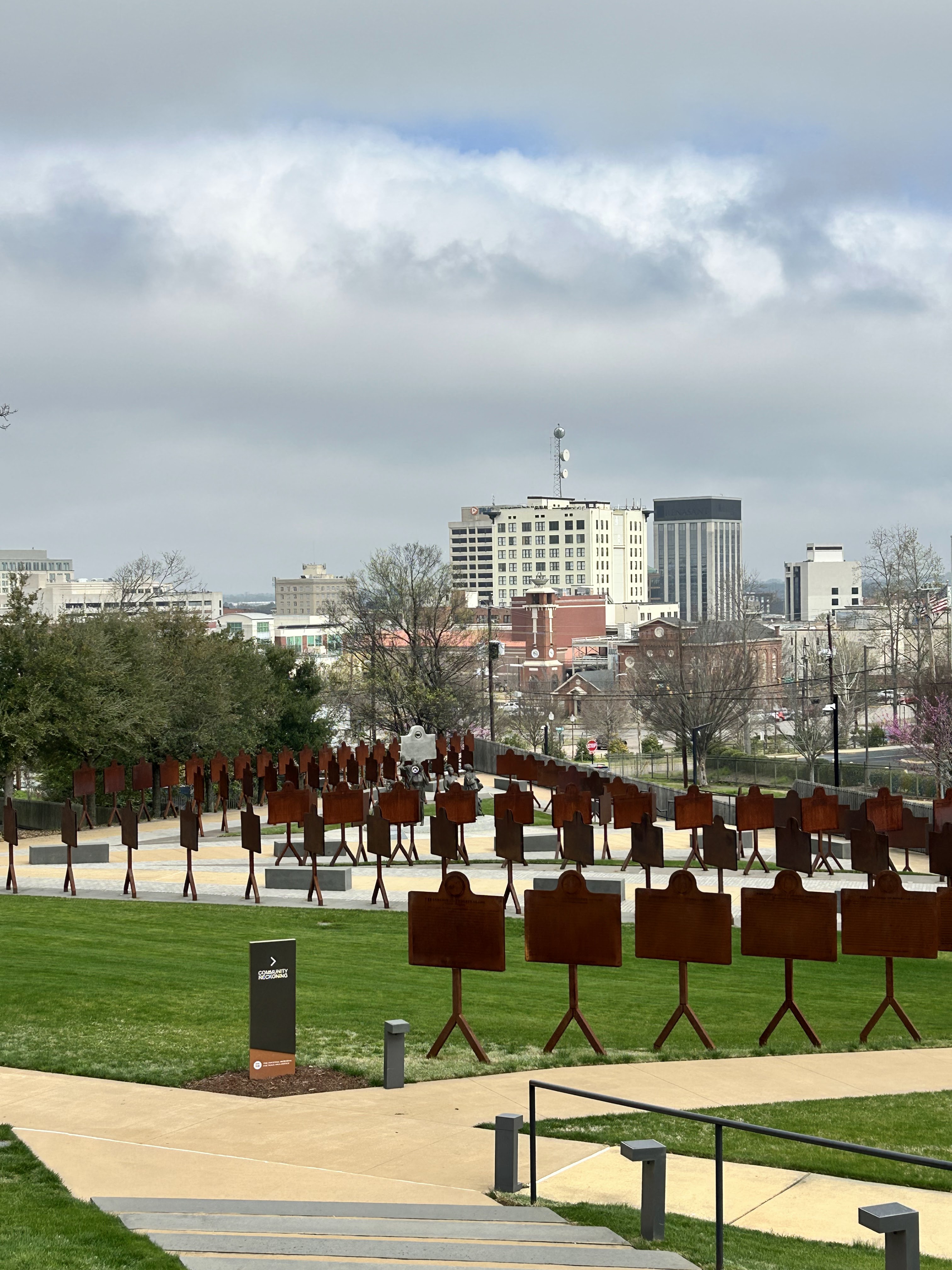
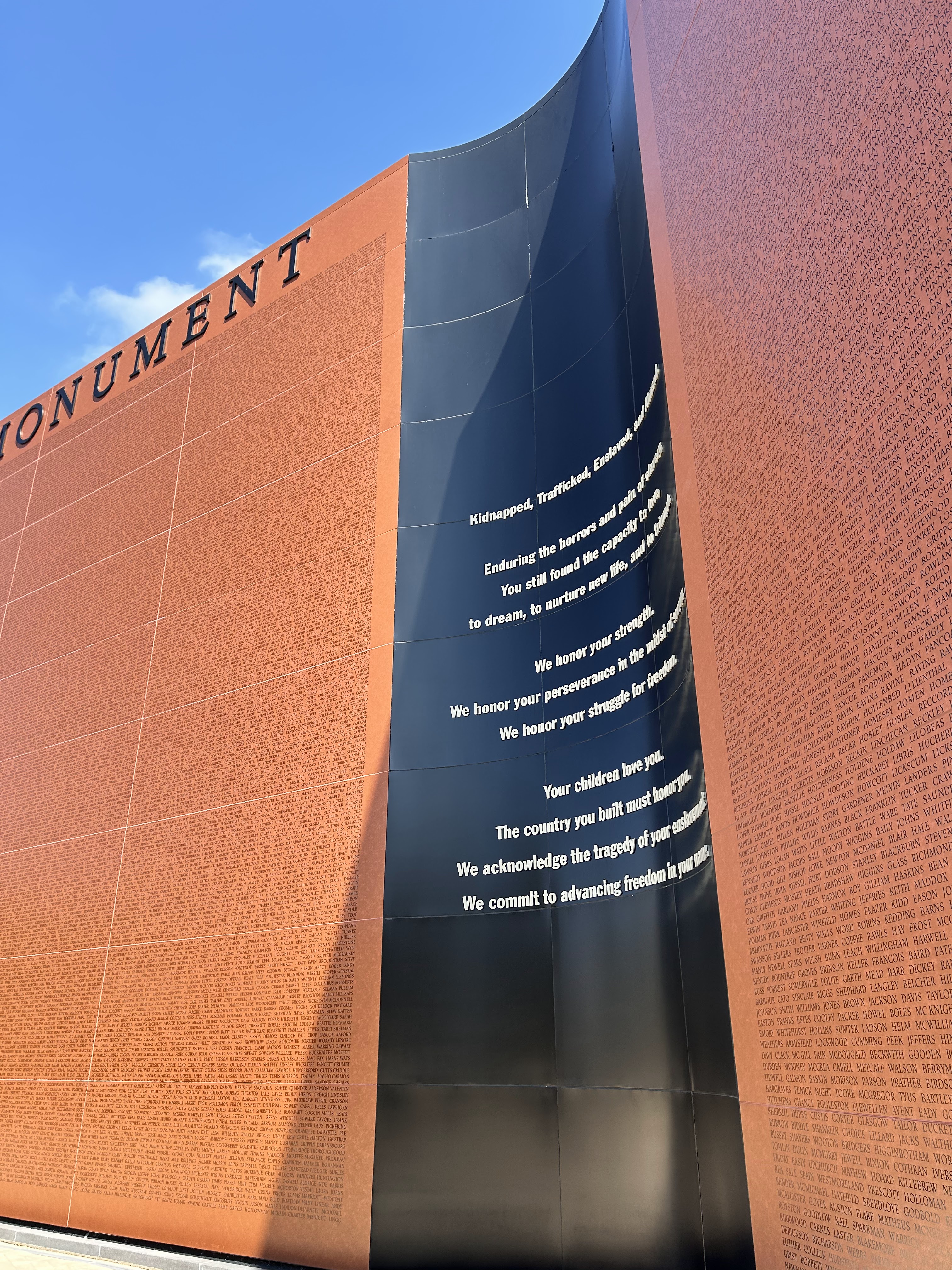
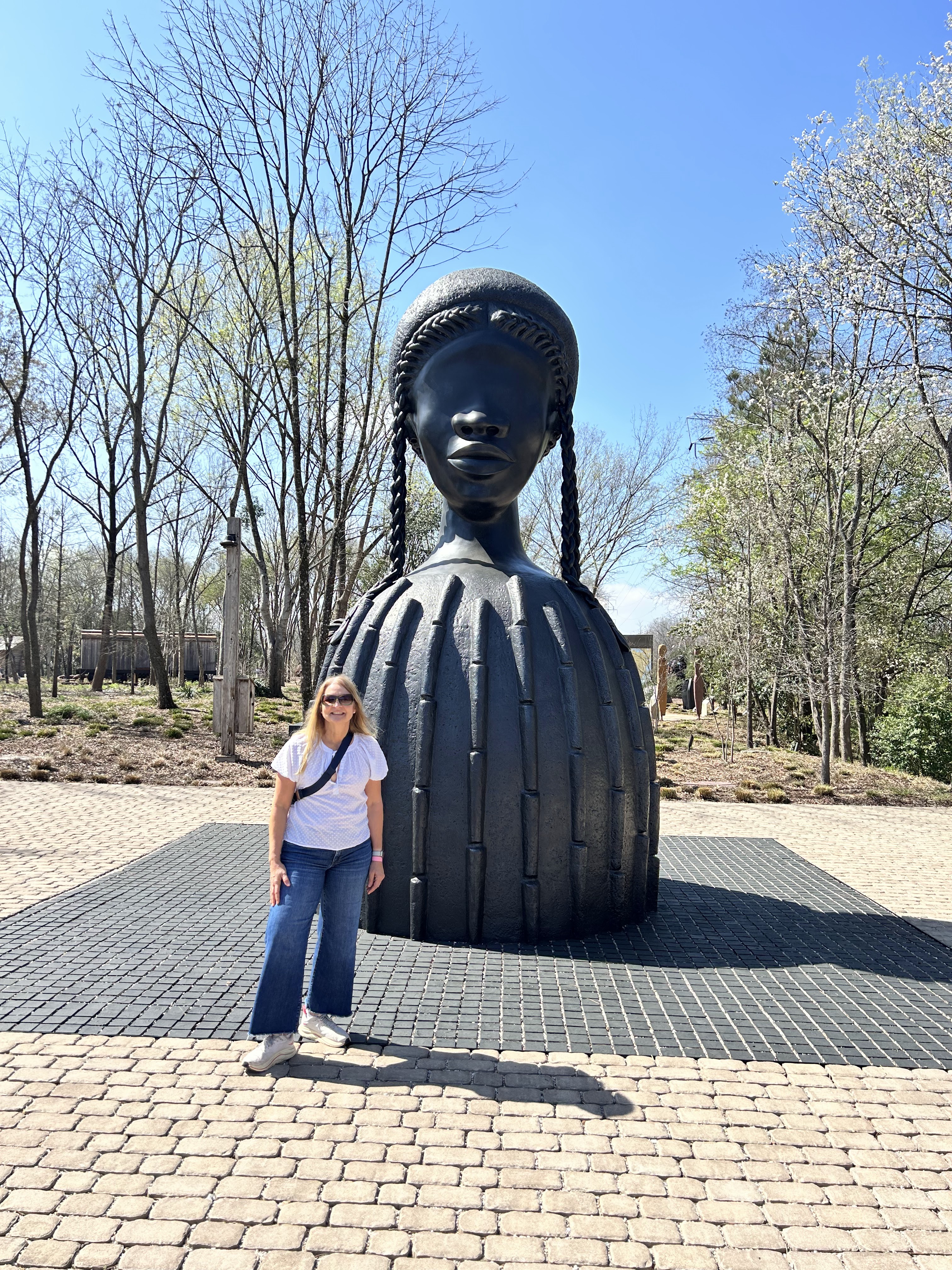
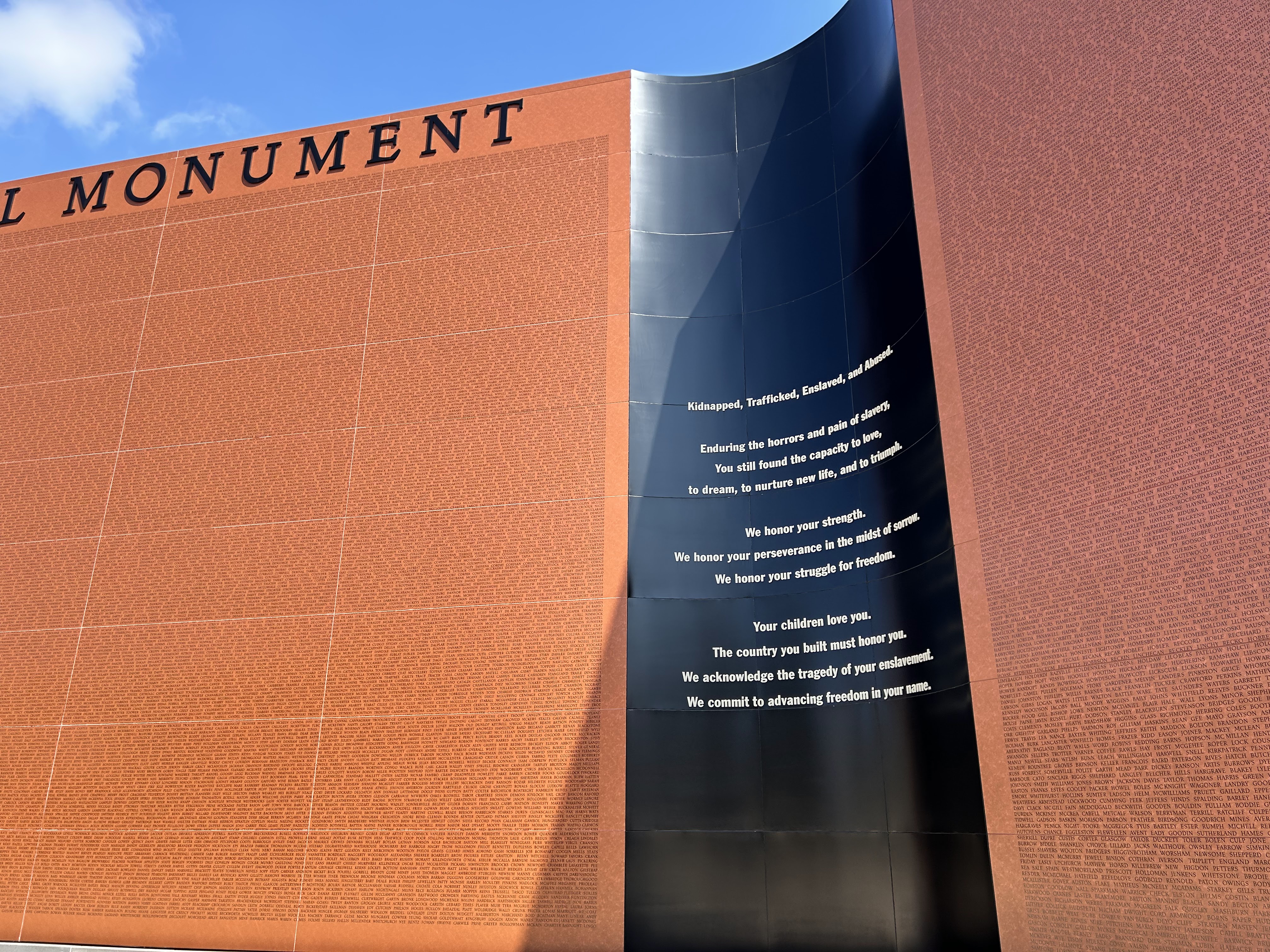
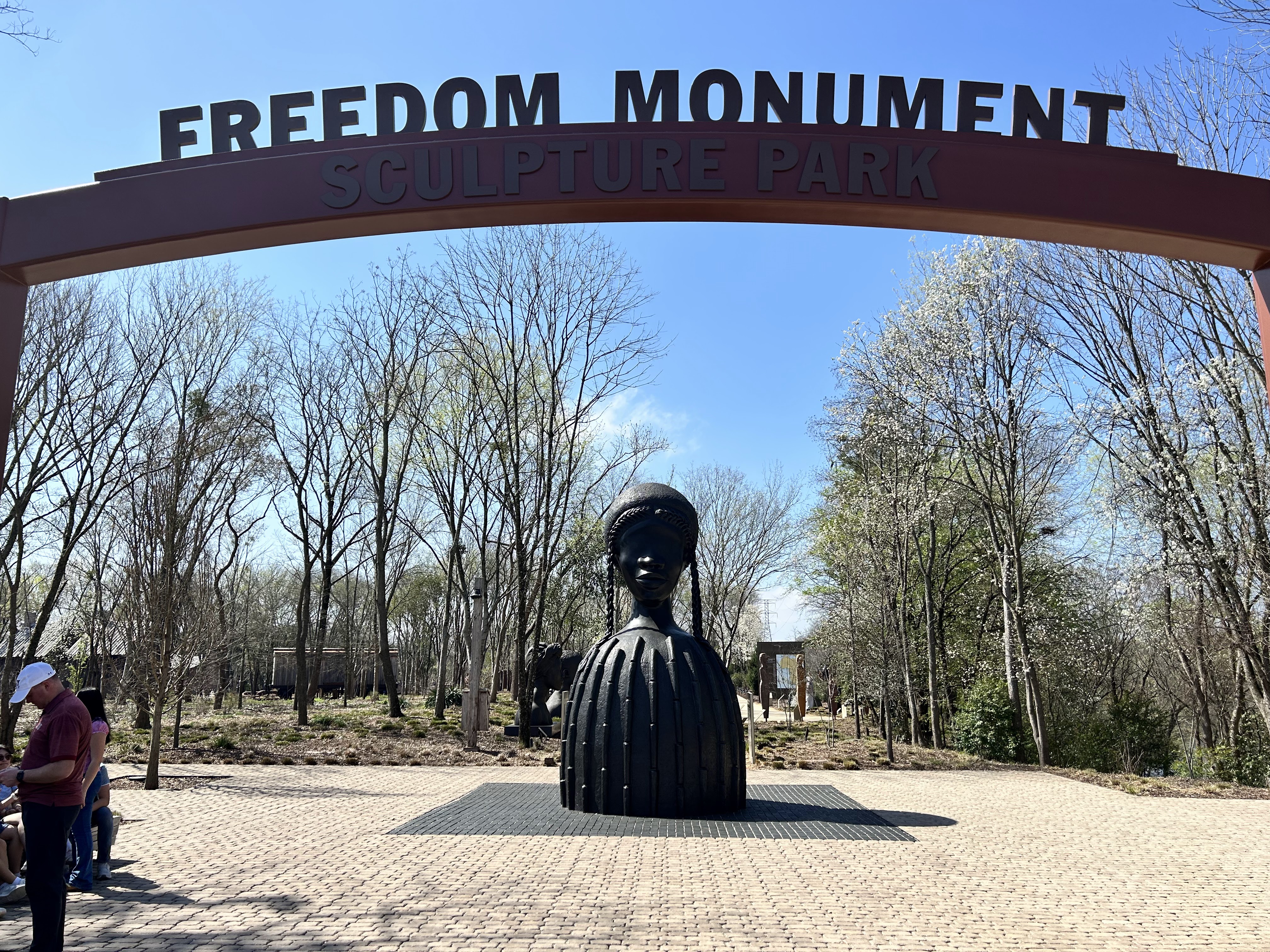
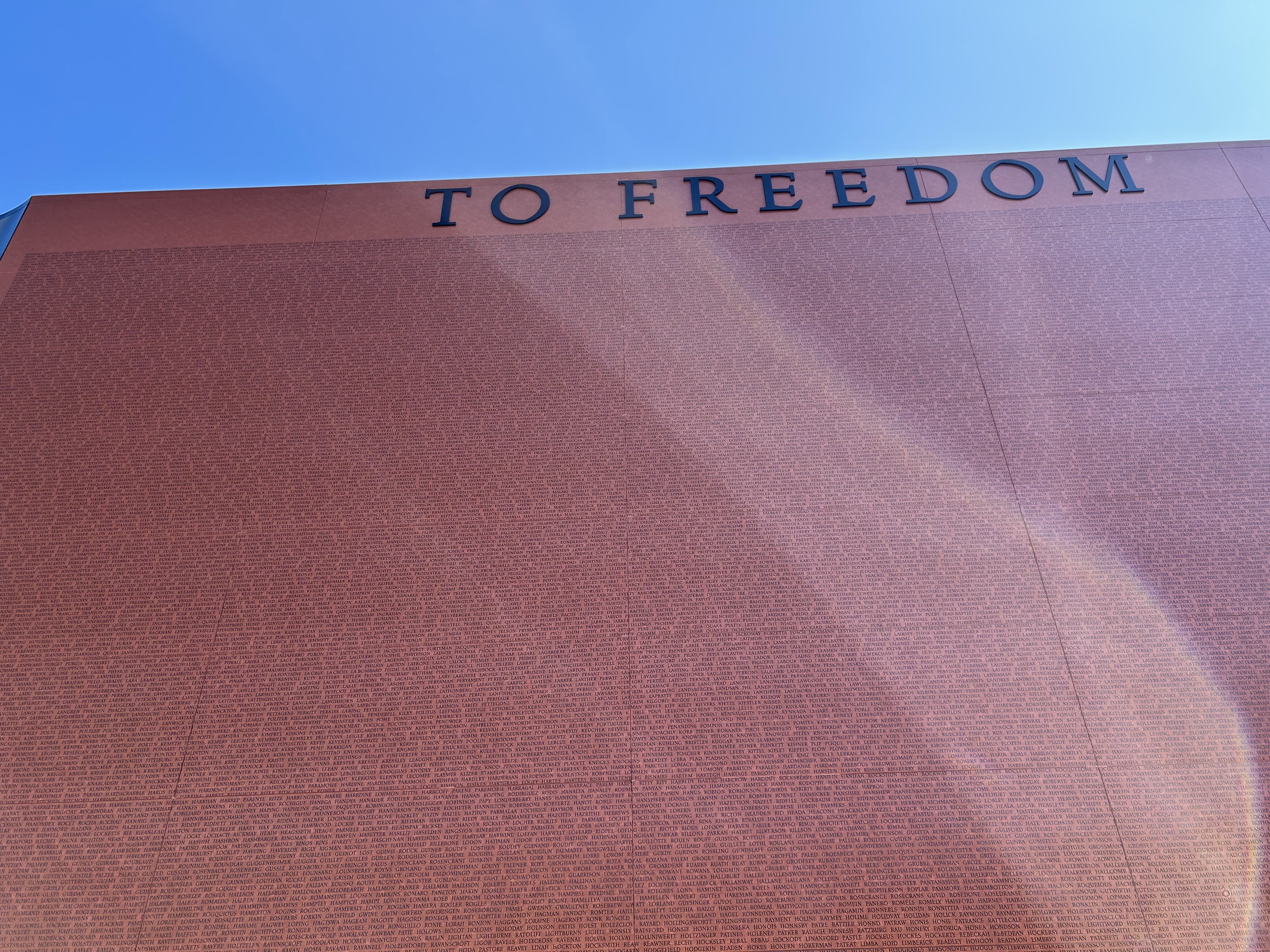
I took a boat ride down the Alabama River to the Freedom Monument Sculpture Park. This was the same way slaves were transported quickly to be sold or transported once sold. I landed at the 17 acre sculpture park that housed amazing sculptures, slave cabins, a railcar and holding paddocks. At the end of the loop was a memorial wall with thousands of names. Photos were limited to just the entry and the memorial. The art and sculptures were beautiful so you must visit yourself to see them!
Overall, I was impressed with Montgomery. It was clean and the old brick buildings and large, county buildings were beautiful. This museum was modern, clean and very thoughtfully mapped out. The metaphors were powerful and thought-provoking exhibits were well-done. Visitors undoubtedly walk away with a clear understanding of how institutional slavery has developed into a permanent hierarchy through our legal, political, religious and science institutions. Racism has been justified as necessary and enforced through violence and continues in our present day.
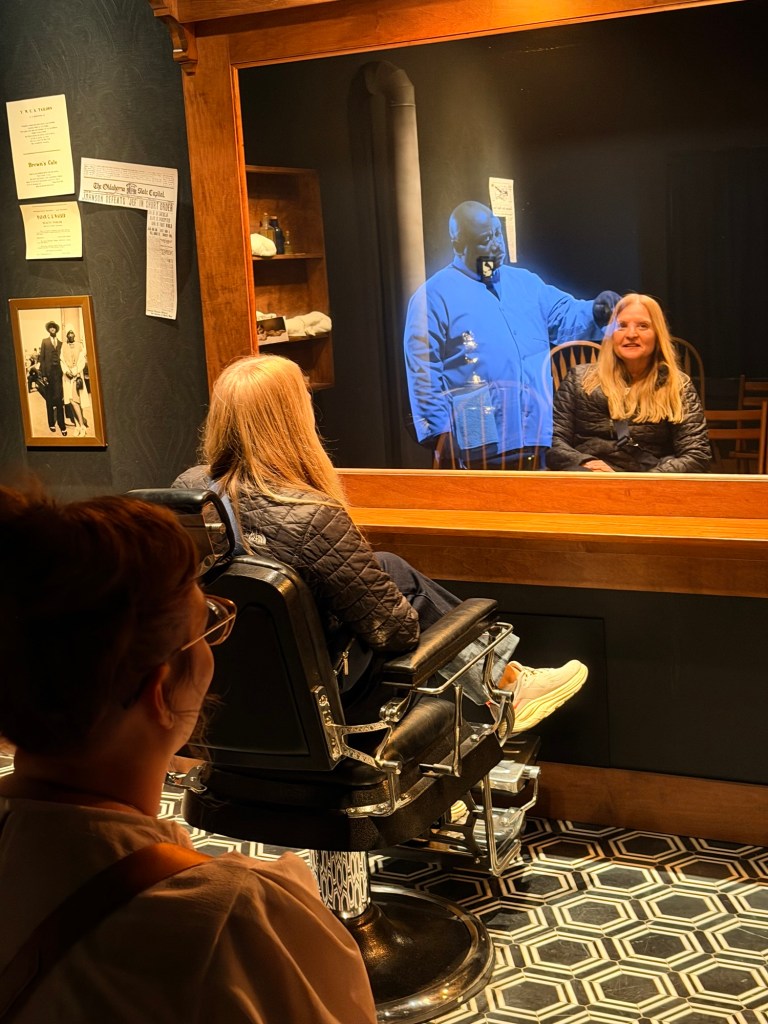
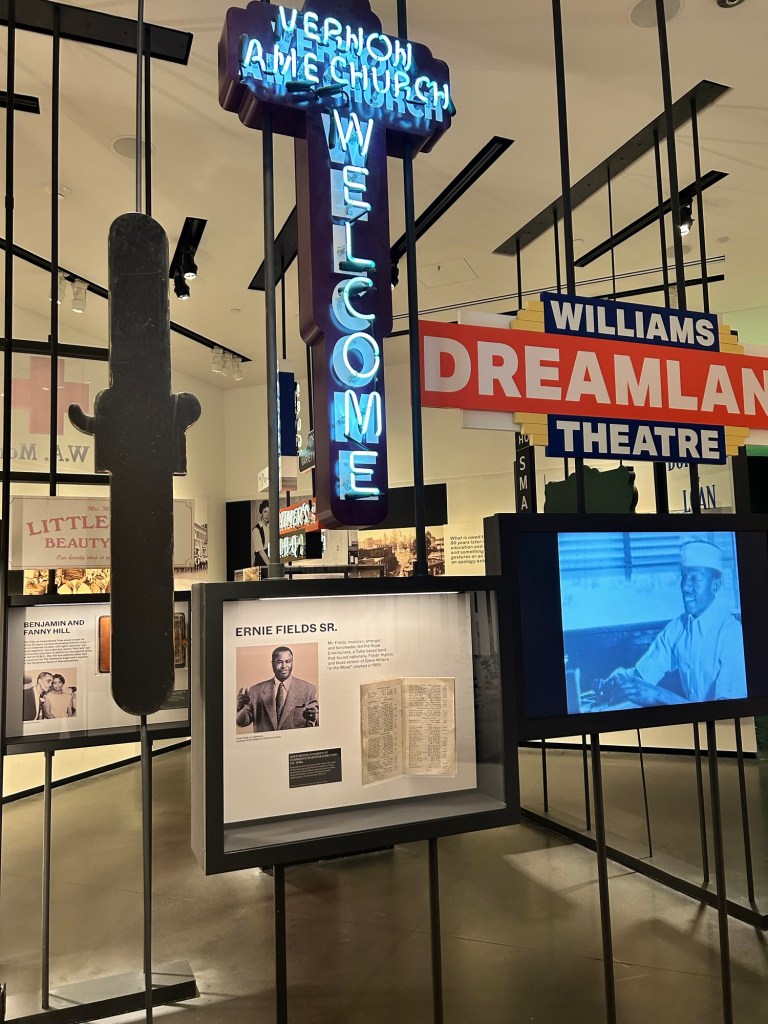
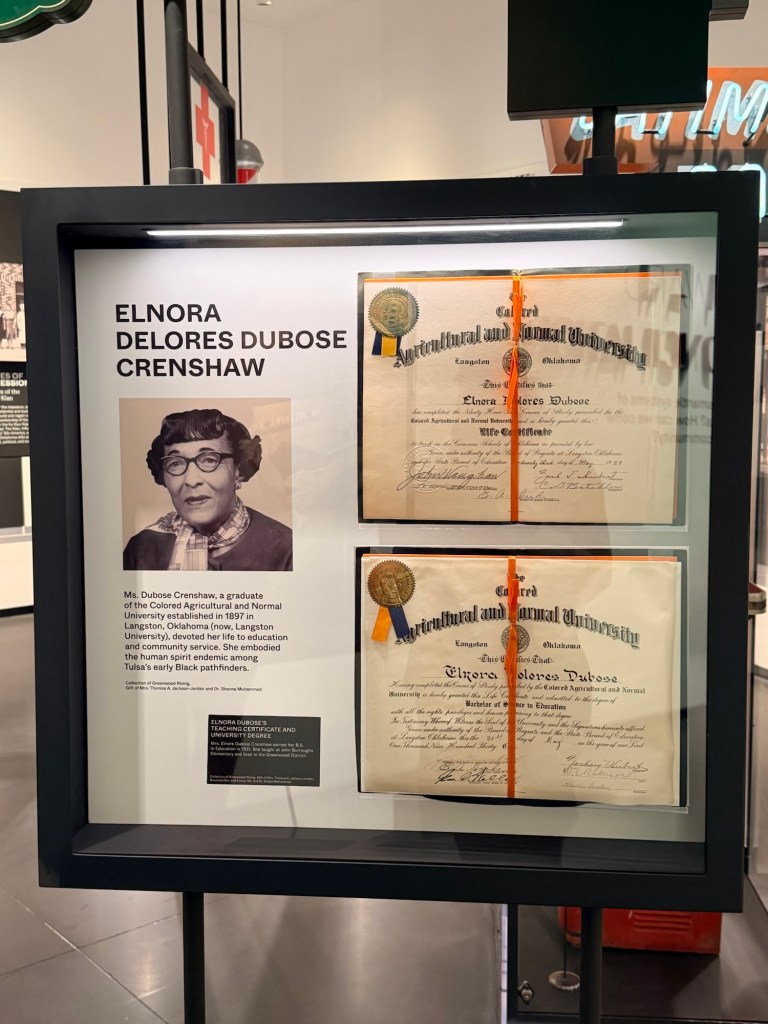
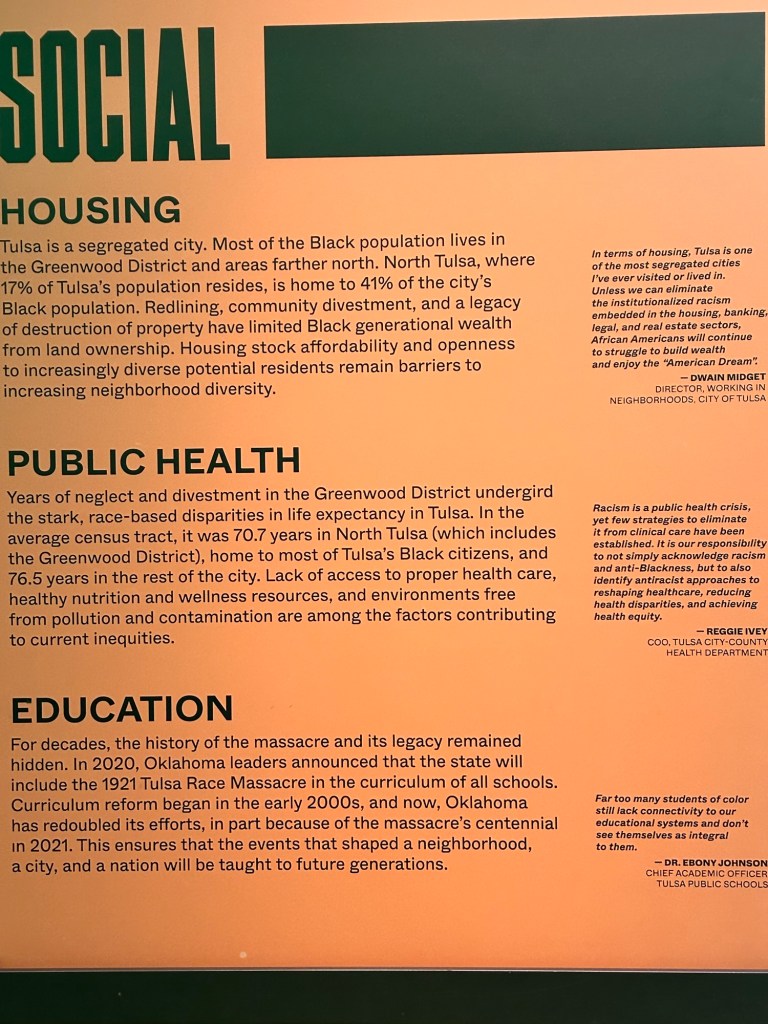
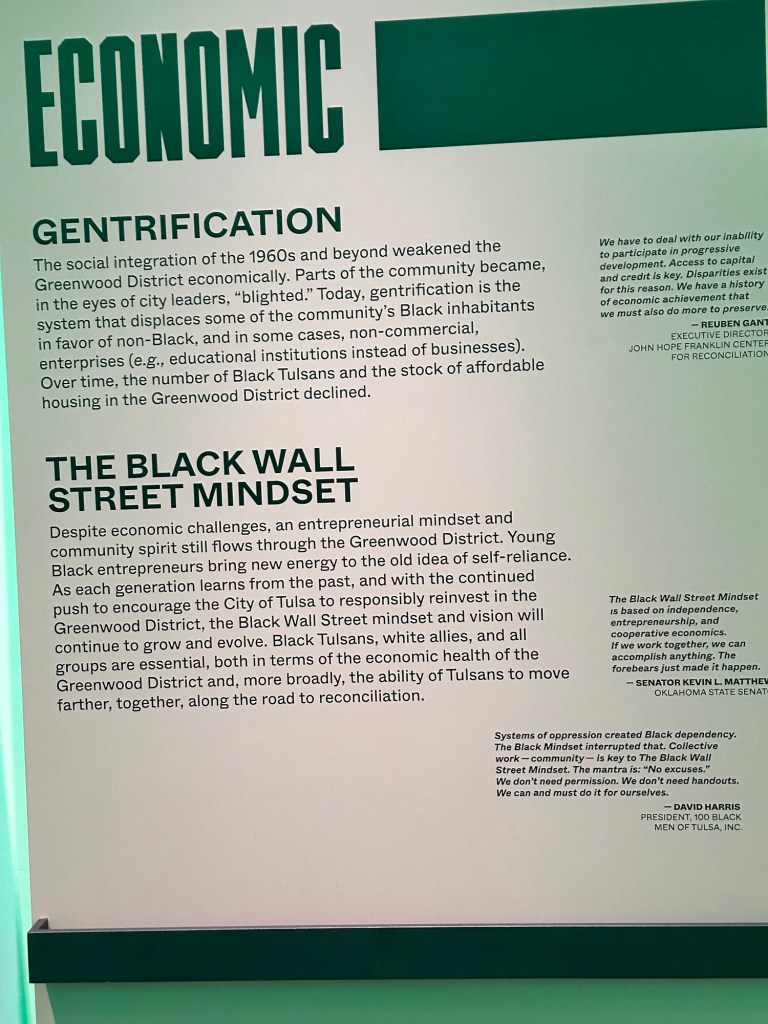
Today I drove about an hour and forty-five minutes to Tulsa. I went to the Greenwood Rising Black Wall Street History Center in Tulsa. It shared the story of Greenwood as a successful enclave of Black business until the Tulsa Race Massacre in 1921. This museum created an immersive experience. My favorite was the barbershop where I was able to sit in the barbershop chair and watch holographic barbers talk about early dreams for Greenwood.
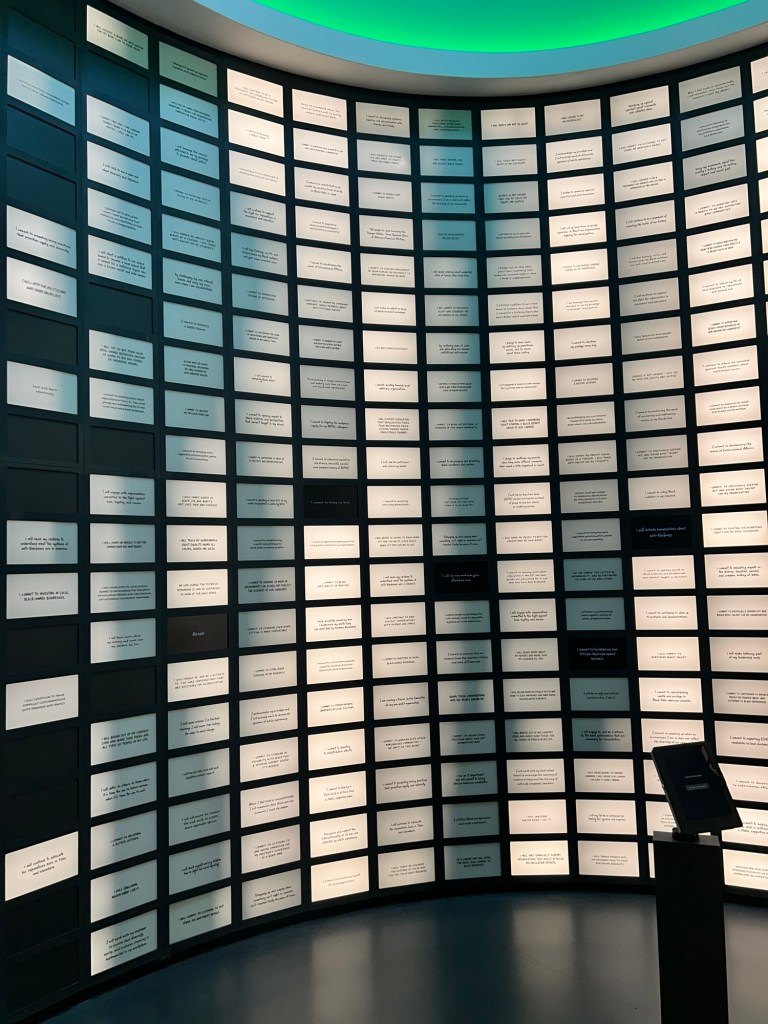
The museum shared examples of systemic oppression and asks visitors to commit to racial reconciliation. I loved the message of the museum through media, stories, pictures and interactive displays. The museum does not shy away from the work that still needs to be done by all of us.
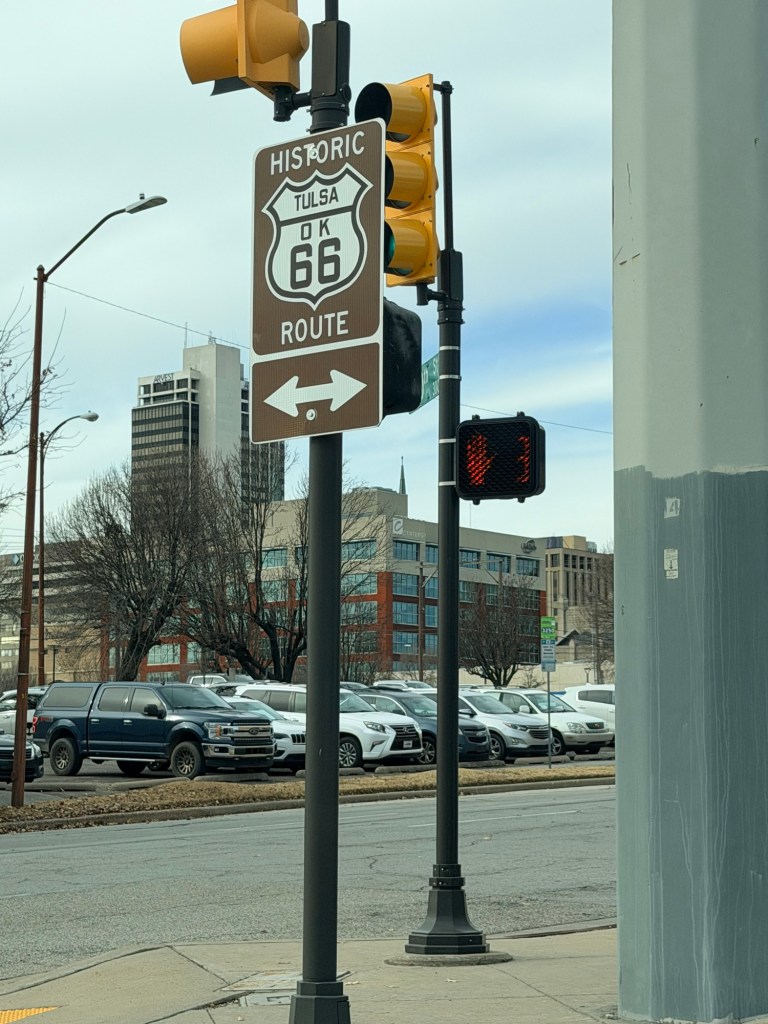
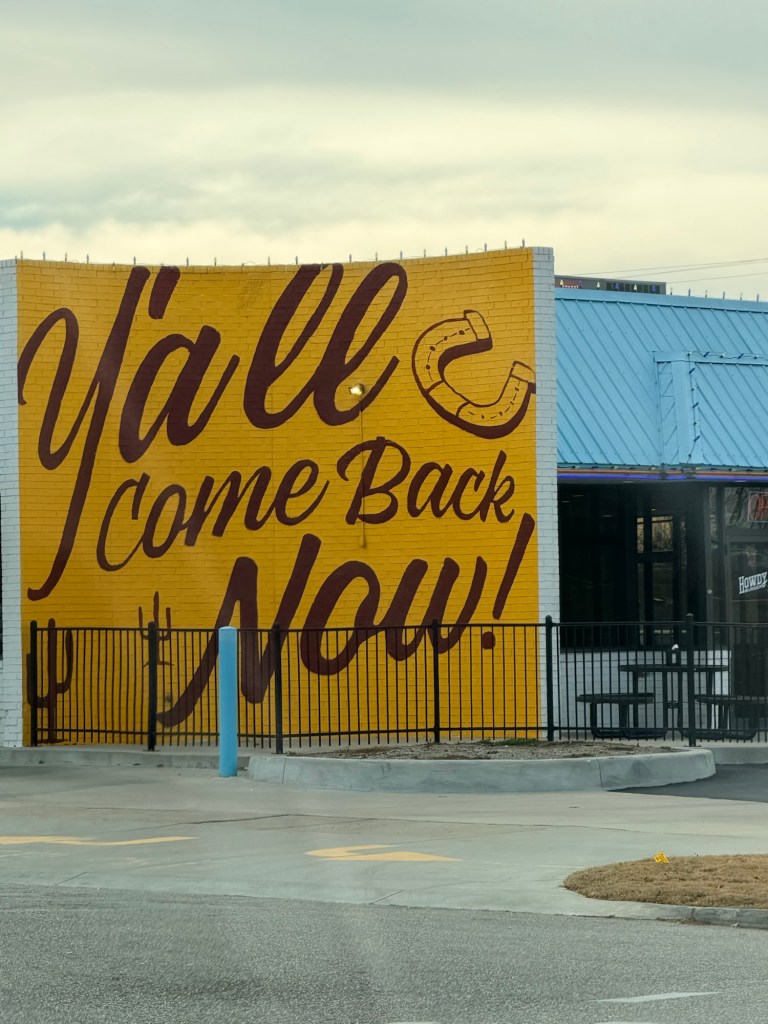
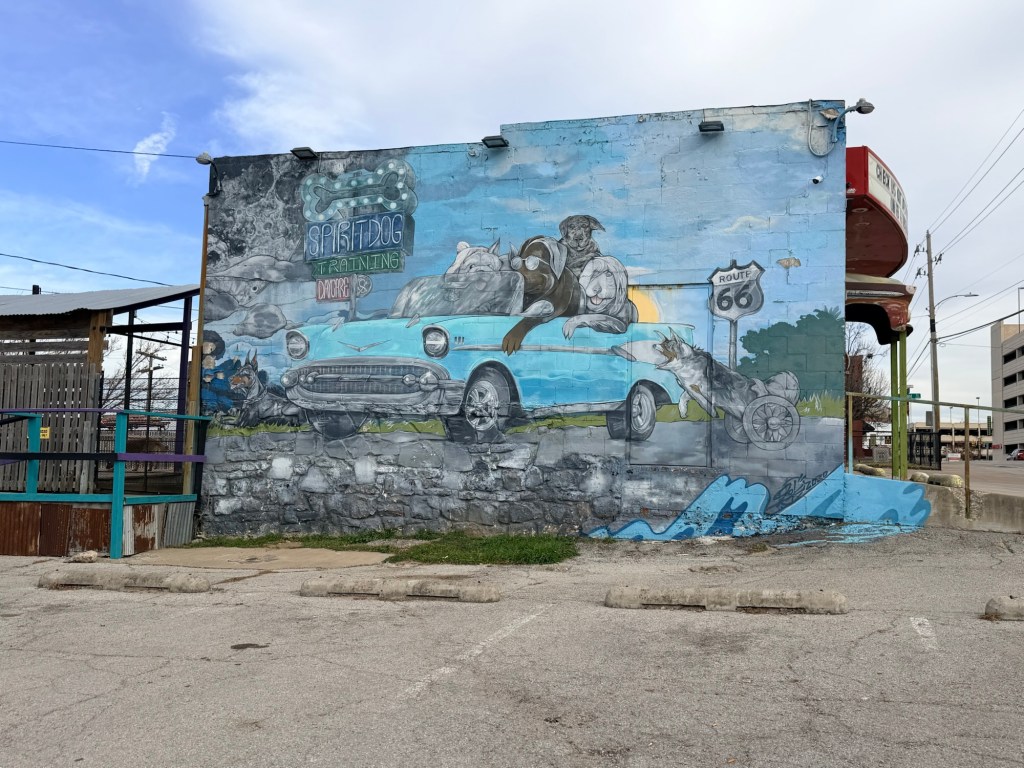
Afterwards I wandered the downtown area to see the many churches, examples of art deco and numerous murals. Tulsa was very clean but few people are out and about on the streets.
I am working with a new client on bolstering their inclusion practices with employees and clients. In the most basic form, inclusion is defined as “the act of including” by Merriam Webster. But we all know it is a lot more than that. In fact, all people want to feel included, valued and appreciated…or at least I know for sure that I do! So how do you create an environment where folks feel a sense of belonging, feel heard and feel safe to express their authentic selves?
First, accept that we all have bias. One of the ways to work through our bias is to talk about it. Many DEIB programs hit walls when they focused on blaming and shaming. Blaming and shaming never work, especially when you are asking someone to be open-minded to others that are different from them. Being bold enough to tackle these tough conversations is difficult since you don’t want to be called a racist, you don’t want to be misunderstood, you don’t want to offend someone and you certainly don’t relish is discomfort!
So what can you do to be more inclusive? I like this video on making assumptions and the framework is offers to Pause/Recognize/Question so that you are not misled by your assumptions (bias). Ask yourself, “What assumptions am I making?” and “How do I know these assumptions are true?”
Another tactic is to acknowledge your own preconceived ideas, move beyond generalizations and know the difference between perspective and reality. In other words:
•What messages have I received in my life that may influence my perspectives?
•What identity groups do I have the most exposure to?
•What identity groups do I have the least exposure to?
•How can I check for blind spots?
Other things you can do are expose yourself to new experiences, talk to people with different identities from your own and broaden your worldview. I love it when I talk to someone and I can say, “I never thought of that perspective or view before.” and “Wow, that’s a whole new way of looking at…” I think the American Negotiation Institute’s guiding principle says it best: “The best things in life are on the other side of difficult conversations.”
For every headline you might read lately, it seems that DEIB is all but gone…under attack…wrong in so many ways. But I see just as many companies, people and organizations sticking with their DEIB initiatives. Most DEIB strategies are focused on doing the right thing not giving folks an “unfair” advantage like the media would like us to believe. Treating people with dignity and respect should never be out of style.
Dismantling racial structures means change and people typically don’t like change especially when they believe they are losing something. So let’s flip the script and focus on what people gain when change happens. It is also important to plan out the change management strategy that should be tied to any organizational pivot or evolution.
The first step in a change management plan is to build and maintain momentum. Have your team analyze stakeholders, evaluate the impact to the organization, determine how you will measure the change and of course, secure budget for the endeavor.
The second step is to engage your stakeholders. This step includes creating a communication plan for the end user so identify your audience and what is important to them. In addition to the communication plan, figure out the engagement strategy…and expect and plan for some bumps along the way.
The third step focuses on aligning the organization. Complete an organizational RACI (Responsible, Accountable, Consulted and Informed). Rewards and measurements should be considered here, too.
The fourth steps includes training and developing people. Consider the needed training strategy tied to roles and jobs, as well as, a coaching plan. Develop the needed materials, create the delivery schedule, determine how you will evaluate the training and then implement the training.
Finally in the fifth step of the process, monitor readiness and adoption of the organization. Define the metrics that will be used and create an assessment plan plus plenty of pulse checks. It is clearly evident that DEIB is very important to every organization (and the world) so upfront planning can help ensure that all the strategies and focus are set up for success and dissemination throughout the organization.
What have you done or experienced that helped your organization successfully implement their DEIB efforts?
Women are in a “no win” situation and walk a tightrope of meeting societal demands for women to demonstrate female characteristics of compassion, warmth, communication and collaboration vs leadership characteristics (dominated by male characteristics) of forceful, assertive, dominant and competitive.
Did you know? When women display male characteristics, they are seen as competent but not liked. When they display female characteristics they are viewed as less competent. Women leaders are seen as competent or likeable but rarely both. I saw this play out in my own career and it is incredibly frustrating.
And when you add women of different race, ethnic, sexual and gender identities to the tightrope of gender bias it gets even more complicated navigating the ladder to success.
A few ways bias shows up:
Pay gap
#Metoo wakeup call sexual abuse, harassment, microaggressions at work
I am presenting the topic of Bias and Intersectionality this week. It is to a group of women new in their careers. Bias is a well-used word but what does it really mean?
Fact: The world does not view women and men the same.
Gender bias is: When people show favoritism toward one gender over another.
Women vs Men:
Conscious and unconscious. = women and men are treated differently.
Bias is hardwired in our brains to help us make sense of the world quickly.
Bias creates different expectations for different genders (in this example).
Bias transforms into prejudice, differential treatment and inequality.
Women and men experience the world in vastly different ways.
Social norms continue to reinforce this bias.
What examples have you seen where bias comes into play?
Reading “The Wake Up” by Michelle Mijung Kim has been powerful and informative. She shares so much great information. Her comment, “Many of us desire to have good impacts, but sometimes even our best intentions can bring unintended consequences of harm.” This results in fear to do or say anything but then harm is also caused by inaction.
Kim suggests a few things to do when you get called out for being harmful:
Listen and calm your defenses.
Apologize and acknowledge the harm.
Express gratitude for the feedback.
Make amends without expecting forgiveness.
Commit to doing better and then actually do better.
I believe it is important to constantly continue to learn. And I love learning new things to to help me consider other points of view. So, I was definitely intrigued to read Kim’s book. She is a queer, immigrant Korean American woman writer and like every other person in this world, she has a unique perspective. This perspective informs her work in the DEI space. The premise of this book is good intentions vs. real change, which also is challenge in the DEI space.
Some things that I liked from this book:
Her definition of allyship. She states that it is, “the active and consistent practice of using power and privilege to achieve equity, inclusion and justice while holding ourselves accountable to marginalized people’s needs.
I agree with her comment that good intentions produce unwanted outcomes all the time. “Doing good” is not the end game. Validation must come from the group that is marginalized. They decide what doing good really means. For example, ” By failing to set accountability metrics that are driven by the very people such initiatives have been created to support, companies end up solving nothing and doing no good.”
Kim’s distinction of do-gooders vs each of us owning that we “each play a critical role in upholding and dismantling systemic oppressions that ultimately impact all of us.” Who does your “why” serve? Yourself? Or historically marginalized people?
We need to understand they ways in which we are harmed by or benefitting from different systems of oppression. We all benefit from some and cause harm in other ways. And the belief that everyone has the opportunity to succeed through hard work and their own skills is a myth. The folks that hold the power, access and resources while not acknowledging the barriers marginalized people face, have enjoyed success, believing they earned (and deserve) their success.
I think about the Afghan man that I am teaching English to and how motivated he is to learn so that he can improve his opportunities. Someone that already speaks English clearly has advantages over this immigrant. This is a simple example but shows how inequities begin and stay in place.
White supremacy exists in every system we have in place: work, healthcare, criminal justice system, real estate, the interviewing and hiring process…the list goes on and on. “Racism is a complex set of systems, policies and beliefs that reinforce the marginalization of people while privileging white people in society.”
Kim lists a few questions to help guide us:
Who has the power?
How is the power being used?
Who benefits?
Who is harmed?
What historical, social, cultural or political context might I be missing?
There is so much to this book, I am going to write multiple posts about it!
I love learning new things and certainly have spent the last several years reading, watching and listening to anything I can get my hands on about diversity, equity, inclusion, bias and belonging. So I recently picked up, “Say the Right Thing” by Kenji Yoshino and David Glasgow. The premise of the book is to learn how to talk about identity, diversity and justice.
The authors suggest a framework called A.D.D.A. which stands for avoid, deflect, deny and attack. The authors contend these are conversational traps that one needs to be aware of and prepare for as one tries to have conversations around identity, diversity and justice issues. I thought this framework really did capture how conversations derail, sometimes before they even start!
One line in the book really captured the issue for me:
As excruciating as it can feel to have conversation about identity, it’s important to remember people from nondominant groups have always experienced emotional turmoil in these dialogues from being ignored, mocked, tone policed, or subjected to retaliation. When you find yourself wondering, “Why am I so uncomfortable? You might instead ask, “Why have I been comfortable until now?” You might then hear the answer: “I’ve been comfortable because until today, the other person has carried all the discomfort on their own.”
The authors suggest some strategies to deal with the emotional discomfort of these types of conversations such as a growth mindset by treating mistakes as opportunities to learn, self-affirm by reminding yourself what is most important and right-size feedback by remembering claims about privilege are often not as extreme as you perceive them. Reframing the situation can make you more open to the conversation in an objective way.
There are lots of helpful nuggets in this book. The authors share stories, examples and suggestions. One of the ending notes I think was helpful, “Don’t ignore people’s group identity, but also don’t reduce them to their group identity.” And finally, educate yourself! It is your responsibility to do so. Be curious, humble and ask for help but don’t expect someone else to educate you. Check out this book and let me know what you learned.

















 seniyegroff