Day One of Wandering

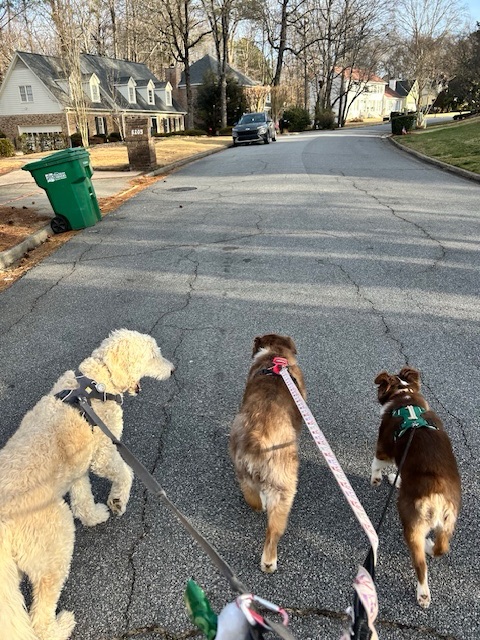
Well after six plus weeks of waiting, today was the day to take off! Of course, it is bittersweet but something I have been planning for the last six years. The numerous good-byes included celebratory drinks and meals, kind words and promises to keep in touch. The momentous day started with my very good friends making me breakfast and giving me fresh baked goods to take on the road. Then a matcha to fuel me for the first leg of my trip. I stopped in Eugene to visit my new college student! Today was the first day of classes. Pete walked the campus and even though it was rainy, Pete was oblivious because the smells (and dropped food crumbs) were just too good!

After my Eugene stop, I headed south and then West to Reedsport. I wanted to check out the Oregon Dunes National Park but it was just too rainy. We saw Elk at the Elk Viewpoint in Dean Creek and then headed down to Bandon. North Bend had a cute downtown and smelled of fresh lumber (which was present everywhere). Pete and I walked Old Town Bandon and then found a hotel. It was a last minute find but actually very nice. We drove about six hours today and it was a great first day.

Real Change in Real Time

I am on my third house sitting gig and my fourth move since I sold my house and moved out in mid August. I was telling a friend today that it’s been more difficult that I expected. The constant moving and learning a new house, establishing a new routine and making sure my dog is taken care of has been a lot of work. Additionally, I make sure that the homes are treated with extra special care (more than I showed my own) because I want to respect and show appreciation for the generosity people have shown me by sharing their homes. Sometimes, this feels like “walking on eggshells”.

Even with the discomfort, I remind myself that I am doing all of this for a reason. I intentionally blew up my life because I don’t want to live a stagnant, “autopilot” life. I believe short term irritation will garnish me with big time gains of a new perspective and value for life and all of its facets, ups and downs and experiences.

My to-do list is getting shorter and shorter. New tires on my car yesterday. Today I signed up for Trusted Housesitters. I figure it will open me to potential locations I haven’t considered or even know about! I also met with a friend today, and as with other friends I have visited, I invited her to accompany me on the road or join me for a part of my road trip. I let her know how important she is to me. I think we don’t tell people enough how they have added to our lives and journey. I am adamant the my friends know they are truly special to me.

And so my journey continues. It will have its peaks and valleys and I will continue to remind myself that it is where the growth happens. And more important than growth, it reminds me I am human and striving to be the very best version of myself, parent and friend.

Change

In the book, “Right Place, Right Time ” by Ryan Frederick, Frederick makes the statement, “Just because it’s hard doesn’t mean it isn’t the right decision.” This simple statement encapsulated exactly how I have been feeling. I love change and always have but that doesn’t mean I don’t doubt myself sometimes. Although I am making a tremendous change in my life by selling my home and wandering for the next year, I am excited and a little frightened by what I have done.

Frederick’s book focuses on finding the right home for the second half of one’s life. He asks the reader to think about Purpose, Social Connection, Physical Well Being, Financial Well Being and Place as they consider where they currently live and where they might want to live. This dashboard can aid in the decision of where to land and in what type of home (including retirement communities). Six years ago I created a weighted spreadsheet to assess similar categories. It has been a helpful tool as I have researched and visited places that might be a potential landing spot.

Some friends recently mentioned to me that I should leverage my process and what I learned to help others that are considering a late-in-life move. Perhaps a podcast or even some client coaching might be in order. I don’t feel like an expert, but I suppose I have learned a thing or two that could help others. I also might be able to coach someone that is afraid of change since change is my superpower. I look at change as an opportunity to learn, which I have always loved. For now, I am preparing for my wandering…five weeks and counting.

Book: “Transitions Making Sense of Life’s Changes” by William Bridges

“Every transition begins with an ending.  We have to let go of the old thing before we can pick up the new one—not just outwardly but inwardly, too.” William Bridges is famous for his transitions framework and this latest book rehashes his three phases of change.  The initial phase of Endings involves acknowledging and processing the losses associated with the old ways of doing things. It’s crucial to allow individuals time to grieve and accept that something is ending before they can move forward. Let’s face it, we are always in a constant state of change given how quickly our world moves.  And whether or not you like change, it is a fact of life so wouldn’t it be effective to have strategies in place to help you with the ending and what is to come afterwards?

During the Endings:

  • Clearly define what is ending.
  • Sort out what parts or aspects you will keep and what you will leave behind.
  • Identify what do you need to unlearn?

In order to end something a few things need to happen.  First, Disengagement, which essentially says you need to feel less attachment to the thing, person or process so ask yourself how you can do that.  Then you need to Dismantle or take apart the structure.  For example, if you have a particular route you take to work but you lose your job, you need to undue your automatic action to take that route in the morning.  One then moves to Disidentification.  Ask yourself, “In what ways are you no longer the person you were?” Then consider Disenchantment to define what no longer holds appeal about that thing or person.  And finally, Disorientation.  What is disorienting to you about this ending? Journaling is a great way to work through these stages.

After the Endings comes the Neutral Zone. This is the “in-between” phase where the old is gone but the new is not fully established. It can be a time of uncertainty, confusion, and even resistance as individuals navigate the unfamiliar.  During this “empty” time take some moments to appreciate this white space to problem solve and creatively process so that new ideas can emerge.  Open yourself to possibilities.  Renewal is the heart of the Neutral Zone.  You begin to see a new way of life, a way of being,  a fertile time for ideas and energy.

This final stage involves embracing the new ways of doing things and building new habits, skills, and relationships called the New Beginnings. Have a plan and purpose.  Focus on achieving small, quick successes.  With each success comes confidence that the change or new thing will eventually feel right.

Read more here.

How can you use this model during your next transition?

“How to Die with Zero” by Bill Perkins.

Bill Perkins challenges us to rethink things…really big things.  By aiming to die with zero, you will forever change your autopilot focus from earning, saving and maximizing your wealth to living the best life you possibly can.  Perkins builds a case through examples from his own life  when he was solely focused on making money but not truly living his life.  He explains to the reader that experiences give us memory dividends that work does not provide.    I agree with him that we should be rich in things that include:

  • Rich in experiences
  • Rich is adventures
  • Rich in memories.

And so Perkins asks the reader to critically think about what meaningful and memorable experiences do you want to have?  Once you know this, start mapping out time buckets in five-to-ten-year increments and list your desired experiences.  Perkins helps with the math and addresses that people often fear running out of money or we operate on autopilot to continue to work and amass money that in the end we will never spend.  He suggests that you donate to your beloved charities now and spend time and money on your kids and people you love now.  Don’t be fooled to think you must continue to work and accumulate and then when you are finally able to retire, you no longer have the health to spend all that money you accumulated.

At the end of the day, Perkins asks, why people fear running out of money more that wasting their lives…a very good question indeed. Some concepts in the book include:

  • Look at your fears and what is holding you back.
  • Take more chances when you are younger.
  • Every moment is a choice. Choices reflect priorities.  Be intentional.  Health and the ability to enjoy experiences.
  • Fear wasting your life and your time.
  • Peak ages are 45-60…so use it wisely.  Plan accordingly.  Peak is a specific date tied to your biological age instead of thinking peak as a dollar amount.
  • Cost to live times number of years left to live.
  • Overly delayed gratification and regret.  People on their deathbeds regret not doing things, not spending time with loved ones etc., not working more or making more etc.
  • Shifting balance of health, time and money.  Young= great health, lots of time and less money.  Middle age (31-60) time, money and health equal.  61+ money and time high, health low.

Life goal is not about maximizing your income and wealth but instead maximizing your life experiences and fulfillment and lasting memories of those experiences.

https://www.diewithzerobook.com/welcome

The 5 Types of Wealth by Sahil Bloom

According to Bloom there are five types of wealth that ideally work in harmony that enable you to live your best life. “You’ve been lied to. Throughout your life, you’ve been slowly indoctrinated to believe that money is the only type of wealth,” Bloom said in an interview with People. “In reality, your wealthy life may involve money, but in the end, it will be defined by everything else.”

  • Time Wealth: How many moments do you have with your remaining loved ones? This section teaches how to prioritize energy-saving tasks to unlock more time in the day.
  • Social Wealth: Who will be sitting in the front row at your funeral? Learn how to create deeper bonds and build a powerful network.
  • Mental Wealth: What would your 10-year-old self say to you today? This teaches how to engage your purpose, and spark constant growth.
  • Physical Wealth: Will you be dancing at your 80th birthday party? Get advice on how to maximize health and vitality through three simple principles of movement, nutrition and recovery.
  • Financial Wealth: What is your definition of enough? Learn how to achieve financial independence and define your version of “enough.”

The book is filled with helpful questionnaires, charts and examples to help the reader consume the ample information.  But as in all things, taking action is what makes the difference so I suggest bite-sized goals to bring the tools to life. The book gives the reader a game plan for forming deeper bonds to grow networks, engaging purpose, maximizing health, and achieving financial independence. Some of the ideas in the book you already know, other concepts will be new and worth thinking about and possibly incorporating into your life.

Which wealth do you want to grow?

The Current State of DEIB

For every headline you might read lately, it seems that DEIB is all but gone…under attack…wrong in so many ways. But I see just as many companies, people and organizations sticking with their DEIB initiatives. Most DEIB strategies are focused on doing the right thing not giving folks an “unfair” advantage like the media would like us to believe. Treating people with dignity and respect should never be out of style.

Dismantling racial structures means change and people typically don’t like change especially when they believe they are losing something. So let’s flip the script and focus on what people gain when change happens. It is also important to plan out the change management strategy that should be tied to any organizational pivot or evolution.

The first step in a change management plan is to build and maintain momentum. Have your team analyze stakeholders, evaluate the impact to the organization, determine how you will measure the change and of course, secure budget for the endeavor.

The second step is to engage your stakeholders. This step includes creating a communication plan for the end user so identify your audience and what is important to them. In addition to the communication plan, figure out the engagement strategy…and expect and plan for some bumps along the way.

The third step focuses on aligning the organization. Complete an organizational RACI (Responsible, Accountable, Consulted and Informed). Rewards and measurements should be considered here, too.

The fourth steps includes training and developing people. Consider the needed training strategy tied to roles and jobs, as well as, a coaching plan. Develop the needed materials, create the delivery schedule, determine how you will evaluate the training and then implement the training.

Finally in the fifth step of the process, monitor readiness and adoption of the organization. Define the metrics that will be used and create an assessment plan plus plenty of pulse checks. It is clearly evident that DEIB is very important to every organization (and the world) so upfront planning can help ensure that all the strategies and focus are set up for success and dissemination throughout the organization.

What have you done or experienced that helped your organization successfully implement their DEIB efforts?

Sharing some reading materials, too:

https://www.fastcompany.com/91247655/this-is-how-dei-will-change-in-2025

Happy 2025!

Almost everyone I know loves New Years Eve. Who couldn’t love the opportunity to hit the reset button?! And after some years, the reset button is a welcome reprieve. I suggest pausing for a moment, though, to consider the following:

  • What worked in the previous year that you should consider repeating?
  • What definitely didn’t work and so stopping immediately is wise?
  • What could be tweaked to get even better results?
  • What was too easy and therefore doing you no good?
  • What do you want to get better at, even if it is scary?
  • What did you learn? Both positive and negative.
  • How do you want to take care of yourself and others?

I am sure there are a million other questions I didn’t even think of, so what are your additions? Let me know.

This Year is Flying By!

Fall is here, hence the pumpkin-flavored everything all around us! So as the year is coming to a close with only three full months left, now is a great time to look backward and forward.

Some things to consider:

  • What do you still want to accomplish before year end?
  • What is reasonable to accomplish by year end?
  • What would be most valuable to accomplish by year end?
  • What have I already accomplished that will set me up for success in the new year?
  • What should I repeat next year?
  • What do I still need to accomplish, learn or get rid of?

What other things should you consider to close out this year and begin the next year?

“Say the Right Thing”

I love learning new things and certainly have spent the last several years reading, watching and listening to anything I can get my hands on about diversity, equity, inclusion, bias and belonging. So I recently picked up, “Say the Right Thing” by Kenji Yoshino and David Glasgow. The premise of the book is to learn how to talk about identity, diversity and justice.

The authors suggest a framework called A.D.D.A. which stands for avoid, deflect, deny and attack. The authors contend these are conversational traps that one needs to be aware of and prepare for as one tries to have conversations around identity, diversity and justice issues. I thought this framework really did capture how conversations derail, sometimes before they even start!

One line in the book really captured the issue for me:

As excruciating as it can feel to have conversation about identity, it’s important to remember people from nondominant groups have always experienced emotional turmoil in these dialogues from being ignored, mocked, tone policed, or subjected to retaliation. When you find yourself wondering, “Why am I so uncomfortable? You might instead ask, “Why have I been comfortable until now?” You might then hear the answer: “I’ve been comfortable because until today, the other person has carried all the discomfort on their own.”

The authors suggest some strategies to deal with the emotional discomfort of these types of conversations such as a growth mindset by treating mistakes as opportunities to learn, self-affirm by reminding yourself what is most important and right-size feedback by remembering claims about privilege are often not as extreme as you perceive them. Reframing the situation can make you more open to the conversation in an objective way.

There are lots of helpful nuggets in this book. The authors share stories, examples and suggestions. One of the ending notes I think was helpful, “Don’t ignore people’s group identity, but also don’t reduce them to their group identity.” And finally, educate yourself! It is your responsibility to do so. Be curious, humble and ask for help but don’t expect someone else to educate you. Check out this book and let me know what you learned.