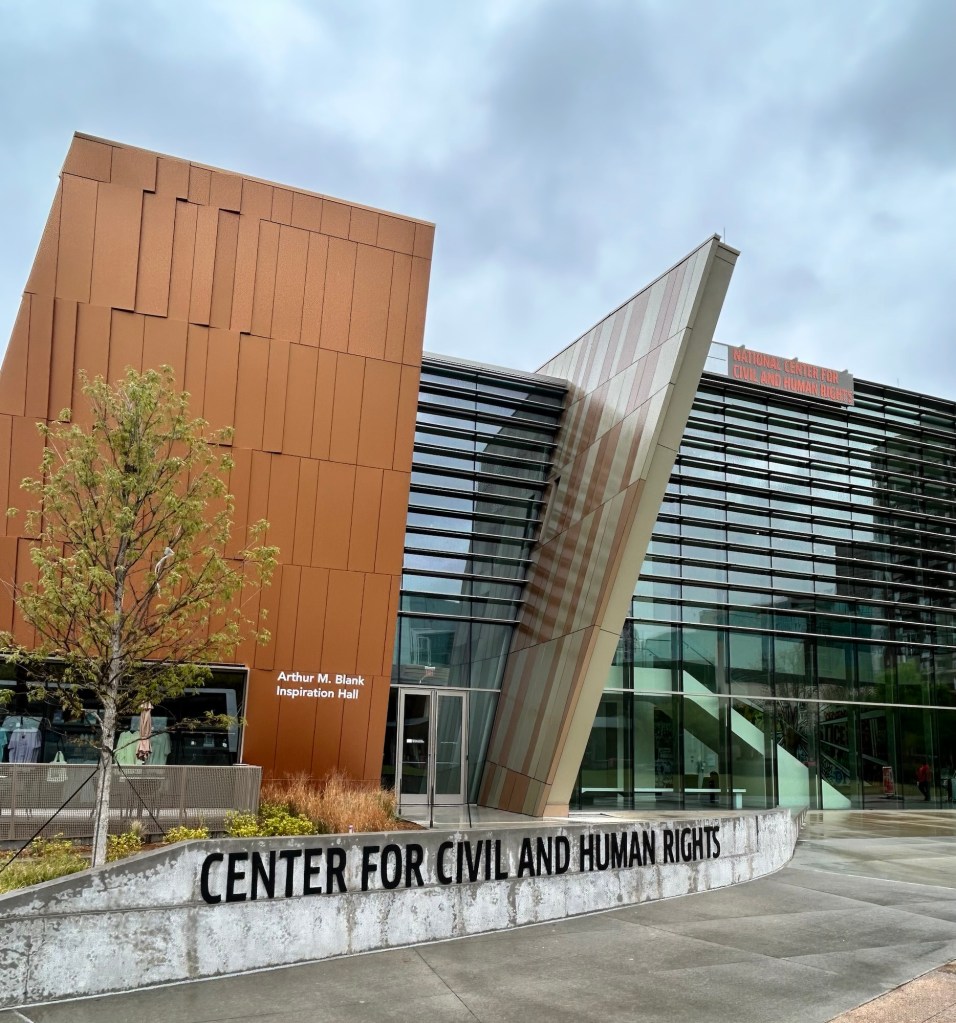
Today I visited another amazing museum. I’ll be honest I didn’t have high expectations after the Legacy Sites in Montgomery. After visiting so many civil rights museums, I do really enjoy seeing the different ways of presenting information and the power and impact those messages can make.
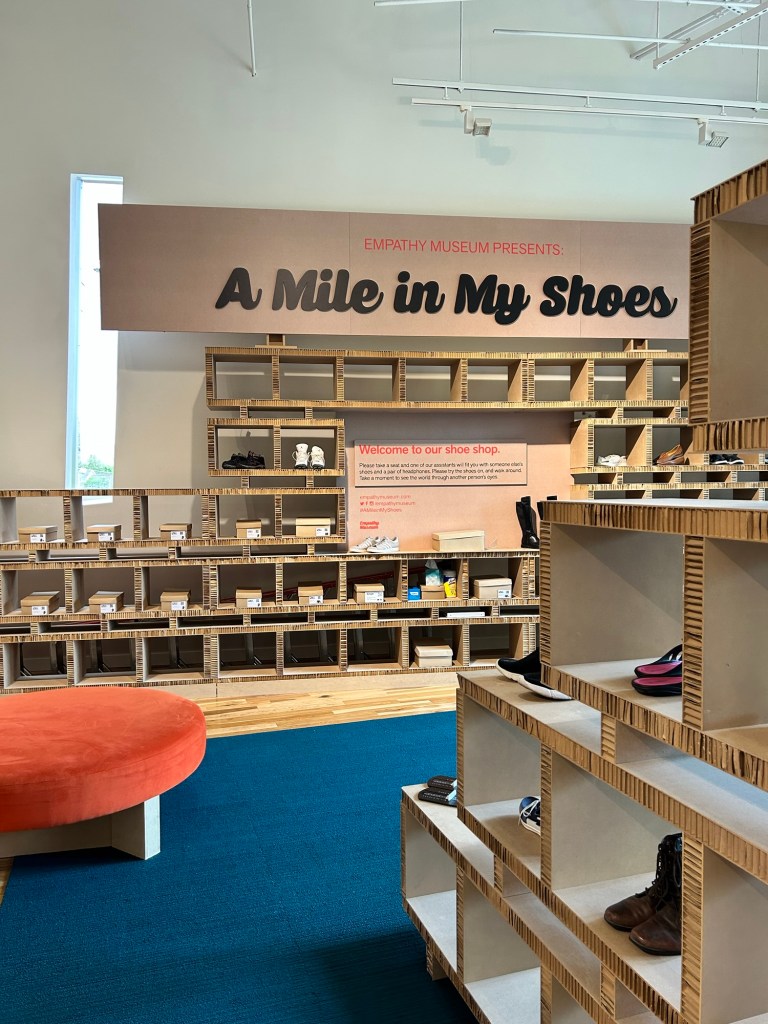
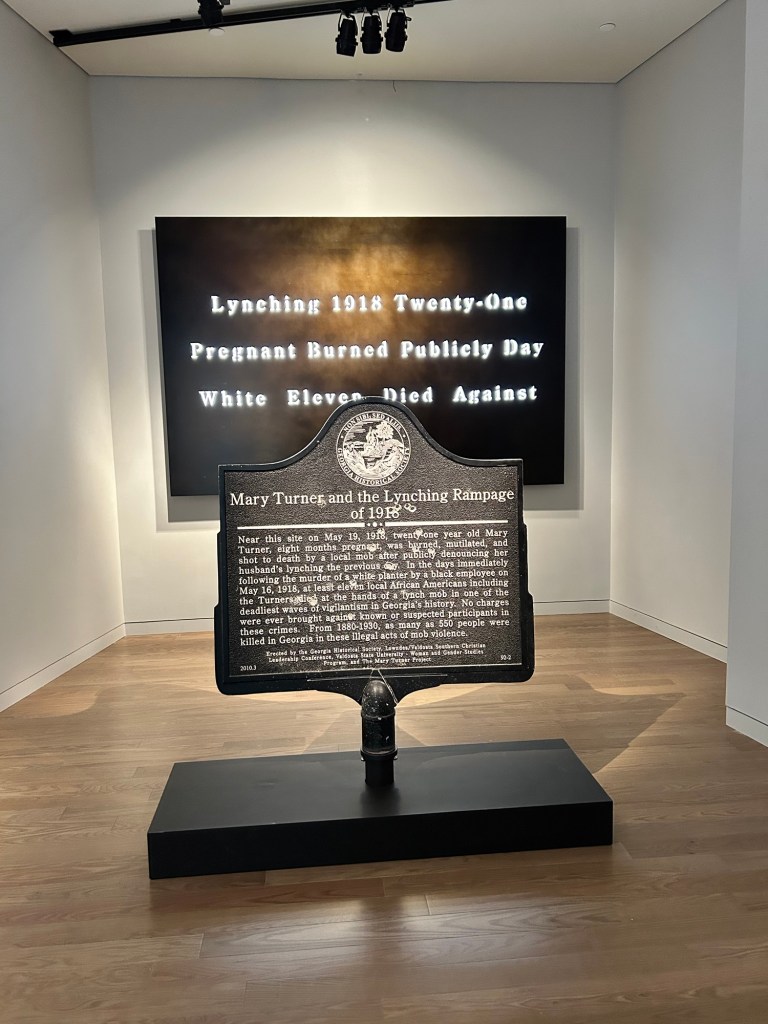
This museum decided to address human rights, in addition to, civil rights. Upon entry, the civil rights section was really crowded so I decided to go upstairs and do the human rights section first. I’ll admit I got emotional almost immediately. This museum leads with powerful stories and shares how average, ordinary people took risks to promote human rights. The exhibit “A Mile in My Shoes” was particularly powerful as I listened to personal stories of complete strangers. Each story is linked to a real pair of shoes worn by the person you’re listening to. This delivery really humanizes their experiences.
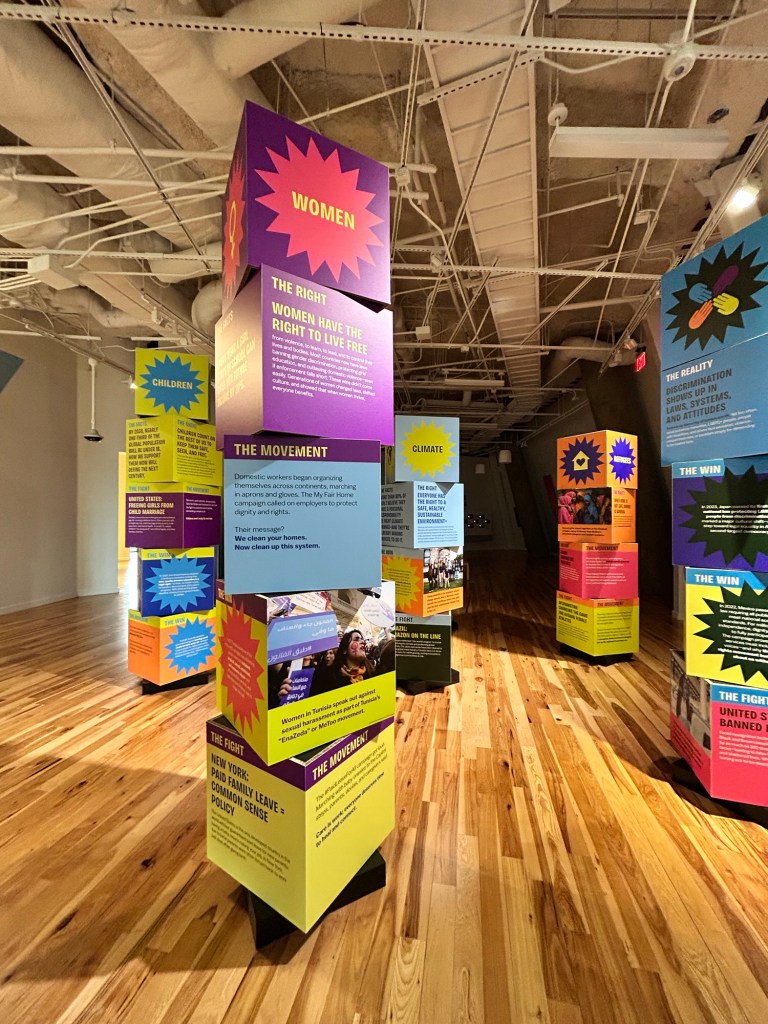
The second floor also housed the Action Lab. Of course, I’m incredibly action oriented and so this exhibit definitely struck me. The visitor learns about a variety of issues and causes, and then is given ways to find resources and opportunities to be involved with that cause.
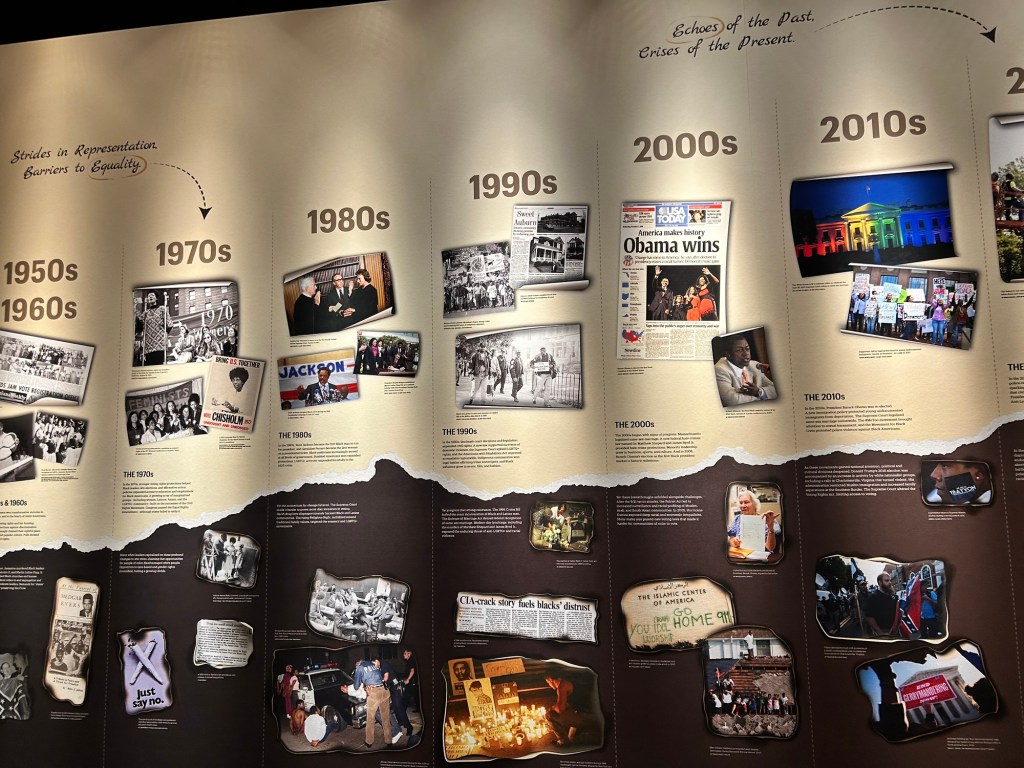
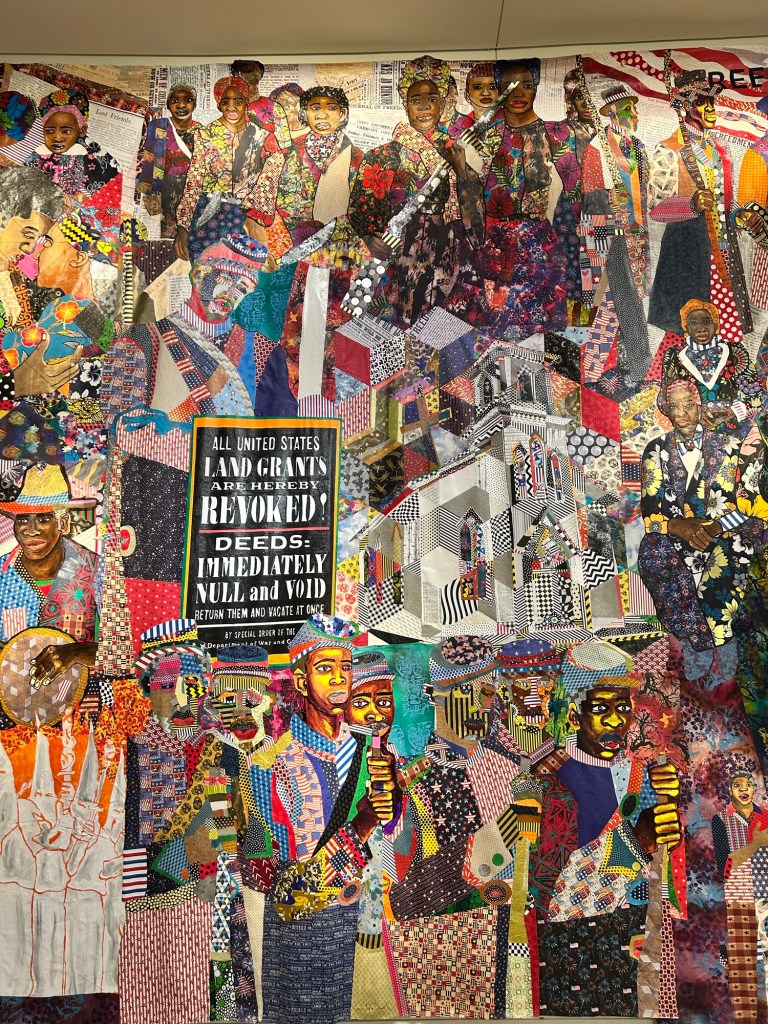
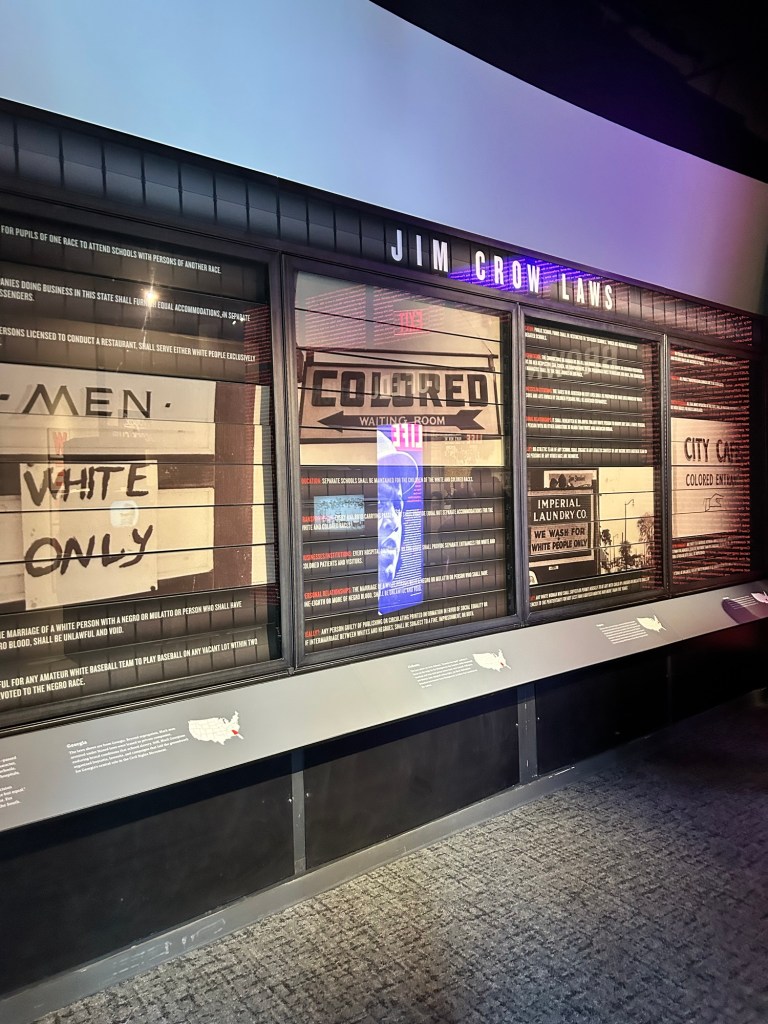
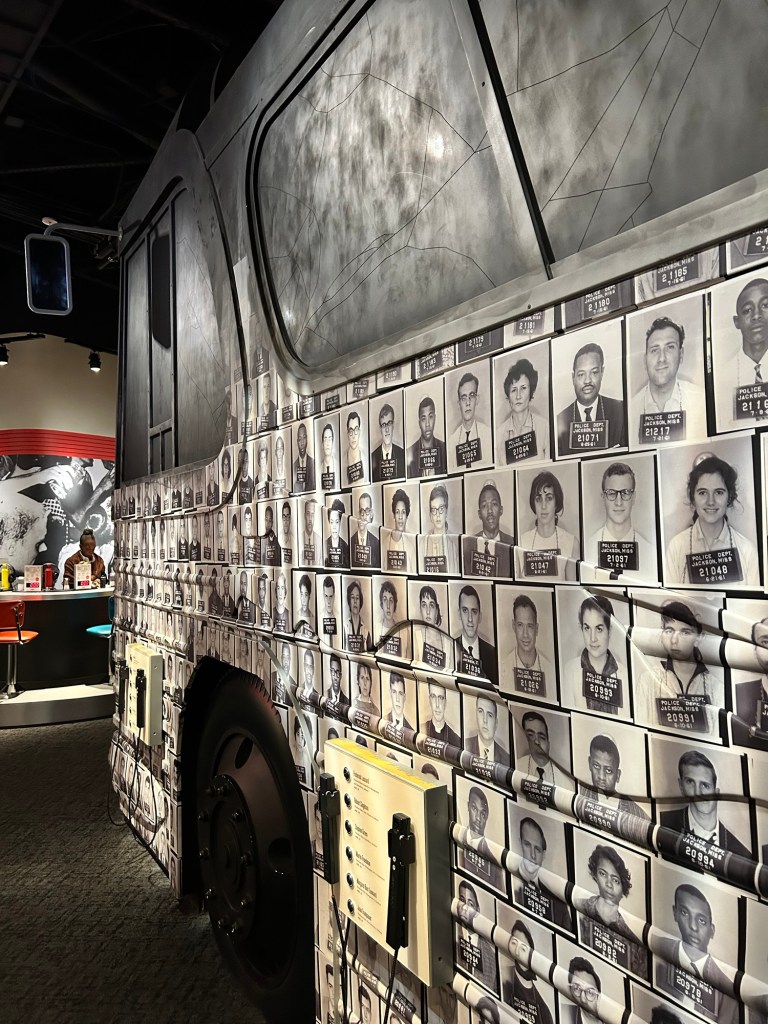
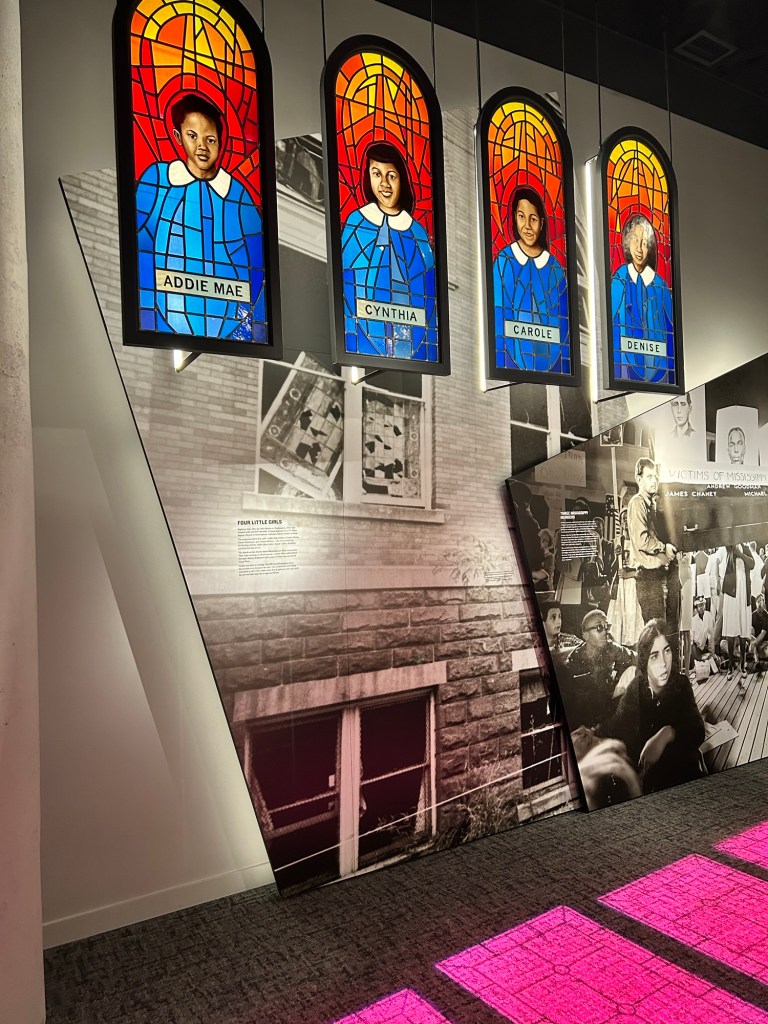
Downstairs is focused on civil rights. There was a ton of information, pictures, videos, and other multimedia that presented details about civil rights. For example, there was a full sized depiction of the Freedom Riders bus with all the pictures of the Freedom Riders. You could pick up a phone and listen to their stories. There was also 1,100 books from Dr. Martin Luther King’s personal library. And two quilts from Gee’s Bend!
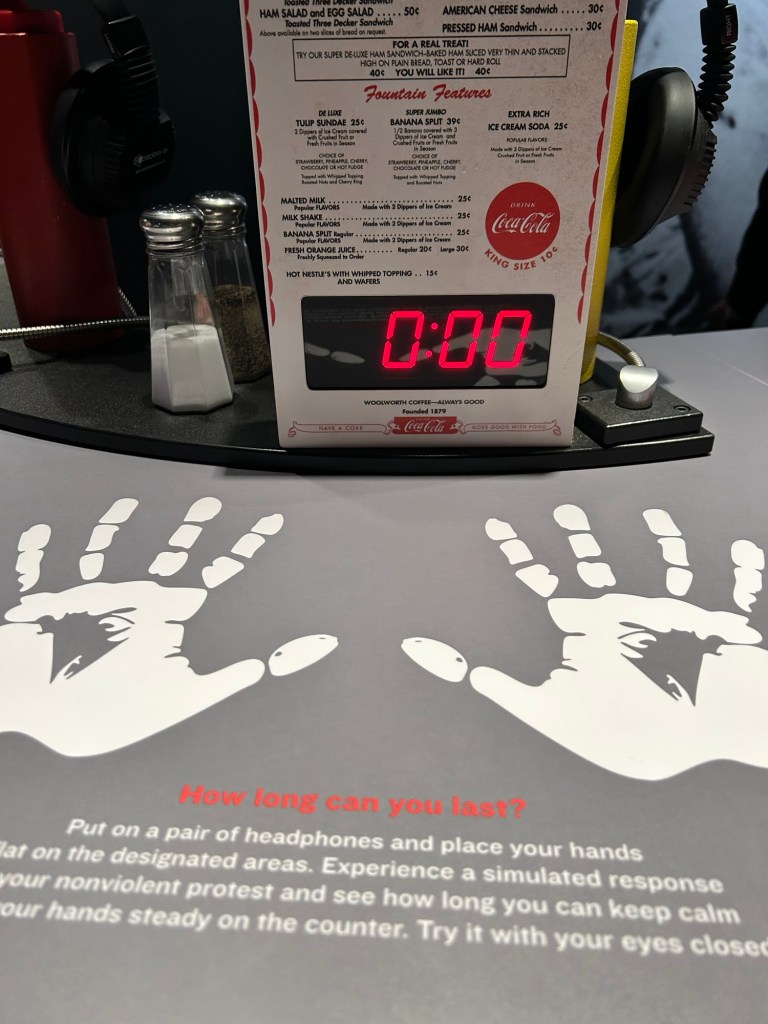
But the most powerful thing in this museum was the lunch counter sit-in. Museum visitors are invited to sit at the lunch counter with a menu in front of them and place headphones over their ears, close their eyes and place their hands on the lunch counter. Audio begins and depicts what folks at the lunch counter heard and experienced. The sound quality of the audio was really amazing. I could literally hear somebody breathing in my right ear. I felt that there was somebody right behind me and the screaming was truly scary. The audio lasted one minute and 25 seconds and mimics being at the lunch counter. It is an experience I will not forget. And it really showed me how courageous the college students were that sat at these lunch counters.
There are so many layers to this museum and I loved how it coupled civil rights with human rights. If you’re in Atlanta definitely visit this museum.
Women are in a “no win” situation and walk a tightrope of meeting societal demands for women to demonstrate female characteristics of compassion, warmth, communication and collaboration vs leadership characteristics (dominated by male characteristics) of forceful, assertive, dominant and competitive.
Did you know? When women display male characteristics, they are seen as competent but not liked. When they display female characteristics they are viewed as less competent. Women leaders are seen as competent or likeable but rarely both. I saw this play out in my own career and it is incredibly frustrating.
And when you add women of different race, ethnic, sexual and gender identities to the tightrope of gender bias it gets even more complicated navigating the ladder to success.
A few ways bias shows up:
Pay gap
#Metoo wakeup call sexual abuse, harassment, microaggressions at work
I am presenting the topic of Bias and Intersectionality this week. It is to a group of women new in their careers. Bias is a well-used word but what does it really mean?
Fact: The world does not view women and men the same.
Gender bias is: When people show favoritism toward one gender over another.
Women vs Men:
Conscious and unconscious. = women and men are treated differently.
Bias is hardwired in our brains to help us make sense of the world quickly.
Bias creates different expectations for different genders (in this example).
Bias transforms into prejudice, differential treatment and inequality.
Women and men experience the world in vastly different ways.
Social norms continue to reinforce this bias.
What examples have you seen where bias comes into play?
Next week, I am co-presenting a session to a group of women new in their careers. Our topic is how obstacles can hinder women’s careers in the workplace. We all know bias exists and it certainly is a challenge for women…all women. I have witnessed it. I have experienced it. And I don’t want my daughters (or any other woman) to have to deal with it.
I have created some pre-work to set the stage for the face-to-face training, which I have shared below.
Individual Reflection:
1. What is my first memory of seeing or experiencing someone different from me?
2. When was there a time in my life that I felt different from others?
2. Have you ever experienced or witnessed any of the bias the article discusses?
3. How did you deal with the situations above?
During the live session, we will walk through what bias looks like, how we all have bias and some things we can do when we see or experience bias. I know that women new in their careers might not be willing to speak up, but my hope is to share some tools that will help them address bias in a thoughtful, intentional, empowering way.
“It’s easy to stand with a crowd. It takes courage to stand alone.” Mahatma Gandi
Besides my consulting work, I have signed on for two speaking engagements in April. One session is focused on early career women and how to overcome barriers in their careers. The second presentation is an HR/Benefits one day conference. I will be presenting on how to jumpstart DEI efforts at organizations. This audience is mainly HR and CFO folks.
I love presenting, sharing ideas and hearing stories from audiences. For the barriers presentation, this article provides a nice overview and some much-needed pre-work for audience self-reflection. I think back to my career and how I put up with so much “wrong” stuff early in my career due to fear, lack of knowledge on what to do and just overall naivete. Even in present day, the barriers are pretty much the same…women hold little power and are subject to so much bias. And then couple that with being a women within another marginalized group and imagine the obstacles, doubled or tripled!
I remember being told that you must “ask for what you want” yet even as recent as five years ago, when I did that, I was told, “Leadership will decide when you are ready…not you.” Unbelievable and yet, as women, we are forced to comply or start over. In this example, it was the beginning of me realizing exactly the environment I was working in and fortunately, I had options so didn’t need to stay.
But most women don’t have options or fear sticking their neck out and saying something. How do we teach women to move beyond this fear? First, we talk openly about it! If we normalize behavior that holds women back is acceptable, it will continue. I think we also need to make women aware of bias and what it looks like and actions they can take against it.
Bias “is a human trait resulting from our tendency and need to classify individuals into categories as we strive to quickly process information and make sense of the world.” There are two types of bias:
Explicit Bias
Implicit or Unconscious Bias
Explicit cognitive bias includes overt racism and racist comments; “individuals are aware of their prejudices and attitudes toward certain groups.”
Implicit cognitive bias “involves all of the subconscious feelings, perceptions, attitudes, and stereotypes that have developed as a result of prior influences and imprints.” Implicit cognitive bias “involves all of the subconscious feelings, perceptions, attitudes, and stereotypes that have developed as a result of prior influences and imprints.” Implicit cognitive bias involves “automatic, unconscious mental processes based on implicit attitudes or implicit stereotypes that are formed by one’s life experience and lurk behind the surface of the conscious.” Implicit biases are necessary for us to survive since our brains cannot possibly process every piece of information coming at it in real time for us to make decisions. Our brains learn to categorize similar things so we can react. EVERYONE has Implicit Bias. A preference for a group (positive or negative) often operating outside our awareness and based on stereotypes and attitudes we hold that tend to develop early in life and tend to strengthen over time.
“Courage is resistance to fear, mastery of fear—not absence of fear.” Mark Twain
Individual Reflection:
1. What is my first memory of seeing or experiencing someone different from me?
2. When was there a time in my life that I felt different from others?
3. How did you deal with the situations above?
Bias
Conscious Bias
Expressed directly
We have it and we are aware of it.
Unconscious Bias
Expressed indirectly
We are not aware of the bias.
Bias in Action
Age
Color
Education level
Expertise
Family status
Gender
National origin
Personality
Physical ability
Physical appearance
Political views
Race/Ethnicity
Religion
Sexual orientation/Identity
Socioeconomic status
Bias effects
Confidence
Creativity
Decision making
Emotional health
Employment
Engagement
Opportunity
Performance
Personal freedom
Physical health
Relationships
Risk taking
Safety
Self-esteem
Q:When have you experienced or witnessed bias? What happened? What was done about it? What was the end result?
Who are you?
I am not biased. I view things objectively.
Or
Bias exists in everyone, including me. I actively STOP and think about how bias effects the choices I make.
Q: Which one are you? Provide an example.
Sources of your bias:
Your own experiences.
Information you read such as news, social media, stories, books, movies etc.
Your education including school you attend and what you study.
Your context-family, friends, work, where you live, what you do and who you spend time with.
Culture-spoken and unspoken rules in your community and society.
Innate characteristics you are born with.
All of these create your identity. Your identity can be sources of positive and negative bias. Some of our identifiers cause us to be biased to others and others to be biased towards us.
Q: What is your identity? Note if any create bias towards others.
How to Disrupt Bias (within yourself)
Create connections with folks different from yourself.
Move from “autopilot” to questioning your thoughts and behaviors.
Be curious.
Be empathetic.
Ask questions. Even if uncomfortable. You can say you are uncomfortable!
Q: Think about who you connect with, hang out with, spend time with, ask advice from…do they look different or similar to you? Why?
Broaden your viewpoint by:
Joining different groups
Reading different viewpoints, following different influencers
Joining different community groups
Try new experiences
Change your routines
Take Action
Ways to Act with Courage
Notice bias happening
Confront bias
Help others with bias
Address bias
Q: What are specific ways you can act with courage as described above?
Pause and question actions, thoughts and outcomes.
Seek to understand.
Check assumptions.
Learn. Educate yourself and others.
Share your story.
Bring people together.
Be a coach or mentor.
Amplify others’ voices.
Speak up.
Organize groups.
Your perspectives are incomplete. You are an expert on your identity…be willing to learn about others.
Types of Bias
Confirmation bias-get information that supports our existing beliefs. Ex. News from a single source.
Take action: What could we do differently?
Anchoring bias-rely on first piece of information we see. Ex. Misdiagnose an illness by paying too much attention to the first symptom we see.
Take action: What could we do differently?
In-Group bias-we favor people we like and who are like us. Ex. Hiring a candidate that has our similar background, alma mater etc.
Take action: What could we do differently?
Negativity bias-we are more powerfully influenced by negative experience than positive or neutral experiences. Ex. Remembering bad customer service experience.
Take action: What could we do differently?
Attribution bias-we judge others on their action but we judge ourselves based on our intent. Ex. Thinking someone is ineffective because of a mistake.
Take action: What could we do differently?
Sunk-Cost bias-we continue things because we have already invested time, money resources. Ex. Keep reading a book even though you don’t like it.
Take action: What could we do differently?
“Courage is an inner resolution to go forward despite obstacles; cowardice is submissive surrender to circumstances.” Martin Luther King
Share your experiences and ideas…and what you can do differently.
Nordell’s book shared some concepts that I think are worth repeating. I certainly have been penalized for speaking out during my career, but imagine how much more difficult it is for marginalized folks. I loved her thought about seeing differences does not matter but instead, it’s how we react to differences in harmful ways that count. What comes to mind for you? How have you reacted negatively when someone has shared something different from what you believe or think?
Another idea that resonated for me in the book was the idea to “notice when stereotypes arise and actively replace with alternative images.” Wow! In other words, look for situational reasons for a person’s behavior rather than assuming it comes from inherent characteristics. This recently came to life in a conversation with a peer when they were relating a story of a recent interview they held with two candidates. The candidates qualifications were similar (one had more formal education, the other had more hands- on experience) and they ended up choosing the candidate with more education. I asked, “Why?” and then I followed up with, “Perhaps the second candidate did not have access to additional education”. My peer responded with “Funny you say that. When I called the candidate and let him know he was not chosen, he said that exact thing”. It is important to remember that marginalized folks often go to underfunded schools with less resources. It is not intentional on their part to get a subpar education…the system creates this inequity in education.
I love how Nordell distills bias to a choice. A choice that you can change by eliminating automatic thinking and instead use conscious deliberation. So, do I accept my automatic evaluation of people or do I try something new? Do I believe my first reaction or do I stop to look for further evidence?
Stop and scrutinize initial assumptions and envision an alternative explanation. Shift from simply reacting to observing your reaction. Frankly this action could work in many parts of life, not just bias. But, it certainly would be a big WIN if we could do it with our own bias.

 seniyegroff