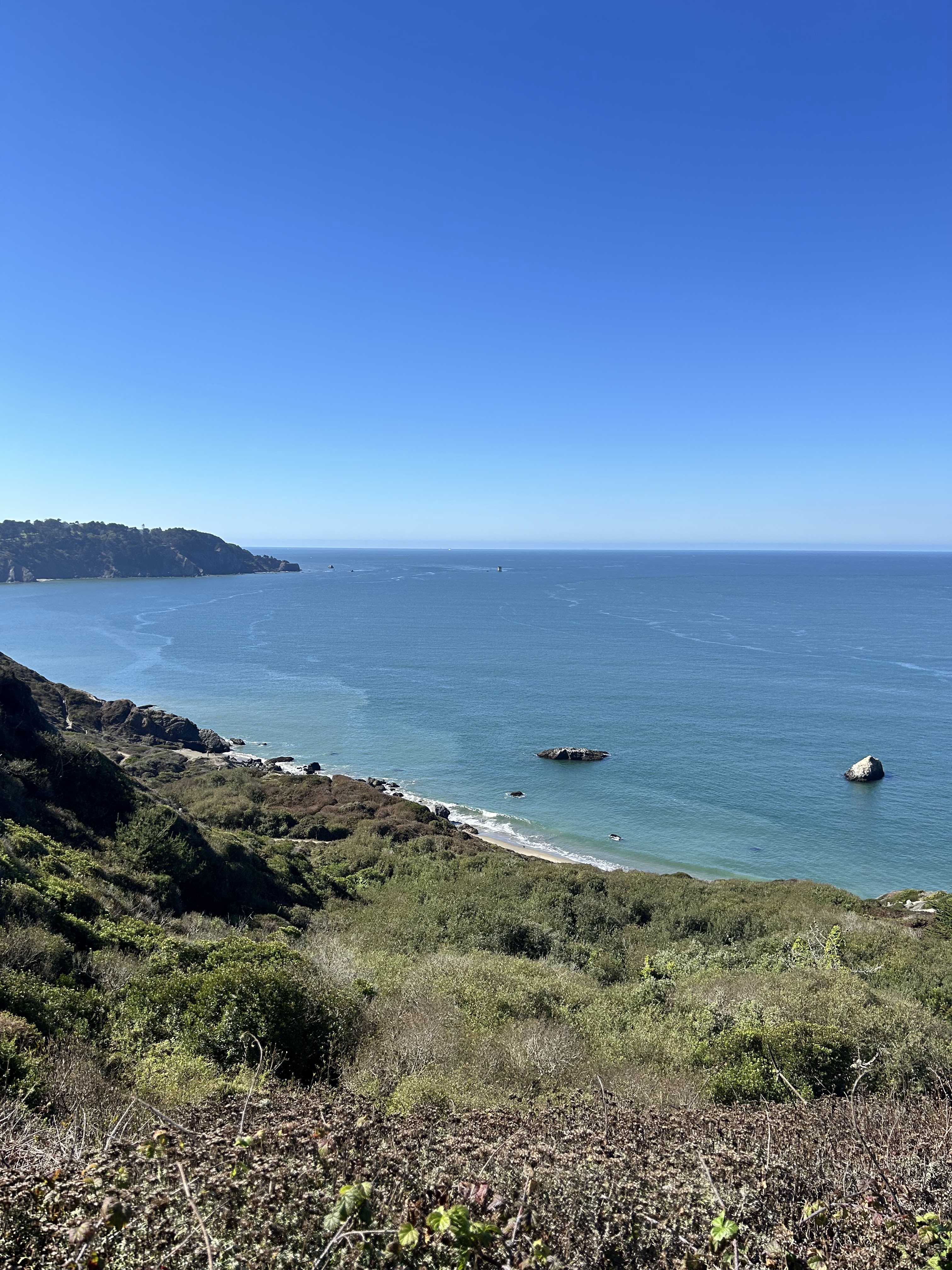
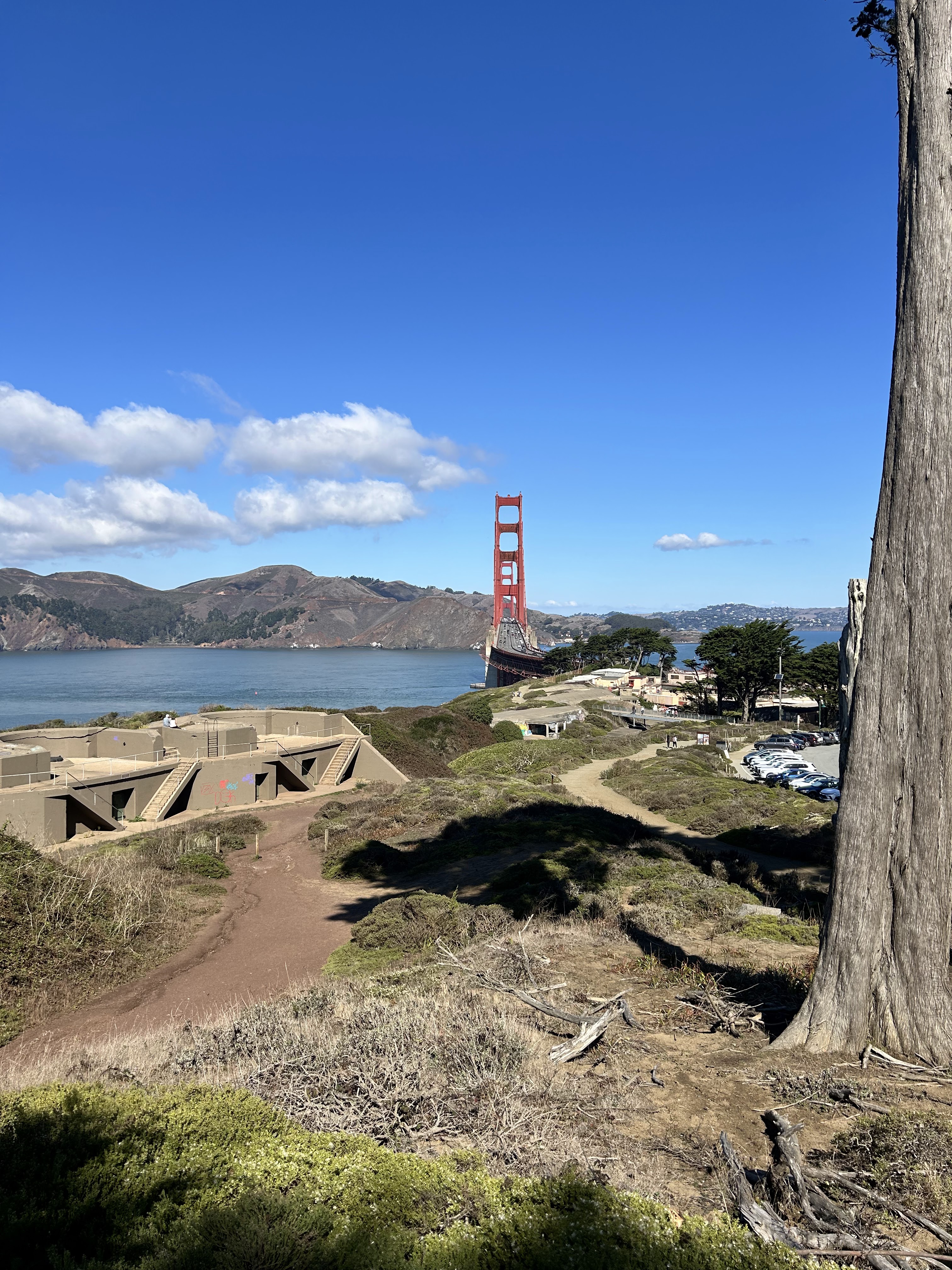
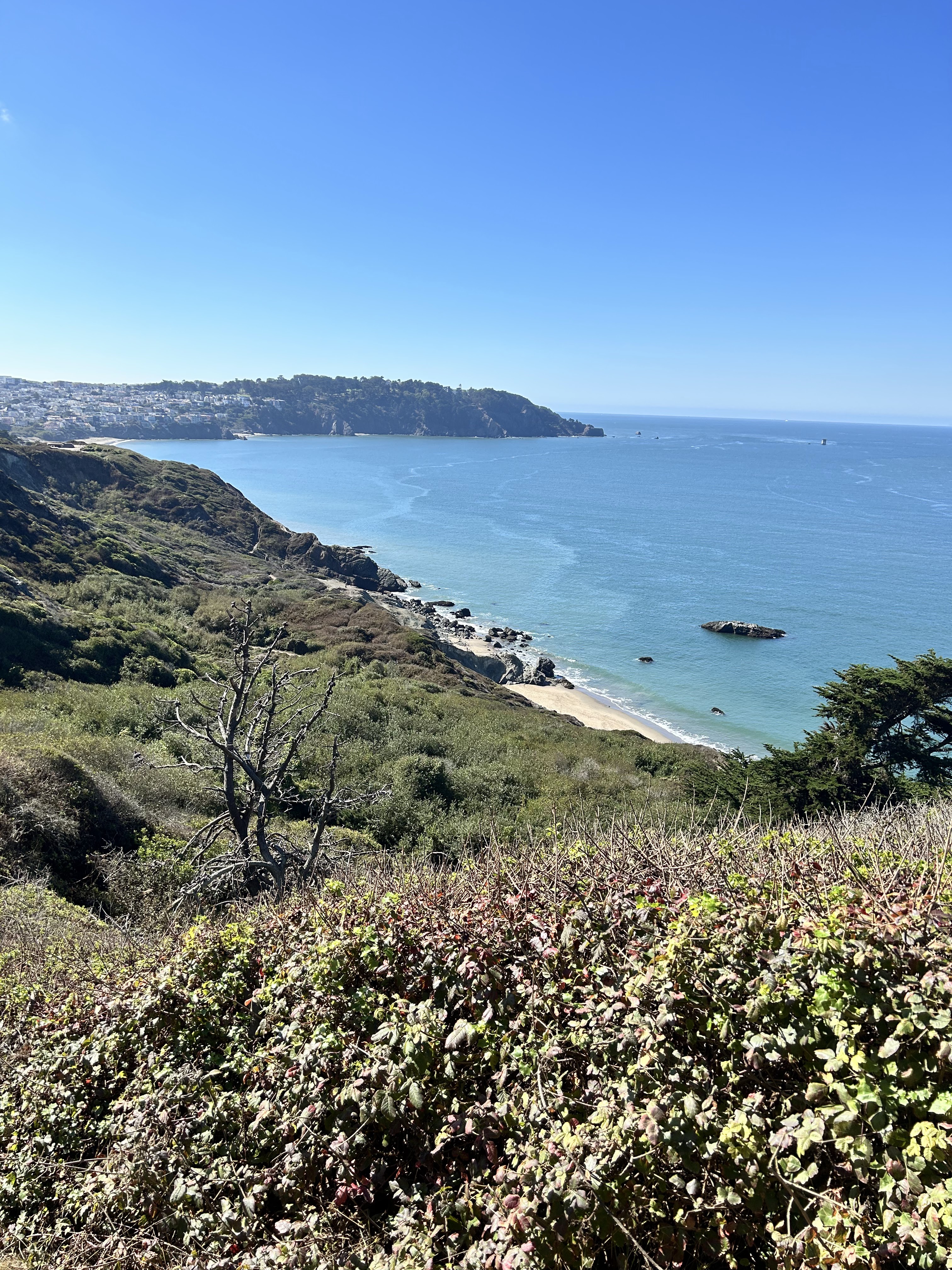
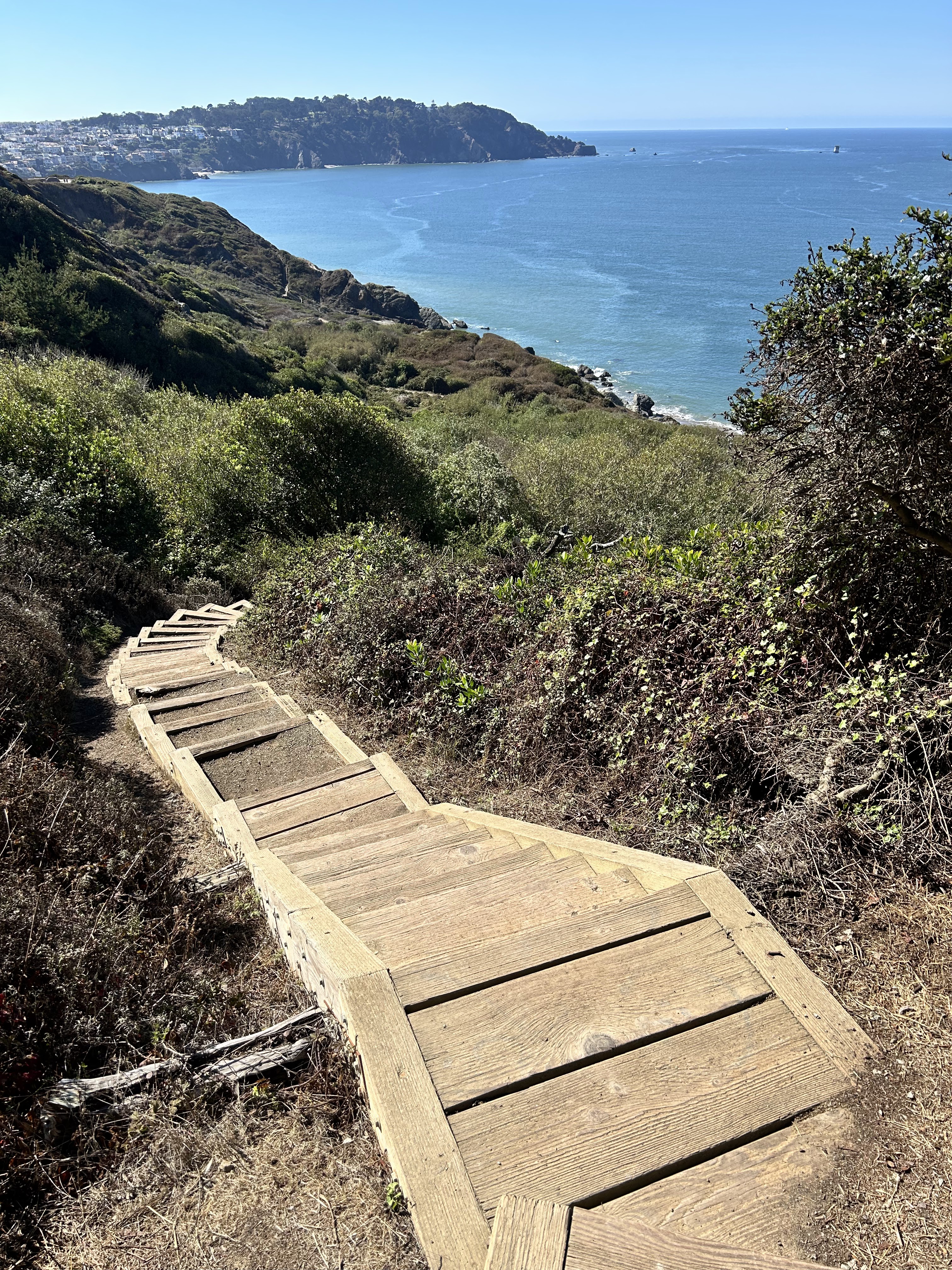
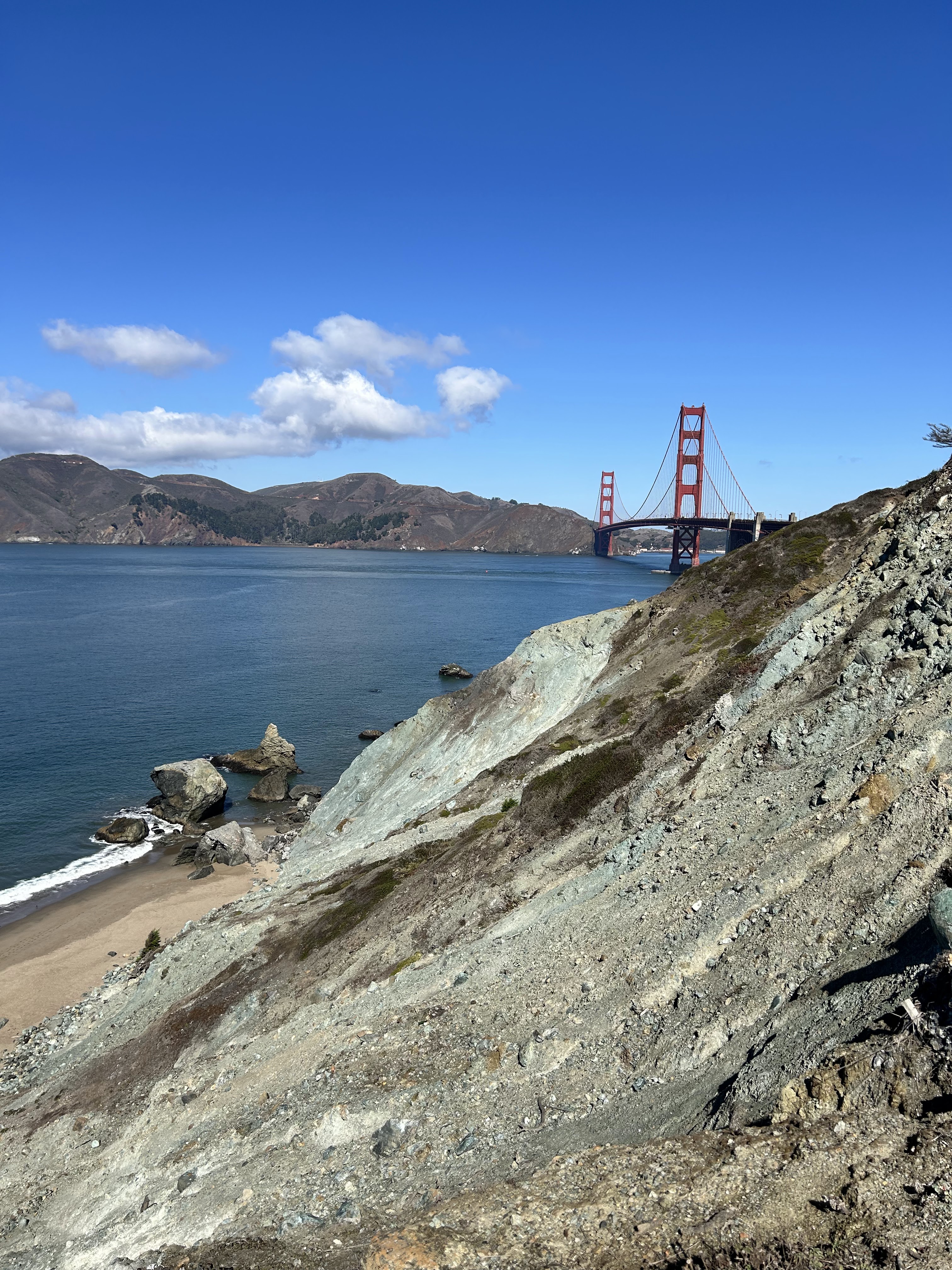
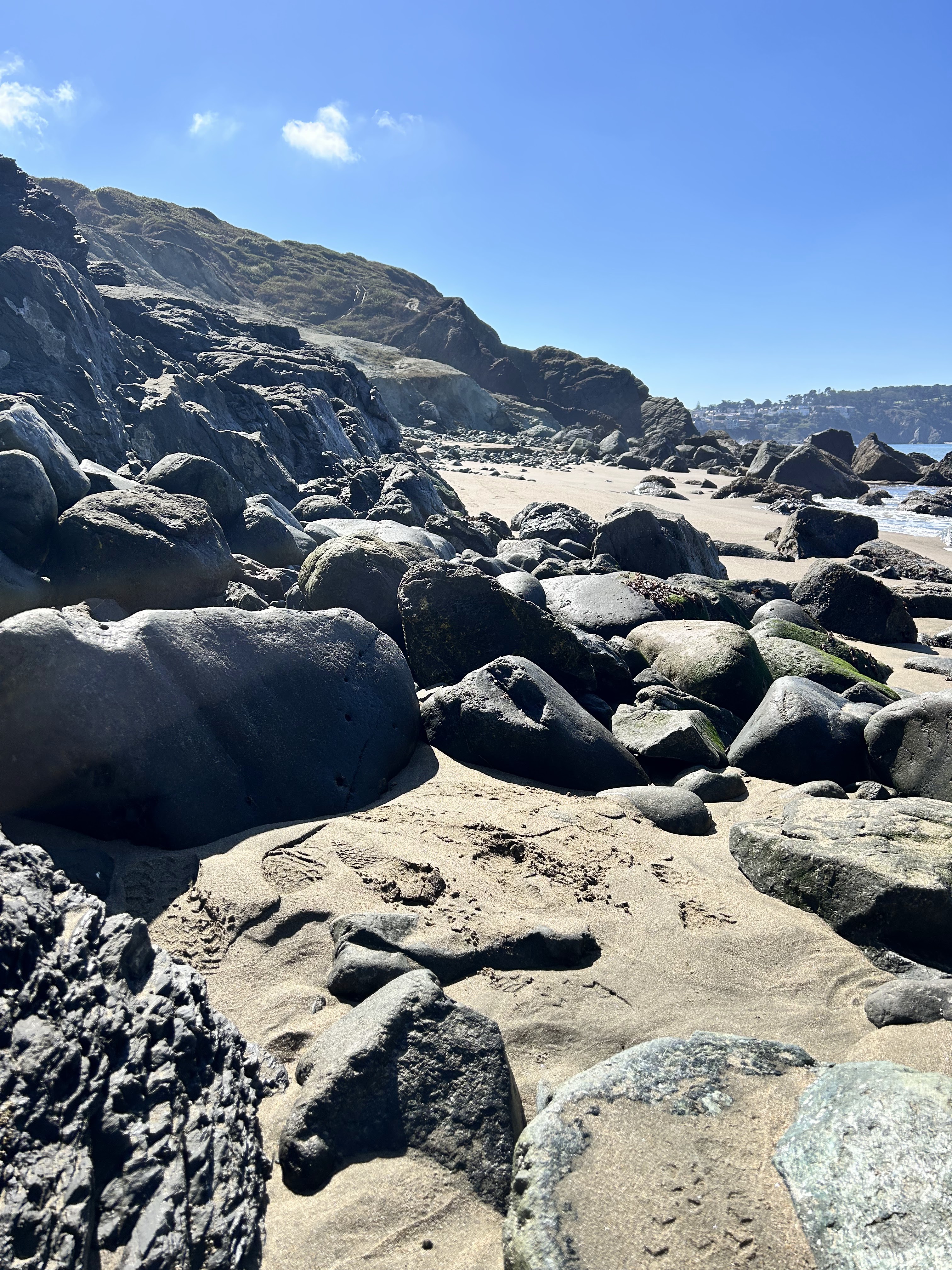
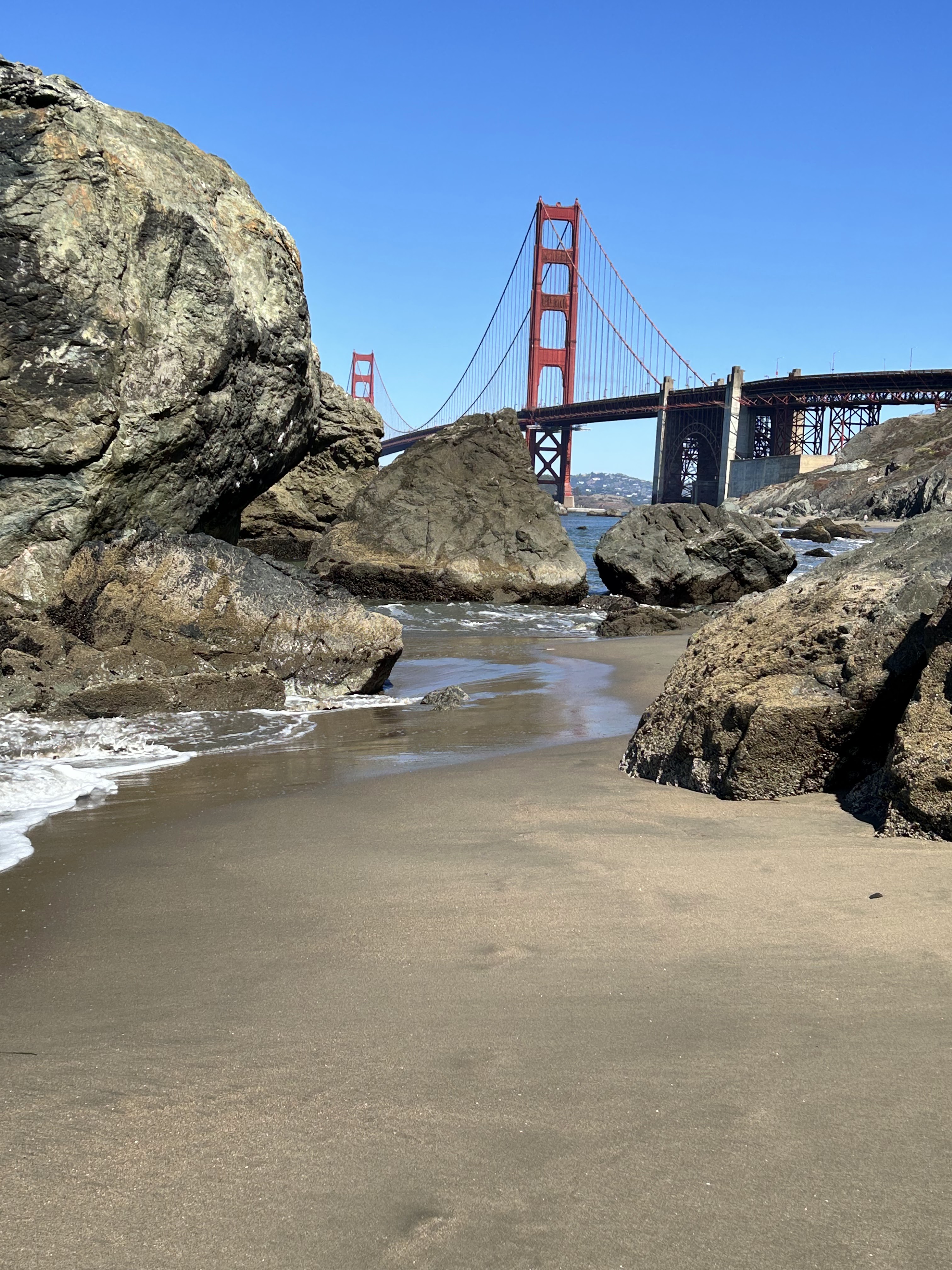
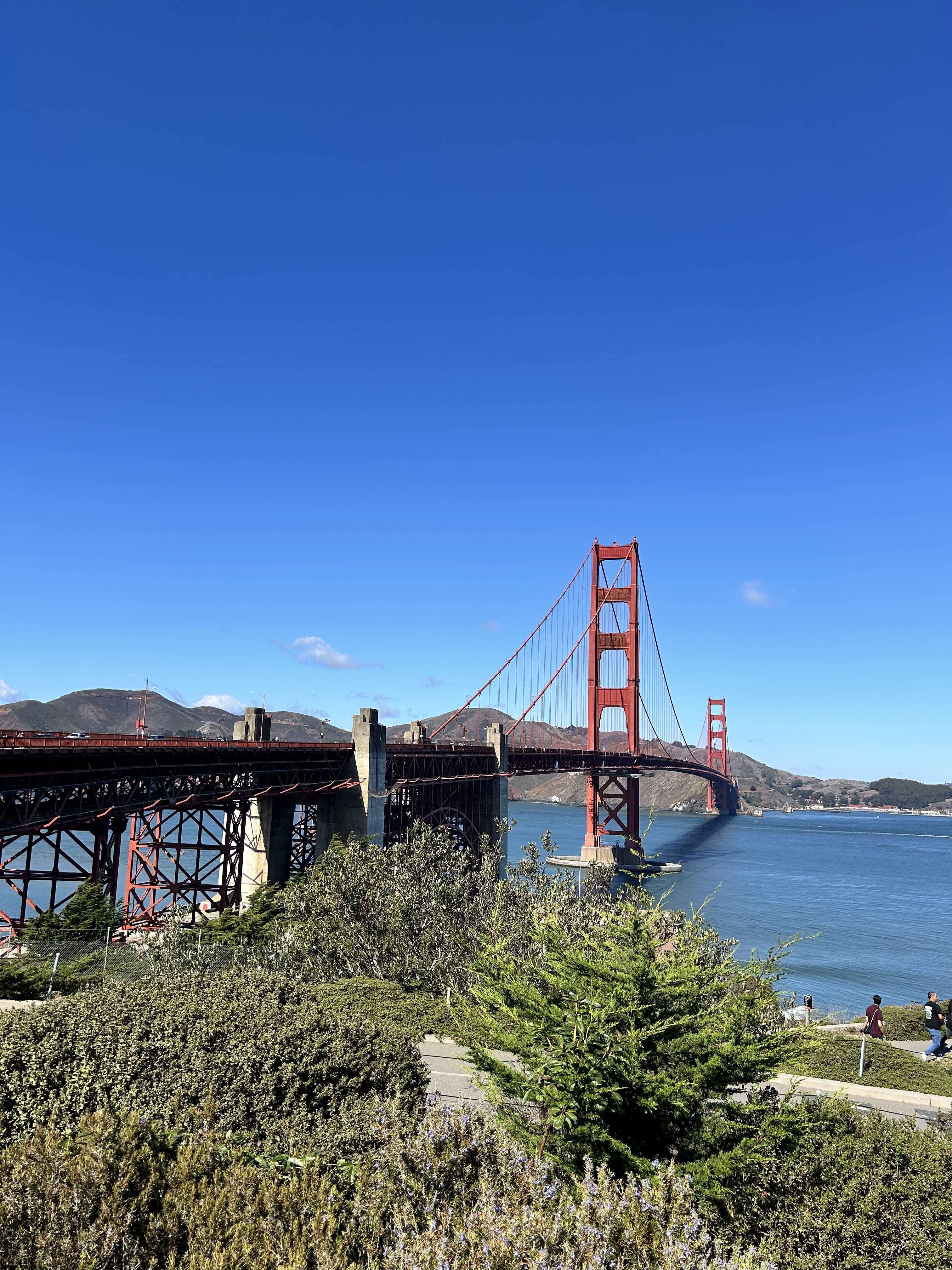
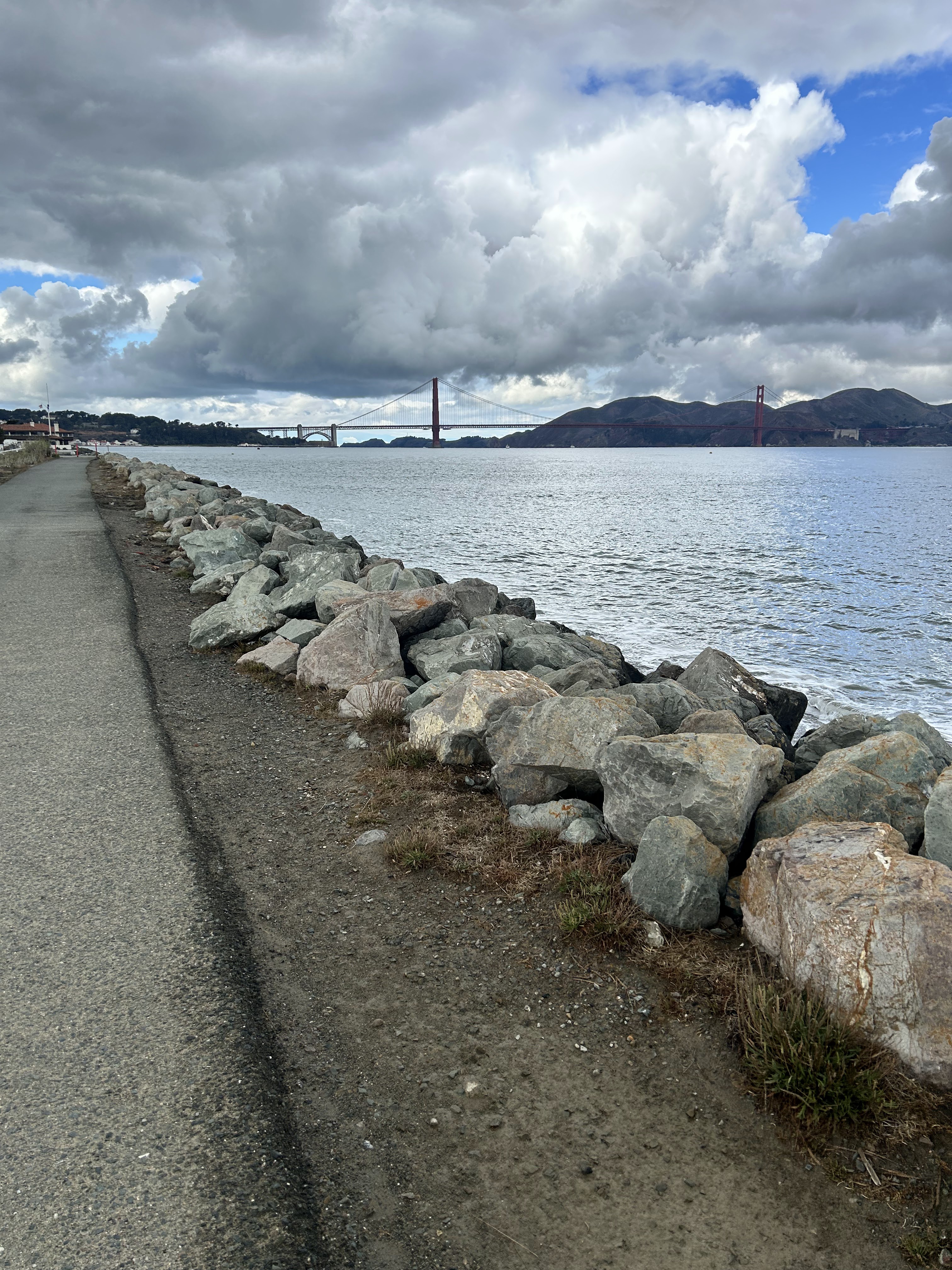
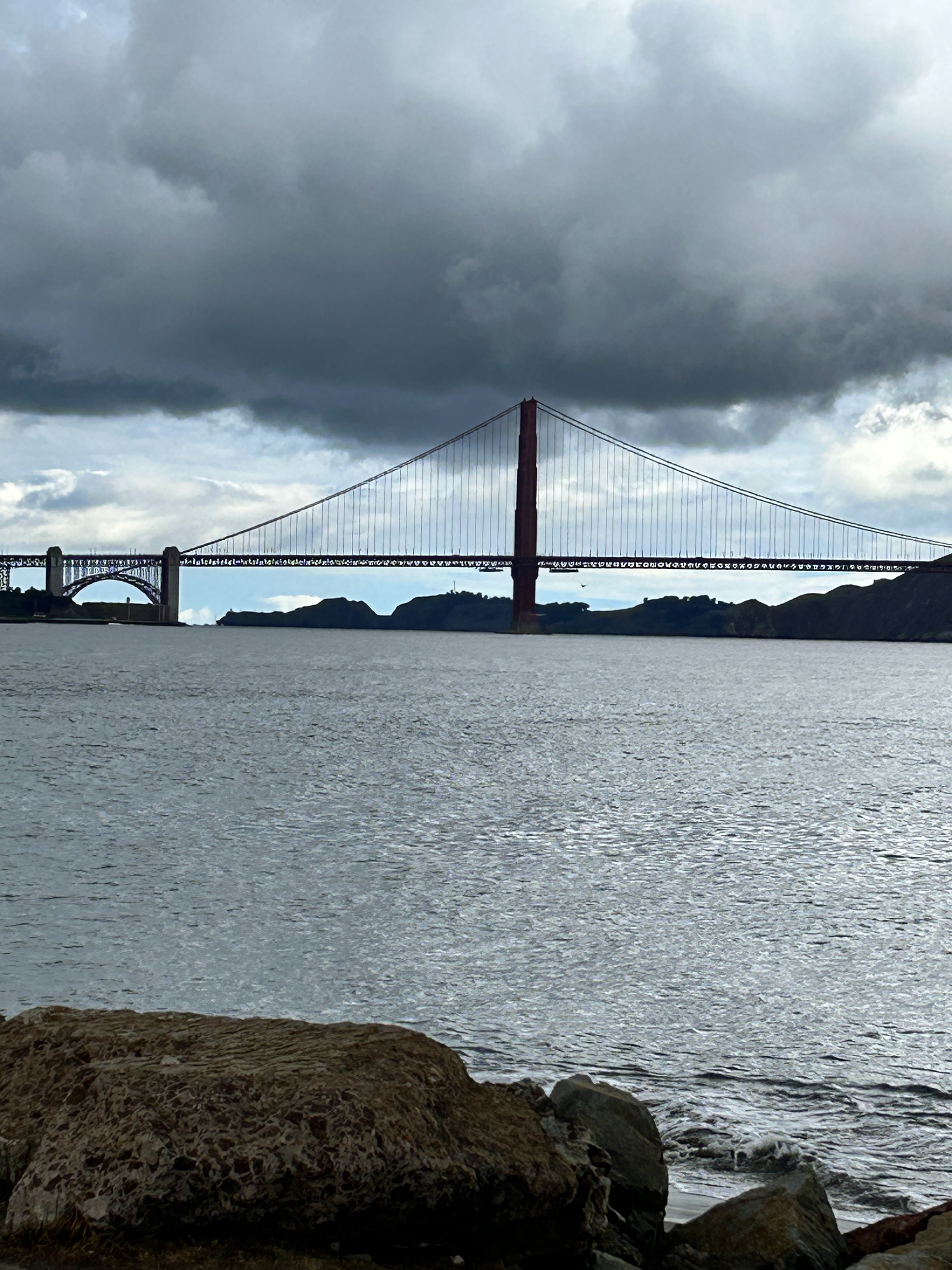
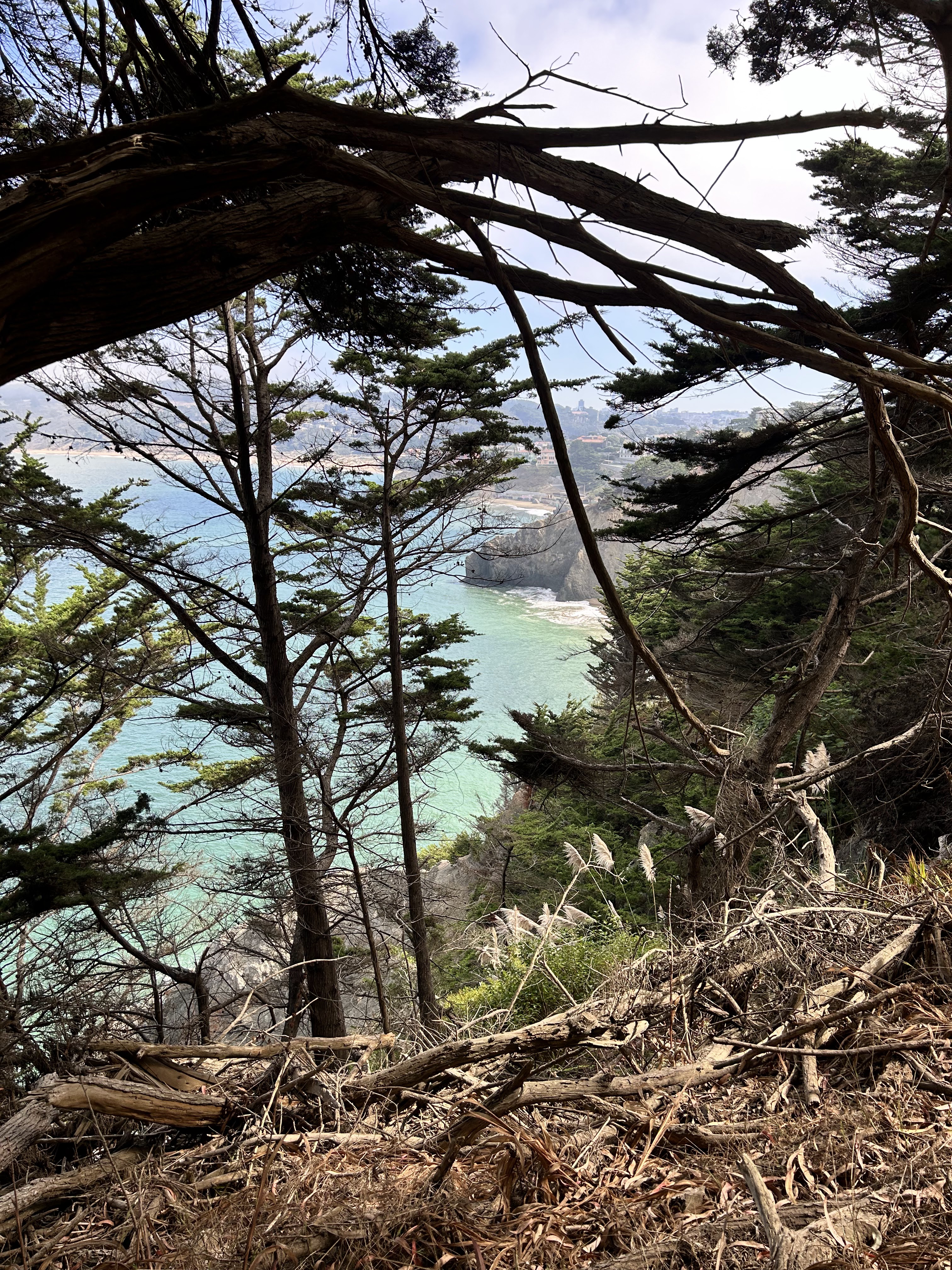
Today I hiked the Batteries to Bluffs Trail. The sweeping ocean views and bonus of walking on the beach coupled with the Golden Gate Bridge in the background made this hike a stellar one. The weather was perfect; I should have worn sunscreen! I even managed to find a mussel shell for my friend who makes art from the shells. I never really noticed mussel shells until I saw her work. Now, I think they are beautiful and am always looking for shells to send to her.
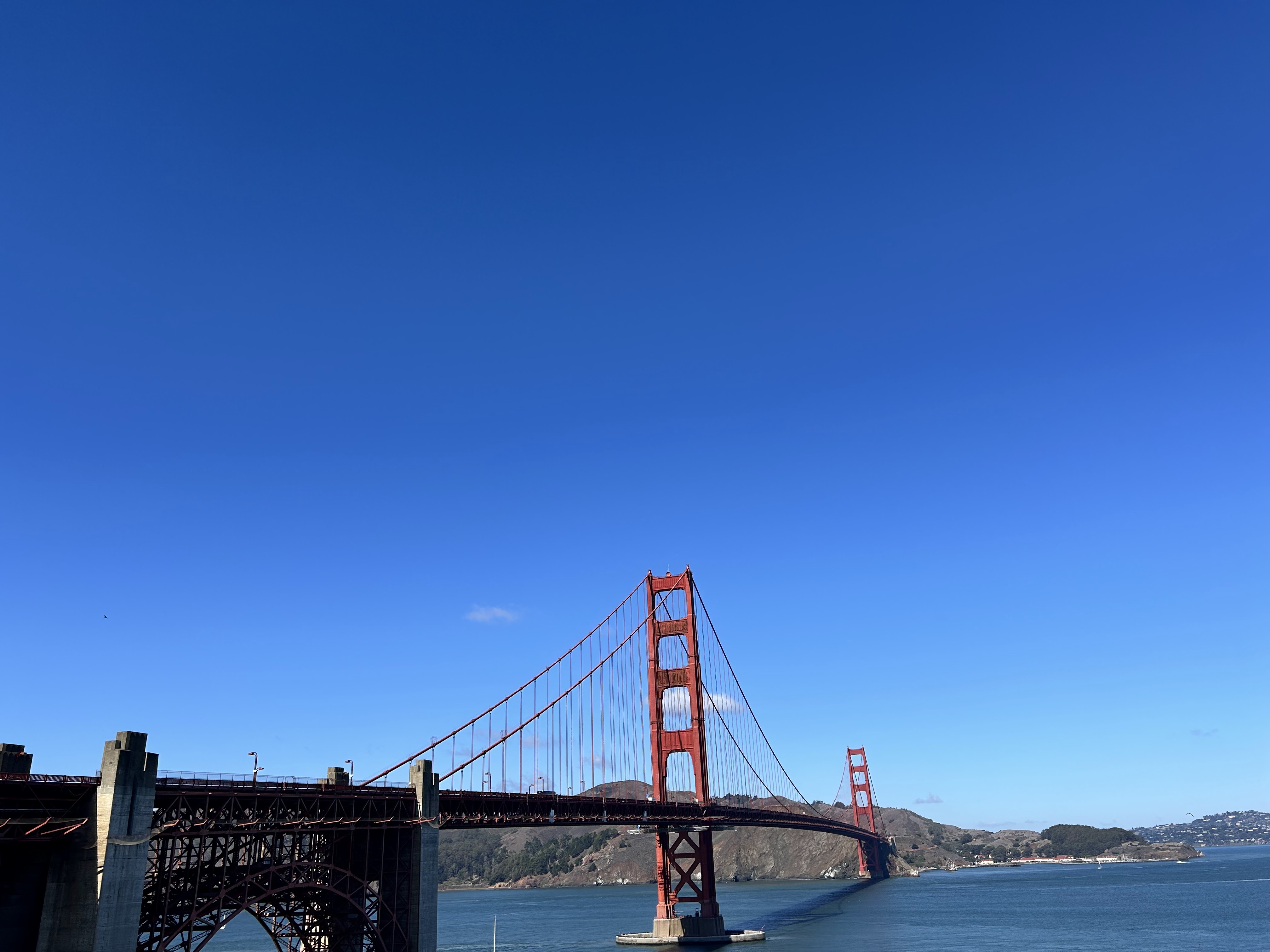
Since I was so close to the Golden Gate Bridge I decided to explore it. There are a lot of great displays about this engineering feat and of course, the views were stunning. I walked the bridge to Marin (1.7 miles each way) and then back to the visitor center. I highly recommend earplugs if you ever do this walk. There were throngs of tourists but the walk over the bridge was not that crowded with walkers but there were plenty of bicyclists.
I have created a little routine that on Tuesdays, which is street cleaning day, I go grocery shopping during the cleaning time slot (8 a.m.). Once that task was completed, I decided Pete and I would find the nearest post office to mail a package and then cross some must-see items off my list. Today was Wave Organ and Palace of Fine Arts. It ended up being a six mile walk and Pete got a romp on the beach, too.
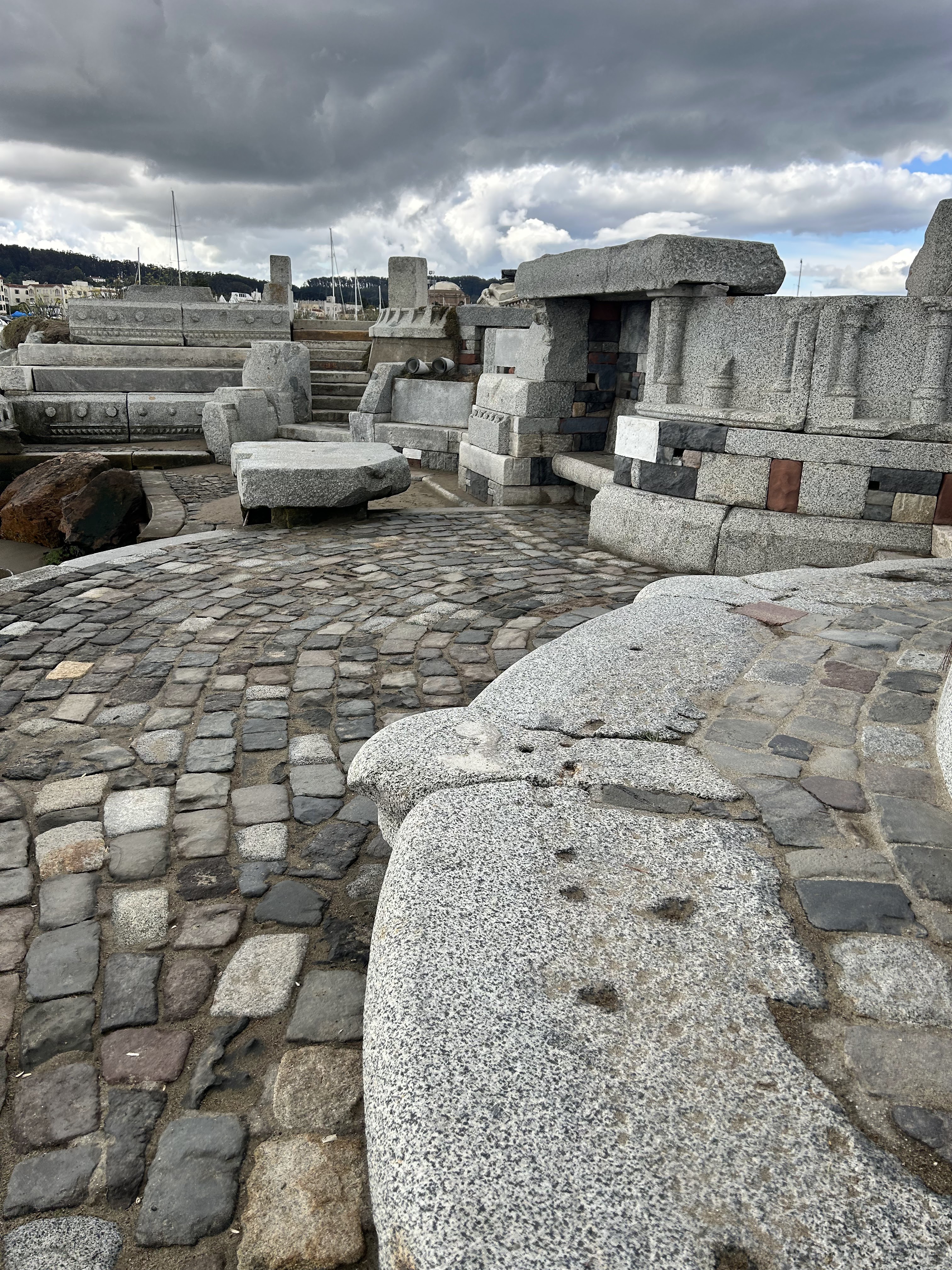
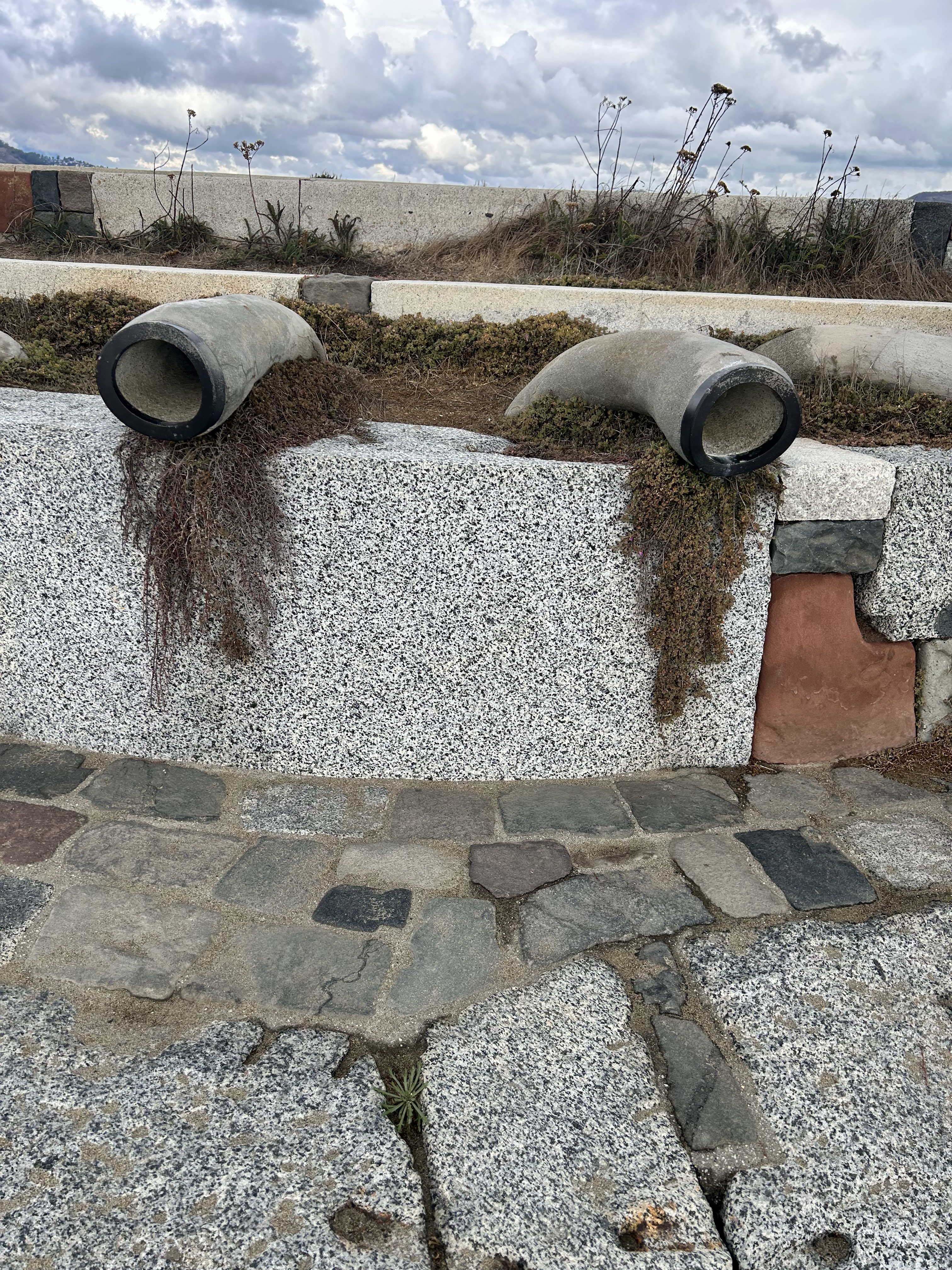
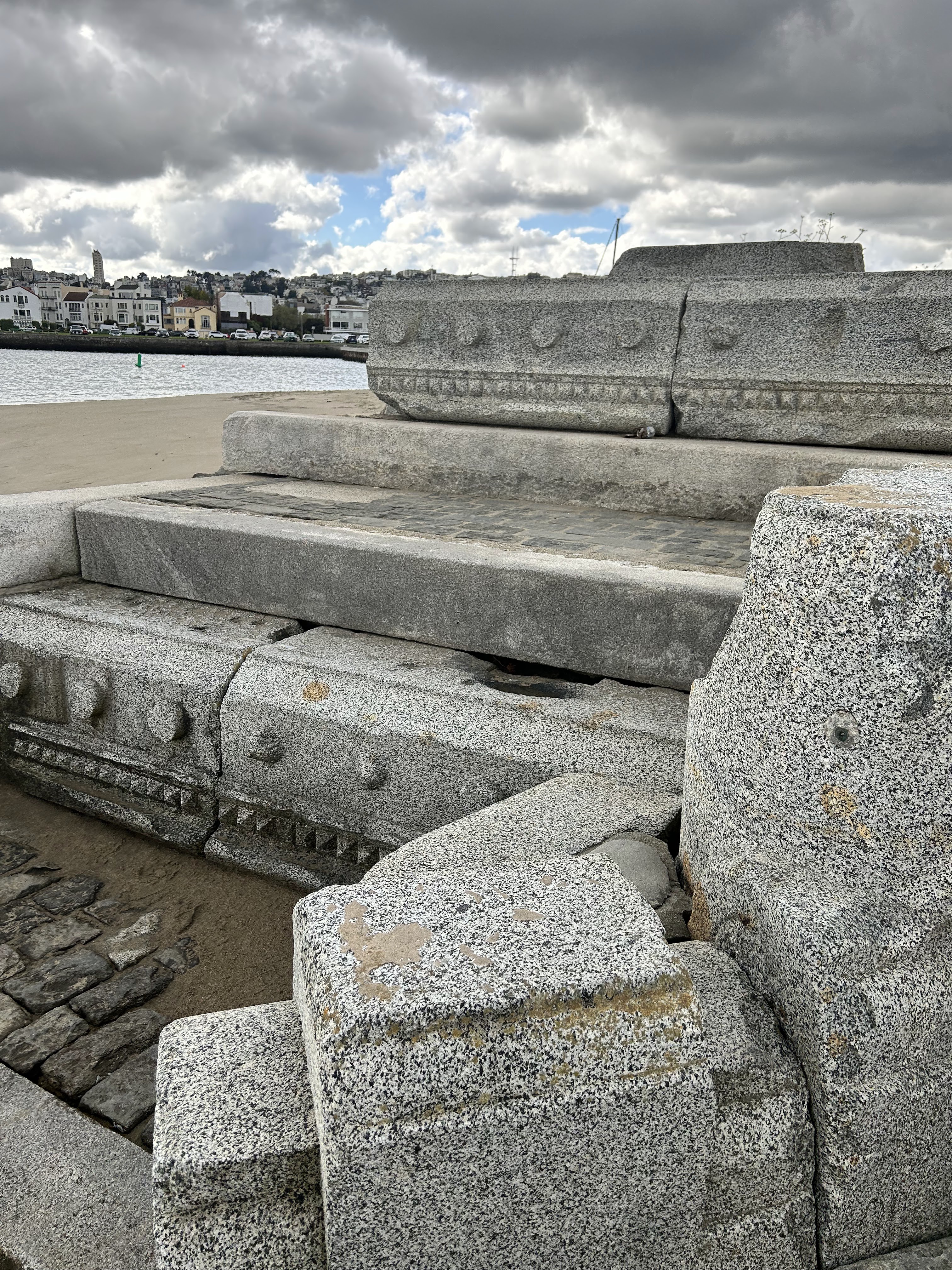
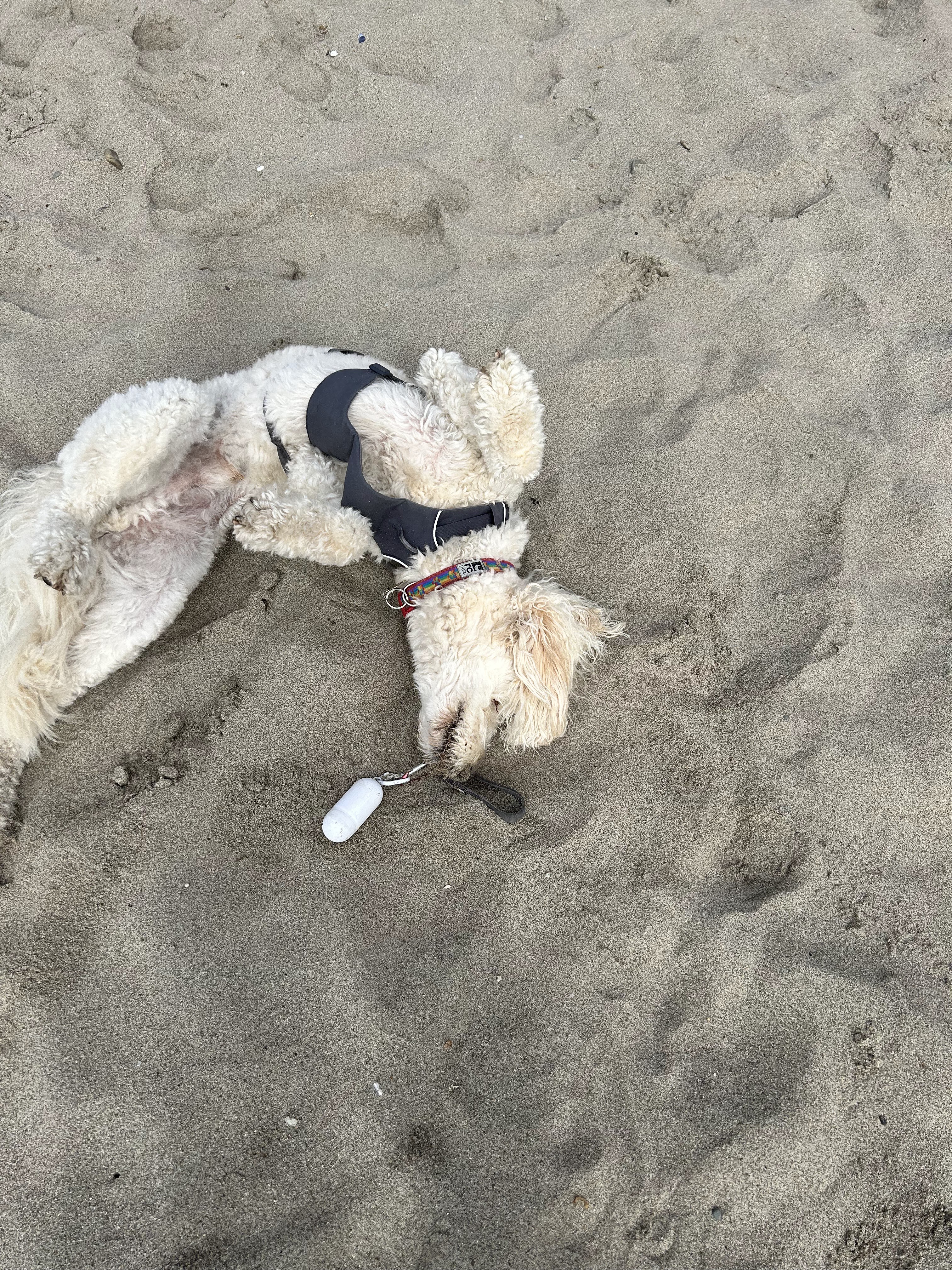
Wave Organ was a bit of a hike, out onto a jetty by the yacht club, and a very interesting concept. I did not hear the “music” since the waves are just too loud. But I suspect that if I stayed for a few hours I might be able to pick up on the nuanced sounds. Pete was more interested in rolling around on the beach next to the “organ” so we spent the majority of our time doing that.
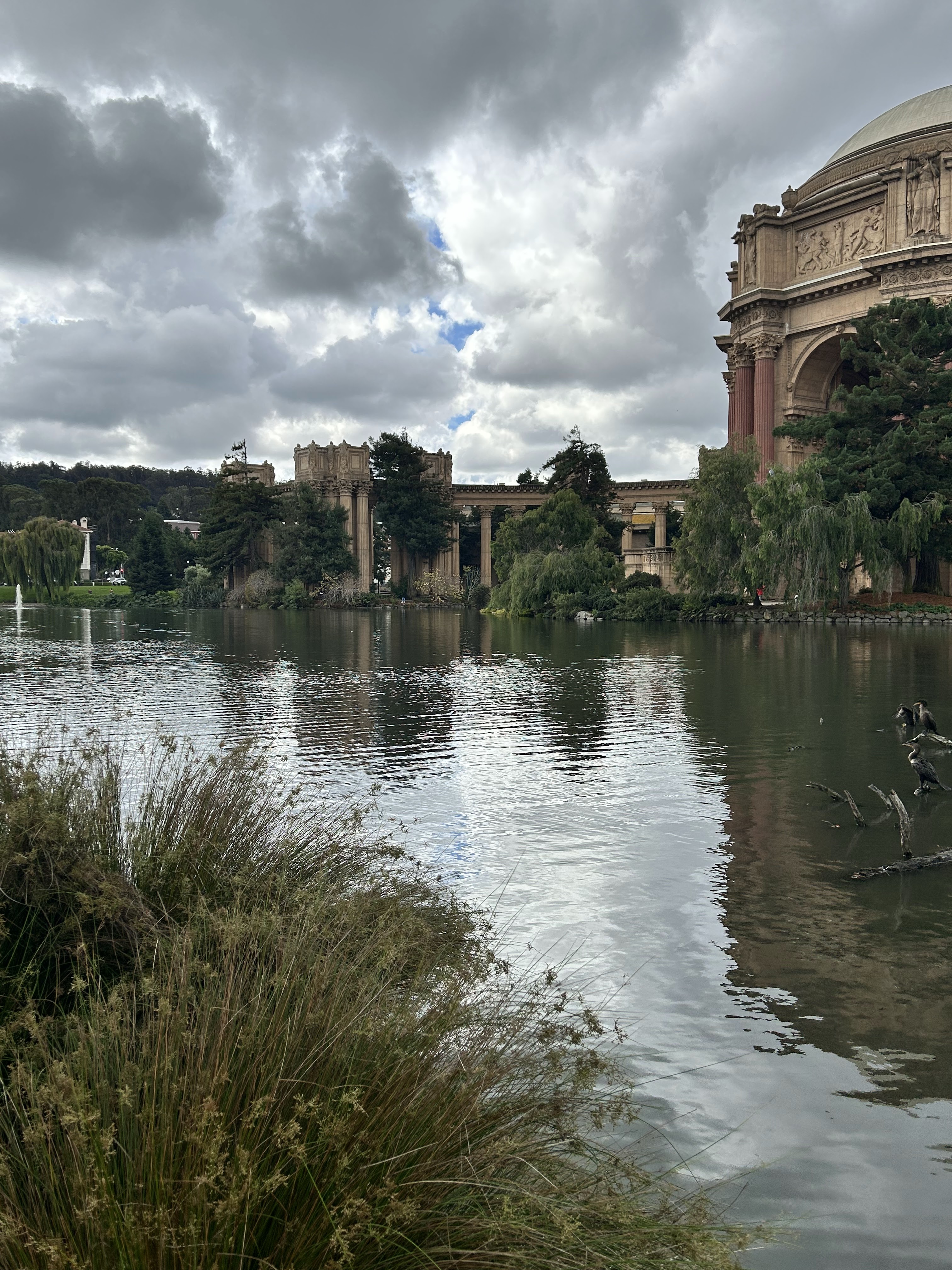
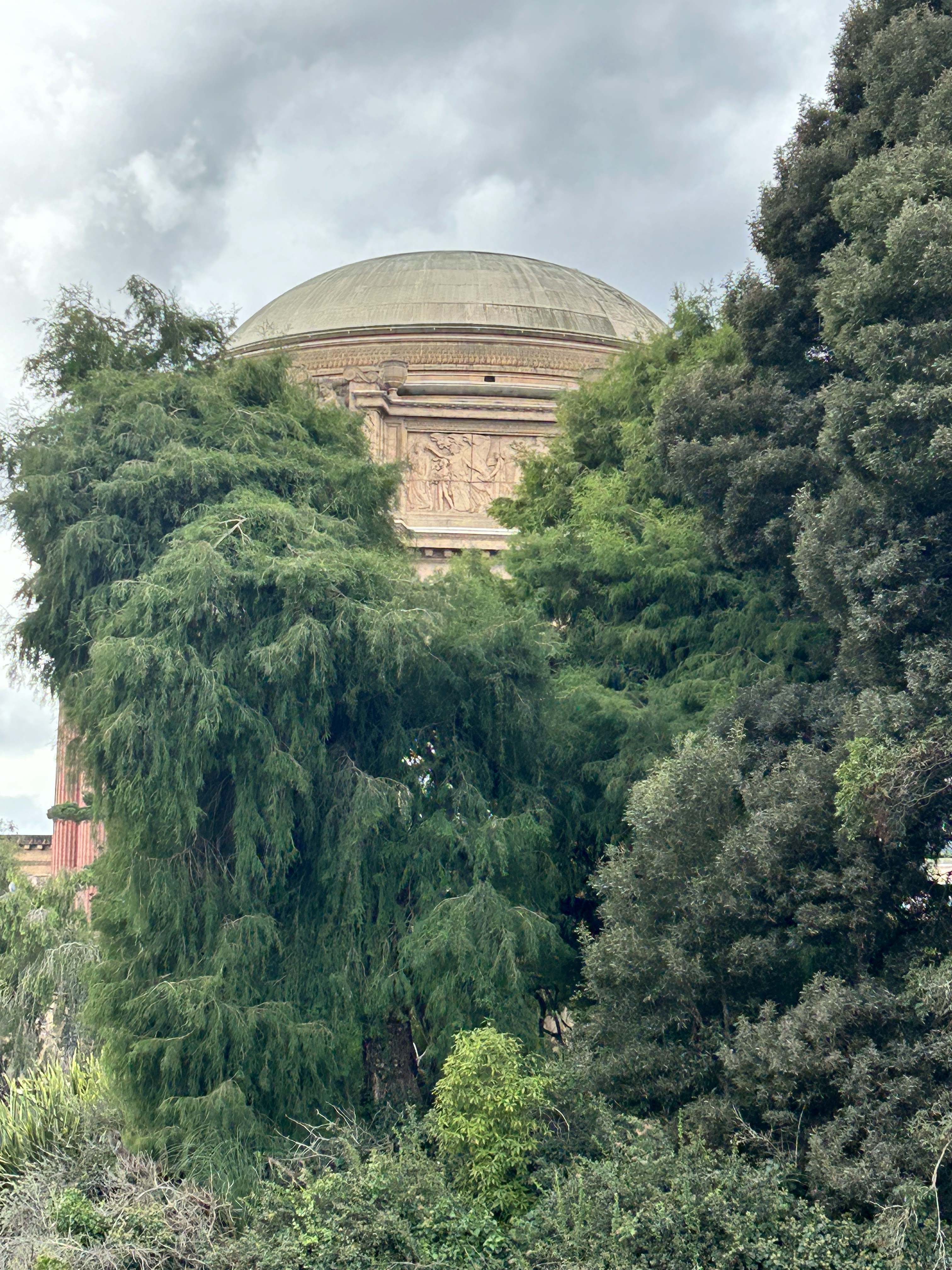
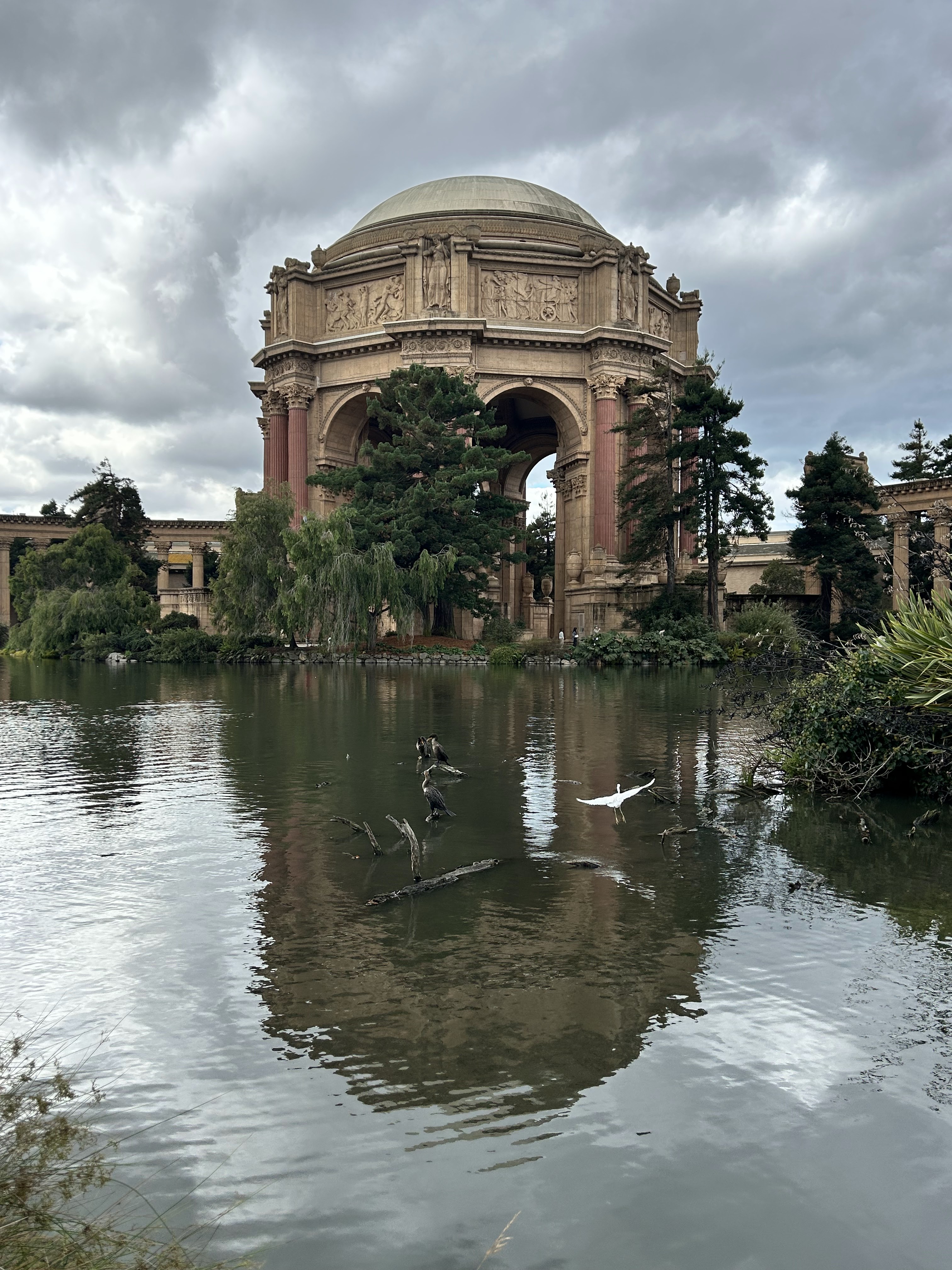
We then walked to the Palace of Fine Arts. It is a beautiful piece of architecture with its Greek-style colonnades and soaring central rotunda. It is larger than you would think, too. It is quintessential San Francisco and is now used for events and lots of wedding photos!
It is funny that all it takes is a routine to feel comfortable and at home. At least that seems to be the case with me. I located my gym and it is only a thirty minute walk each way. I have found my grocery store and most importantly, landed many options for Pete’s daily walks. I see Steven (the valet at the Fairmont) daily so that Pete can gather his treat and I have met people, and know their names, from my daily visits at the dog park.
The process of wandering is not only learning about the new places I visit, but also learning about myself, too. Building a community is important to me and these daily achievements help make that happen. I have learned that the daily minutiae of crap doesn’t end just because I am wandering; I am still spending parts of my days dealing with daily living stuff.
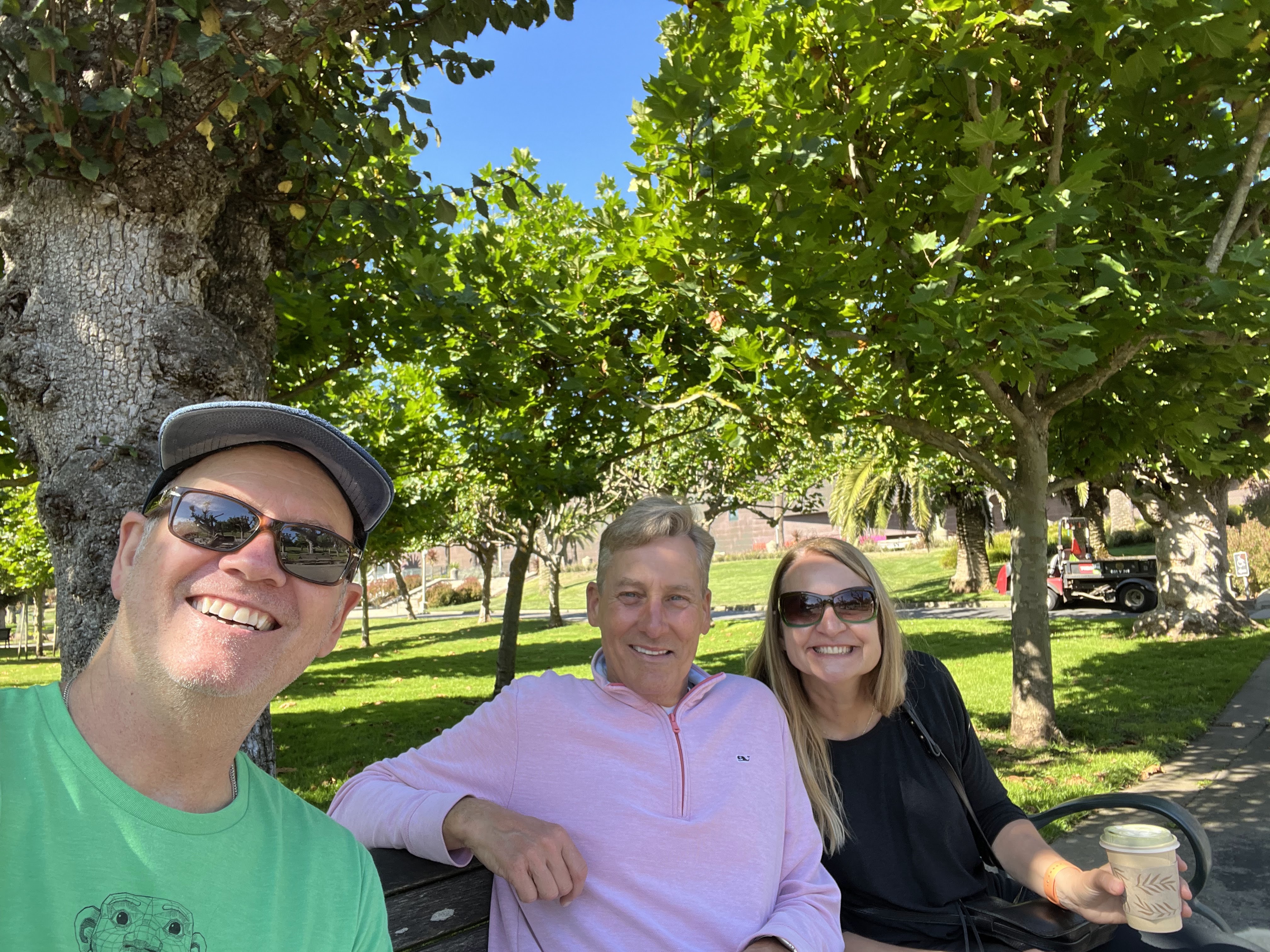
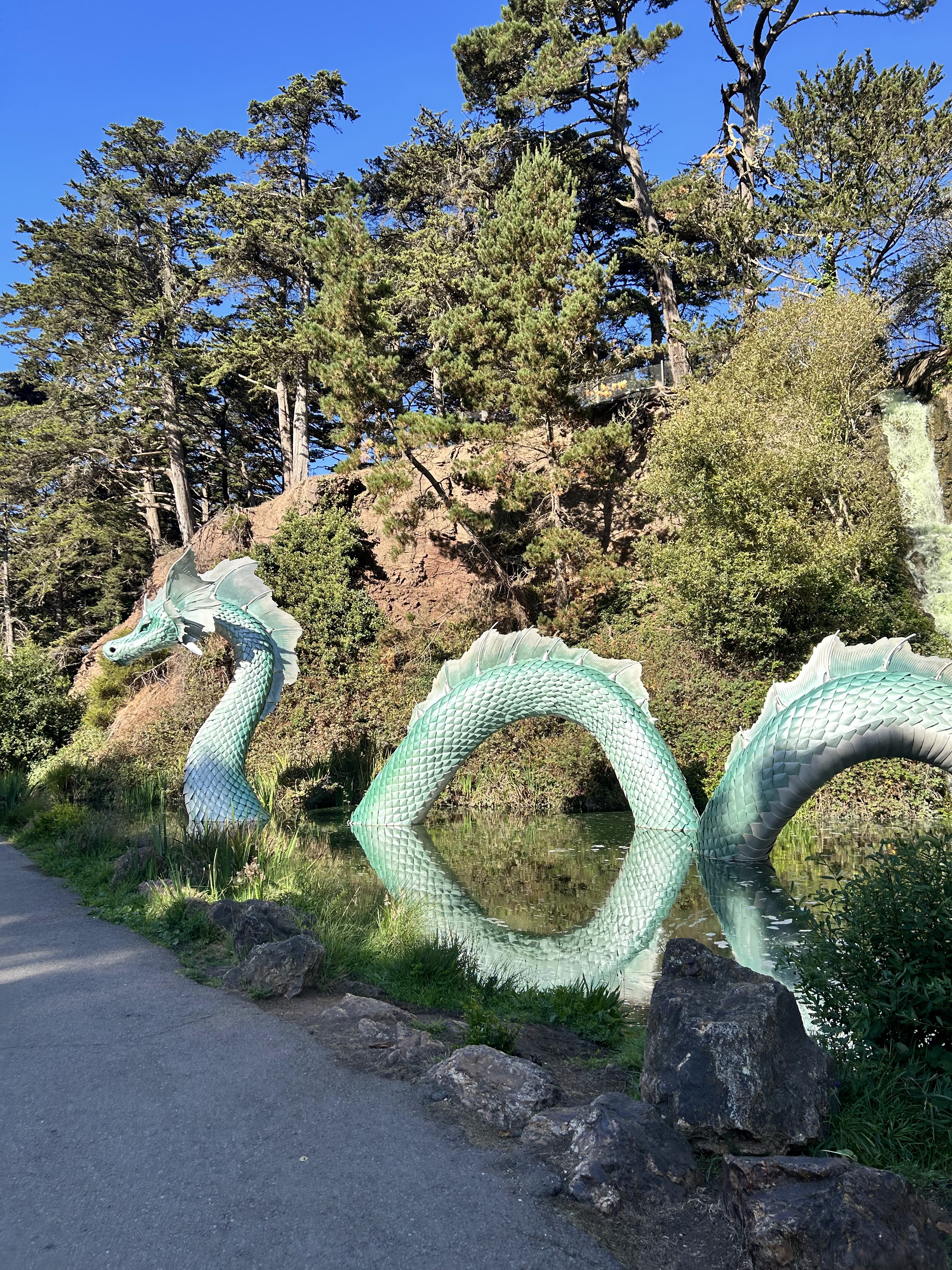
Today I met with friends of a friend. Meeting new people allows me to hear new perspectives. We met this morning at the boat house at Golden Gate Park. Golden Gate is larger than Central Park and we saw some really cool art installations on a pedestrian-only area of the park. When I meet people that have lived in the city for 30 plus years, I learn their favorite spots, as well as, their perspective on what works and what doesn’t in their hometown. I saw the park through their eyes (and it was splendid!).
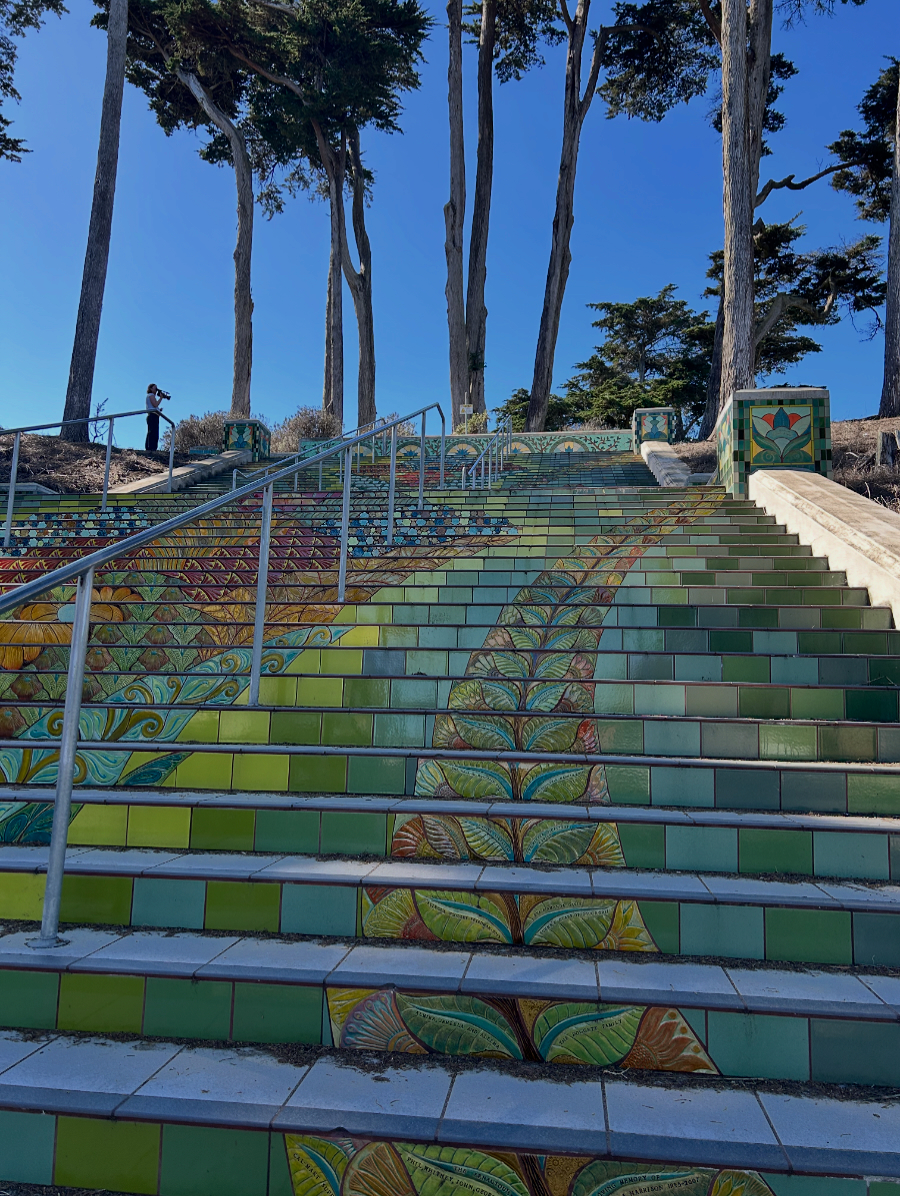
I don’t want you to think I don’t make mistakes, though. Today, after our walk I tried to return back to my rented studio…big mistake! With Fleet Week and a North Beach festival happening, there was not only no parking but many streets were shut down. After driving around for an hour trying to find a parking space, I decided to return to the Golden Gate Park area. Pete and I investigated Lincoln Park and found the Lincoln Park steps. We also walked around Lands End. Basically, I was trying to burn time.
At 5 p.m. I returned but to no avail…still no spots. Fortunately, Carli’s friend took my car and found a spot in her neighborhood since she will be using my car tonight, anyway. Thank goodness Pete is easygoing. I will be more careful going forward on noting events and when I should and shouldn’t use my car!
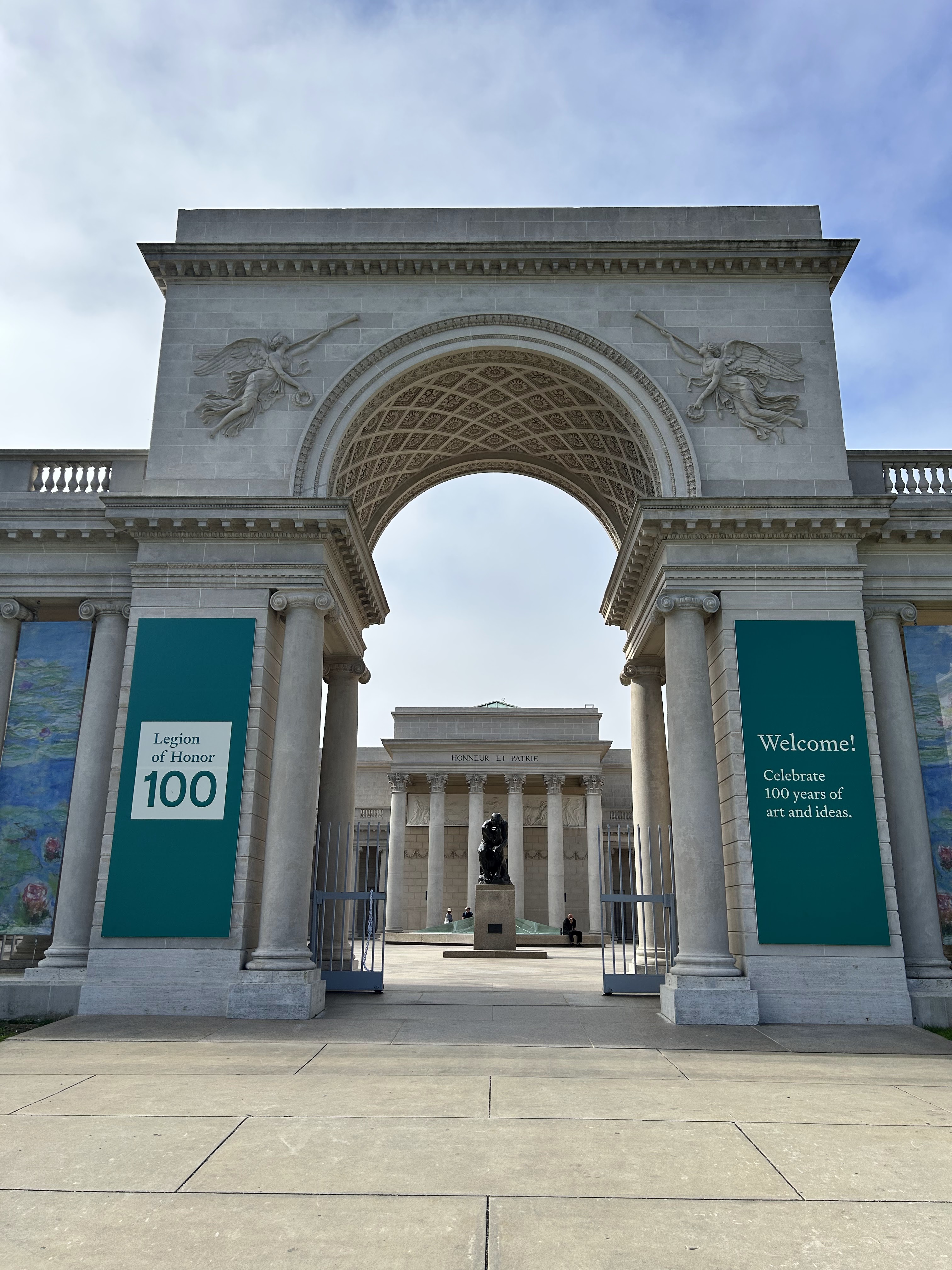
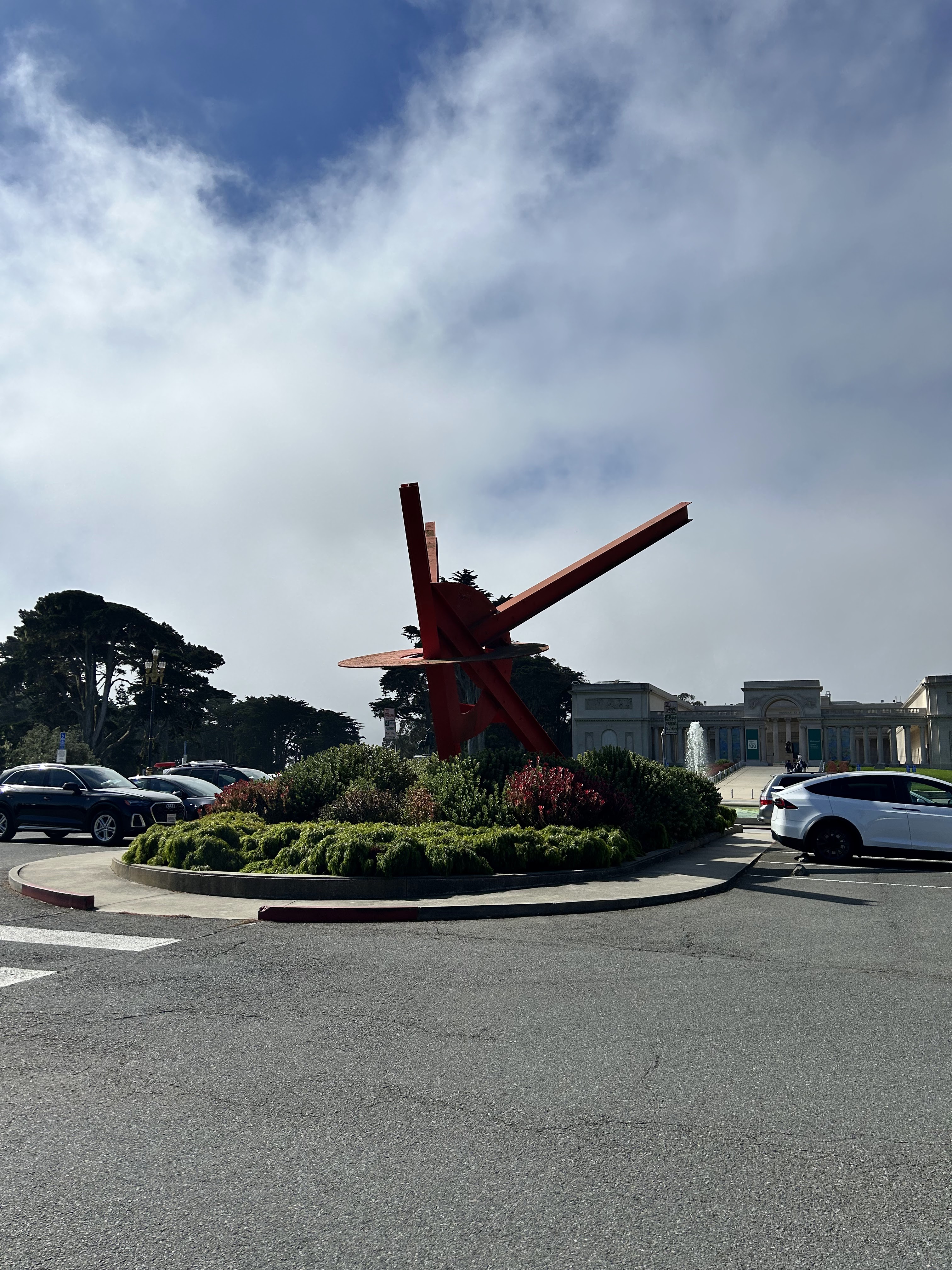
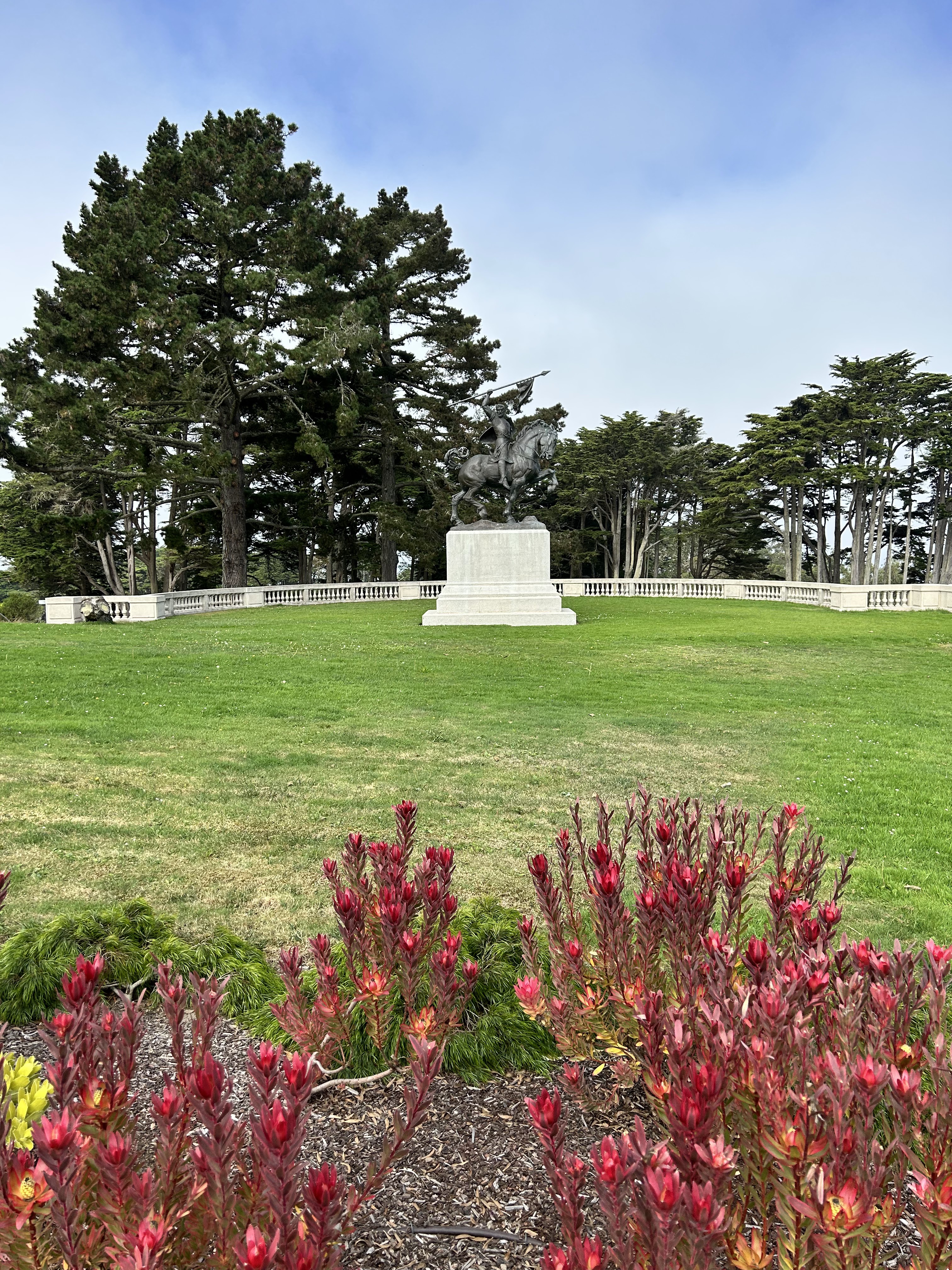
Today I ventured out to visit the Legion of Honor (in Lincoln Park) and de Young (in Golden Gate Park) art museums. The Legion of Honor Museum is situated high on a hill overlooking the Pacific Ocean. The entry is stunning and the museum holds the largest collection of Rodin sculptures outside of Paris. It also has an impressive collection of European painters and contemporary art. This is the perfect-sized museum with just two floors and a digestible amount of art.
After leaving the museum I drove the Sea Cliff neighborhood (stunning!) to the Lands End hiking trail. The trail is easy and the views are spectacular.
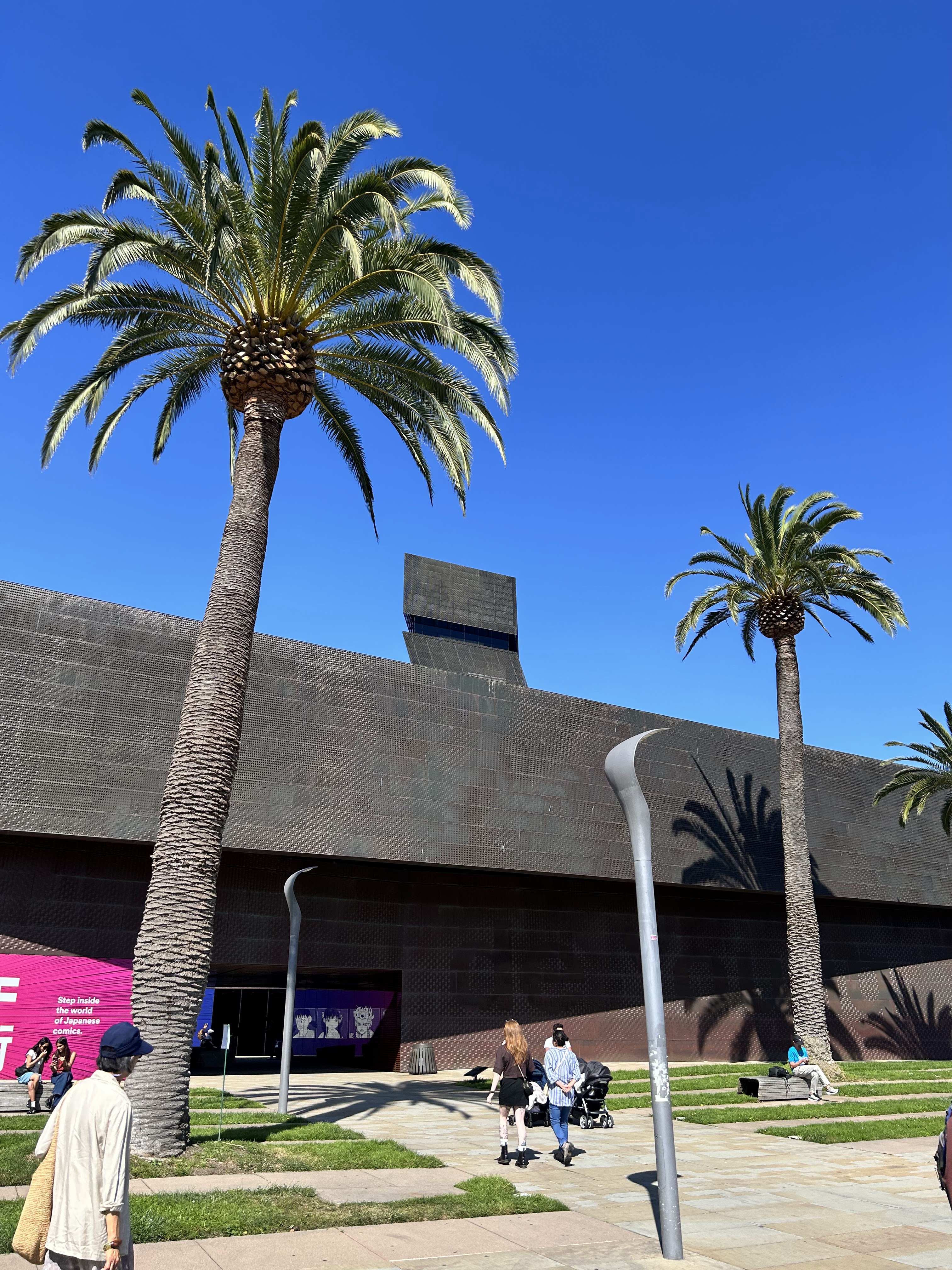
I then drove to the de Young Art Museum. It is another two-level museum (so perfect-sized). It focuses on American art from the 17th century to present day. There was a special exhibit on Japanese comic art that I think Pearl would have loved. They also had some African art. Overall, I preferred the Legion of Honor museum but both are worth a stop.
San Francisco is generous with her beauty. I have been traipsing through neighborhoods all while enjoying the breathtaking views of the Pacific Ocean. Yes, the hills make for great workouts but they also pitch me to great viewpoints. Pete and I have established our walk routine and he insists on at least one daily visit to the Francisco dog park to meet with his new pals and one visit to the valets at the Fairmont for his nightly treat. It’s a routine I can live with.
On Sunday I walked 3.4 miles to and from a 24 Hour Fitness in the financial district. I was the only woman working out, which was a bit unsettling. I asked the front desk why no women were at the gym. The only answer they could give me, “It’s Sunday”. Hmmm I think women can work out on Sunday.
My short term rental is on the path of the cable cars so I hear the bells all day and see the delight as the numerous tourists hold onto the railing and swing halfway off the wooden steps. It’s a quintessential San Francisco vision. The noisy underground cables in the street scare Pete so we walk quickly when crossing.
I see swimmers in the water morning, midday and in the evening. Tai Chi happening at Washington Square in North Beach. Fruit and vegetables piled high in China Town. Fort Mason littered with bikers, runners and walkers. I think I have figured out the parking situation although the street cleaning schedule does throw an additional wrinkle in finding and, more importantly, keeping a spot.
I even managed to pick up Carli from the airport today…yes, the San Francisco Airport! It was easier than expected Each day gets easier. I am using my phone map less and less. I am not as bothered by the sometimes pungent smells on the street. And most importantly, Pete has a bop of happiness each time we go for a walk. He is happy here and so am I.
Last night during the evening dog walk we passed the Fairmont. The valet (Steven) immediately called us in and wanted to meet Pete and give him a dog treat. So, during our 6 a.m. dog walk this morning Pete wanted to go right to the Fairmont. His sense of direction is uncanny, especially when it results in a treat.
We walked the neighborhood and the SF Maritime National Historic Park. There were people in the aquatic cove swimming. They had on wetsuits and I could hear the laughing and chatting in the early morning, dark hours. I have already noticed that even though San Francisco is a BIG city, it lives small. People smile, say hello and introduce themselves. Eddie and his dog Rocky introduced themselves as we walked to the dog park this morning. And Eddie gave Pete a chicken treat. At this rate, Pete will NEVER leave this city…the treats are just too plentiful.
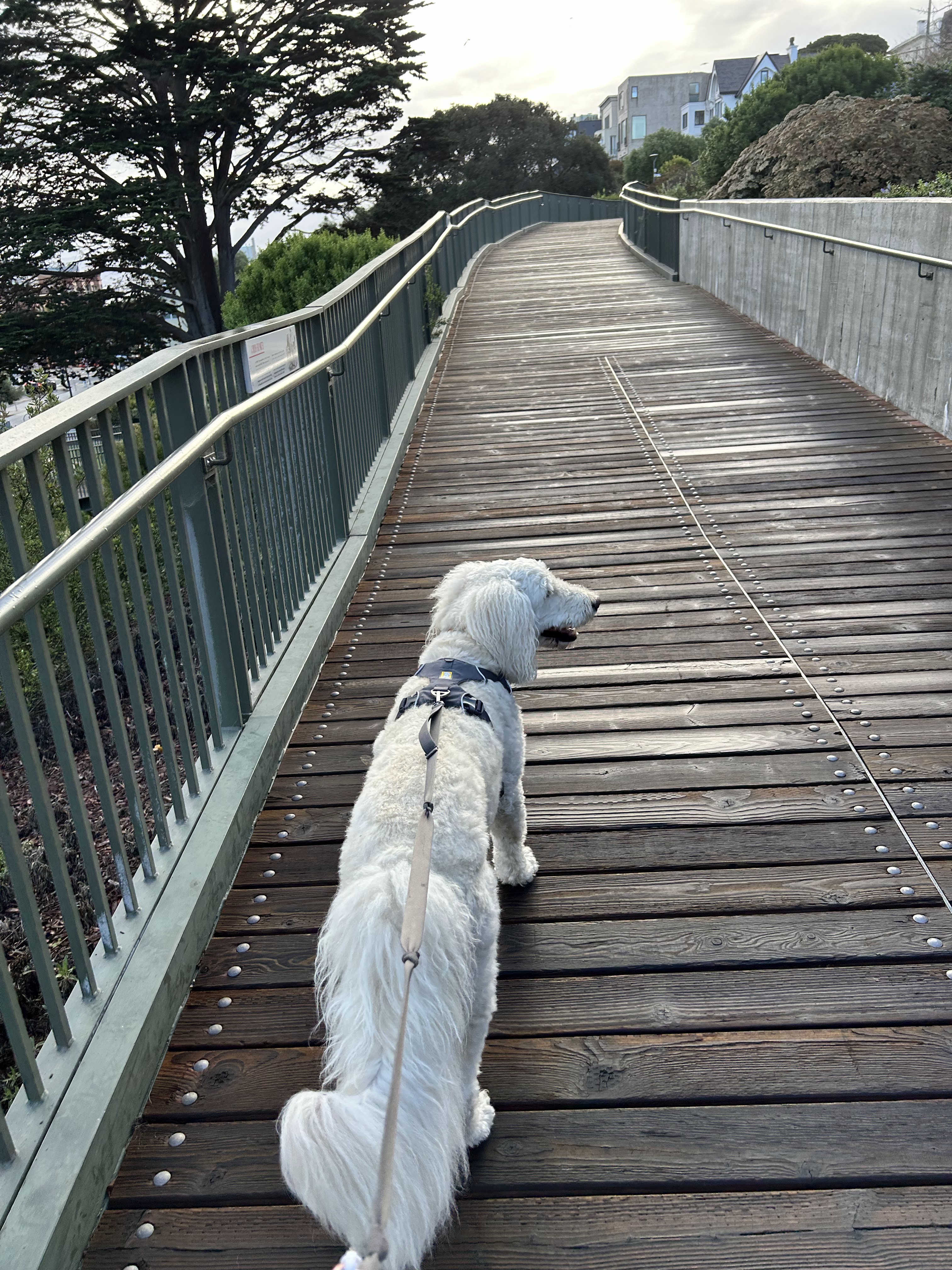
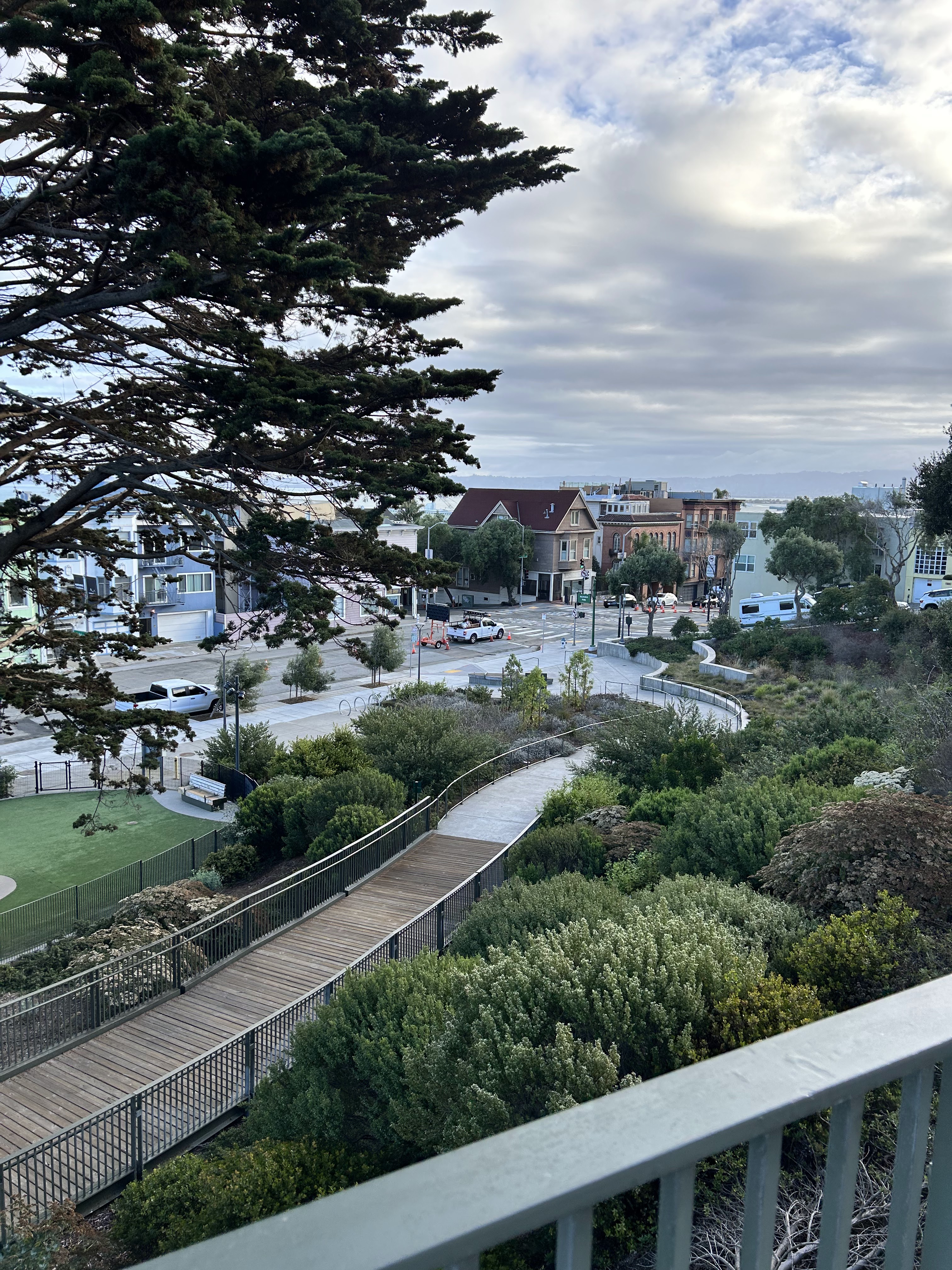
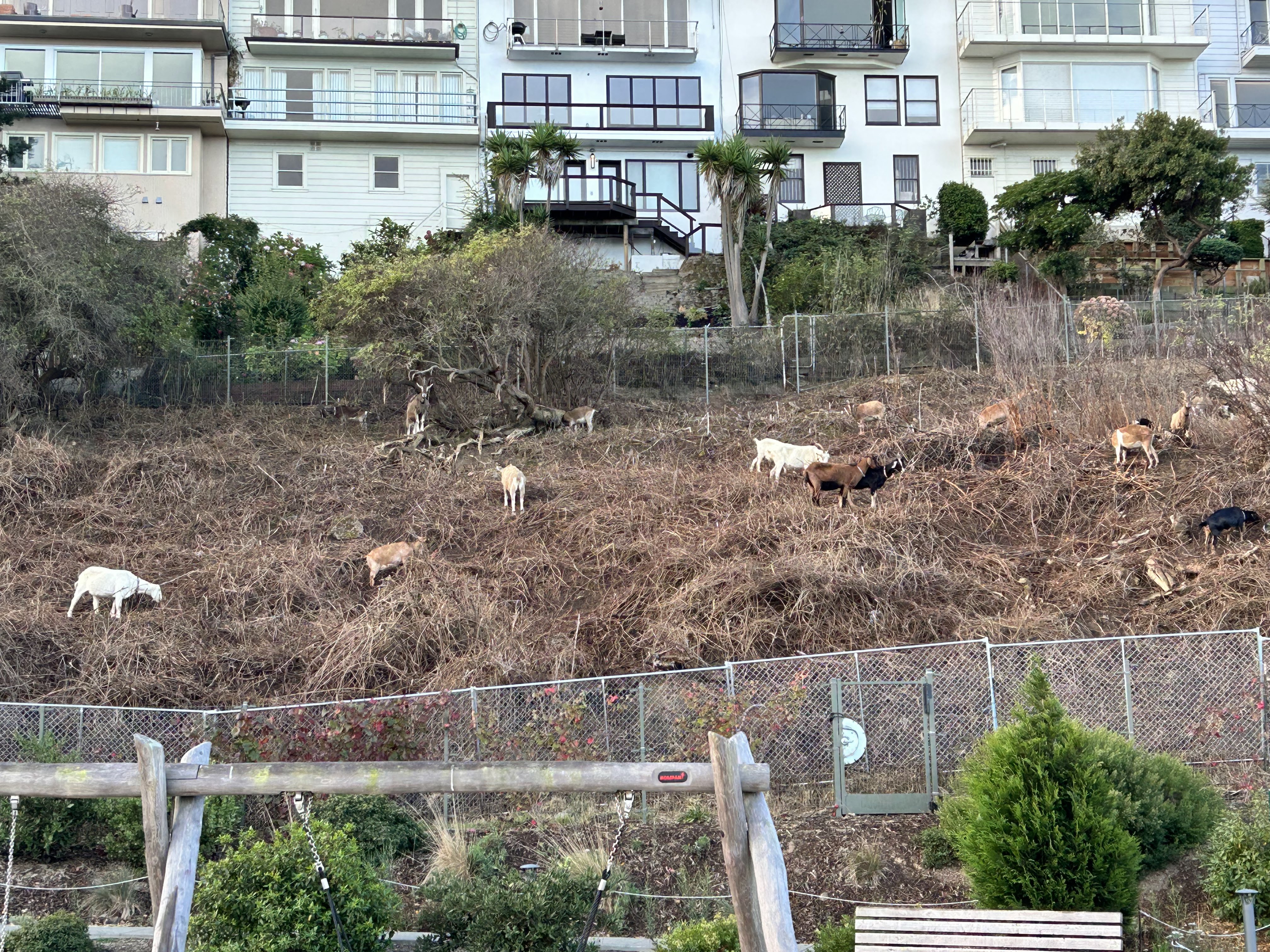
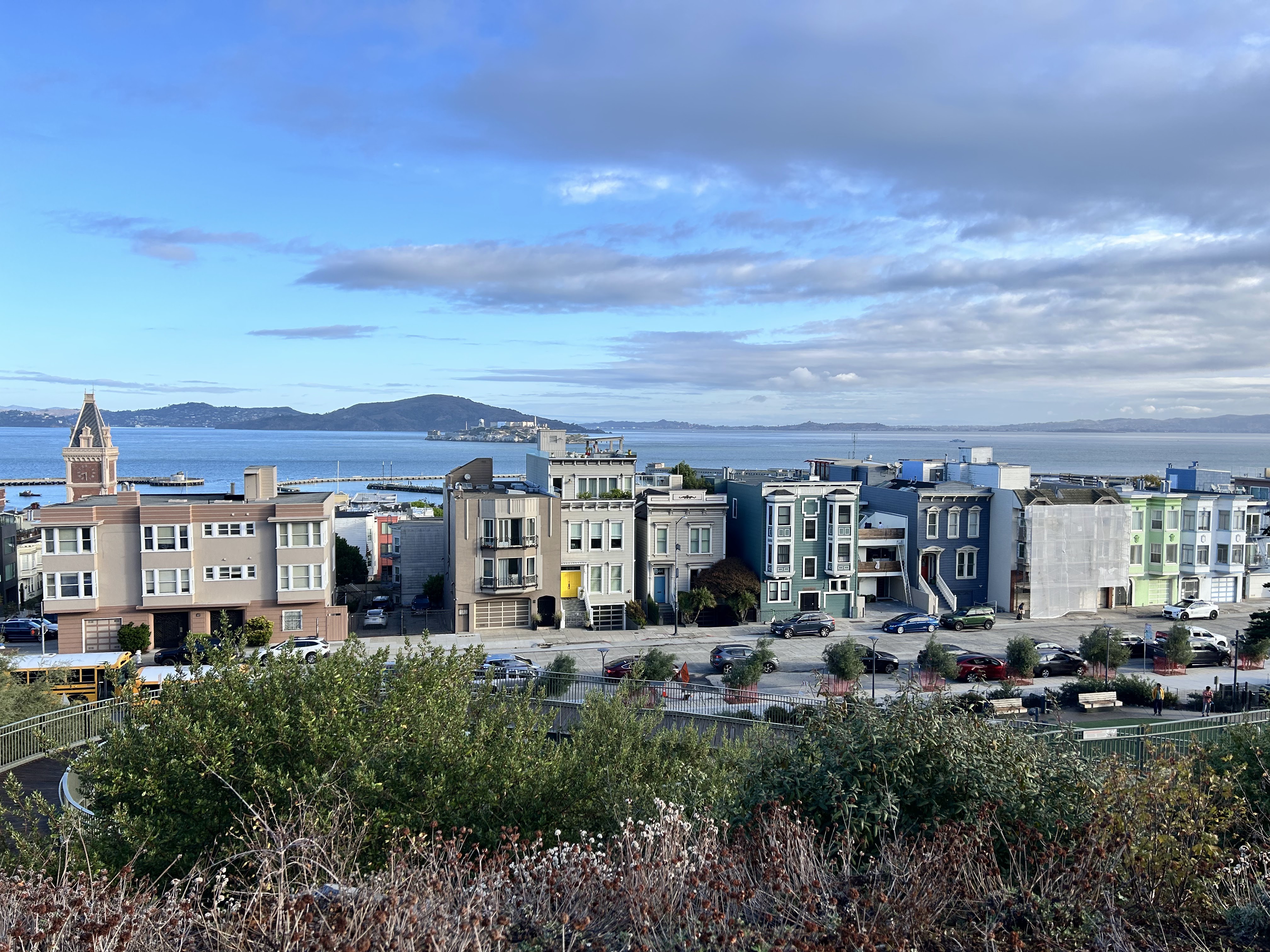
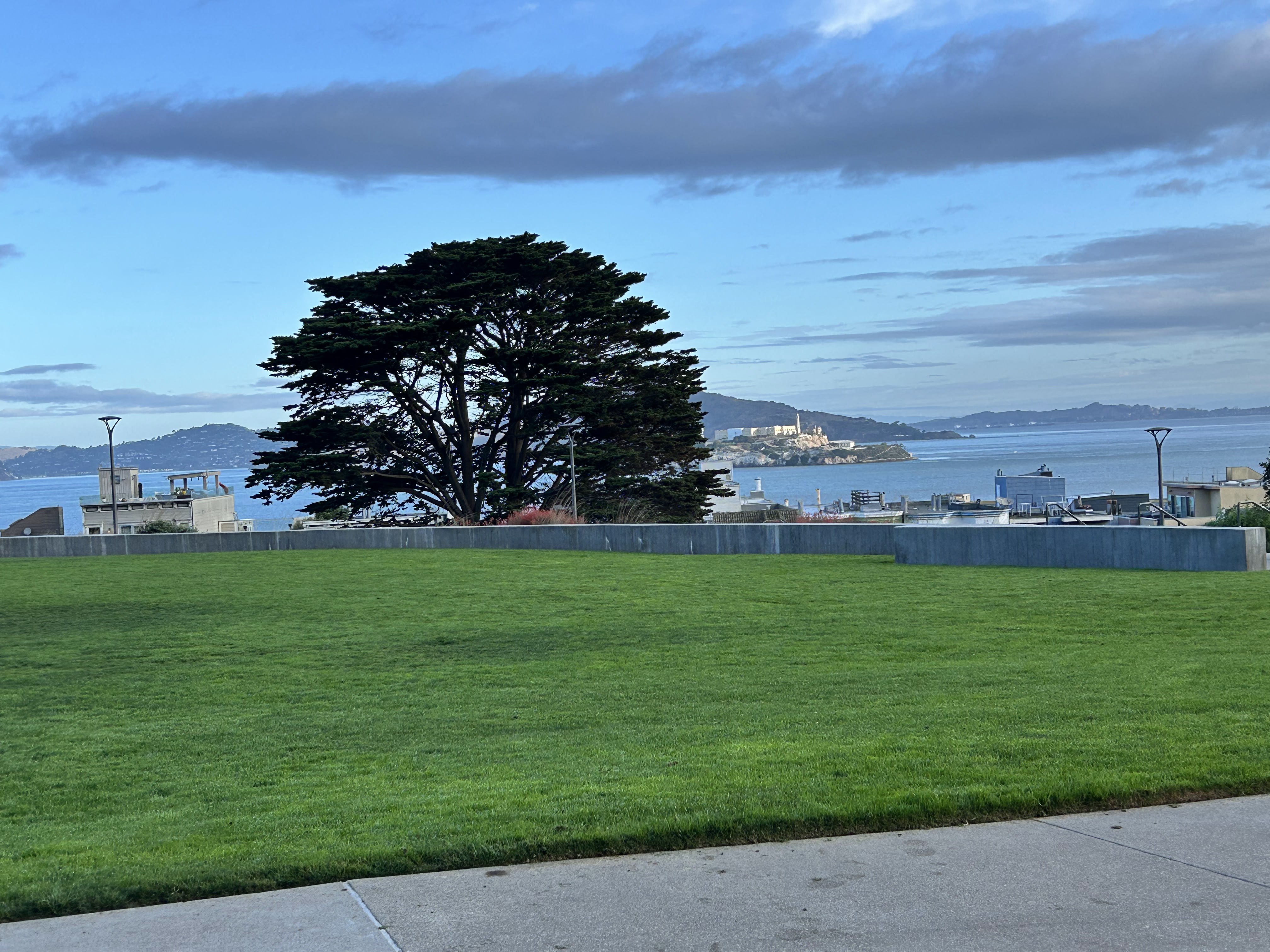
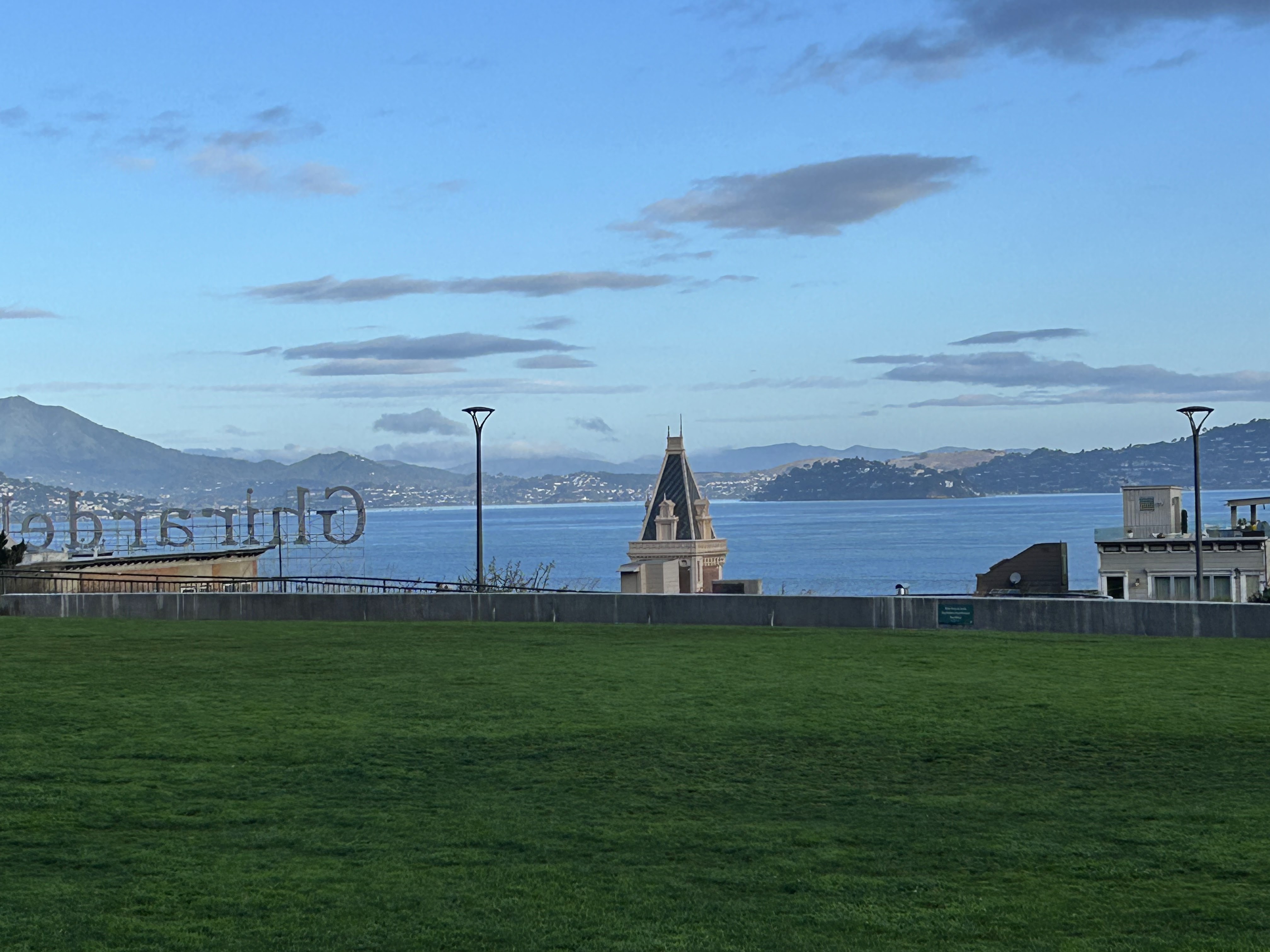
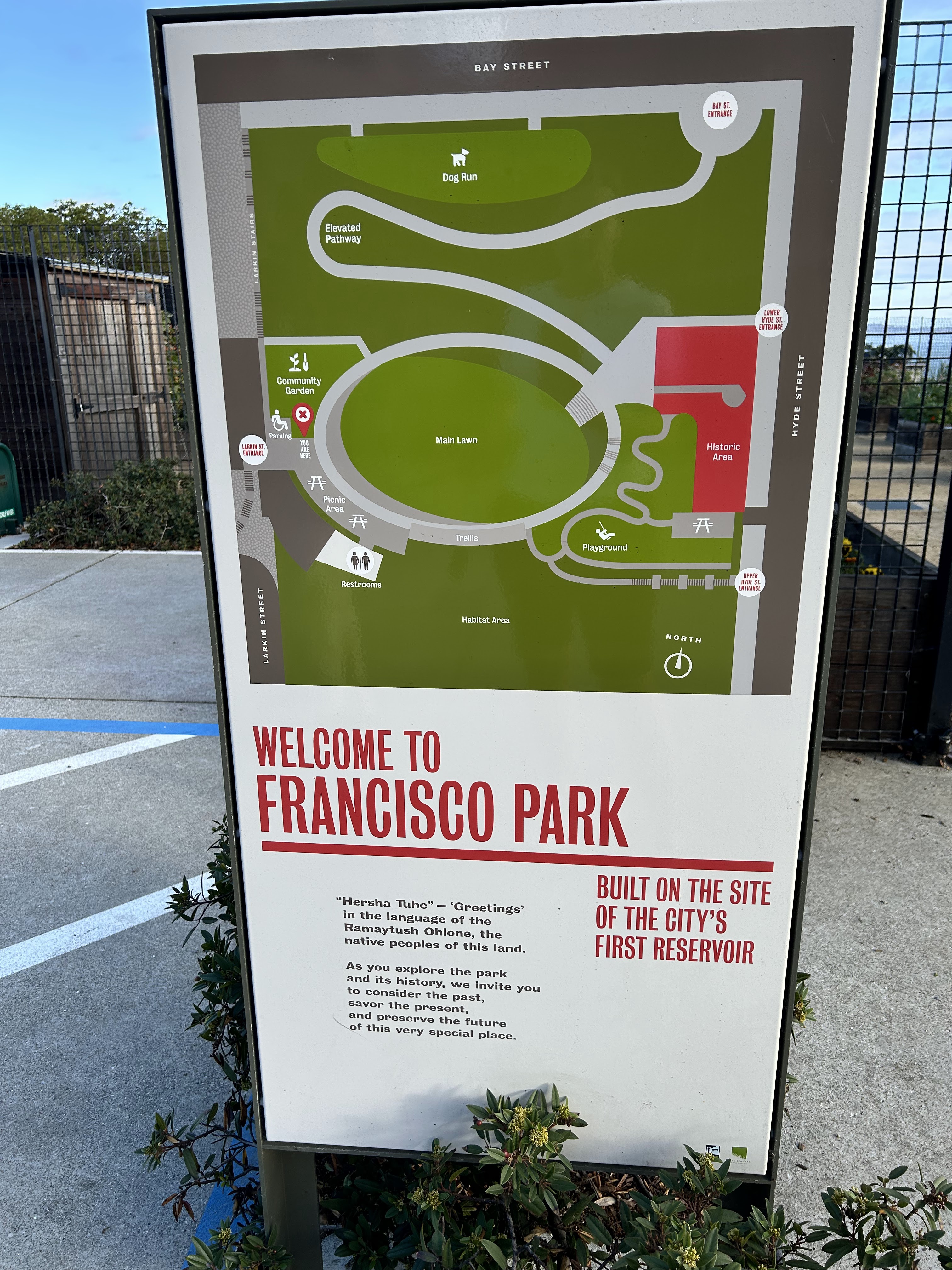
After visiting the dog park where Pete energetically played with another Doodle, we walked up to the area above the park, which was an even better park! The views were stunning overlooking the water and Alcatraz. Goats were on the hill doing the organic farming and a community garden and a playground rounded out the park.
I purchased my parking permit for the city and FasTrak for the bridge tolls. This afternoon I will find my gym. There are two options, both 1.4 miles away so I will walk both of them and see which one I like better. I already have settled in and it feels pretty good. I look forward to exploring the next two months. And I am sure Pete will be gaining some weight!
Today should be called the day of driving. I drove from Mendocino to Bodega Bay. It took about three and a half hours to drive there and the first 30 miles were hairpin curves. Bodega Bay was a bit underwhelming. It’s tiny and really no central downtown area. I don’t think it was really worth the drive but now I know. At least I found some good fish and chips (day three in a row)!
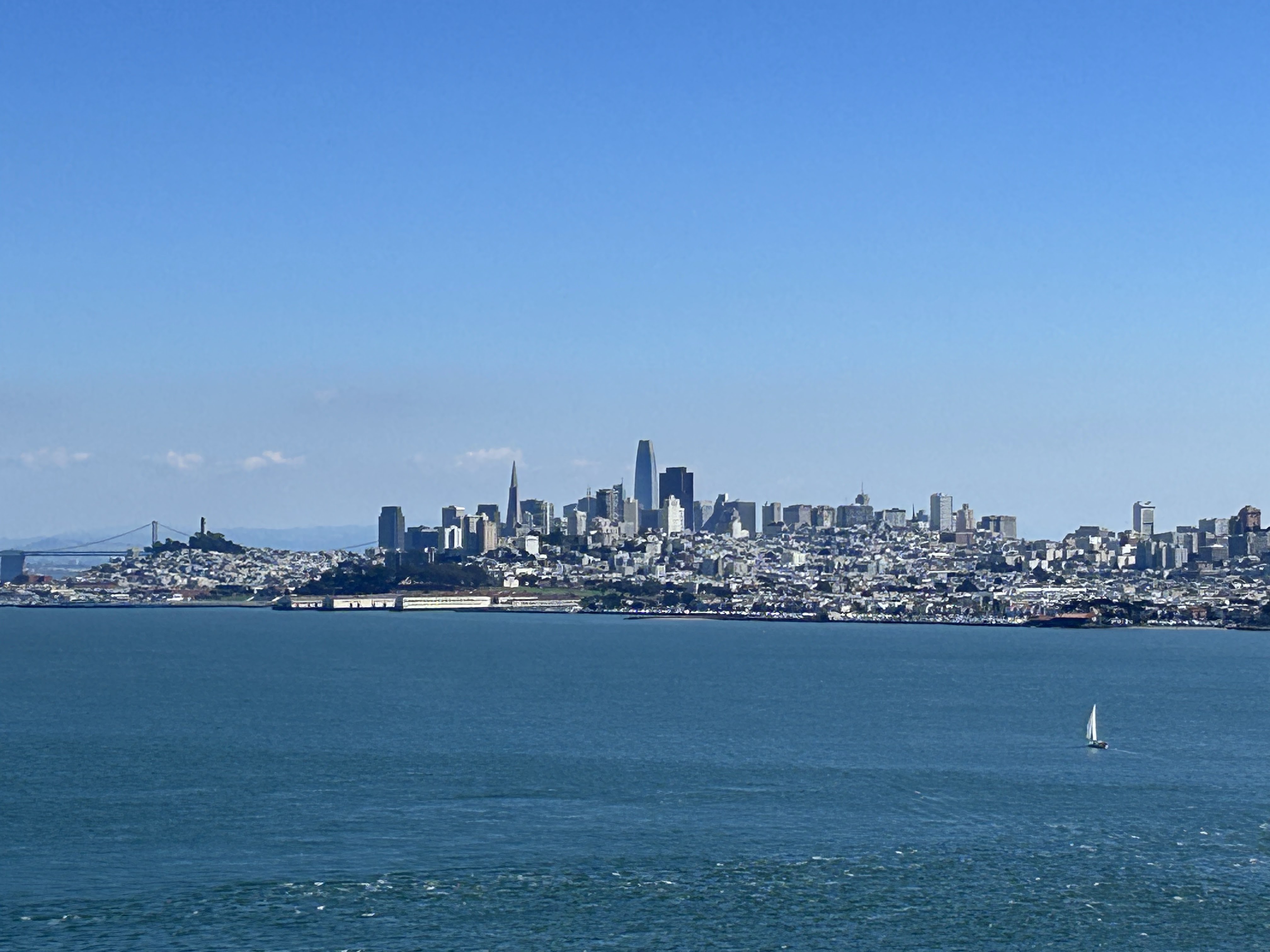
I considered driving to Point Reyes National Seashore (which is what I should have done instead of Bodega Bay) but frankly Pete and I had enough of driving so we drove straight to San Francisco which took about an hour and a half. I have to admit that while I was driving over the Golden Gate Bridge and saw the city in the distance I got a little emotional. I got emotional for two reasons. The first reason is that I realized this was the longest drive I have done by myself (except for two weeks in Portugal). Secondly, arriving in this city marked the beginning of my second half journey. The house is sold, my six weeks of being a nomad across Portland is over. I’ve left my cocoon of familiarity. This is truly the first step of formulating my second half rewrite.
My short term rental was easy to find but parking was not! Fortunately my host was very helpful. I unloaded the car and then headed a block away to a fantastic dog park. Pete was shy at first but then he jumped right in with the 30+ other dogs. It was fun to watch all the dogs run, sniff and get along. I look forward to investigating San Francisco.
I am really enjoying this wandering thing. It’s nice to explore, learn new things and not be too pressed for time. Pete seems to be enjoying it, too, especially all the stops at the beaches. It was another big day for driving and seeing things and the weather is much better today.
We started in Eureka which has a super cute downtown area with shops, cafes and a harbor. We then drove about an hour to the northern entrance of the Avenue of the Giants. Parts of the drive through the ancient redwoods is so dark you would think it was nighttime! The sheer number of giant redwoods clustered in this 31 mile drive is truly amazing.
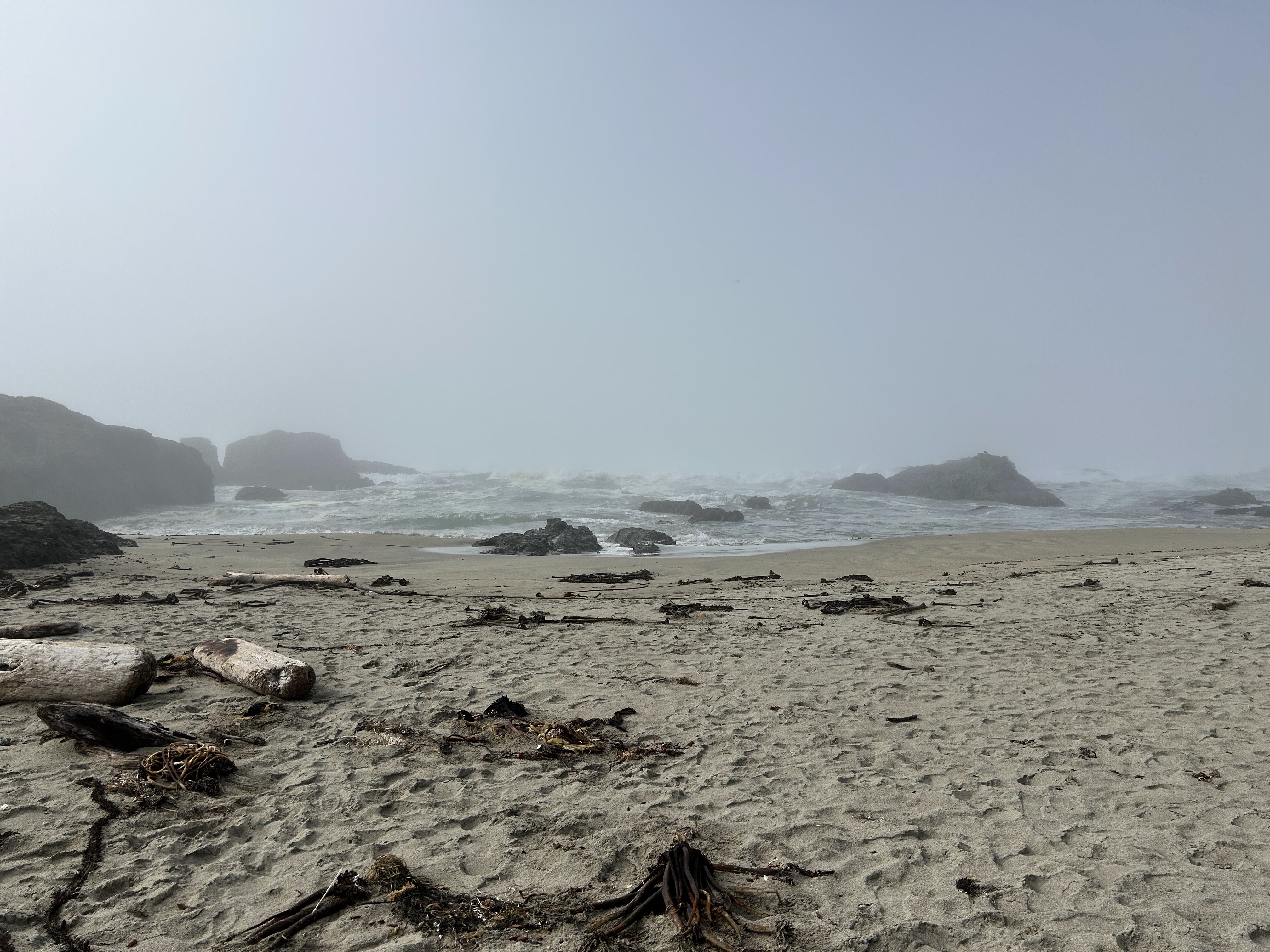
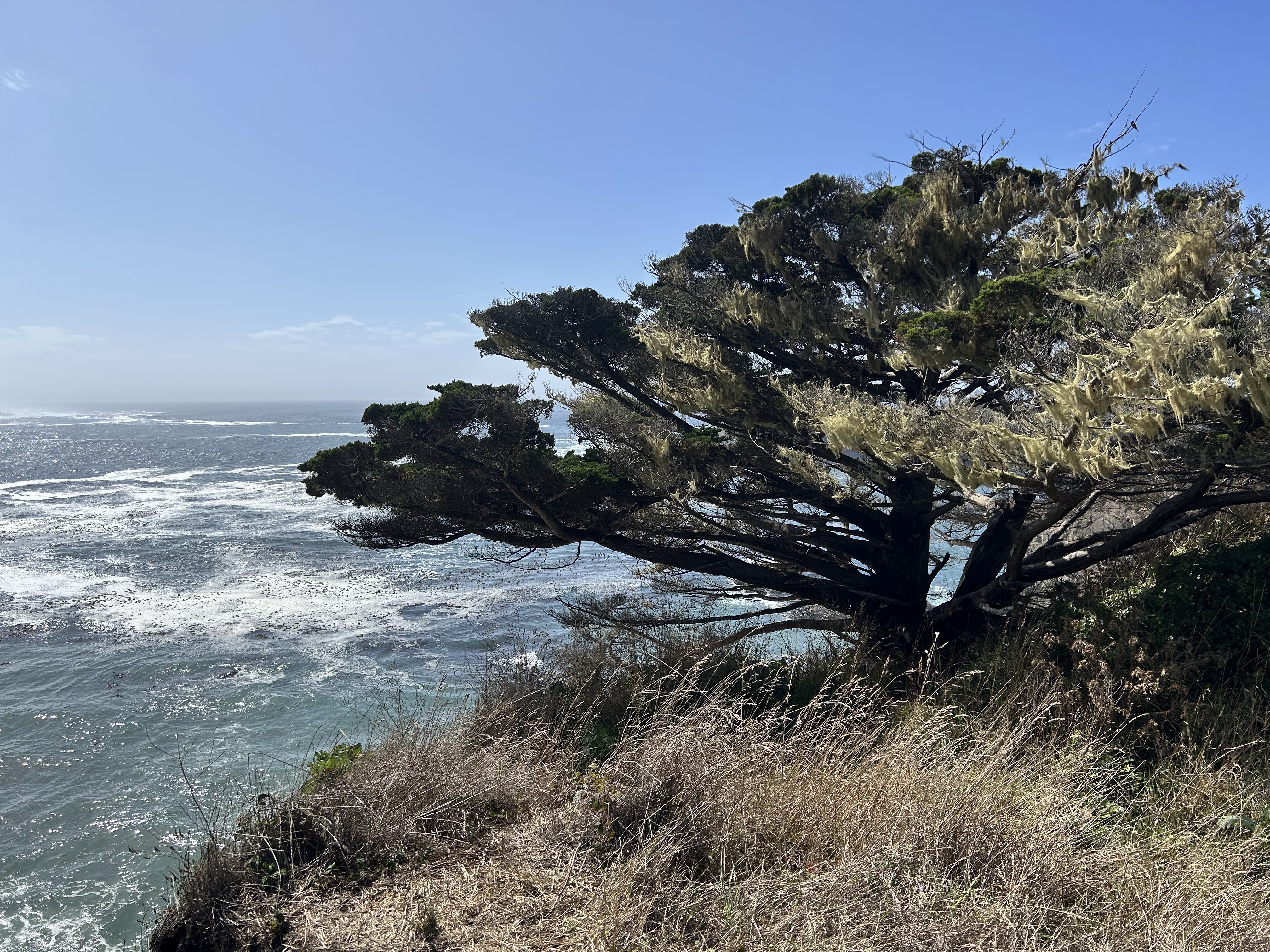
Shortly after exiting the redwood drive, I hopped on Highway 1. It was 30 miles of soft serve ice cream curves…in other words, very, very curvy. And no guardrails which is always a nail biter. But after 30 miles you are popped right out to the ocean cliffs. The views are stunning and the waves were powerful. We stopped at Seaside Beach. Just more loud waves, more rocks jutting out of the water and more beauty for free. I was also able to find a few mussel shells for my friend Jenny. She does amazing art with mussel shells.
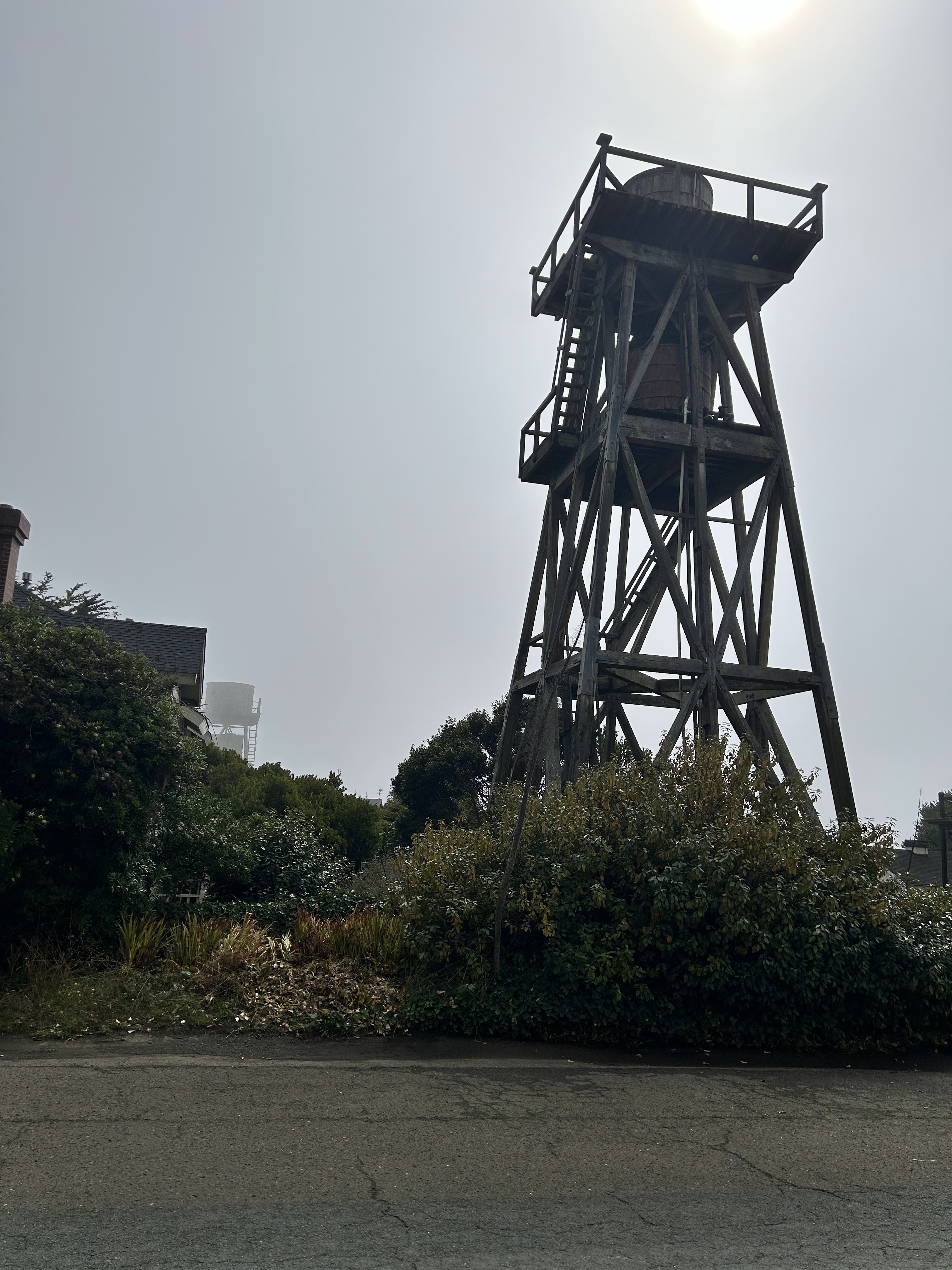
We passed through Fort Bragg and returned later to have lunch at Sea Pals (more fish and chips) and walk at MacKerricher State Park and Glass Beach. But before that we wandered the Mendocino downtown area. It’s a quaint downtown right on a cliff overlooking the Pacific Ocean with water towers sprinkled throughout the town. I stopped at the visitor center to learn a little history. The town (unincorporated) still uses them today since the source of water is wells. The towers are now powered by electricity. Mendocino can be sunny one minute and then the fog rolls in and visibility is nil. Pete and I are ready for a nap!
Today was a big driving day because the weather was wet and windy and did not lend itself to walking outside a lot. I have realized that when one is traveling with a dog it limits what you can do indoors. I cannot sit in a restaurant (so takeout is the go-to) and when the weather is lousy I can’t lounge in a bookstore for hours on end.
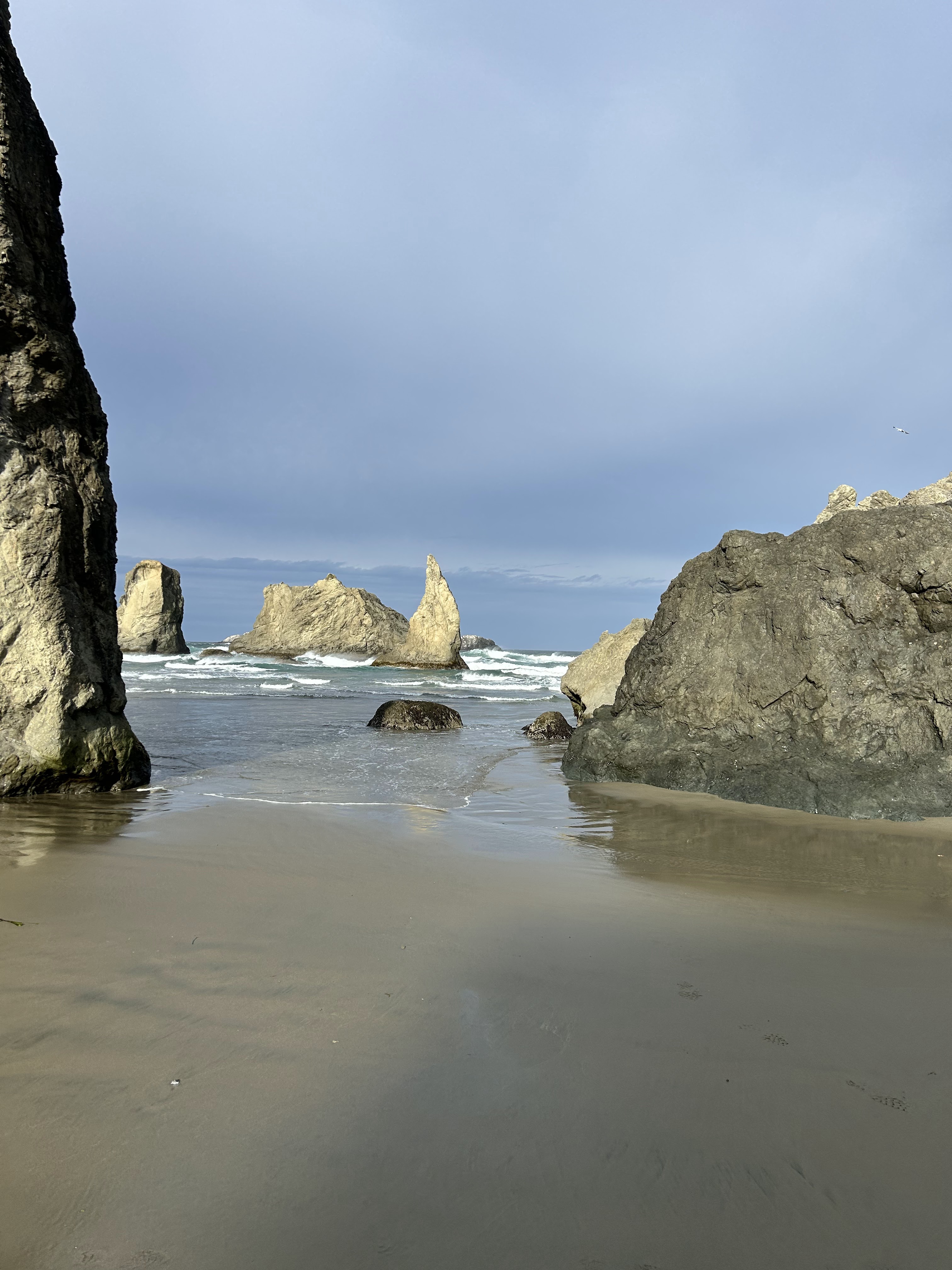
Nonetheless we saw a lot. We left the hotel by 8 a.m. because the rain was scheduled to start at 11 a.m. This plan proved to be wise because Bandon Beach was BEAUTIFUL this morning and the sun was shining. We started at Cocquille Point, walked down the stairs and to the beach. Jutting rocks were everywhere. Pete was unimpressed by the giant puffin statue made from debris. Pete immediately rolled in the sand…over and over again. He truly loves the beach. We walked the length of the beach and then returned to the car to continue down the 101.
Port Orford was next. It was a quaint town focused on art. We stopped at the Battle Rocks Wayside Park for the stunning views and then moved on to Gold Beach. Gold Beach is where the Rogue River and the ocean meet. We stopped quickly at a viewpoint but then moved on as the weather was very wet.
On the way to Brookings we stopped along the Samuel Boardman State Scenic Corridor and decided it was time for fish and chips. Happy Clam did not disappoint.
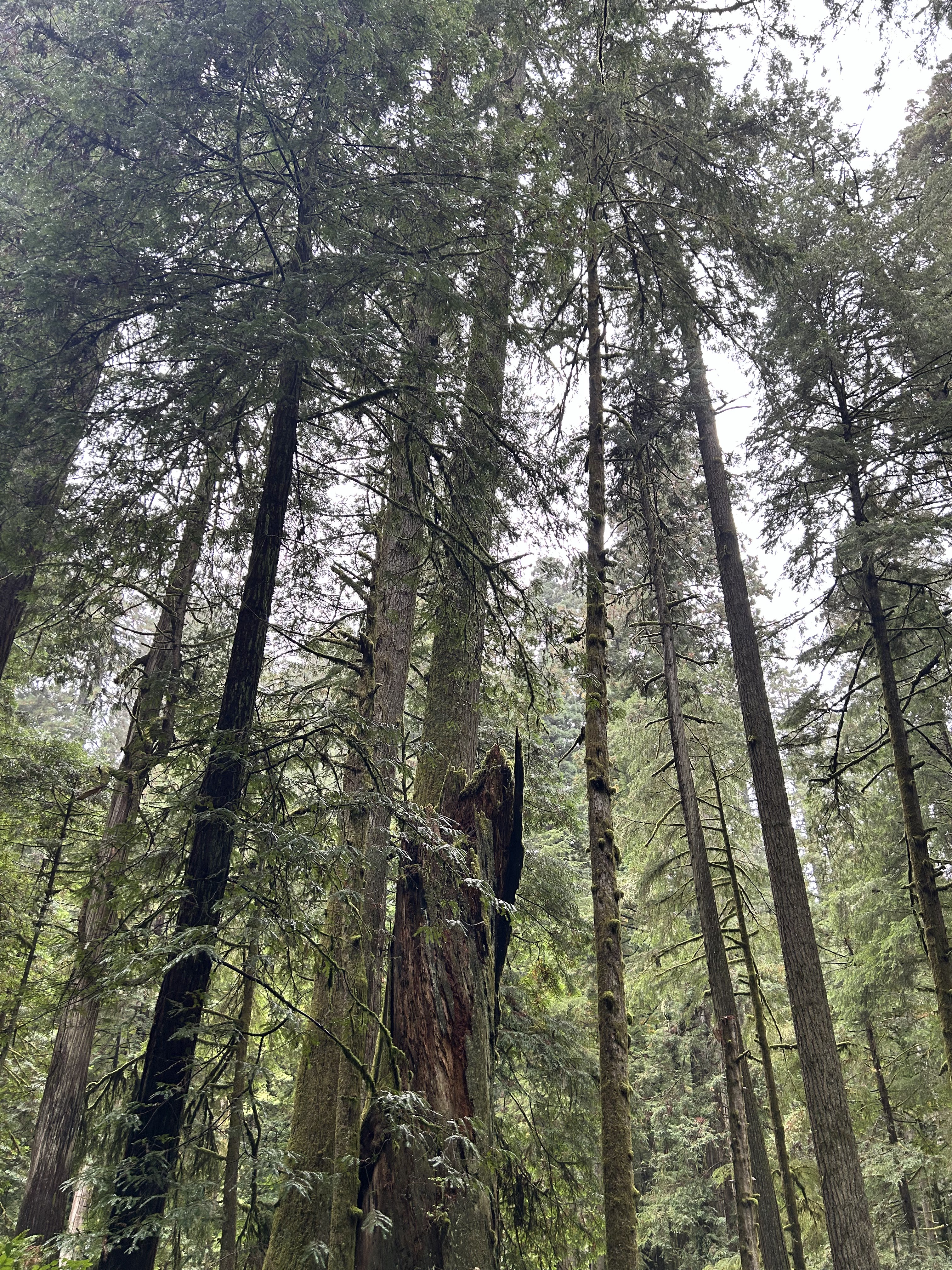
Jedediah Smith Redwoods State Park was next on the route. We stopped at the ranger station to get a map and will do the Avenue of the Giants tomorrow. The trail I really wanted to walk was just too wet and muddy and I really wasn’t prepared. The stunning drive through the park was dark as the trees were amazingly tall.
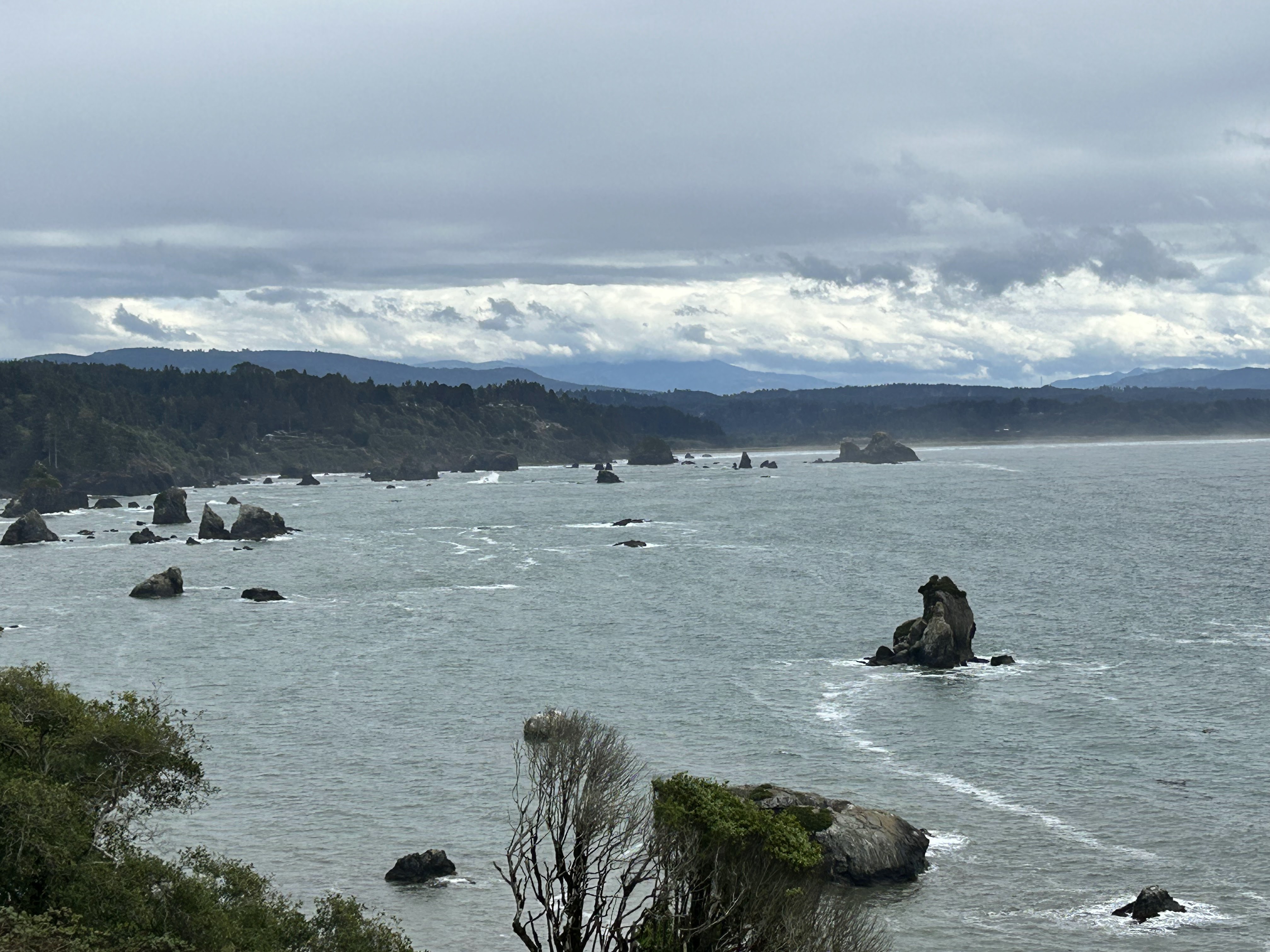
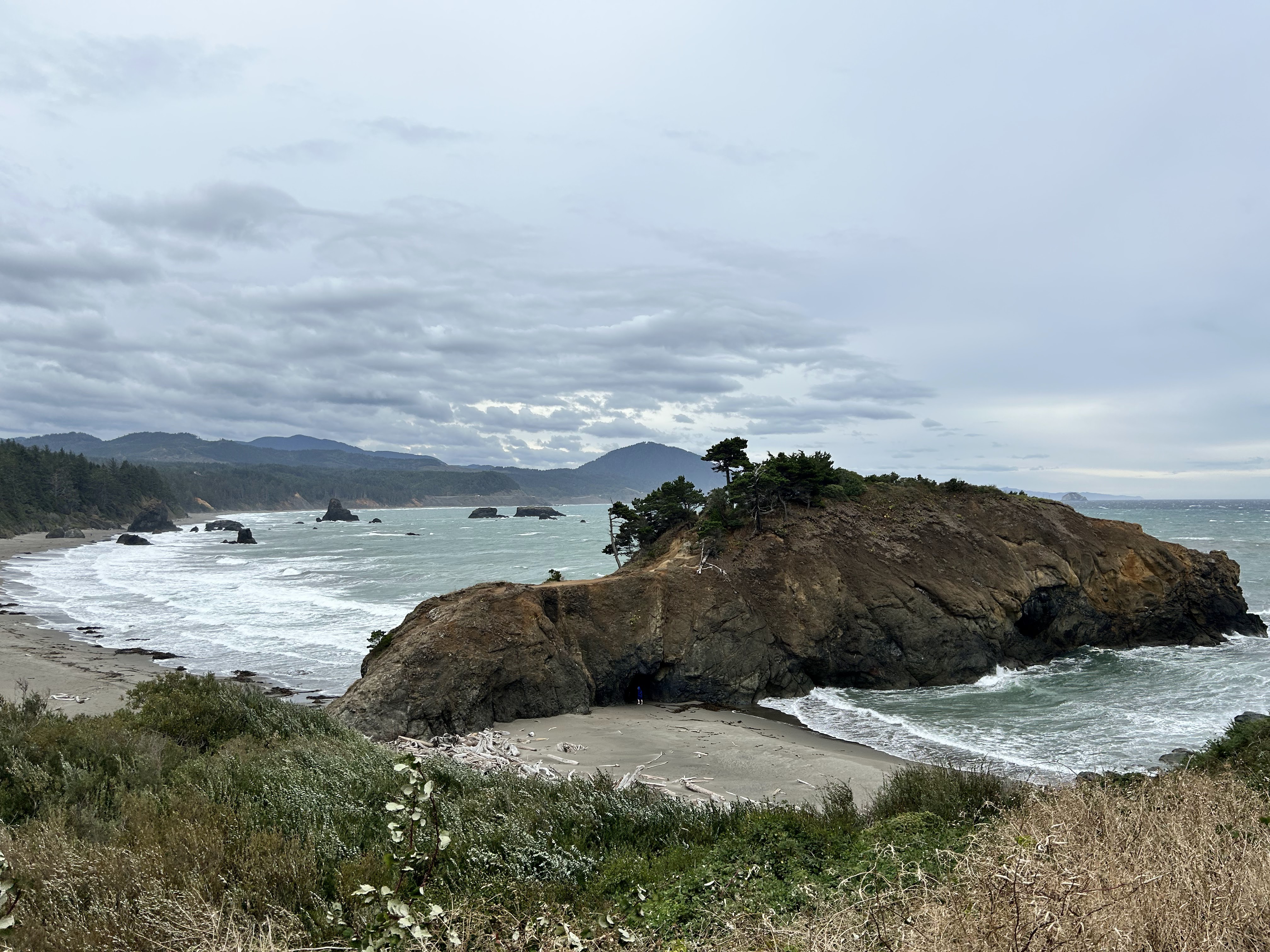
Next up was Trinidad, which is a small town of about 300 people. It had a beautiful bay overlook but no access to a beach we could walk. By now my butt was hurting and Pete was tired of being a passenger so we found a hotel in Arcata and called it a night! Overall the drive along the 101 is mesmerizing with its stunning views, rock formations and crashing waves.
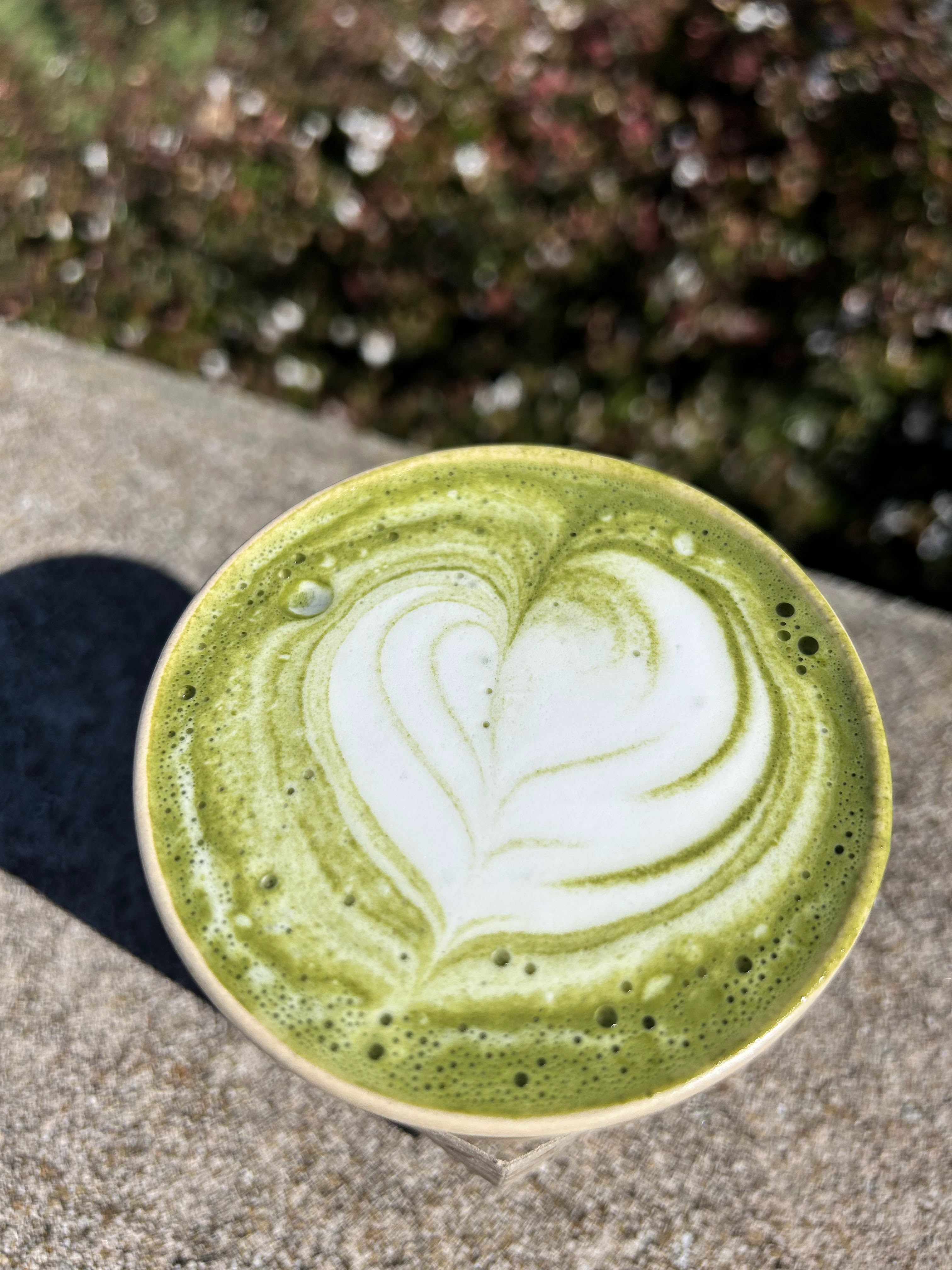
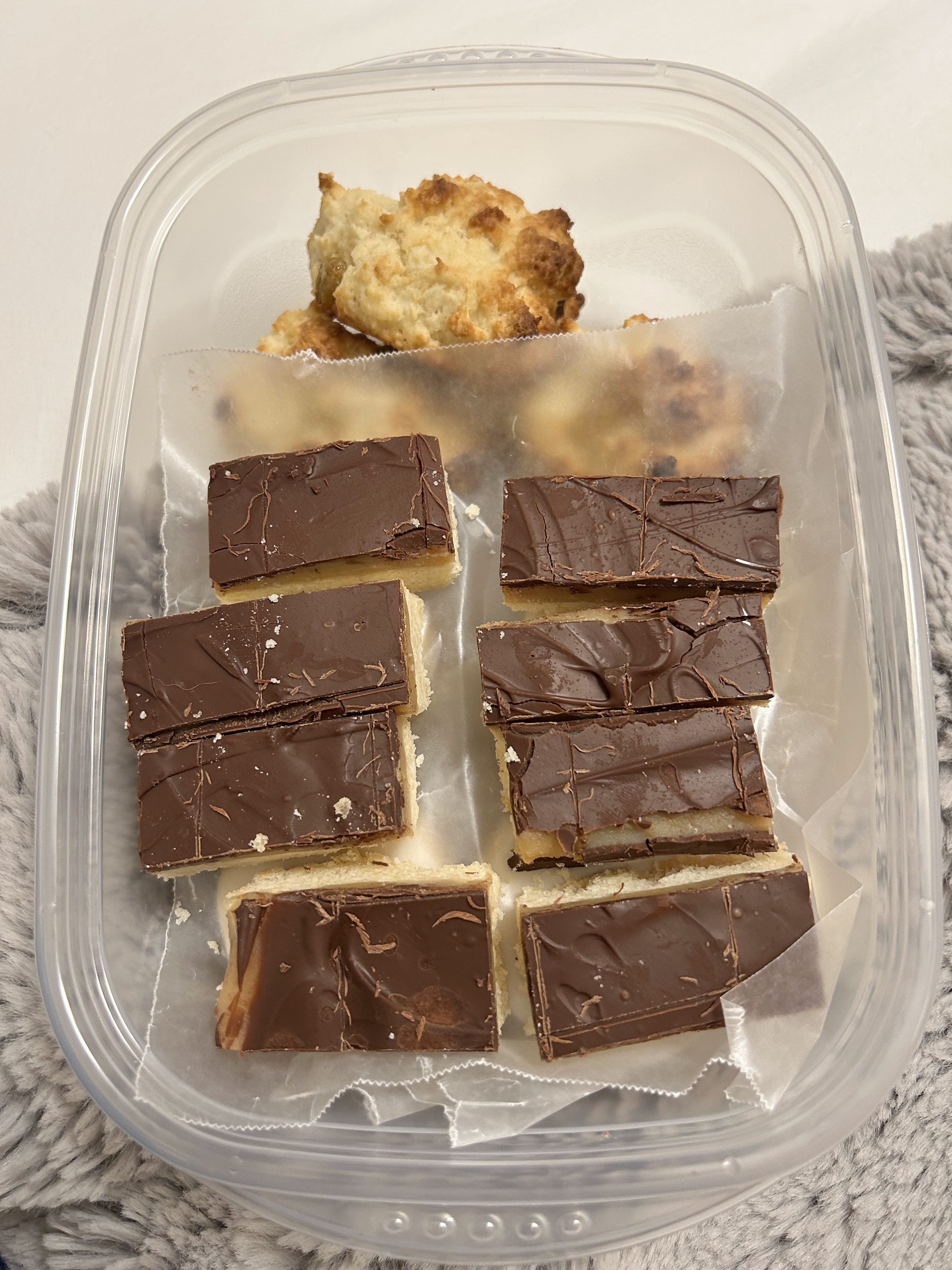
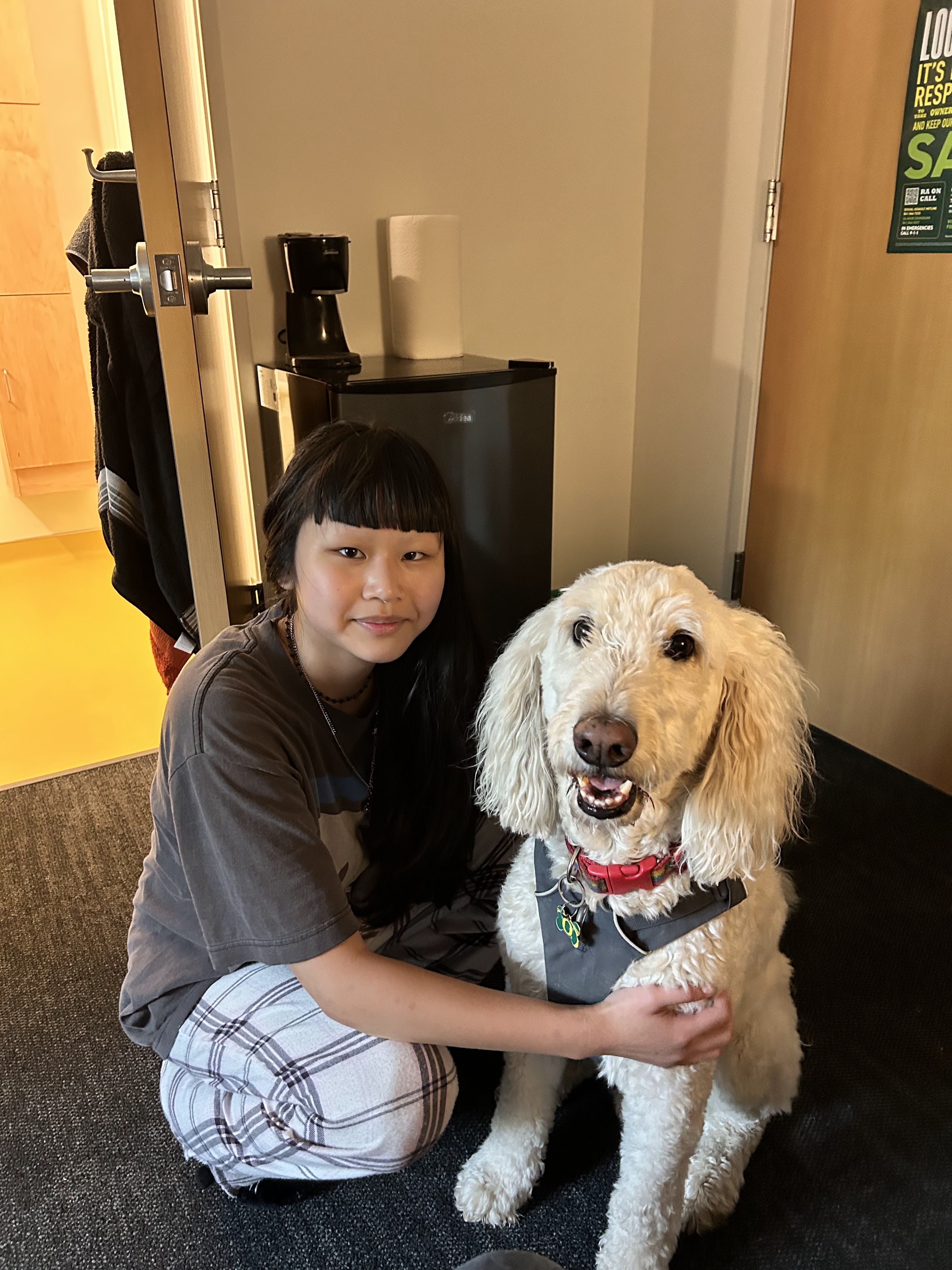
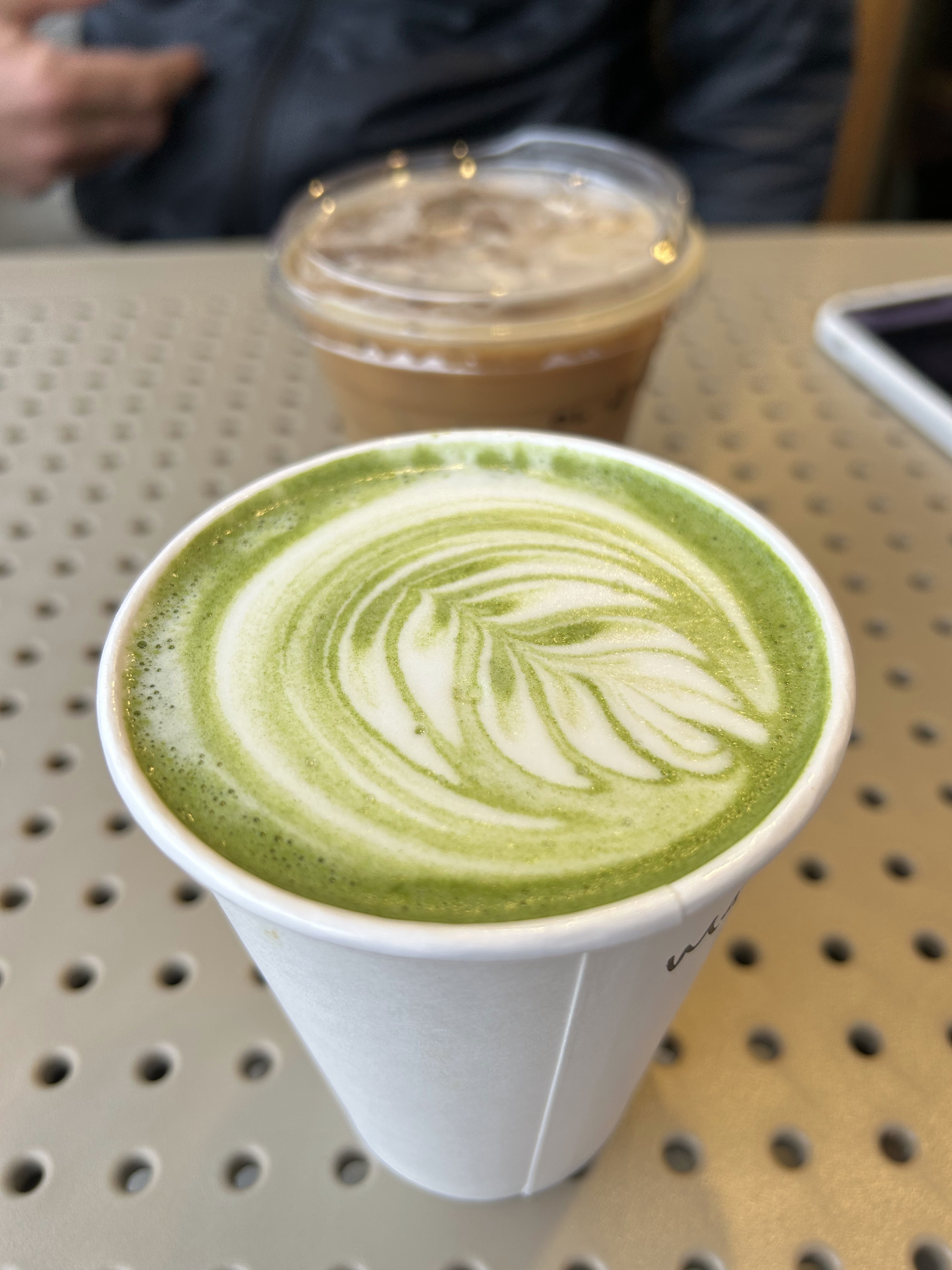
Well after six plus weeks of waiting, today was the day to take off! Of course, it is bittersweet but something I have been planning for the last six years. The numerous good-byes included celebratory drinks and meals, kind words and promises to keep in touch. The momentous day started with my very good friends making me breakfast and giving me fresh baked goods to take on the road. Then a matcha to fuel me for the first leg of my trip. I stopped in Eugene to visit my new college student! Today was the first day of classes. Pete walked the campus and even though it was rainy, Pete was oblivious because the smells (and dropped food crumbs) were just too good!
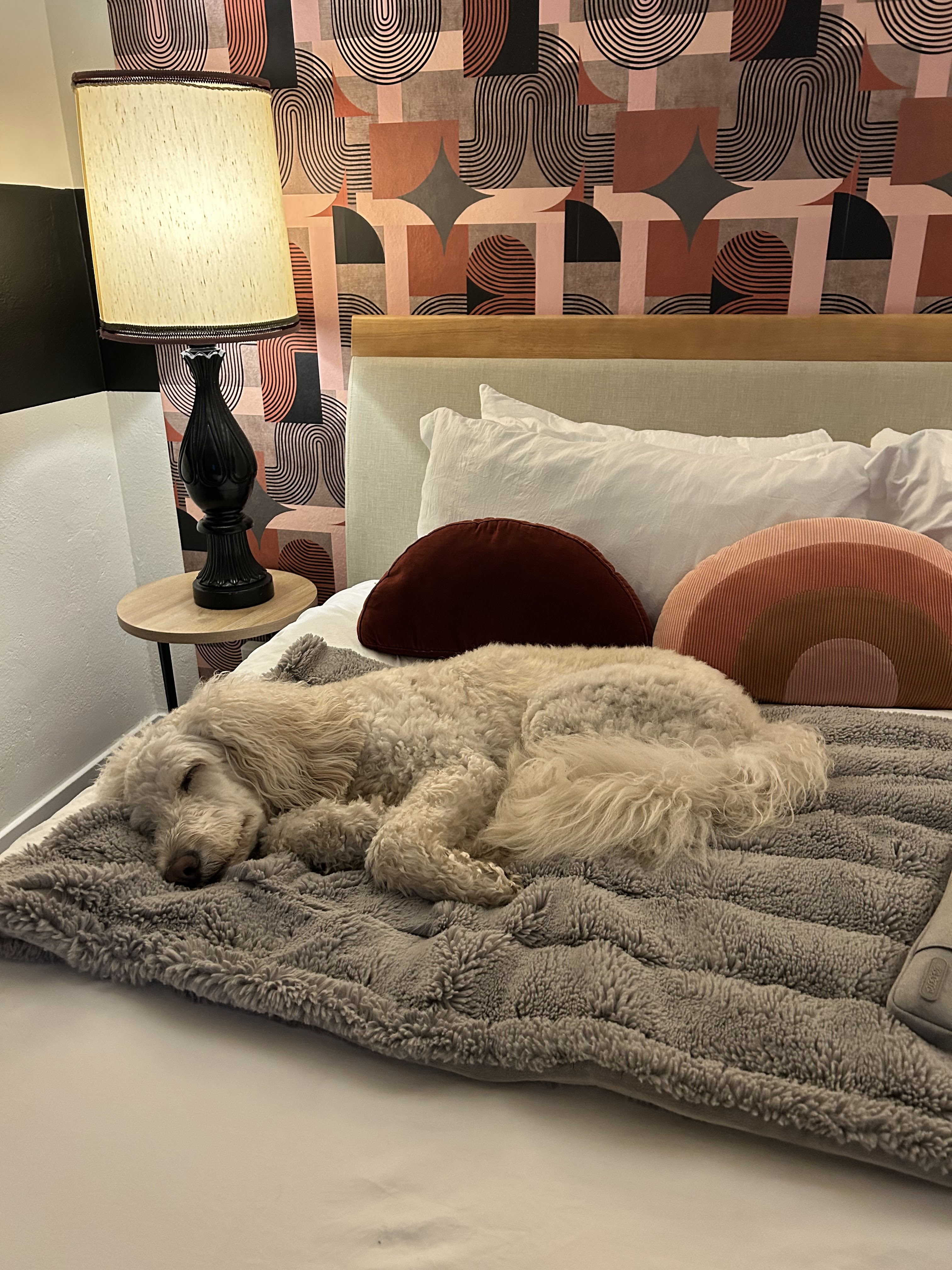
After my Eugene stop, I headed south and then West to Reedsport. I wanted to check out the Oregon Dunes National Park but it was just too rainy. We saw Elk at the Elk Viewpoint in Dean Creek and then headed down to Bandon. North Bend had a cute downtown and smelled of fresh lumber (which was present everywhere). Pete and I walked Old Town Bandon and then found a hotel. It was a last minute find but actually very nice. We drove about six hours today and it was a great first day.

































 seniyegroff