Personal Learning Environments

“Surfing the Internet has become everyone’s favored solution for resolving information challenges large and small.”

There has been a shift from formal to informal learning in the corporate training landscape.  Granted, there are still topics that demand formal learning such as compliance and safety issues, but more and more learning is happening on the job, informally driven by the employee.  Employees now have a wealth of information at their fingertips with the internet, social networking sites and collaboration with peers.  Formal learning does not always allow the learner to apply the knowledge to their job immediately, thereby decreasing retention of knowledge.  Usually with informal learning the learner applies the knowledge right away (by answering a customer’s question, following a process etc.). 

Given the growth of social networking, the internet and other technologies, there has been an explosion of Personal Learning Environments (PLE).  These PLEs include both formal and informal learning and allow the learner to be in charge of the needed knowledge.  PLEs “are highly personalized portals that employ filtering technologies to recognize individual users and their preferences and provide them with highly customized experiences.”  PLEs are a perfect solution to being able to offer different content to different audiences.  For example, when addressing the training needs of the novice vs. intermediate vs. expert employee; potentially a novice needs full blown training while an expert only needs to access a performance support piece.

Given the movement from a very structured, planned training event to a more fluid model driven by the learner, Dr. Sivasailam “Thiagi” Thiagarajan has created the Four-Door Model where the “four doors” represent four different areas or components of the learning environment: 1) The Library, 2) The Playground, 3) The Café and 4) The Evaluation Center. The Library contains the content of the course or module—the information required to master the learning objectives and to successfully complete the final performance test. It typically contains pre-built or existing content, such as videos, documents, slide shows, photos, and audio files. Anything that contains meaningful content and could be put on the Web is used. Learners are invited to study the content in any way they prefer. The Playground contains fast-paced frame-games that provide practice in recalling and applying the content from the library. These games help increase fluency. The frame-games typically require the learner to type or choose short answers. Learners can play each frame game repeatedly at up to three levels of difficulty. The Café contains social learning activities. A good example is the open-question game which uses open-ended questions to encourage the learner to reflect on the content presented in the library. Learners respond to each question by typing an answer in a text box. When complete, the learner can review the answers given by experts and fellow participants. The café may also include other social-learning components such as wikis, blogs, message boards, etc. Facebook and LinkedIn groups would fall under this category. The Evaluation Center is simply the test center. It contains the performance test. Ideally, instead of using multiple-choice questions, the evaluation asks the learner to complete or participate in an actual job-related assignment.

The learner controls their learning path when instruction is a non linear experience. Allow learners to figure things out on their own and  still establish metrics for success. This flexibility allows every employee to jump into the training at their own place.  For example, a new employee versus and experienced employee has very different learning needs and would use the Four Doors very differently.


 

Gratitude

Today was my last day of vacation.  We take an annual trip the week leading up to Labor Day to Sunriver, OR or otherwise known as the high desert.  I always know that the week will be filled with biking, tennis, swimming, eating and good times with friends.  Since the elevation is 4200 feet I usually find myself reluctant to run.  This year, though, I managed to run three times!  The first time was the first day I arrived.  My friend Amy asked me to go with her.  I figured I wouldn’t get lost on the myriad of paths if I went with someone.  I huffed and puffed and pushed myself to run 30 minutes.  Then on Saturday, equipped with my daughter’s iPod, I ran 40 minutes.  I never run with music so it was great to have the extra motivation.  Then today, as soon as I woke up, I decided to run while my husband packed up the car.  Again armed with the iPod, I set my goal at 45 minutes and managed to run 50.  I actually felt strong…as if the elevation no longer bothered me.  As I was breathing in the crisp, fresh air and looking at the blue, blue sky, I reveled in my luckiness.  I managed to see 10 deer on my run, too.  And I felt such gratitude and knew I must cherish times like this…the quiet, the strength, the determination and the feeling of success.

So much success, I came home and registered for the October  21st Run Like Hell 10k.  Join me if you want.

Le Road Trip

Cheaper than a ticket to Europe, Vivian Swift’s Le Road Trip is the next best thing to the sights and sounds of France. Swift likens her travel to falling in love, beginning with anticipation. This book is about France but not in your practical, fact-filled travel book way. There are hundreds of watercolor illustrations that create a whimsical, charming book that instantly immerses you in the French-way. Swift infuses the book with some cute ideas such as the traveler’s scrapbook, an accordion folding pocket-sized scrapbook for your travel mementos.

Swift has an aggressive itinerary with Paris, Normandy, Brittany, Bordeaux, Loire Valley, Chartres and back to Paris. After anticipation comes infatuation, where Swift debates the differences between her travel in 1975 and 2005 in France. She discusses food, buildings, gardens and the night light from the Northern Lights. ||As in love, nothing is perfect and Swift’s third phase wanders through some bumpy travel. During the honeymoon phase, Swift discusses all things romance and in phase five, survival tips for both love and travel. But ultimately, Swift’s book is about arriving in the comfort zone, which Swift calls being a vagabond…where the affair turns into a relationship. Sit down, have a glass of wine (from Bordeaux of course) and enjoy this book for what it was meant to be–a quirky visual record of Swift’s travel and love throughout France.

http://www.portlandbookreview.com/le-road-trip-a-travelers-journal-of-love-and-france/

What it Takes to Build a Team

Team?  What is it really?  There are thousands of articles, books, seminars and courses on team but Talent Management (August 2012) has a great article of what it really takes.  Anderson argues that “high-performance teams regularly challenge each other for their best thinking.”  How often have you seen that everyone goes with the flow or is afraid of asking a tough question?  Afterall, if you ask a tough question and your team-mate cannot answer it, you run the risk of making them look stupid or incompetent.  So how do you ask the tough questions without putting people on the defensive?

Anderson states that the first step is to change the rewards and recognition.  “To build any team, members must understand what’s in it for them and be able to tie that to their own rewards and recognition.  Once they are convinced their own needs are going to be met, most can begin to think more as “we” rather than I.'”  The next step is to work in facilitated dialogue sessions.  In these session shared goals are identified.  There also must be a thought and action shift (and lots of trust) to move to the next phase.  We are talking about a serious cultural shift in the way teams, and companies, do business.  Ultimately, “teaming in new ways, collaborating across organizational boundaries and sharing resources in new ways”  are the path to nirvana when it comes to the future of teamwork. 

Check out the article and tell me what you think!

How to Boost Employee Career Satisfaction

An article is this month’s Talent Management caught my eye.  Probably because employee satisfaction is at the top of my mind right now since someone I recently sat down with to do some career coaching asked me, “I am 60% satisfied with my job.  Is that enough?”  First of all, being able to distill it to such an exact percentage was impressive to me.  But more importantly, was the fact that he was willing to settle…in other words being 40% dissatisfied is okay.  But is it really?  And how much can we change or put up with depending on what is truly important to us?  Granted, humans are adaptable creatures, but the ever elusive “happiness” can really make or break the experience, as well as, what we are willing to do to get it.

Taylor’s article states that “employees want to be informed about goals and expectations and how their roles fit within them.”  Obviously if employees feel like they know what they are “shooting for” and feel that the work they are required to get there uses their skills and abilities and is truly interesting to them, you bet they will help leadership get to the end goal!  Taylor suggests there are nine ways companies can boost career satisfaction:

  • “Place people in the right roles according to strengths, skills and interests.
  • Tap into talent in the cloud.
  • Use a pool of pre-screened, reliable talent.
  • Create an employee loan initiative.
  • Cross-skill people so they can use different skills on demand.
  • Create a dedicated pool of flexible, just-in-time talent.
  • Create a demand-driven talent marketplace.
  • Restructure work in terms of smaller, discrete, skill-based projects.
  • Define jobs more broadly.”

Read the full article to get more detail on the bullet points and then drop me a line and tell me what you think.  I am pretty sure you will agree, if companies tried some of these strategies, 40% dissatisfaction wouldn’t even be in the picture!

Purely Portland

Today we did the Providence Bridge Pedal.  Although we have biked it before, this was the first time with both kids.  There was the 6, 8 or 10 bridge option.  I opted for sure-thing (given the kids) and went with the six bridge option.  It is amazing that a city  of Portland’s size can figure out how to move thousands of people over its 10 beautiful bridges!

We biked to the start of the race from our home, as well as, back at the end so we guessed we did about 15-16 miles.  With the kids, 16 miles is awesome!  And the kids even agreed that it was a beautiful way to begin a Sunday morning.  We did see one bicycle accident but in pure Portland style, people stopped and helped.  At another spot, caution tape came loose and started to tangle in people’s bikes and once again, people got off their bikes to help out.  I know we have serious bicyclists in this city, but it is nice to see people willing to interrupt their ride to help others.  In other words…purely Portland!

Who Should Choose What Employees Learn?

The August 2012 Chief Learning Officer has an article near and dear to my heart.  I have mentioned before that learning is moving away from the centralized, corporate dictatorship to a more learner-driven model.  Randy Emelo’s article reinforces that “internal drivers, such as your own personal desire to learn, rather than external drivers, such as someone telling you what to learn” are taking precedence.  People are taking their experience and “applying new insights immediately to solve problems.”

And guess what?  As a learning leader your job is to help people exchange their knowledge!  Instead of learning folks holding all the knowledge, they are facilitators of making sure employees that know find others that know or need to know.  In other words, “people come together to solve problems.”  In the past (and even the present in many organizations) there is a focus on information management but instead, we need to focus on knowledge management.

The article’s closing thought could not be better said:  “It has been said that many companies hire the smartest people they find and then they treat them like idiots but if we simply give them the opportunity to guide their own learning and their careers, they will produce amazing results.”  Check out the complete article.

Cheese Making Part Deux

Because I refuse to be beaten by a little citric acid and rennet, I attempted to make mozzarella cheese again today.  I am happy to report that I mastered it by not over heating the cheese this time.  I have a ball of ooey, gooey mozzarella goodness to eat tonight with fresh tomatoes and basil!  Cheers to persistence!

Making Mozzarella Part Two

Not sure why my words did not show up on my last post, but here goes again…

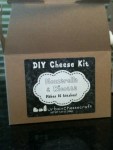
I have always wanted to learn to make mozzarella cheese since it is one of my favorites…all you need is olive oil and basil and prefection has been reached.  I purchased a cheese kit from Urban Cheese Craft .  It is a straight forward and simple process and the kit contains everything you need except the gallon of milk.  The kit contains enough supplies to make 10 batches, which means I will be in cheese heaven for a while!

My cheese progressed exactly as the directions said until the end when I needed to stretch it.  I think I overheated it during the last heating session because it was really difficult to stretch.  Of course, the true test comes tomorrow when I taste it…I am keeping my fingers crossed!