Training Success

I recently finished a project rolling out a new software coupled with new processes.  As always, there were some great insights and learning at the end of the project.

Background:

  1. Learners were dispersed globally and, of course, time and money were important.
  2. The new platform consisted of four new modules that worked with the customer’s business.
  3. Most learners would use one or two of the modules but not all four.
  4. Additionally the new process needed to be shared and include why, what, when, how and where needed to be presented to everyone.  Many people were involved with the due diligence so were familiar with the content.
  5. Face-to-face sessions were offered worldwide after a slew of trainers when through train-the-trainer (TTT) sessions.
  6. Documentation was thorough and consisted of process decks, work instructions and quick reference guides for both process and the tools.
  7. Attendance to training was required (yay!).

Reality:

Attendance was surprisingly low, partially I believe because roll out was in August when vacations are at an all-time high.  Also the required training was two days long, which was another obstacle because work schedules were already so full.  Some attendees felt the class went too fast, while most felt the class was too long.  Other feedback stated that the class was too process heavy and not enough tool training.  Finally, given that the 700 learners came from many facets of the business, the trainers knew and delivered content on the overall process and tool, but were unable to provide specific business detail to the various departments rolling out the tool.  Oh, and the tool was in user acceptance testing (UAT) so it behaved wonky at best during the training sessions.

Future Plan:

As this project matures and future modules evolve and roll out I recommend the following:

  • A modular approach so that learners only need to attend the sessions that apply to their work.  So if they only use one of the four modules in real-life, then they only attend the session on that specific content.
  • E-learning component so that the learners can learn foundational knowledge in a self-directed format and attend classroom time to work in the tool.
  • Leader from the respective business group attend the session with their team so that the process-specific questions get answered immediately and demonstrated in the tool.

Performance improvement is an ever-evolving activity.  I love the variety and challenge that each project brings; there is no one solution for any project which ensures that creativity and best practices are always required for each and every project!
Spain

I was lucky enough to travel to Spain for two weeks! Spain has always been on my travel list, so it was great to finally see it. A nice bonus was that I got to use my Spanish skills, which although were a little rusty, worked just fine for our trip.

We flew into Madrid and figured out the metro system very quickly. We stayed in the Bibao area of Madrid in an Airbnb apartment. This was my first time using Airbnb, so I did not really know what to expect. Overall we used three different Airbnb apartments on our trip and for the most part it worked out great. I figured traveling with the family would be easier in a full apartment rather than a hotel room, especially since Spain’s hotels do not have two double beds in their rooms (but rather only two twin beds). A word of warning when using Airbnb…the pictures make the rooms look much larger than what they are. Also, read the comments carefully so that you can piece together the “true” details of the accommodation.

IMG_1811

IMG_1809

IMG_1812

In Madrid, the metro system was easy to navigate to all the “must-see” sights. The weather was a heatwave at about 20 degrees hotter than usual, so we used the subway a lot more than usual. On our first full day, we meandered over to Puerta del Sol and the Royal Palace. The Royal Palace gave insight to the opulent lifestyle of this national palace.

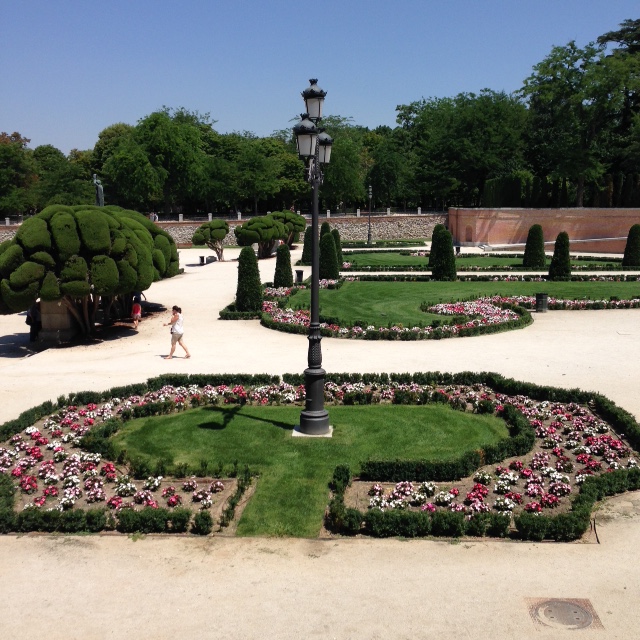
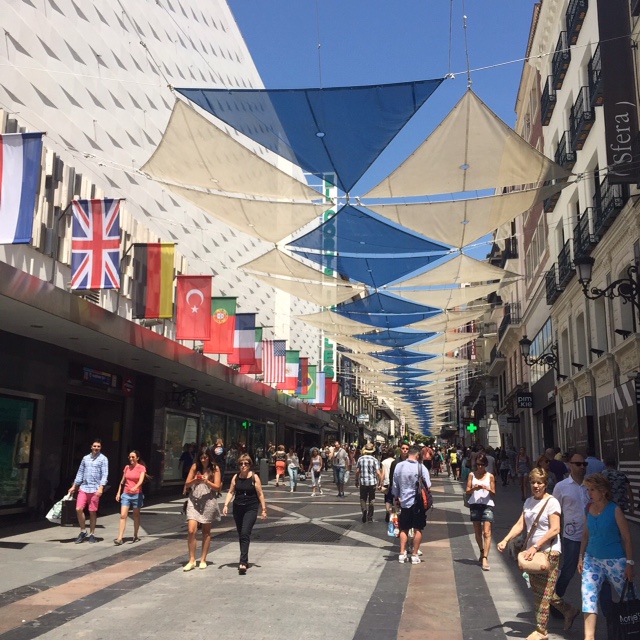
There really is something magical about the meandering cobblestone streets that were built hundreds of years ago. We also visited (and ate) at the Mercado de San Miguel. There are many art museums to choose from so we went to the Thyssen because of its smaller but impressive collection. On day two we went to Retiro Park, which is a beautiful respite of green space from the very busy city. We also walked the Gran Via and were amazed by all the hustle and bustle; Madrid is a lively (and very clean) city!

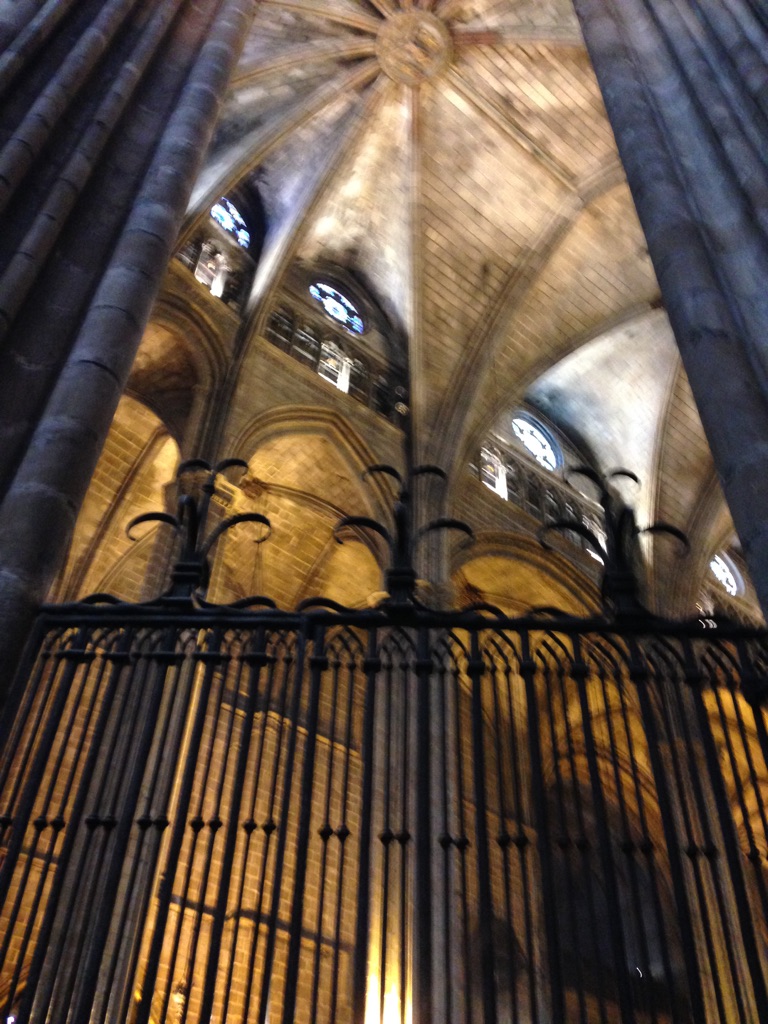
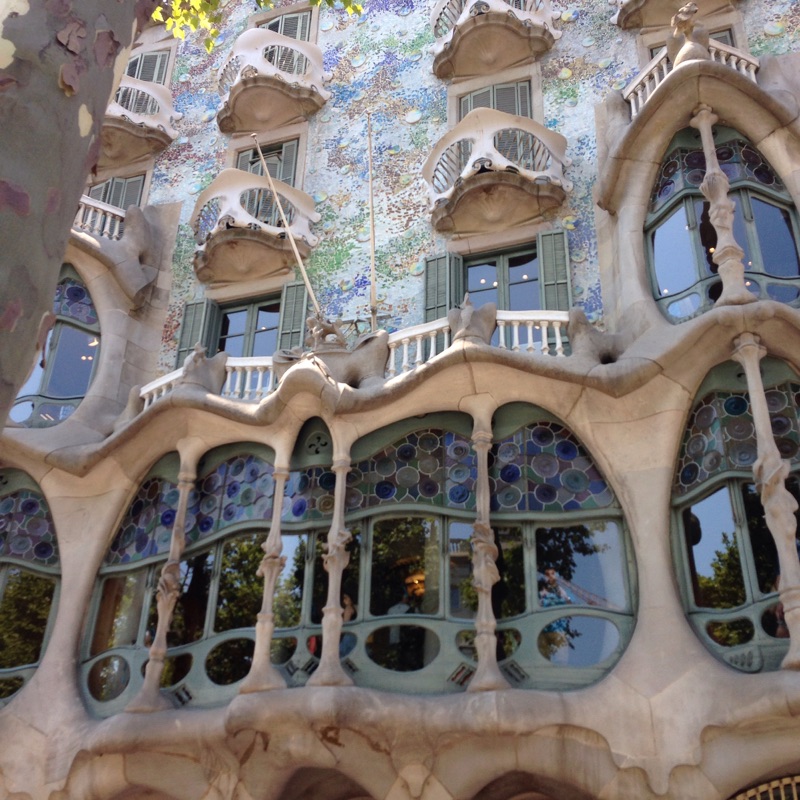
We rented a car from Madrid to Barcelona, which was a five hour drive, but much more economical than taking the train or airplane for four people. Barcelona’s metro was not as easy to navigate and so we took a taxi (a definite splurge) to our apartment in the El Born neighborhood. During our time there, we went to Ramblas, La Boqueria Market, Cathedral of Barcelona, Santa Caterina Market, Church of Santa Maria del Mar, Casa Batilo, Palau Guell, the Barceloneta and Block of Discord. It is so interesting to see how Gaudi has influenced the architecture of the city. Barcelona’s must-see attractions are much more close together, so it was easier to walk everywhere instead of navigating the metro.

IMG_1853

IMG_1862

IMG_1860

IMG_1879

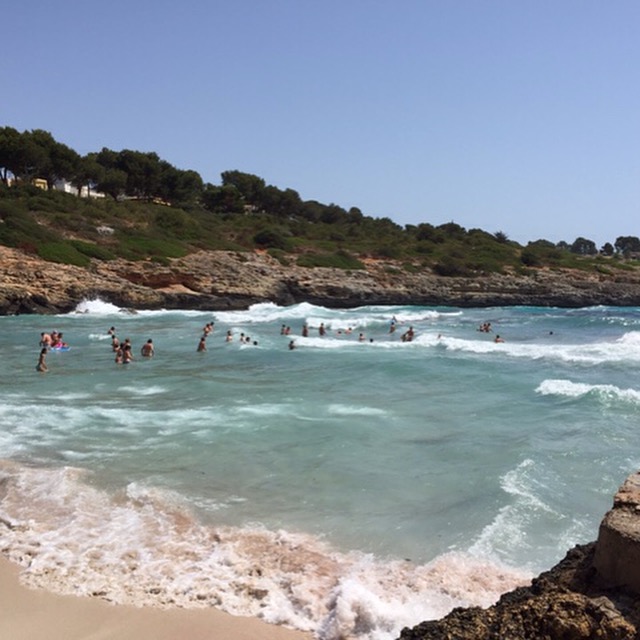
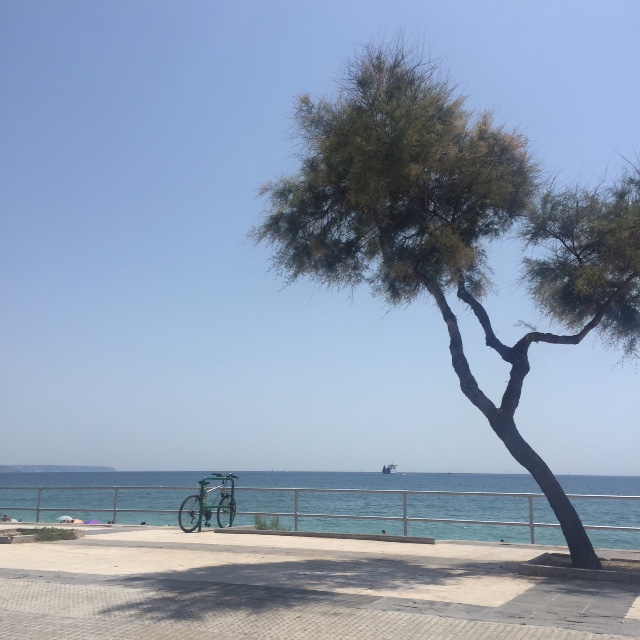
We then flew to Mallorca. (I definitely would not recommend Ryanair!) I was expecting a quaint, undeveloped island but Mallorca is definitely not that. There were lots of tourists and tourist-related activities. We stayed in C’an Picafort which was primarily a family area. We visited three different beaches in some wonderful hidden coves. We also visited Soller, which is situated high in the mountainous side of the island.

IMG_1886

IMG_1891

IMG_1895

IMG_1903

IMG_1905

IMG_1906

IMG_1913

IMG_1917

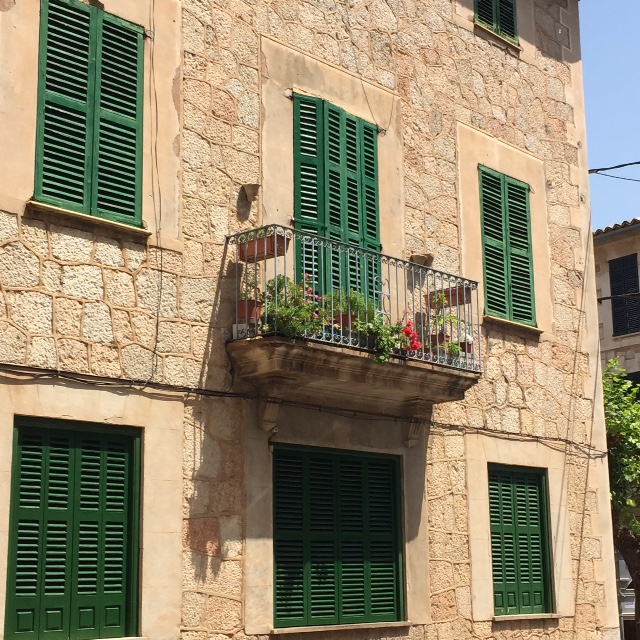
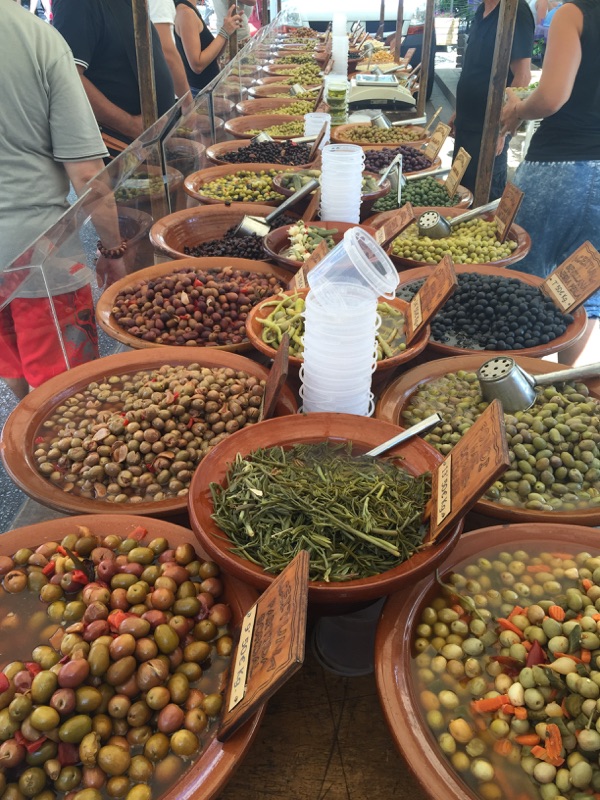
Spain is a beautiful place. The people were very friendly and we had a great time discovering these three areas. The vibrant Spanish lifestyle was very apparent as people seemed to hang out, eat late and then walk the streets late into the night. We managed to find some traditional Spanish fare (versus the touristic menus) and definitely recommend the Menu del Dia to sample the wonderful food. Olives, olive oil, jamon and wine reign in this region! I am sure my kids will remember their Spanish experience for years to come. And ultimately the lesson I always walk away with when I travel is that the world really is a pretty small place where we are more alike than different and location certainly does influence building materials, food and lifestyle.

Some Recent Great Reads

I have had a flurry of good reads lately and only one of them was an actual book review!

I just finished “The Accidental Empress” by Allison Pataki. This book centered around the Habsburgs in 1853. This is historical fiction at its finest. The reader meets Sisi when she is 15 and suddenly finds herself betrothed to Emperor Franz Joseph. The book has all the usual suspects in a royal court and I could not help but feel sorry for Sisi as she learns to navigate the endless treachery while being so young.

I could not put down “The Nightingale” by Kristin Hannah. The Holocaust always makes for an emotional-filled backdrop. Two sisters trying to survive while being rebellious against the Germans made for an incredible, engrossing read!

I reviewed “Paris Red” for Portland Book Review and loved it! This was another book with an instant character connection and engrossing period details.

“Unbecoming” by Rebecca Sherm guides the reader on a journey of how a few bad decisions can have one looking over their shoulders for a long time.

Finally, “The Paying Guests” by Sarah Waters made me definitely want to read more by this author. I could not put this book down after I was introduced to Frances and her mother in 1922. When their circumstances change and they are forced to take in guests (aka boarders) to make ends meet, the outcome changes their lives forever!

Blueberry Bran Muffins

Yesterday I went through a flurry of cooking.  I made pizza dough, ricotta cheese, yogurt and blueberry bran muffins.  I consider it a success when my 13 year old will eat bran so when she ate two of these muffins, I knew the recipe was post-worthy.  The recipe is from Barefoot Contessa.  The only change I made was to use frozen blueberries instead of fresh.  The result was stunning!

IMG_1650

1/2 cup Vegetable oil
1 cup unbleached all-purpose flour
1 teaspoon kosher salt
½ teaspoon baking powder
½ teaspoon baking soda
½ teaspoon ground cinnamon
7 ounces Greek-style yogurt (about 1 cup)
½ cup sugar
½ cup honey
2 extra-large eggs, lightly beaten
1 teaspoon pure vanilla extract
2 ½ cups wheat bran
1½ cups fresh blueberries (8 ounces)

Preheat the oven to 350 degrees. Line muffin pan with 12 paper liners.
Stir together the flour, salt, baking powder, baking soda, and cinnamon in a medium bowl.

In large bowl, whisk together the yogurt, sugar, vegetable oil, honey, eggs, and vanilla until combined. Add the dry ingredients, stirring with a wooden spoon, just until incorporated. Gently stir in the wheat bran until incorporated. Add the blueberries and stir until evenly distributed.

Scoop the batter into the muffin cups with a rounded 2¼-inch ice cream scoop. Bake for 22 to 30 minutes, until the tops are a golden brown and a cake tester comes out clean. Allow to cool for 5 minutes and serve warm or at room temperature.

The Beginning and the End

Similar to the joy of seeing the first spring flower or the first snowy, winter day, the beginning and end of a consulting assignment is most exciting for me. I can set the stage for success or failure by specific actions I take at both critical points in any engagement. The bookends of a project are your client’s impression bank, long after you are onto another assignment. Throughout a consulting assignment, ethics and strong communication skills are keys to a successful engagement. Unless you do what you say you are going to do and communicate along the way, the outcome will not be seen as success in your client’s eyes.

So what can you do to ensure a strong beginning and end to any of your projects?

In the beginning, the client wants to confirm to himself (or even the entire organization) that hiring you was money well-spent and that the time SMEs will spend with you (instead of doing their own job) will be a sound investment. Ultimately, will you solve the problem that you were hired to solve? By rolling up your sleeves, asking good, thought-provoking questions and listening, you can confirm to your audience that you “get it”. Don’t jump to conclusions and presume you have all the answers. Listen to the real problem to determine the root cause of the issue you are asked to solve. On the other hand, you must move fast. Unlike an employee, there is no “on-boarding” time for you; you need to put in the hours to understand the environment, culture, players and issue as quickly as possible. You were hired because you are the expert and you must demonstrate that expertise quickly in the relationship.

Assuming you met your deliverables and solved the problem (and perhaps a few additional issues) how do you end the assignment successfully? I firmly believe that you thank your stakeholder personally–either in person or with a hand-written card. I realize that in this day of email, it is easier to hurriedly spew of a few lines, but I believe it is much more meaningful to do it in person. Secondly, write up a transition plan prior to your departure, highlighting what you have accomplished, where documentation is located and any follow-up activities to ensure what you suggested or created remains active in the organization. Finally, make sure you connect on LinkedIn and even ask for a recommendation, while your success is present in the client’s mind.

What have you done to ensure a strong beginning or end to projects you have worked on?

Middle Schoolers

Copy of 2014-07-14 13.51.58I never realized that having a young child was such an ego boost; they ask you tons of questions and wait anxiously for your answers.  I only realize this now that I have a 13-year-old in the house because every comment of mine gets an eye roll and I have been told I am “so embarrassing” more times than I can count.  I wonder way too much, if I will survive the next several years.

It is difficult to not be bitter as I look at her incredulously when she must show off. Treating me poorly in front of her friends is the new past time. I pour over the photo albums of the various family vacations we have taken; she looks at me lovingly and expectantly. And as a parent, I wonder where has the time gone and how can someone I love so ferociously treat me in her self-centered middle school “way”.

I am told this is a phase. “Get through ages 12 and 13 and things will return to normal,” they say. Maybe so, I think, but will I survive and endure is the question. Even more depressing, is that in six years I will be going through this all again, as my now-seven year old reaches 13!

Social Media and Training

I recently developed some on boarding materials for a new hire group, and like any other job, quick productivity on the job was crucial. I suggested that we engage some social media tools to help with the quick integration. New hires would have access to information, get to know people and start contributing sooner.

Some ideas for the new hire group:
1. YouTube for video feeds for connections, just in time training.
2. Blog for coaching or informal mentoring. Could include a hub of information such as curriculum, materials and resources.
3. A private LinkedIn group so that new hires could share tips and insights.
4. After every training session, a LinkedIn discussion question could be posted.
5. Learners can get points as part of an overall incentive plan for responding to the post.
6. Learners could also get points for starting their own discussion threads. Makes it fun and helps to form a habit!
7. Facebook page as a companion to training-share ideas, best practices, successes in the role, industry news, announcements.
8. Pinterest or Instagram to share ideas, collaboration or just funny stuff to build relationships.

All this allows new hires to start contributing, adding value and building relationships immediately upon matriculation of on boarding program.

What have you tried? What has worked?

The Gift of Instructional Design

I recently designed and delivered a session on strategic business planning skills. The topic had been trained for the two prior years but with little success; either the training was too “numbers focused” or too high on the “feelings” barometer. Also, like so many training programs, after the sessions, people failed to take action.

The Performance Problem:
From my initial client meeting I gathered that there was a potential lack of skill, a planning form that was 18 (yes 18 pages!) and little change in behavior after the training due to a lack of follow-up and accountability on the part of the managers.

Solution:
Given the above challenges, I designed a three hour session built on interactivity, sharing of knowledge and accountability through peer-to-peer coaching. First, I worked with the stakeholder to streamline the planning document. And I mean STREAMLINE by turning it into essentially five core pages of information. I felt that possibly some of the reason why the employees were not completing the document was because it was frankly, too daunting. I felt the process was similar to doing year-end taxes and we know how much we love to do those!!

Secondly, I created a lively session that focused on group work. I broke each section of the business plan into discrete components. Participants gathered to discuss a component, including sharing ideas of what they had done in the past. Once the group talked, I brought the discussion to the larger group and more ideas were shared. When the section was completed, participants moved around to work with a different set of people. This in essence got participants to interact with many different people with many different ideas, perspectives and experiences. During the session, it was often difficult to get people to stop talking and sharing (exactly what I wanted to happen)!!

Thirdly, at the end of the session, each person chose a peer to hold accountable and hold them accountable. I felt it was much more likely that participants would take action if someone was going to call them on it.

Results:
All six sessions went great and initial feedback has been VERY positive. It will be interesting to see how 2015 business results are affected by this training. My session design was not by accident; it was a thoughtful process intended on changing performance…and that my friends is the beauty and art of instructional design.

Sleep in Peace Tonight

James MacManus has written an immersive, beautiful book, “Sleep in Peace Tonight”, centered on the events leading up to the U.S. entry into WWII.  MacManus chronicles   the efforts of Harry Hopkins, Winston Churchill and Franklin Delano Roosevelt.    Roosevelt trusts Hopkins implicitly and most of Roosevelt’s staff resents it.    Churchill is desperate for the US to enter the war and enlists Hopkins to advise Roosevelt to do so.    Detailed accounts of meetings, drinking and wartime bombing of London truly bring this book to life.    To complicate matters, Leonora Finch is assigned to drive Hopkins around.  But what Leonora really wants in frontline action in the war and enlists to be a spy in France.  Hopkins and Finch engage in several trysts and Hopkins finds that he loves her but her passion lies in wartime action.  Hopkins travels back and forth between DC and London trying to track down Leonora as the war escalates.  Latter chapters in the book chronicle Leonora’s training as a spy and when Leonora cannot be found Hopkins is mired in regret.//It is obvious that MacManus researched this topic thoroughly and the end result is a book difficult to put down.  The realistic conversations, historical facts and all-too-human emotions make this book a real winner.

I Am Malala

“I am Malala” is inspiration-filled as you learn about this wonderful story of Malala, a young and very brave girl in Pakistan.   Typically women do not get educated in Malala’s country but her father was a progressive educator that believes both boys and girls should be educated.  When Malala was ten, the Taliban began to attack villages that did not follow a strict Muslin lifestyle.  Malala was an excellent student that loved to learn and she was not willing to give up school.  When she was ten, she started a campaign to ensure girls were educated.    In October 2012, she was shot while returning home from school.  Two other girls were injured but the shooters wanted to kill Malala for her outspoken passion and influence.  After the shooting, Malala and her family moved to Birmingham, England.  ” Am Malala”  is a book that reminds readers how for granted we take our freedoms.  A simple day at school can be a death-defying event as Malala proved.  Prepare to be inspired and ultimately hopeful as you read this interesting and detailed look into a young girl’s Pakistani life.