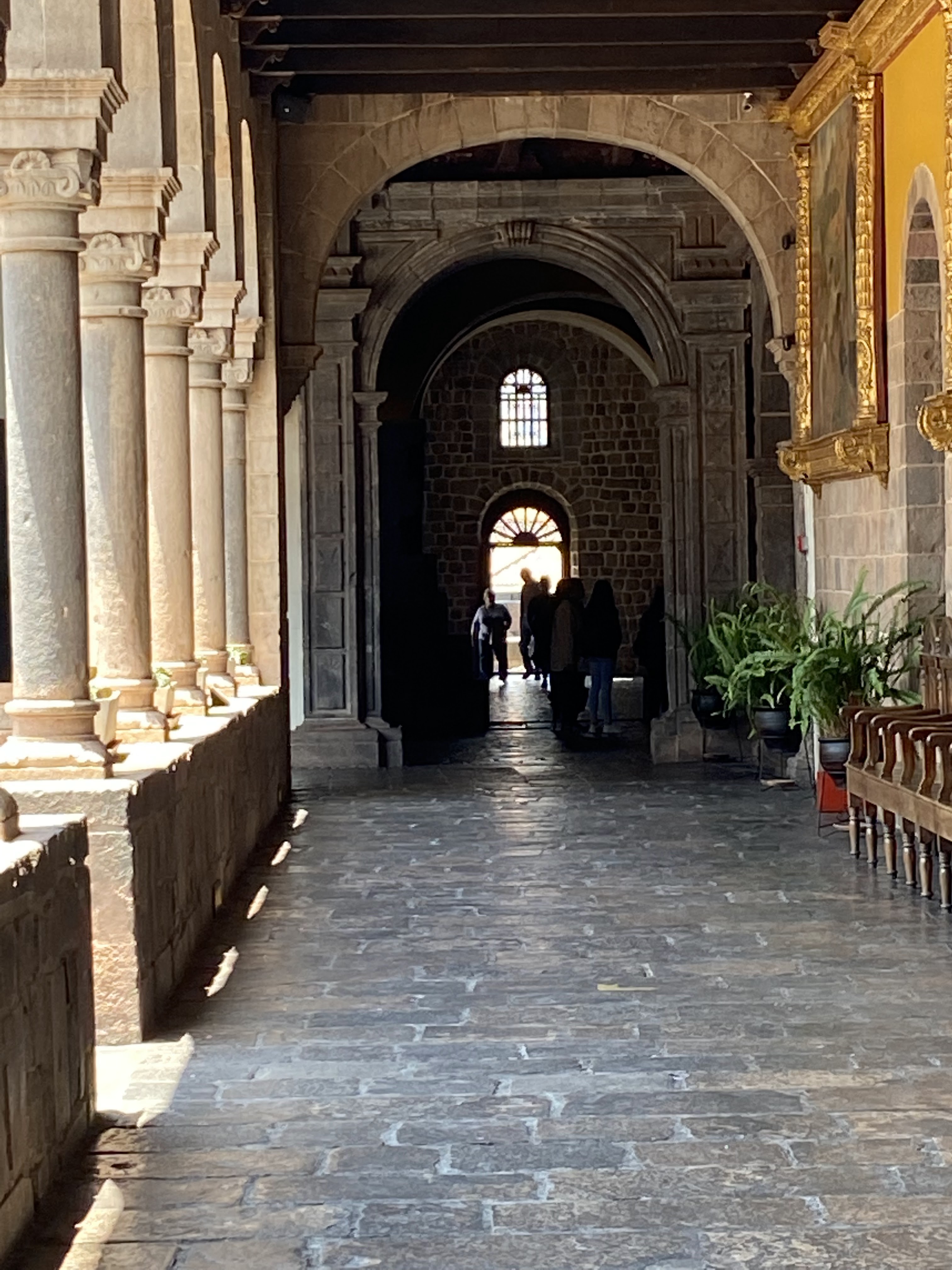
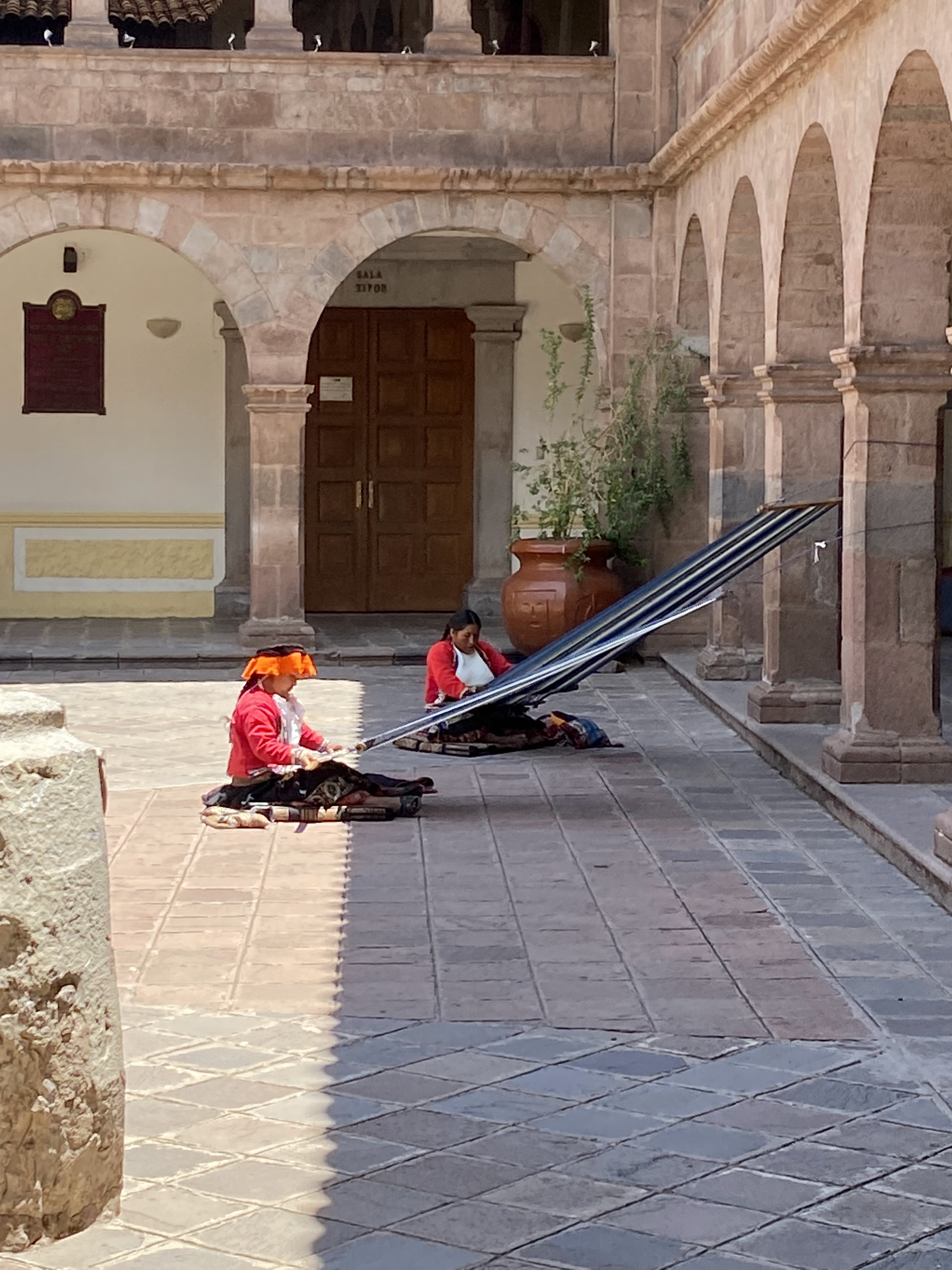
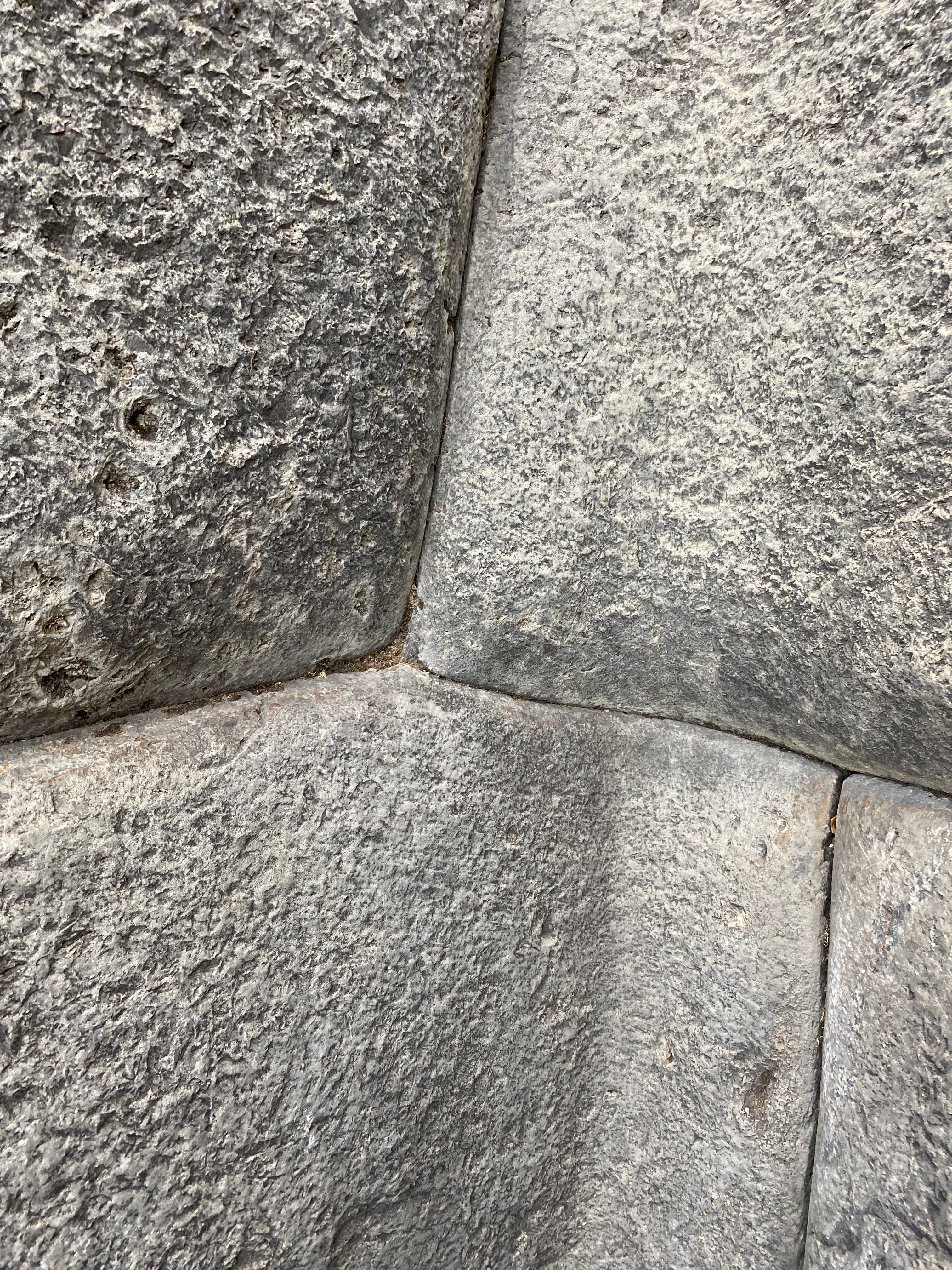
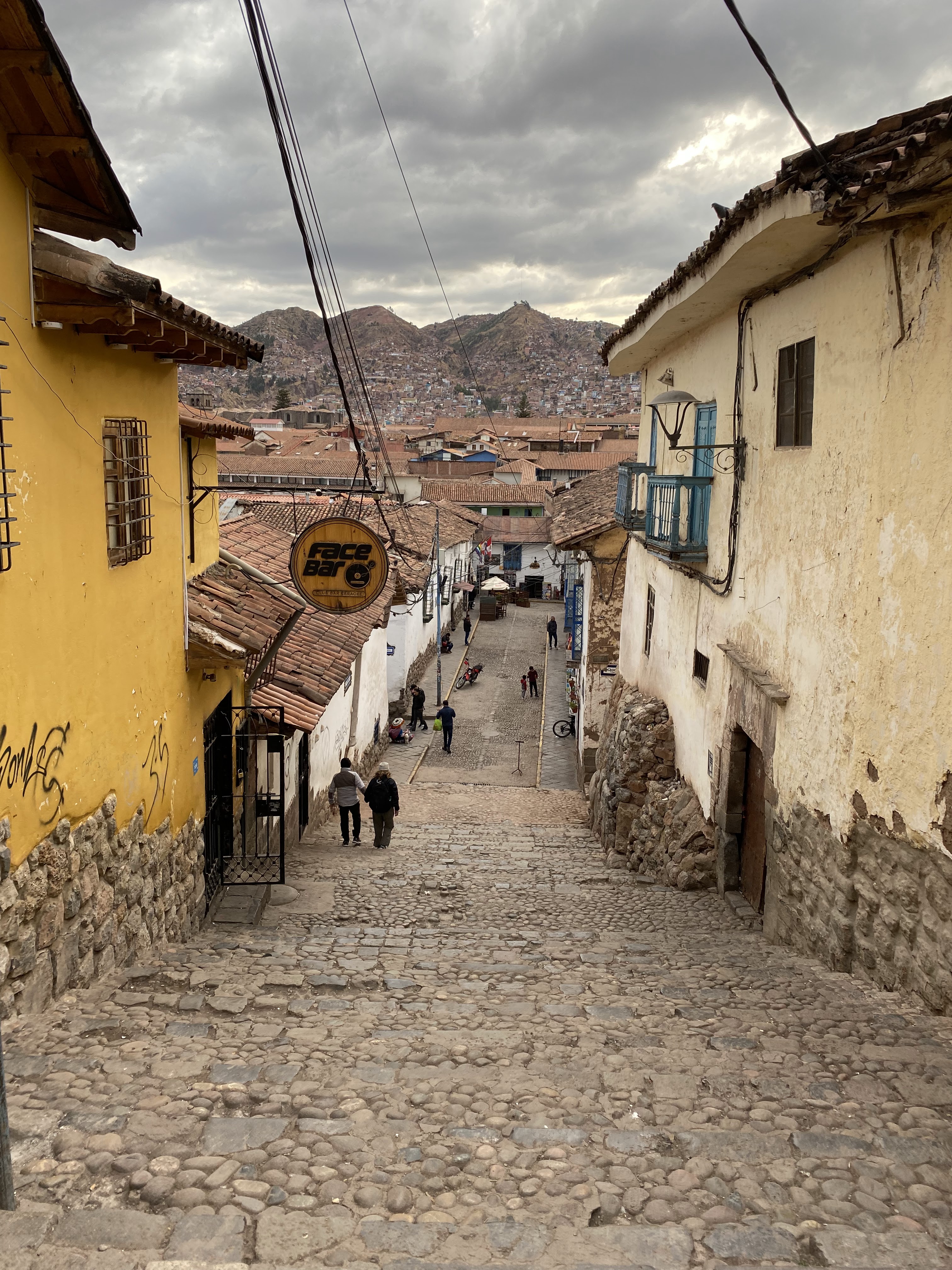
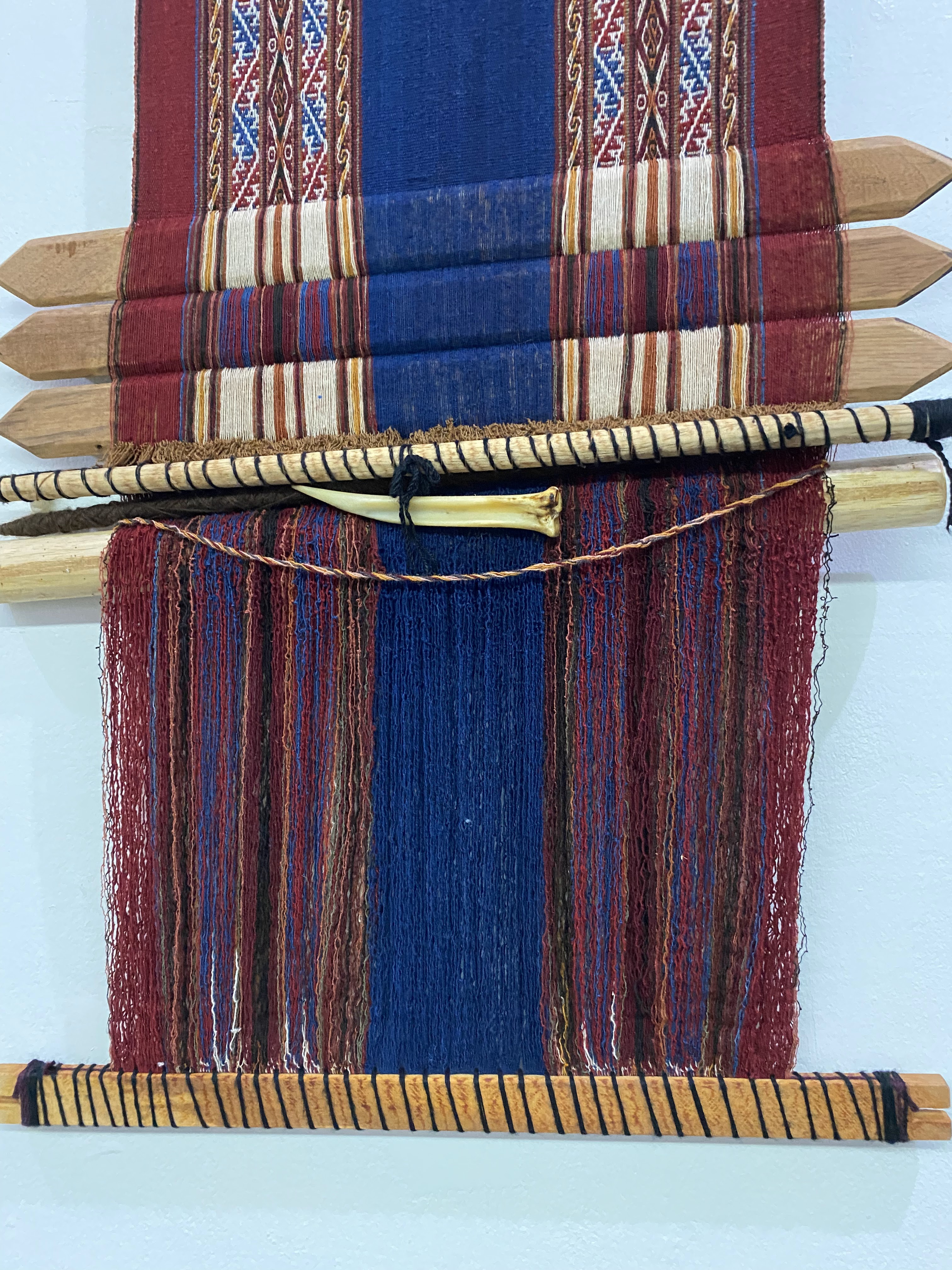
I got to spend a few extra days in Cusco, rather than hiking due to my altitude sickness. Cusco is a vibrant, historical, proud city and I wandered around. I visited the Qorikancha Temple (Temple of the Sun) which was built on top of a Christian church. The earthquake of 1953 uncovered this beauty when the church came down.
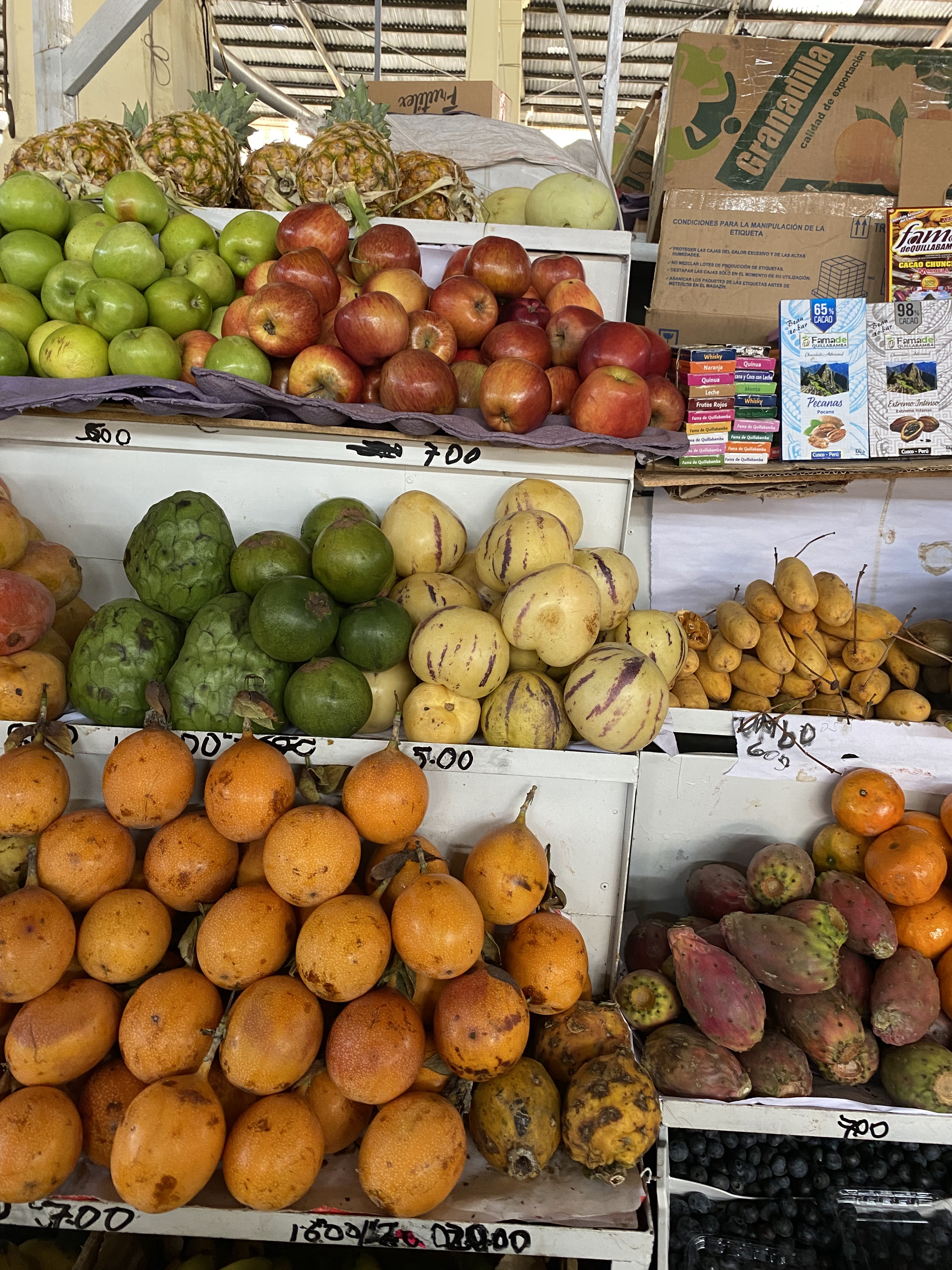
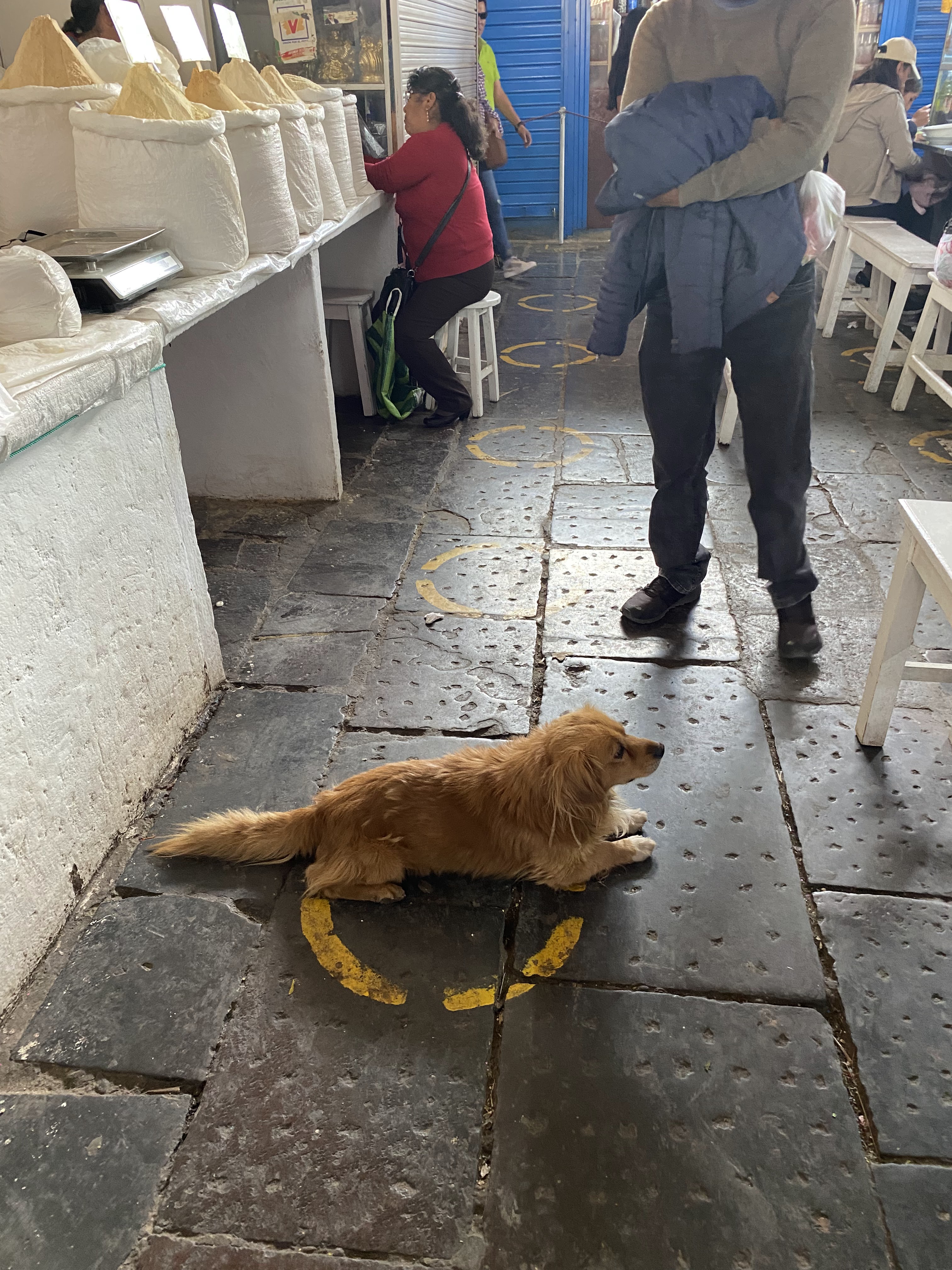
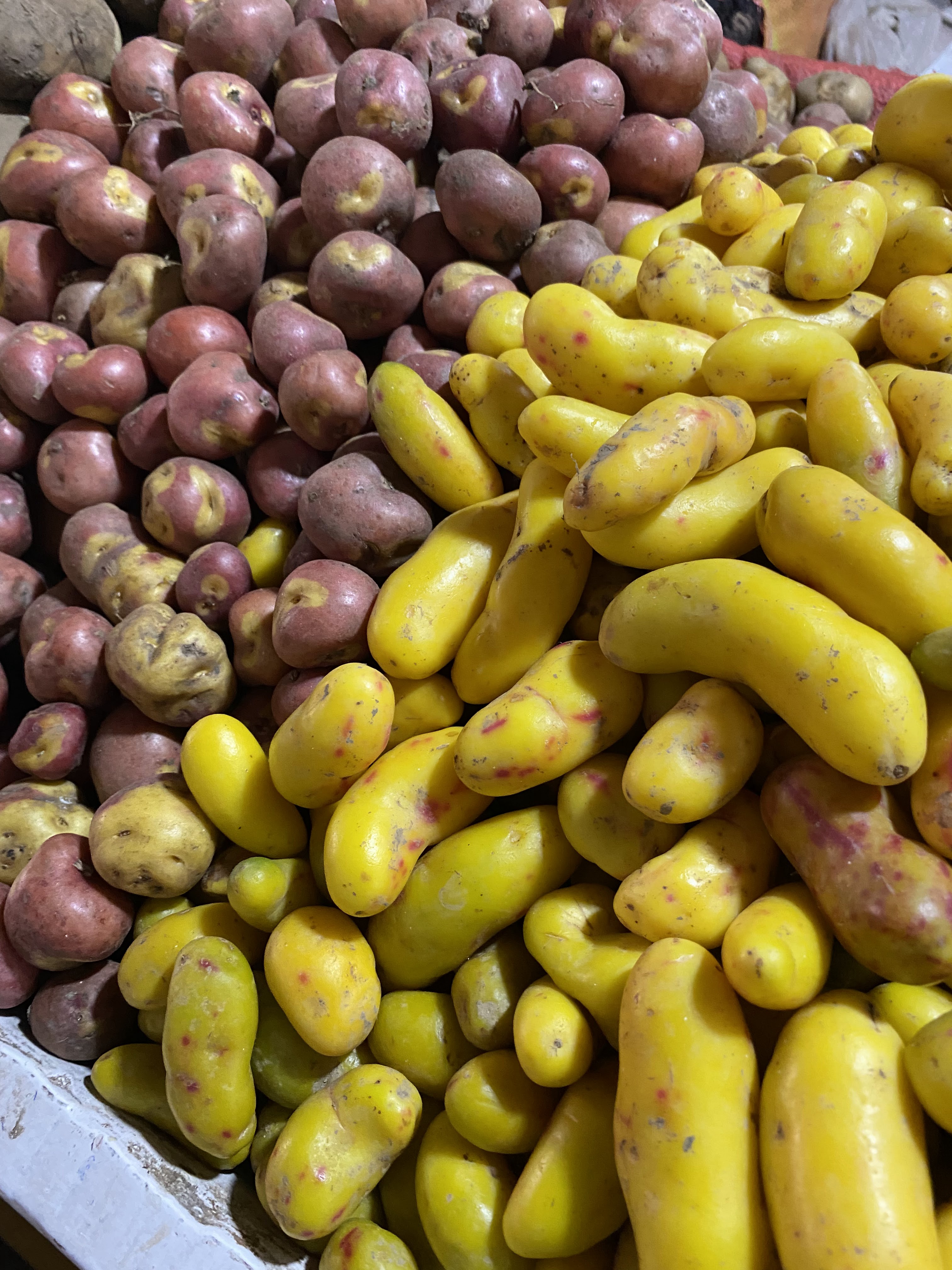
I also visited the local street market filled with local vendors. I was told locals shop there every morning. The market had a little bit of everything including the dog, of course. I have been fascinated with the rampant loose dogs that run around the city. Apparently they roam free all day and eventually return home in the evenings. Dogs are literally everywhere…mainly sleeping but also playing and rummaging through garbage. Thank goodness they are not viscous and really are uninterested in pedestrians.
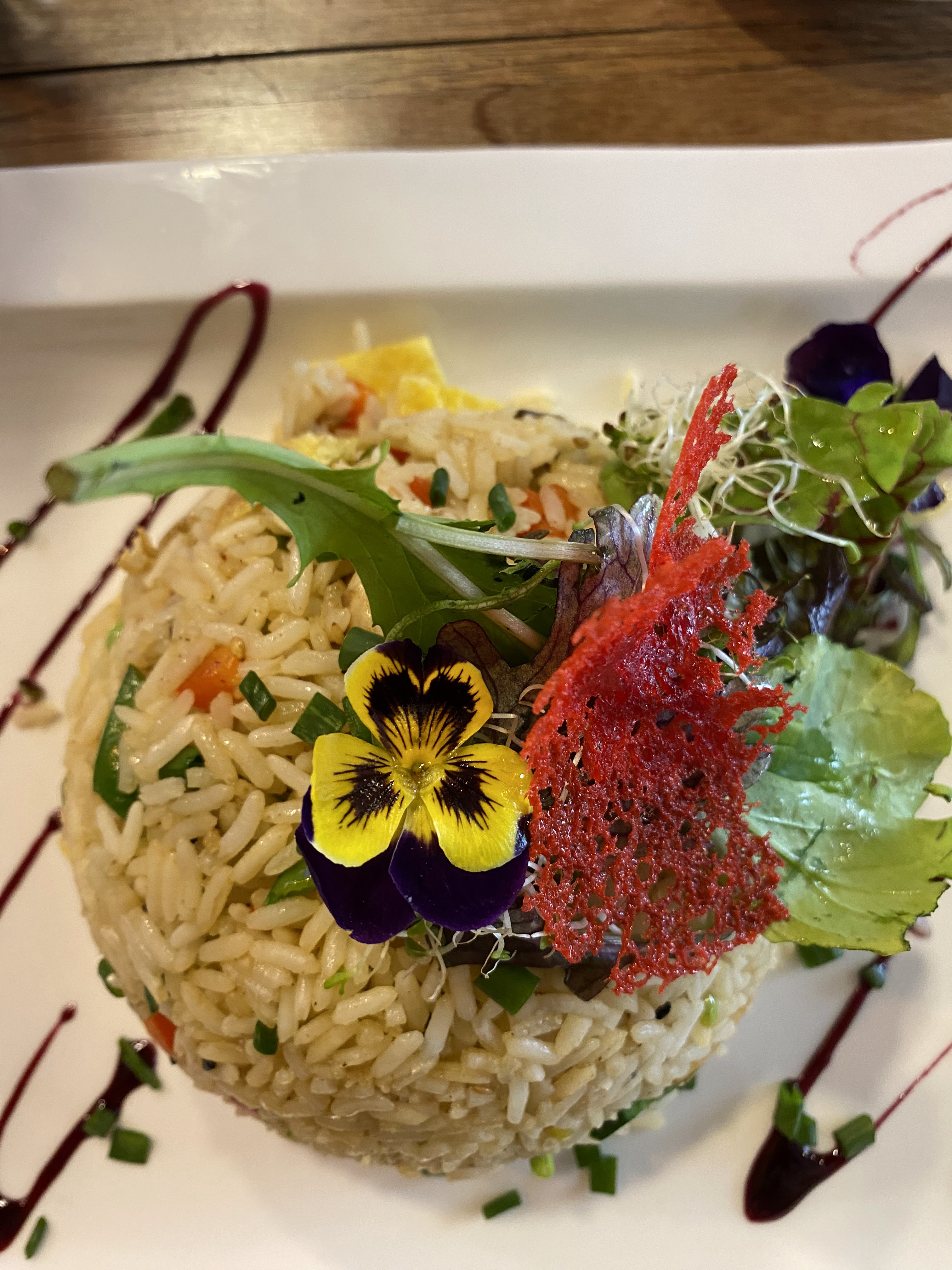
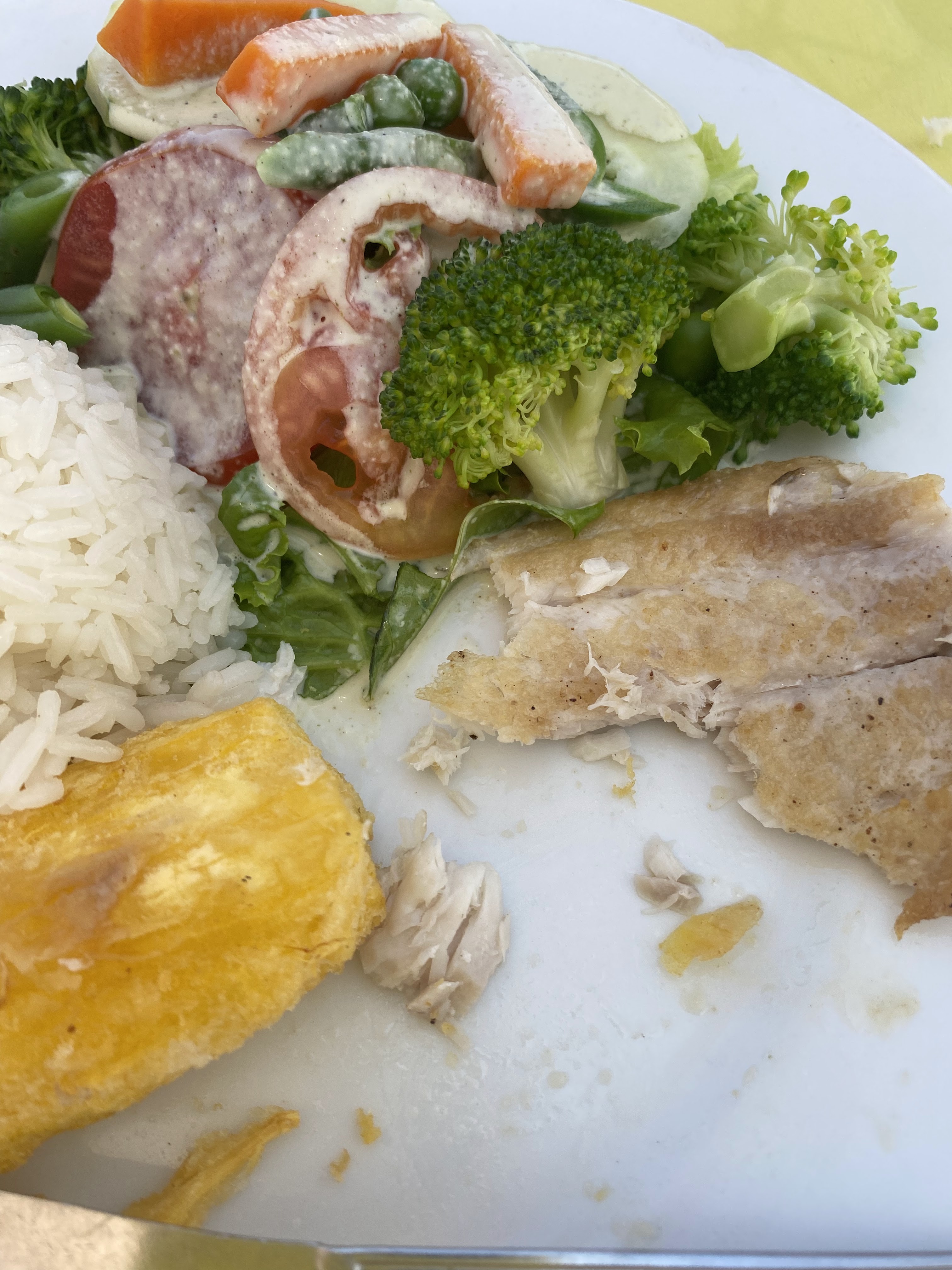
I also continued to have some great meals. Food in Peru appears to be celebrated and not only it is delicious but always presented very artfully. My favorite meal was Canelones Andinos. I am inspired to incorporate some Peruvian-style cooking into my own repertoire!
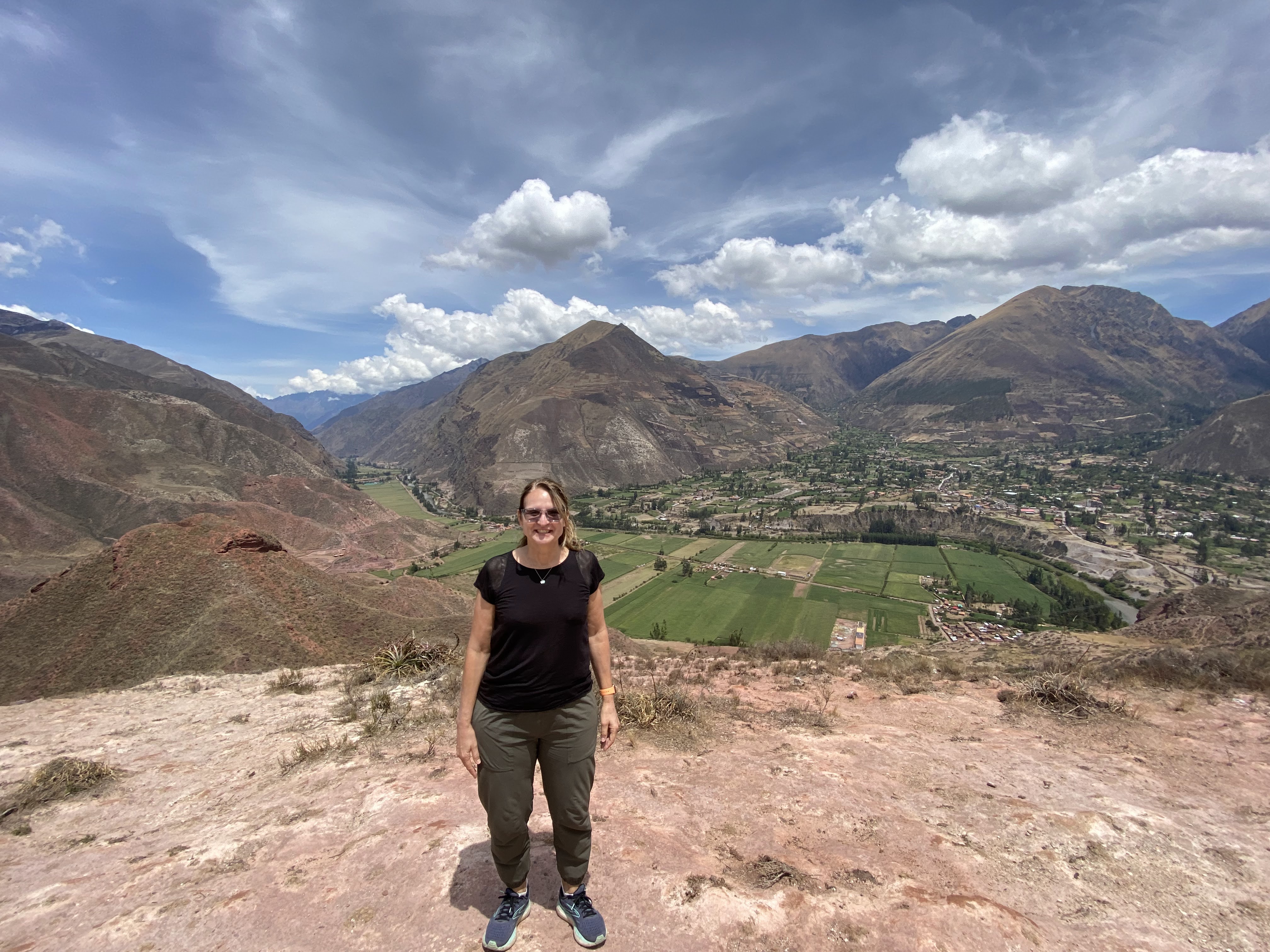
After the amazing revelation of Machu Picchu, you would think it’s time to go home…what could top that after all??!! In reality probably not much but I actually had another week in Peru! Because I missed my tour earlier in the week due to altitude sickness (which I was still fighting), I hired a guide to take me through the Sacred Valley…and Sacred it is! It is stunningly beautiful with the variations of soil colors, the surrounding mountains and overall lushness.
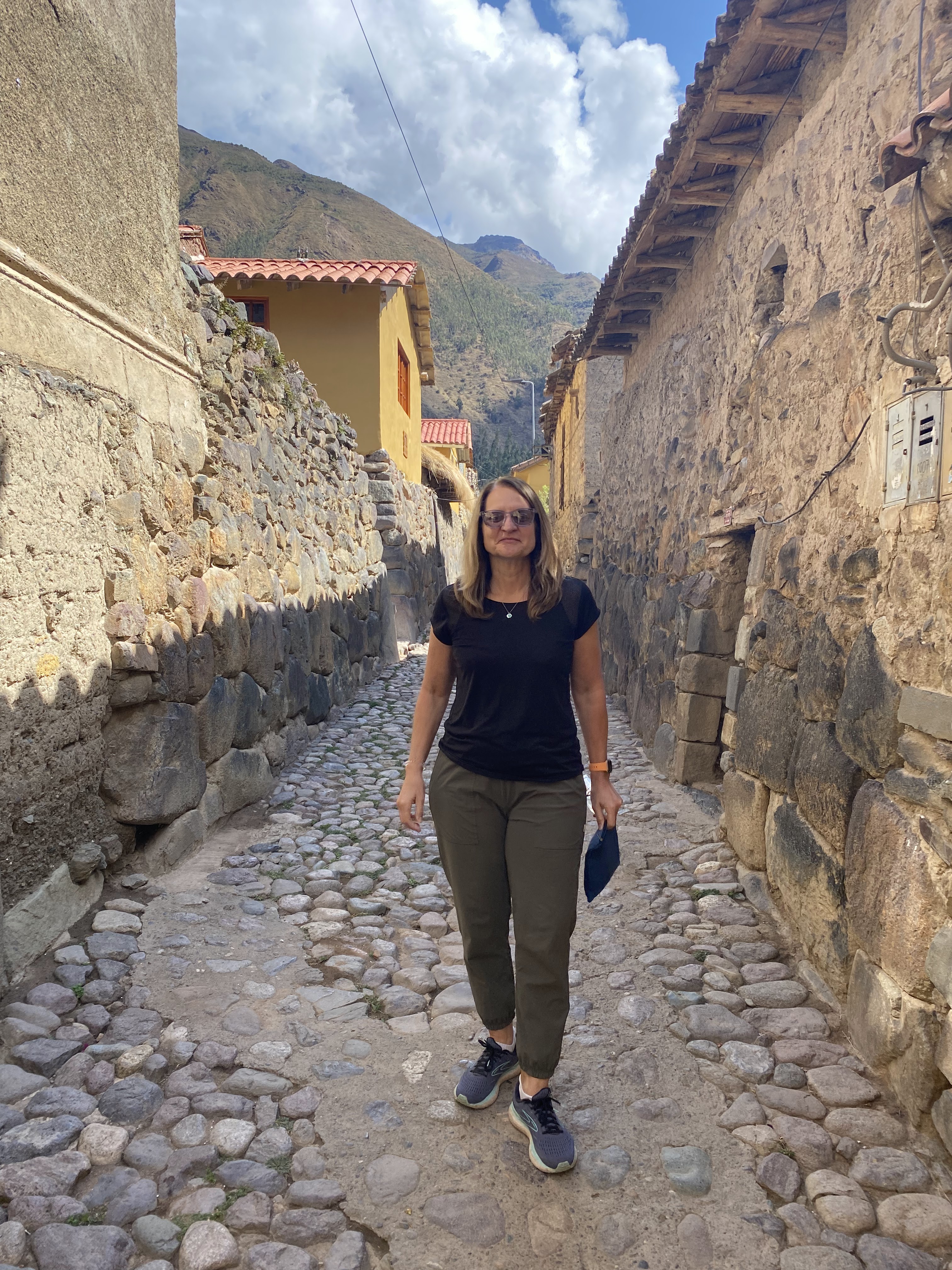
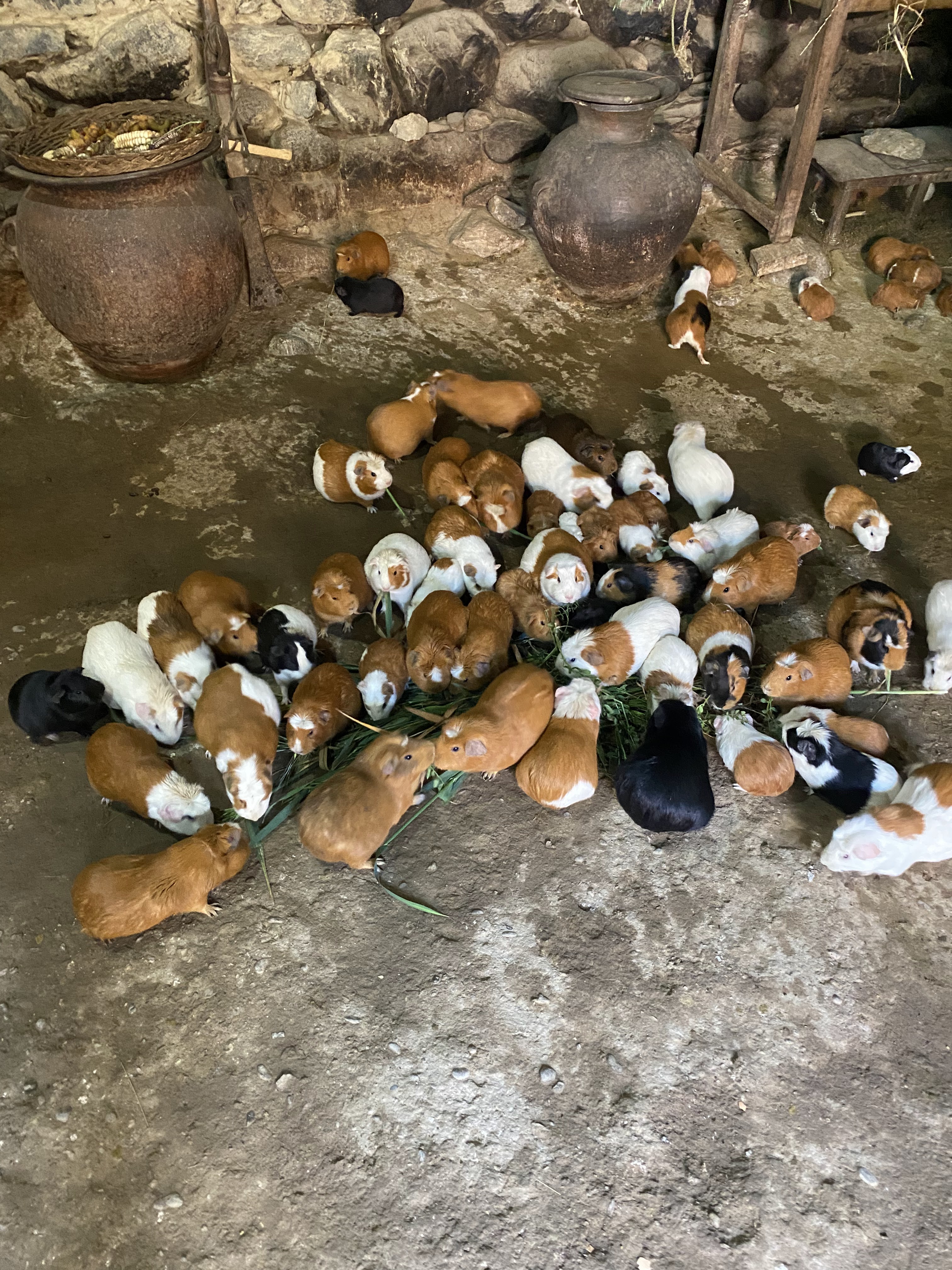
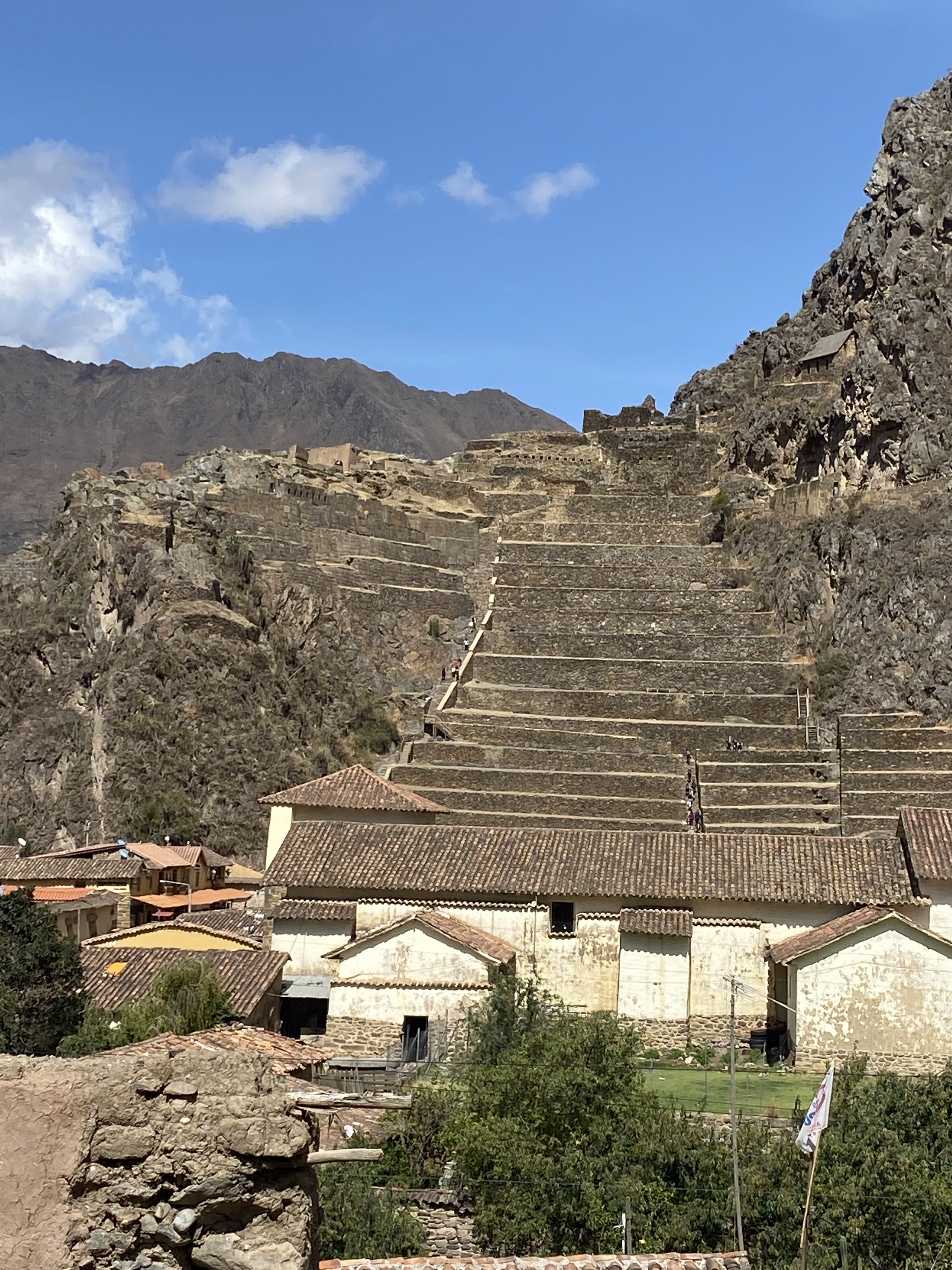
I first visited Ollantaytambo and wandered the tiny stone streets that existed since pre-Incan days. I got to see a typical original home where dirt floors, no electricity or plumbing and lots of guinea pigs existed as pets until it was time to eat them! Ollantaytambo is another spectacular Incan site. Again it was perched on the side of a mountain, which the Incans made accommodations for as they determined where there crops should be grown.
I then headed to Moray. This was a very interesting agricultural testing ground and the concentric circle design was very cool. Then onto Maras. The town of Maras is similar to being in Italy or Portugal…quaint stone homes on clean streets and it actually had lots of character. I learned that 500 families own the salt flats and they work it like a cooperative. They work the salt flats six months of the year and then farm the remaining six months of the year.
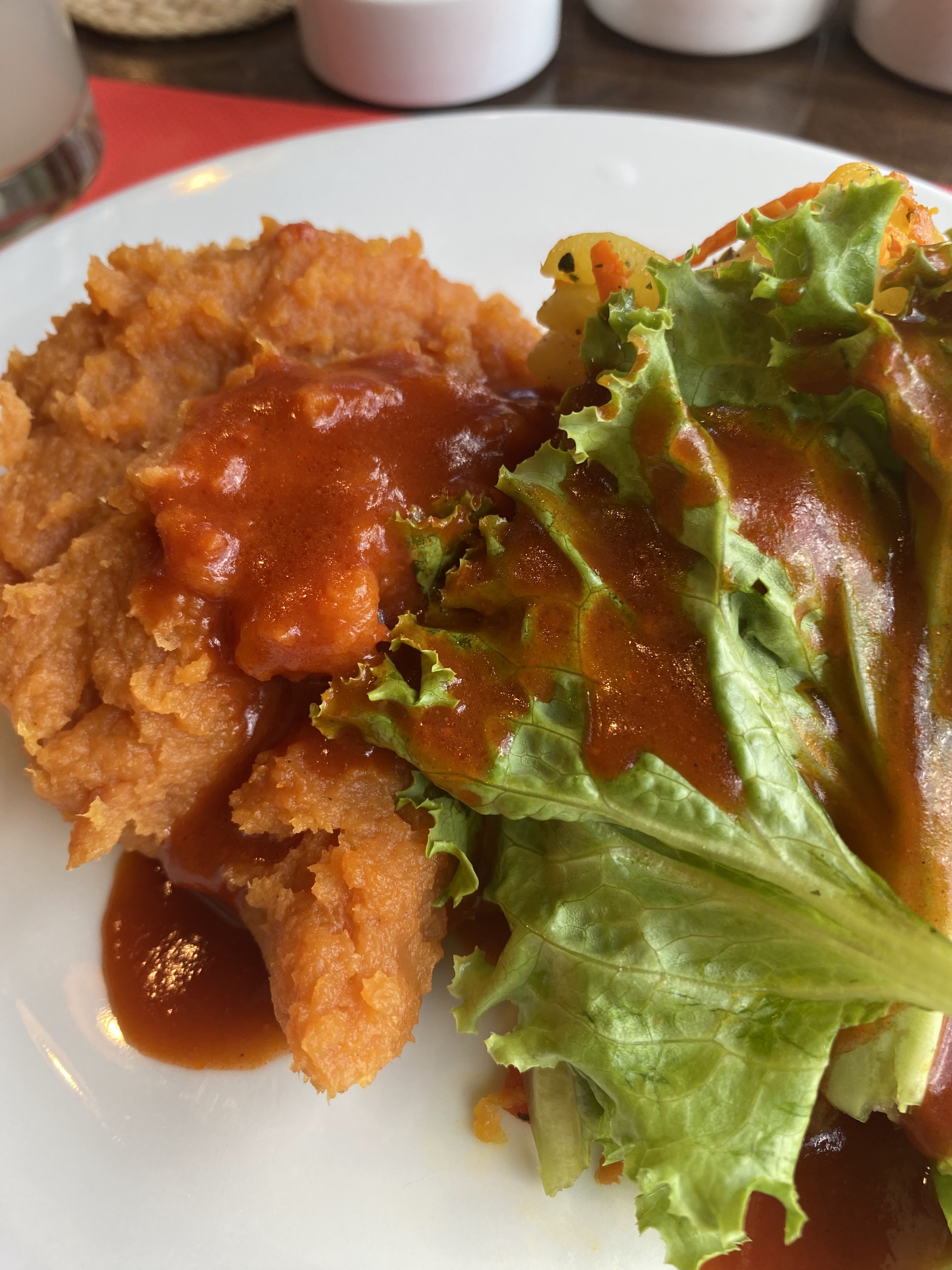
We then trekked to Chinchero for a preplanned lunch. I think being vegetarian is perplexing for the guides and restaurants. I was given a salad and a sweet potato puree and a very sweet chocolate cake. It was fine but my guides licked their meat-laden plates clean!
This day was supposed to include a waterfall hike but my head just couldn’t imagine doing anything strenuous so, instead, I asked the taxi to head back to Cusco, an hour and a half scenic drive. It was a great day overall.
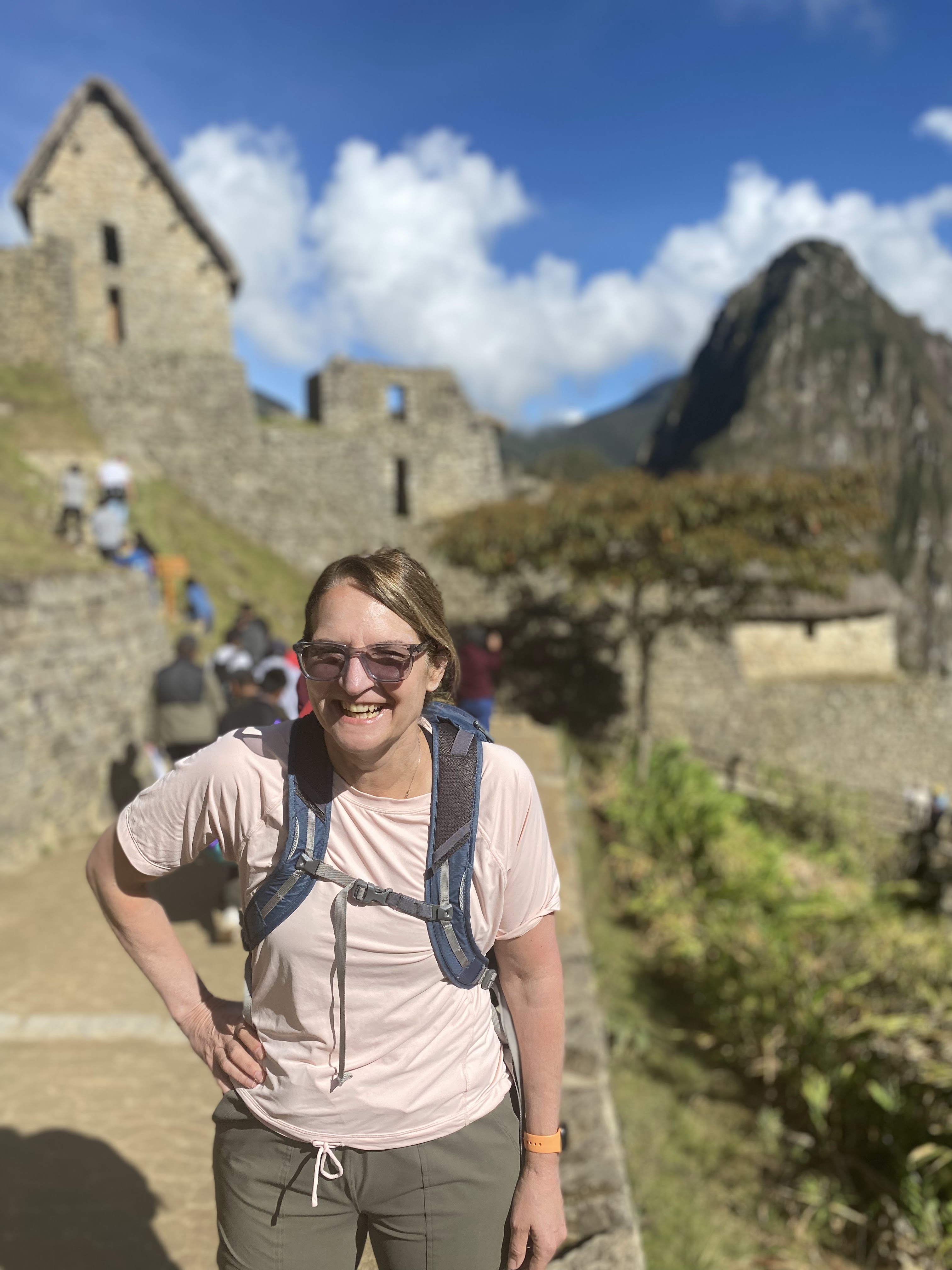
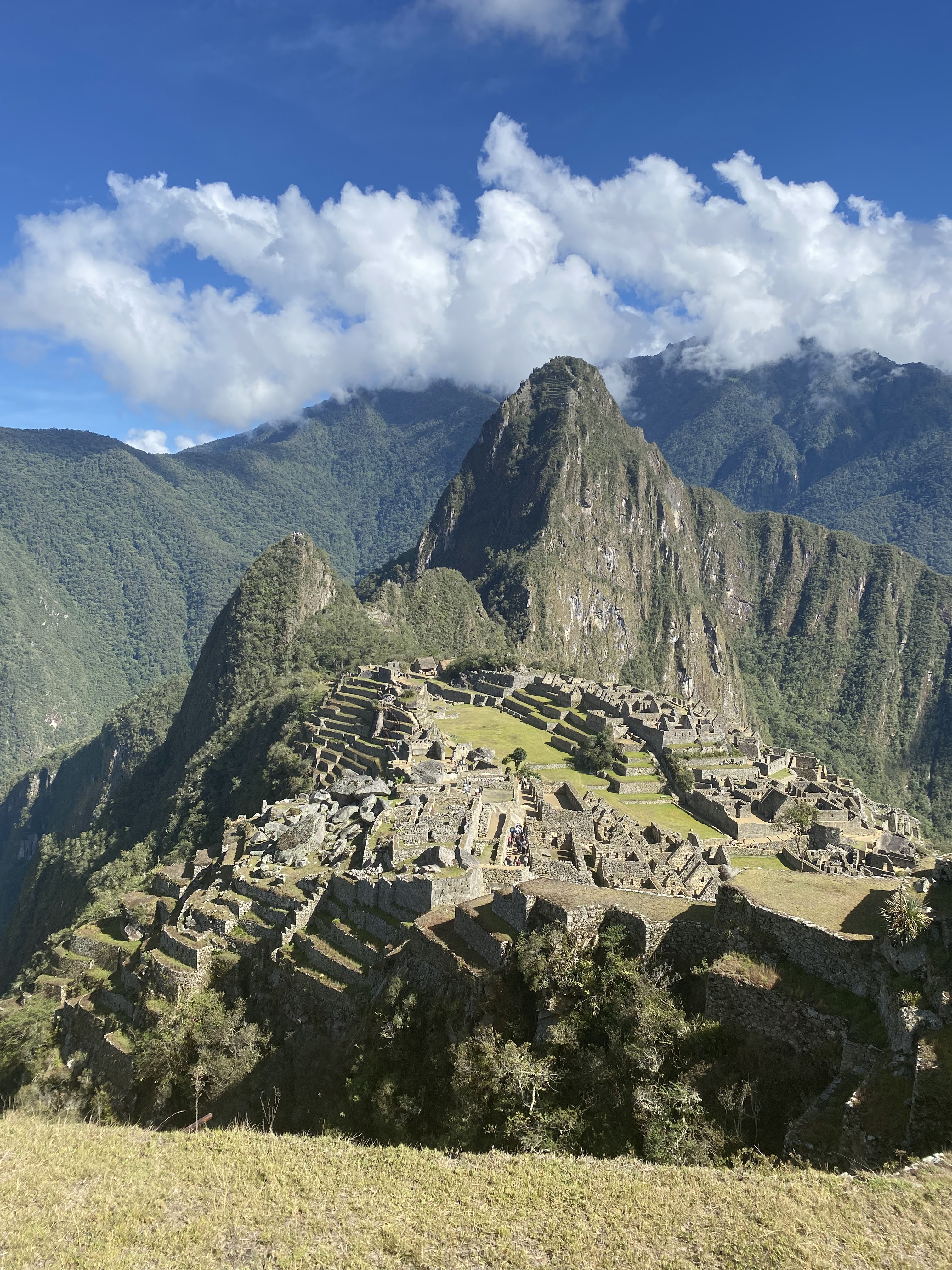
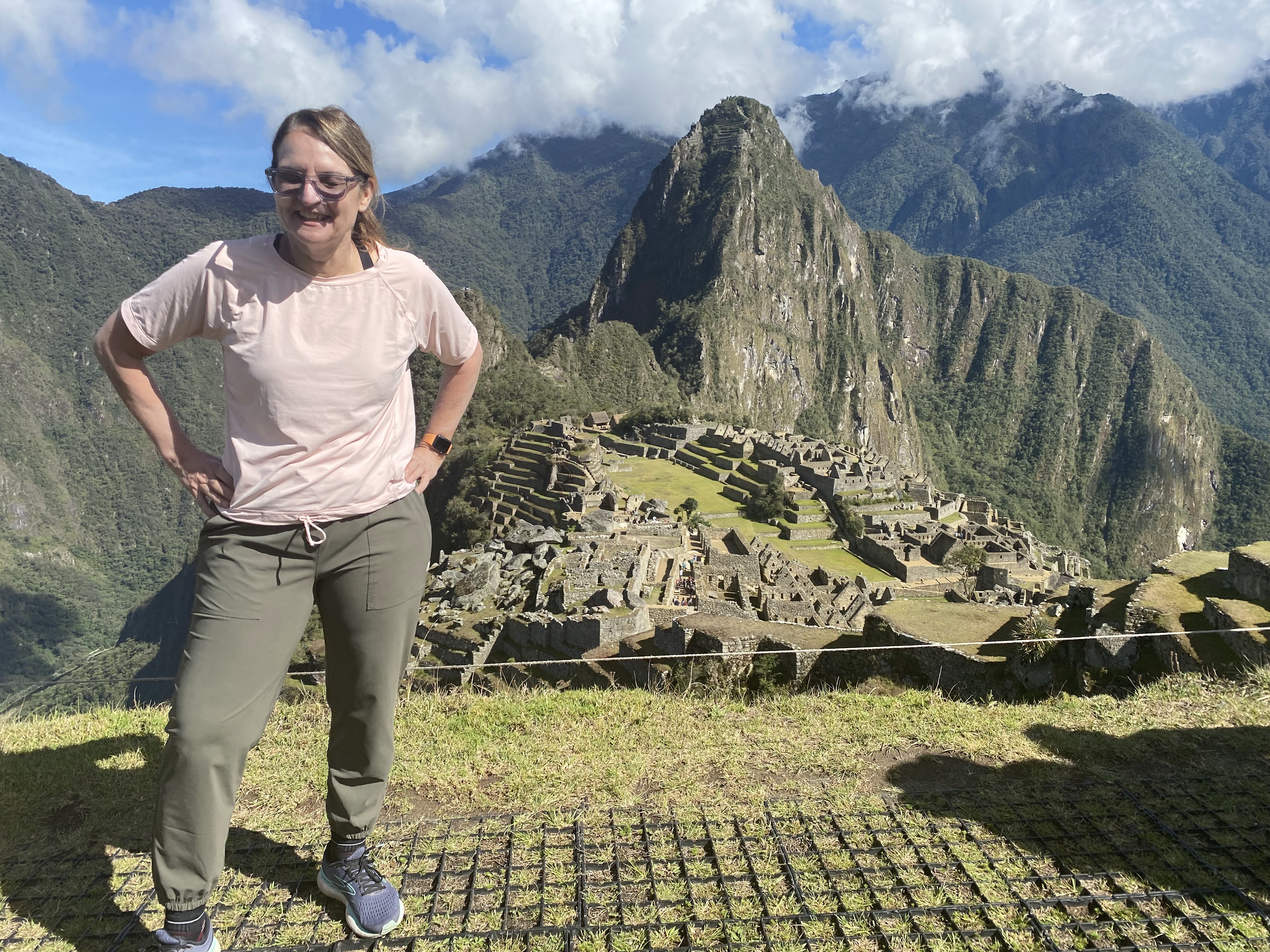
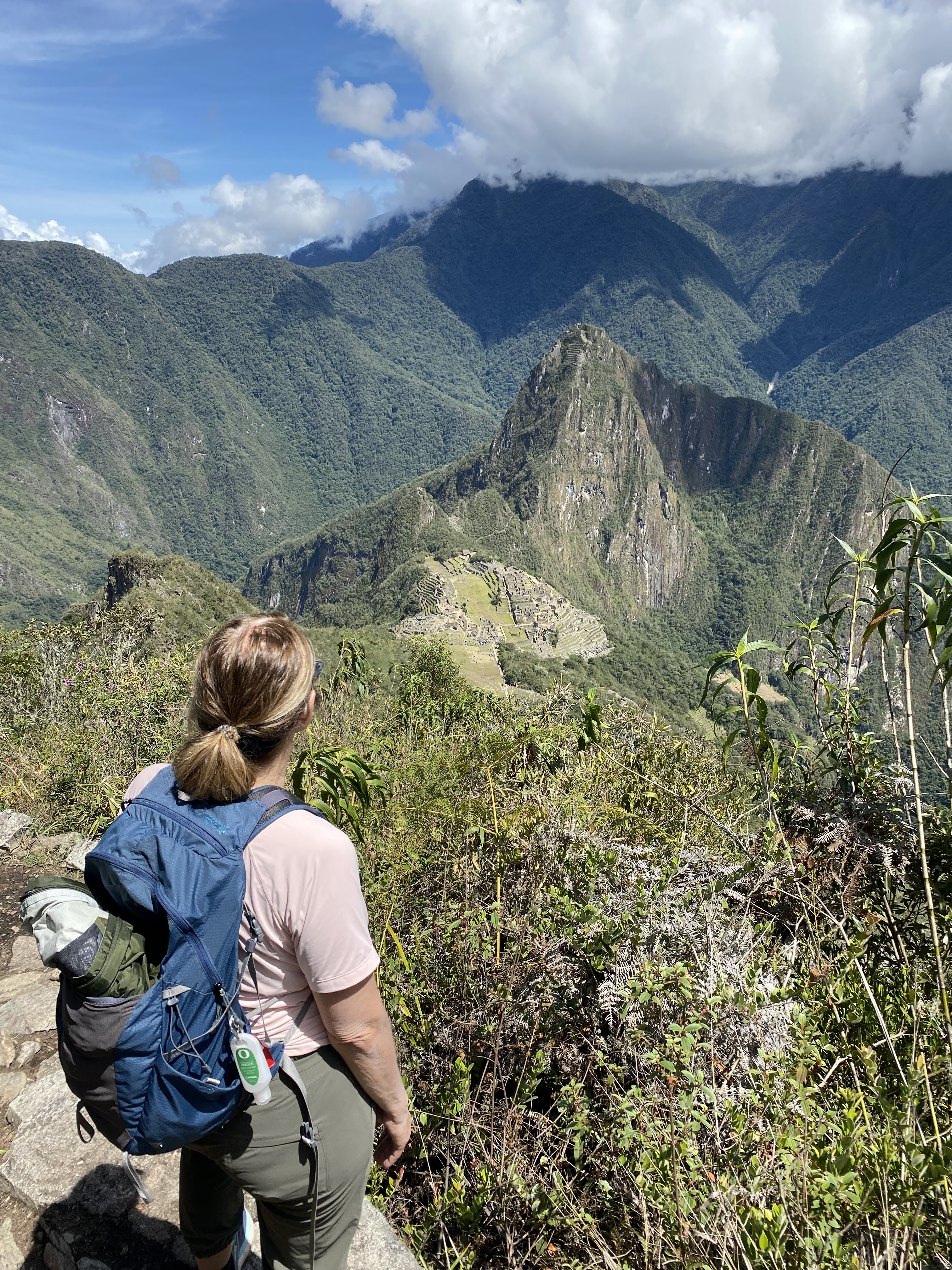
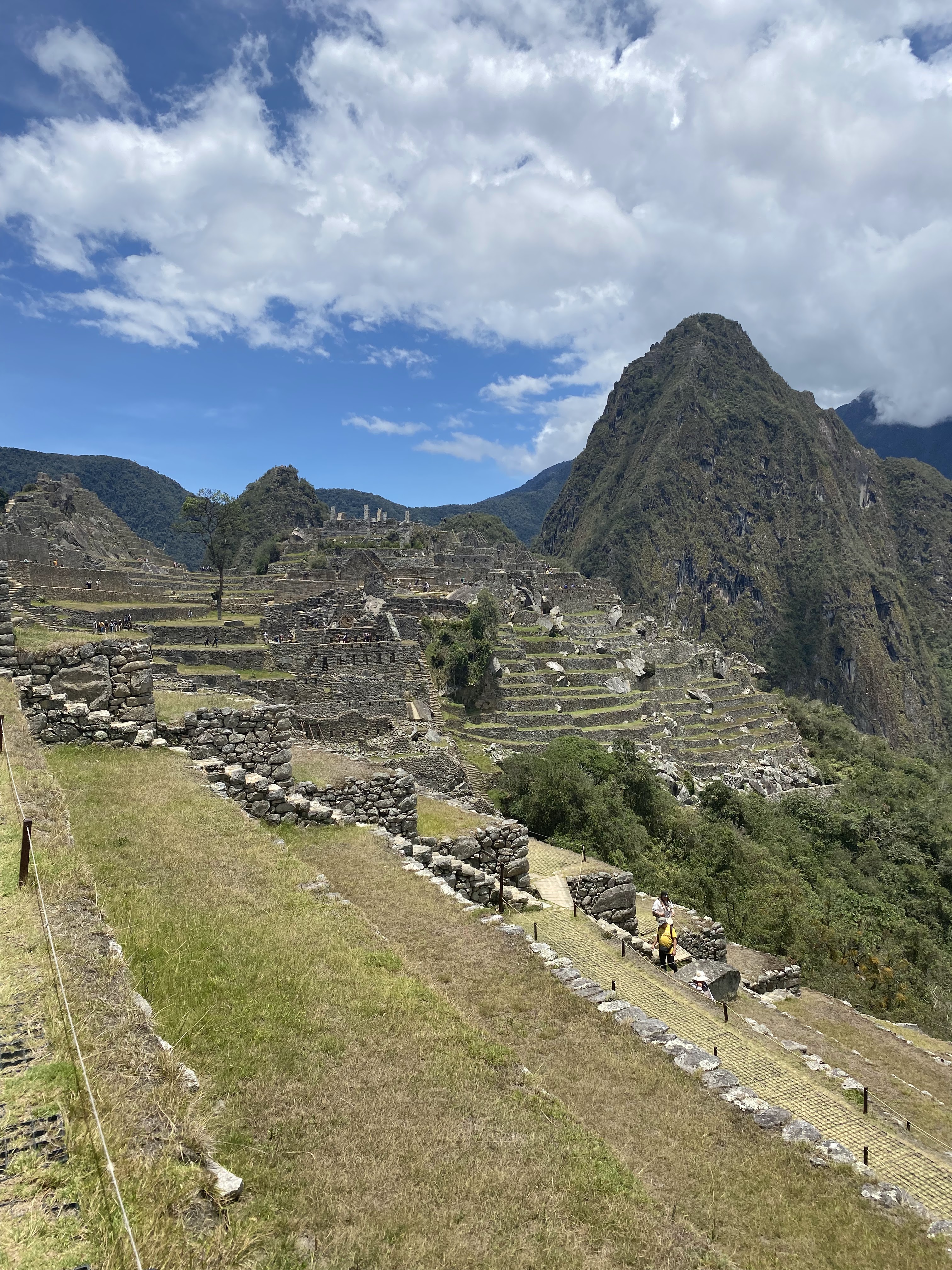
Machu Picchu deserves a post all by itself. The train ride from Ollantaytambo was easy; the train is clean, modern and efficient and an hour and a half later I arrived in Machu Picchu Pueblo (also referred to as Agua Calientes). My entry time to MP was 7-8 a.m. and the 30 minute bus ride up to the entrance was organized and gave me a glimpse of the splendor to come!
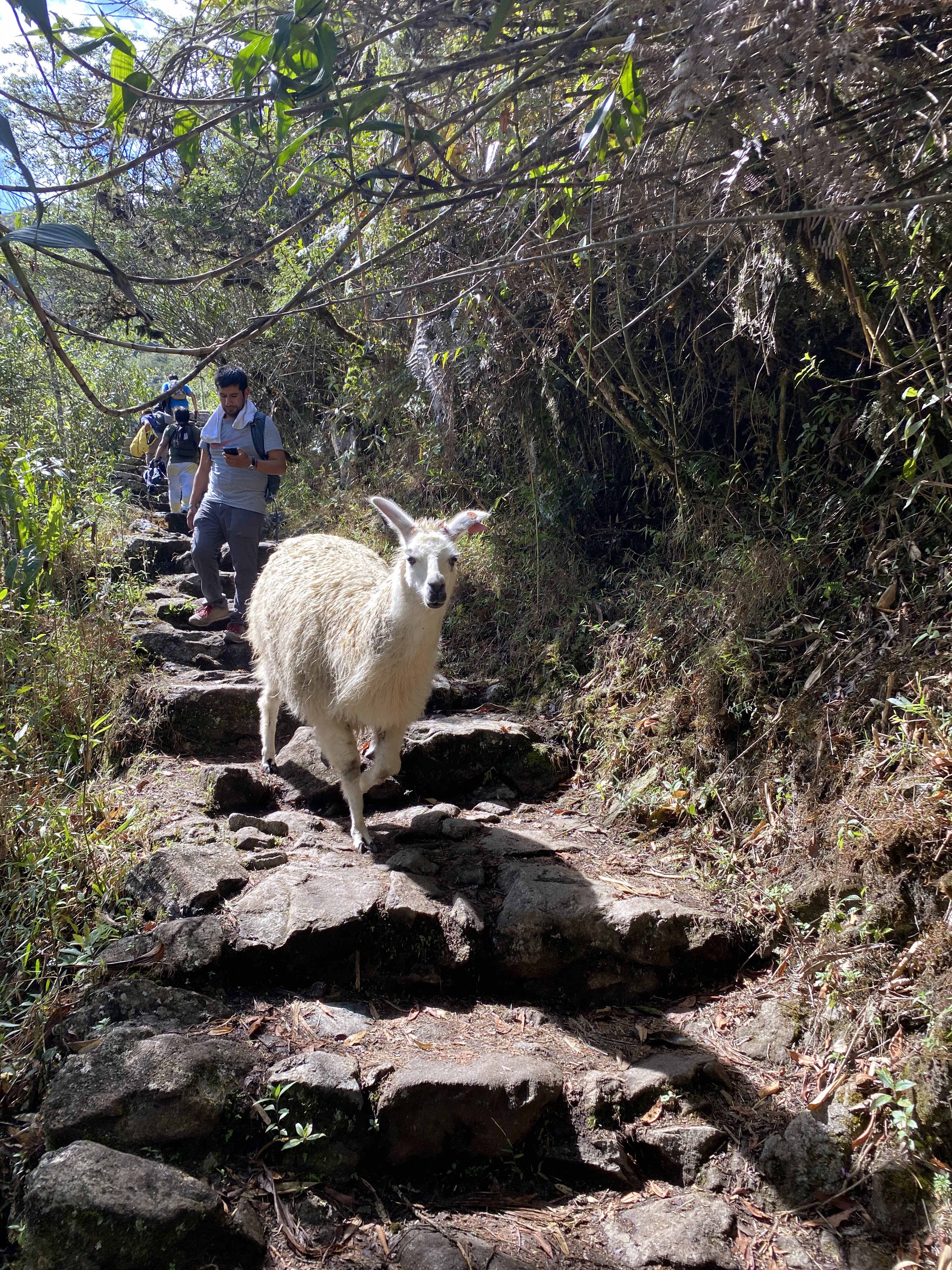
Everywhere in Peru, it seems, means stairs and Machu Picchu is no exception. Just getting to the entrance and the initial lookout was challenging, especially with the altitude. We then headed to La Montana to do a hike up the mountain that that looks down on MP cuidad. This is also a timed entry and required an additional fee. Again the steepness coupled with the altitude made this very challenging even with me being an experienced hiker. The stone steps were various sizes and heights. In places the path is quite narrow but there were some fabulous viewpoints.
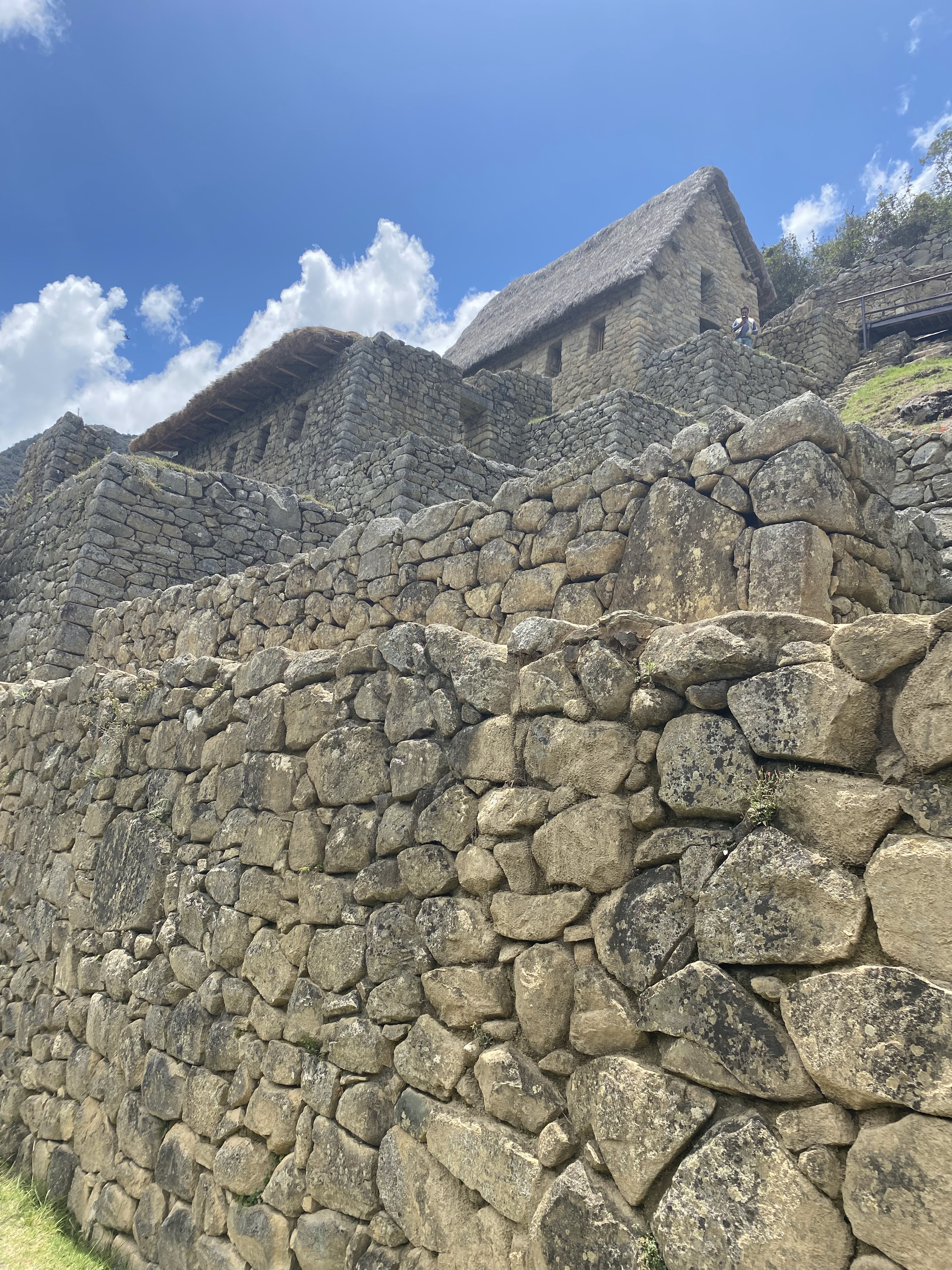
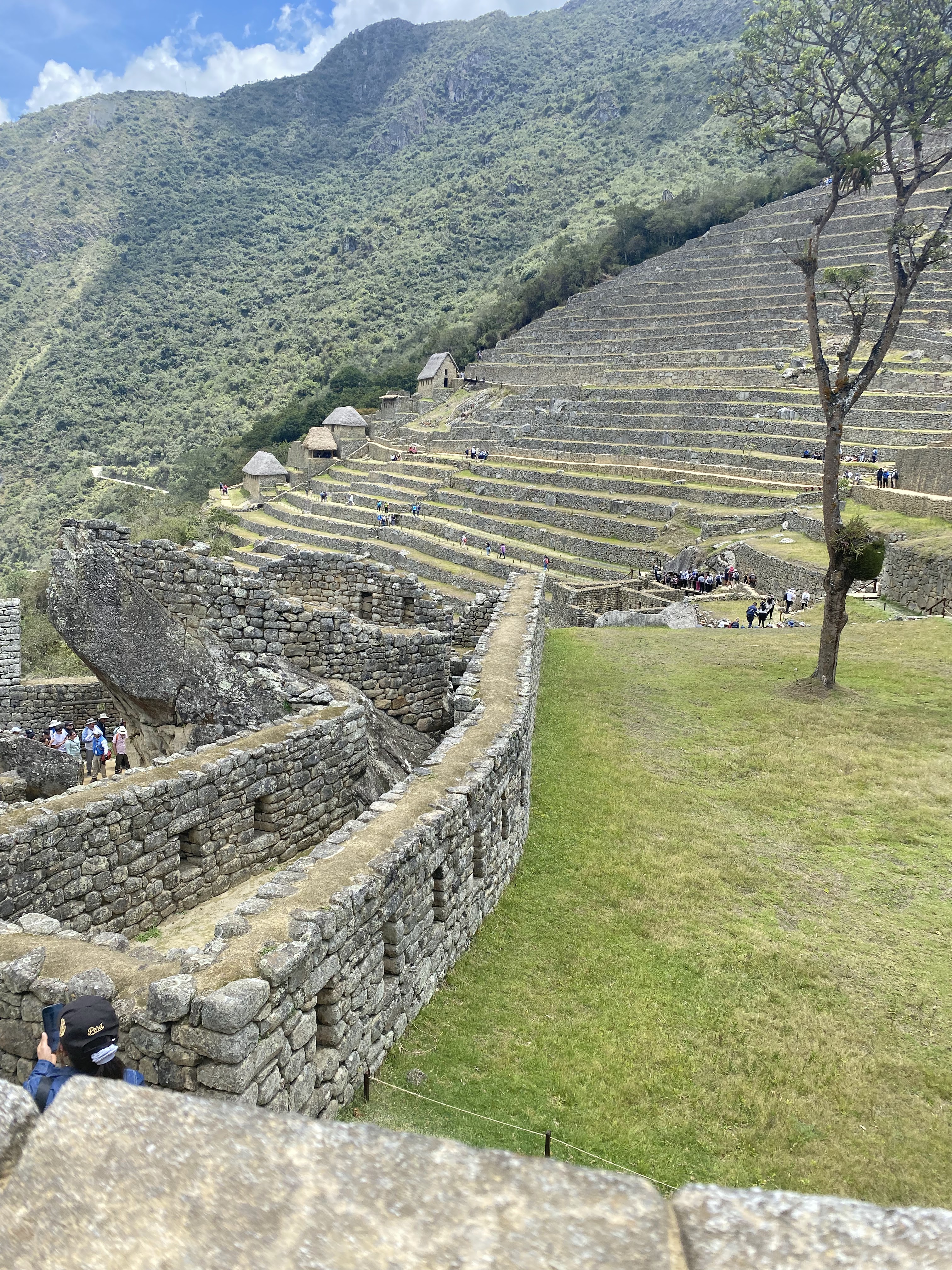
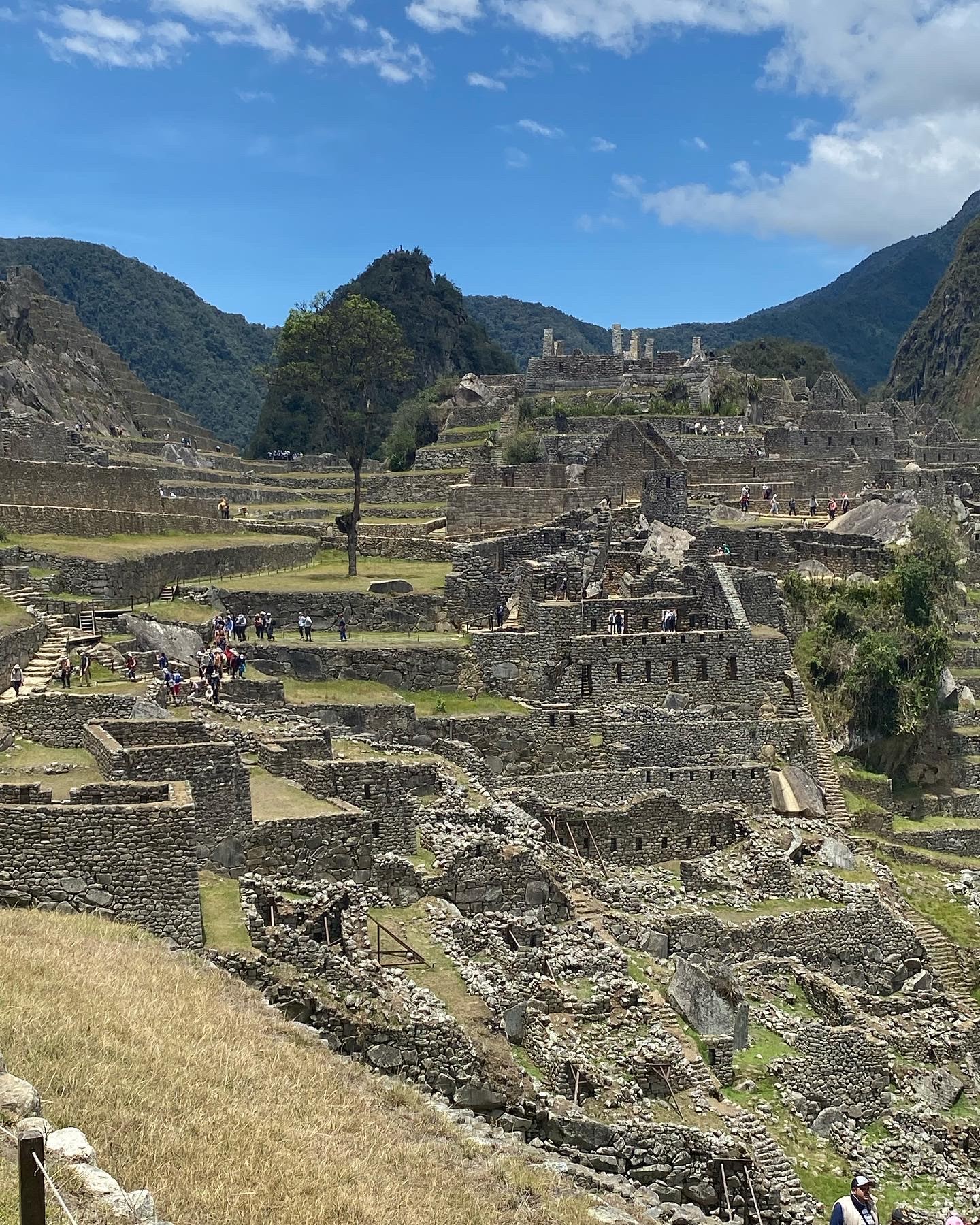
Once down the mountain, one must go up again to reach MP cuidad. But honestly MP is indescribable. The magnitude of the surrounding mountains and the architectural feat of what they Incas built (and at that altitude and steepness) is just mesmerizing. The Incas were amazingly smart and forward-thinking. The way they captured water, positioned their buildings and storage and determined their crops is like nothing else I have ever seen (and I have seen lots of ruins in multiple countries like Italy, Turkey and Greece).
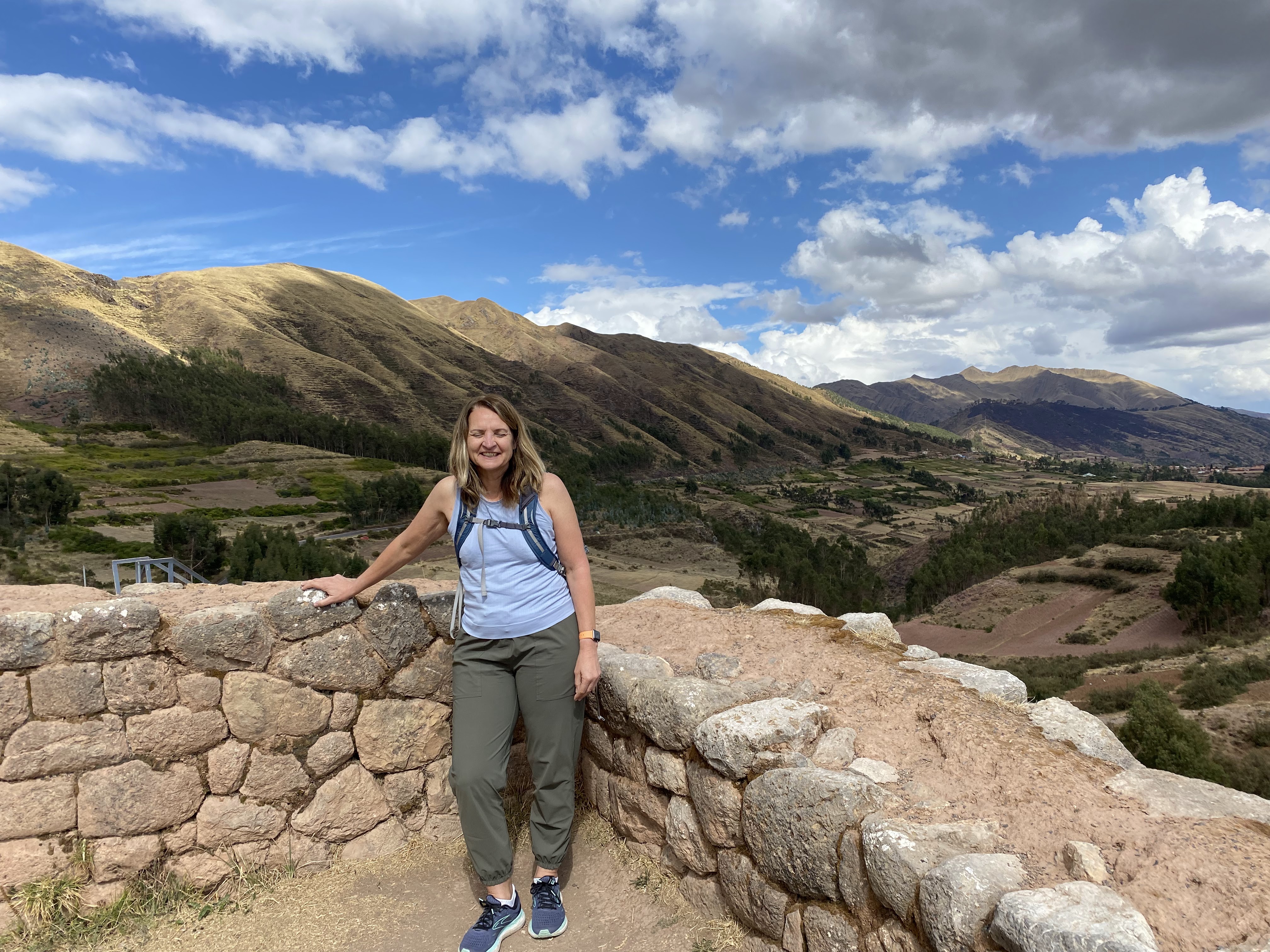
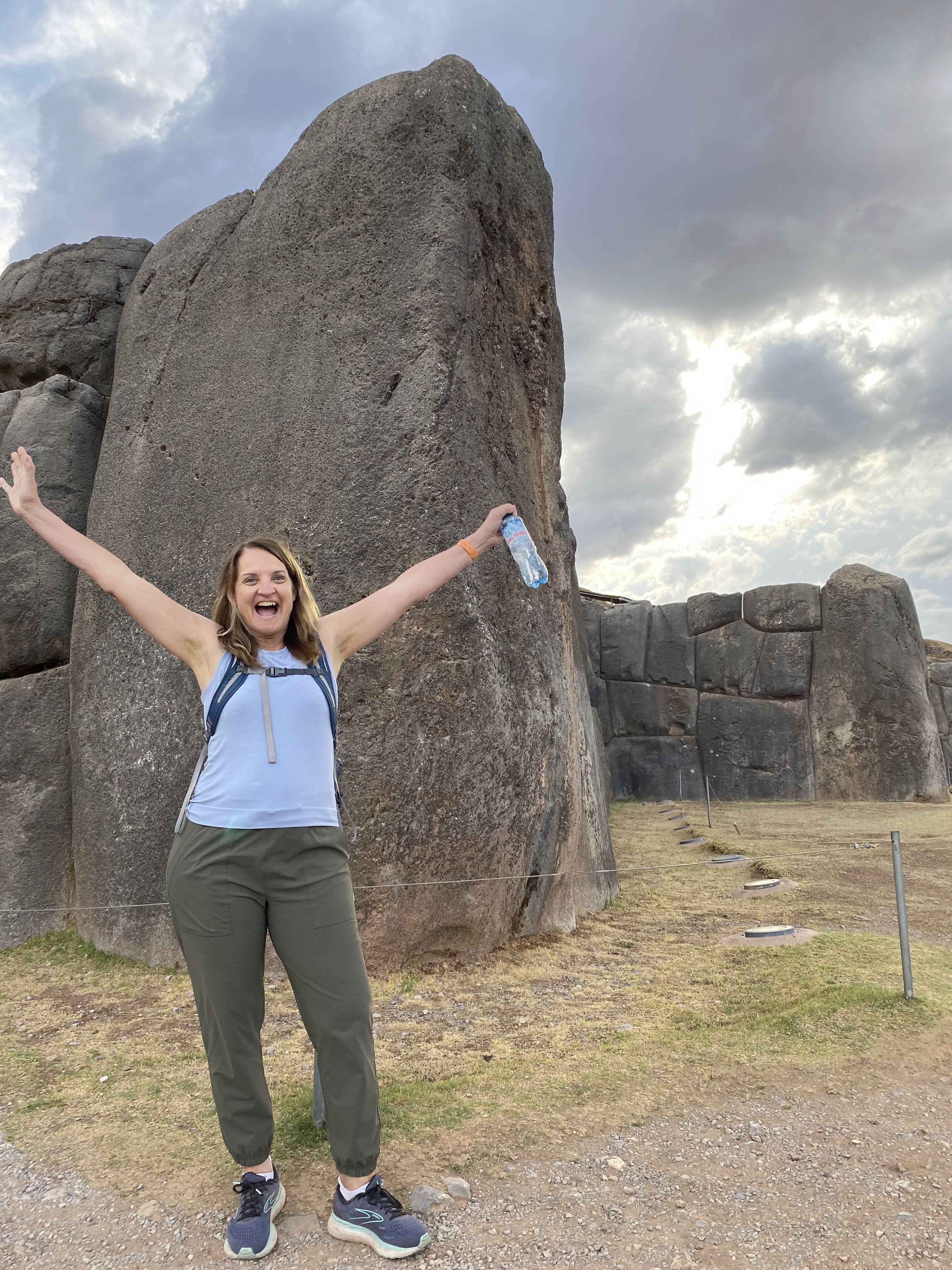
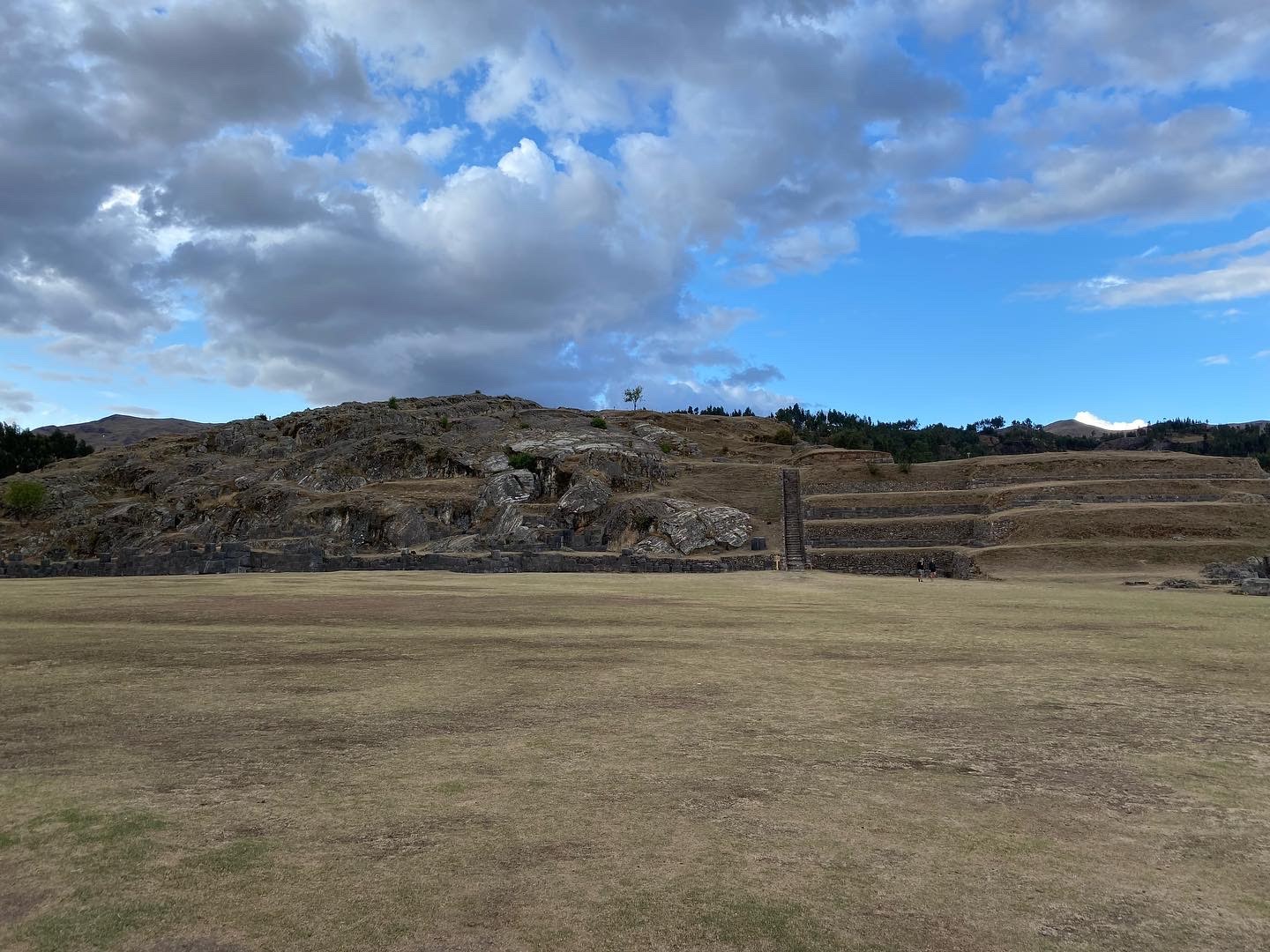
After an overnight in Lima, I headed to the airport to fly to Cusco. I have to admit that I was worried about the altitude at 11,000 feet and how I would react. When I landed I immediately got a headache but proceeded with my itinerary. I visited Sacsayhuaman, Quenqo, Puca Pucara and Tambomachay, as well as, the Cathedral. This meant going to an even higher elevation and walking about five miles. I was feeling relatively fine…until that evening when my head felt like it would explode and I was throwing up. I frankly could barely move and ended up being hooked to an oxygen tank overnight. It was brutal and scary. I missed my tour the next morning and my visit to Machu Picchu was at risk with the timed entry system I needed to make my day/time or not get in. At noon I decided to catch a taxi for the hour and a half journey to the train station that would take me to the Machu Picchu Pueblo. I definitely was at “half mast” but was also motivated to see Machu Picchu.
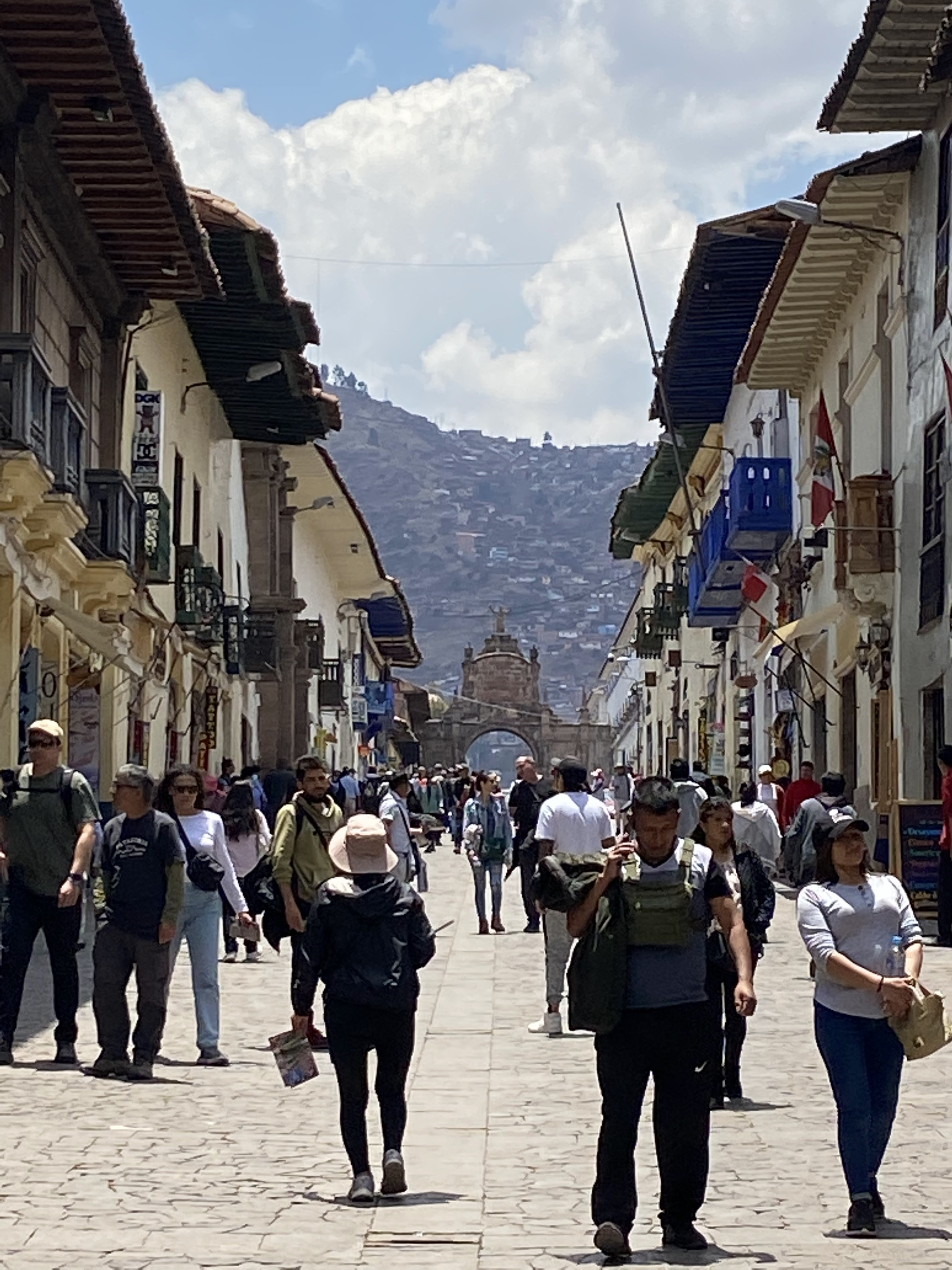
My initial impressions of Cusco made me want to learn more. There was plenty of history but also a vibrant, energetic feel. Once I returned from Machu Picchu and the Sacred Valley I would explore Cusco more thoroughly, even with the daunting altitude.
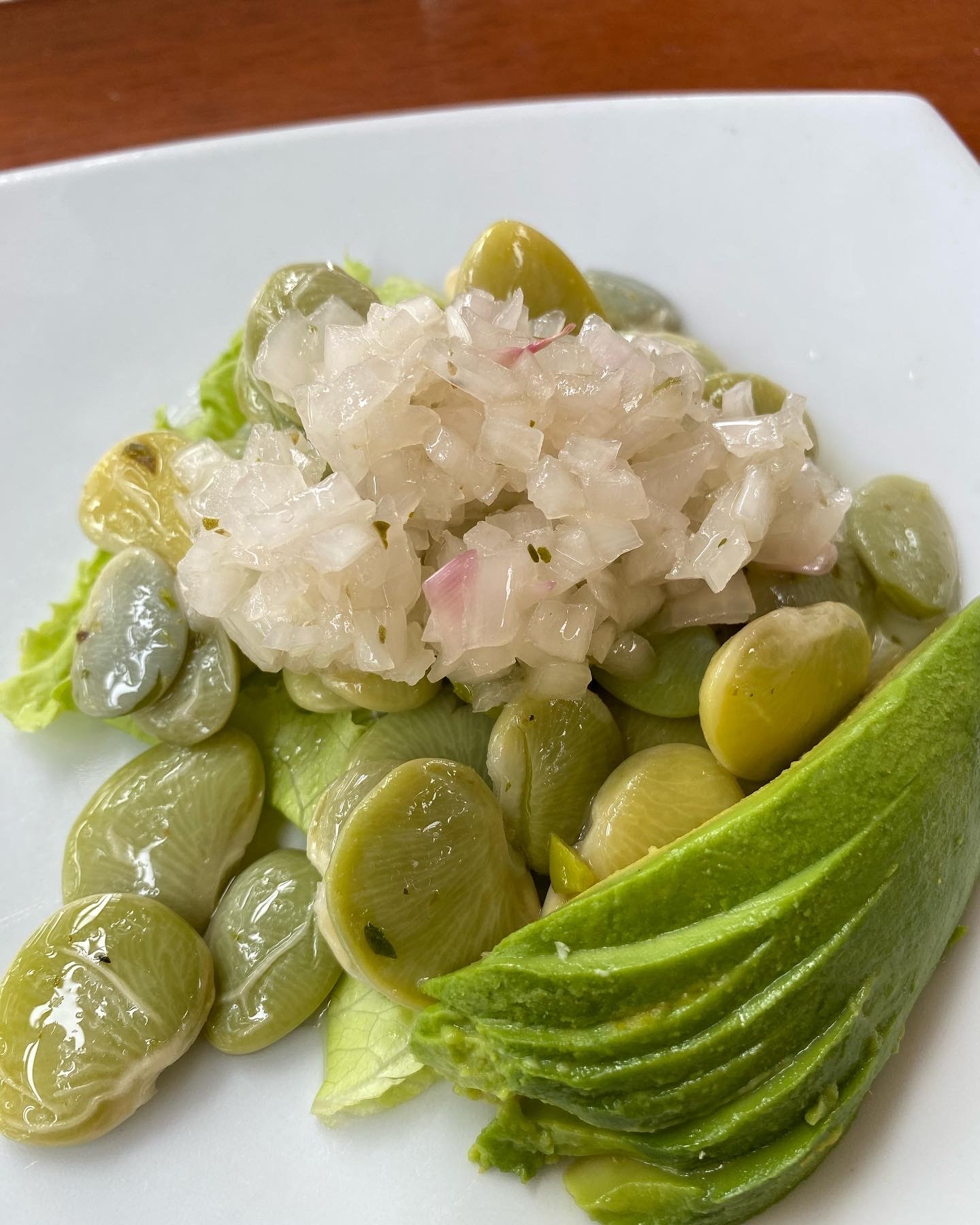
After the Nazca lines I headed to a Pisco distillery that has been in three generations of one family. I walked the vineyards, learned the process for making Pisco, tasted several Piscos and then had lunch in their dining room. I ate the most amazing lima bean salad with minced onions and avocado…it was so simple yet incredibly tasty.
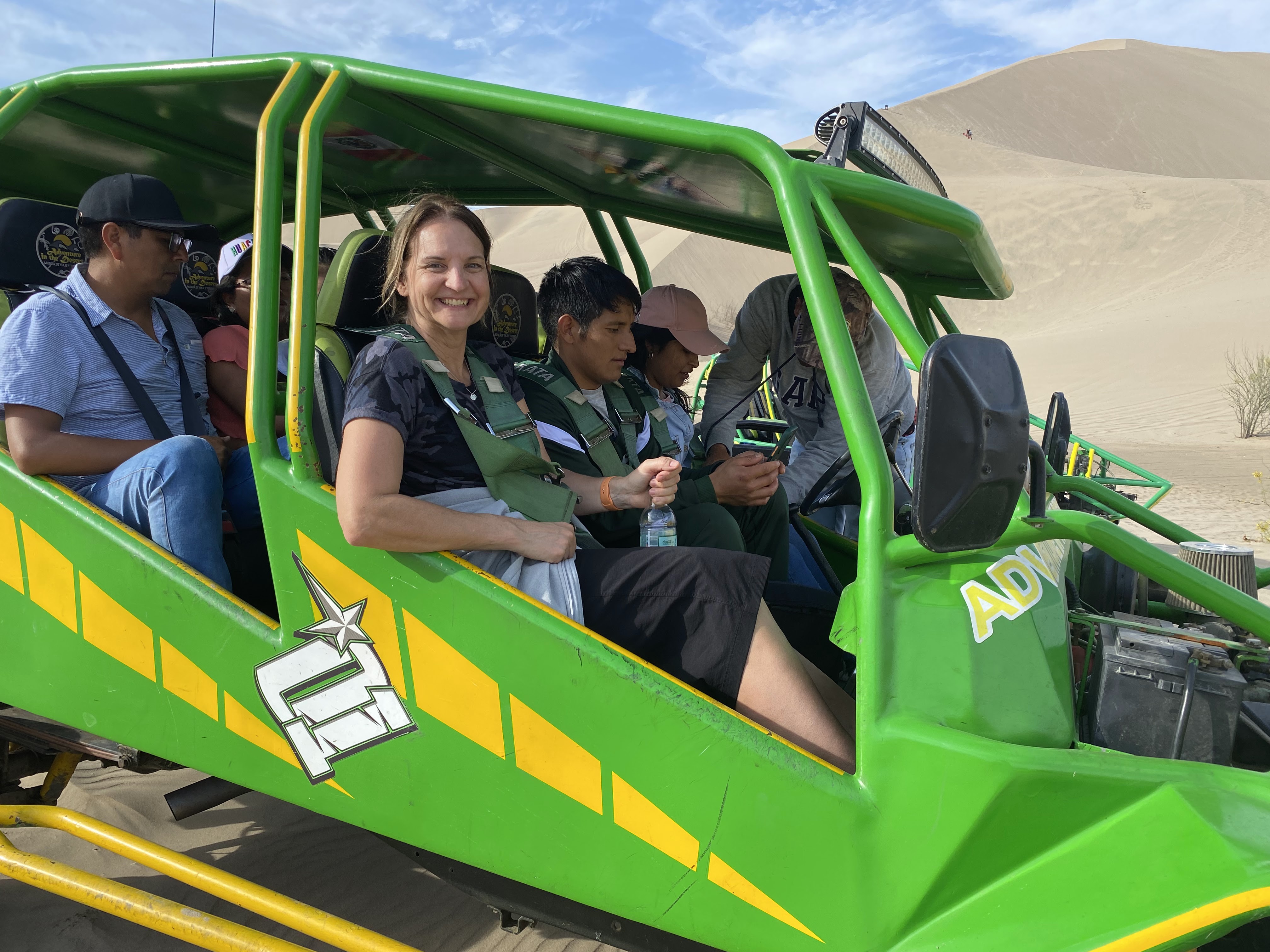
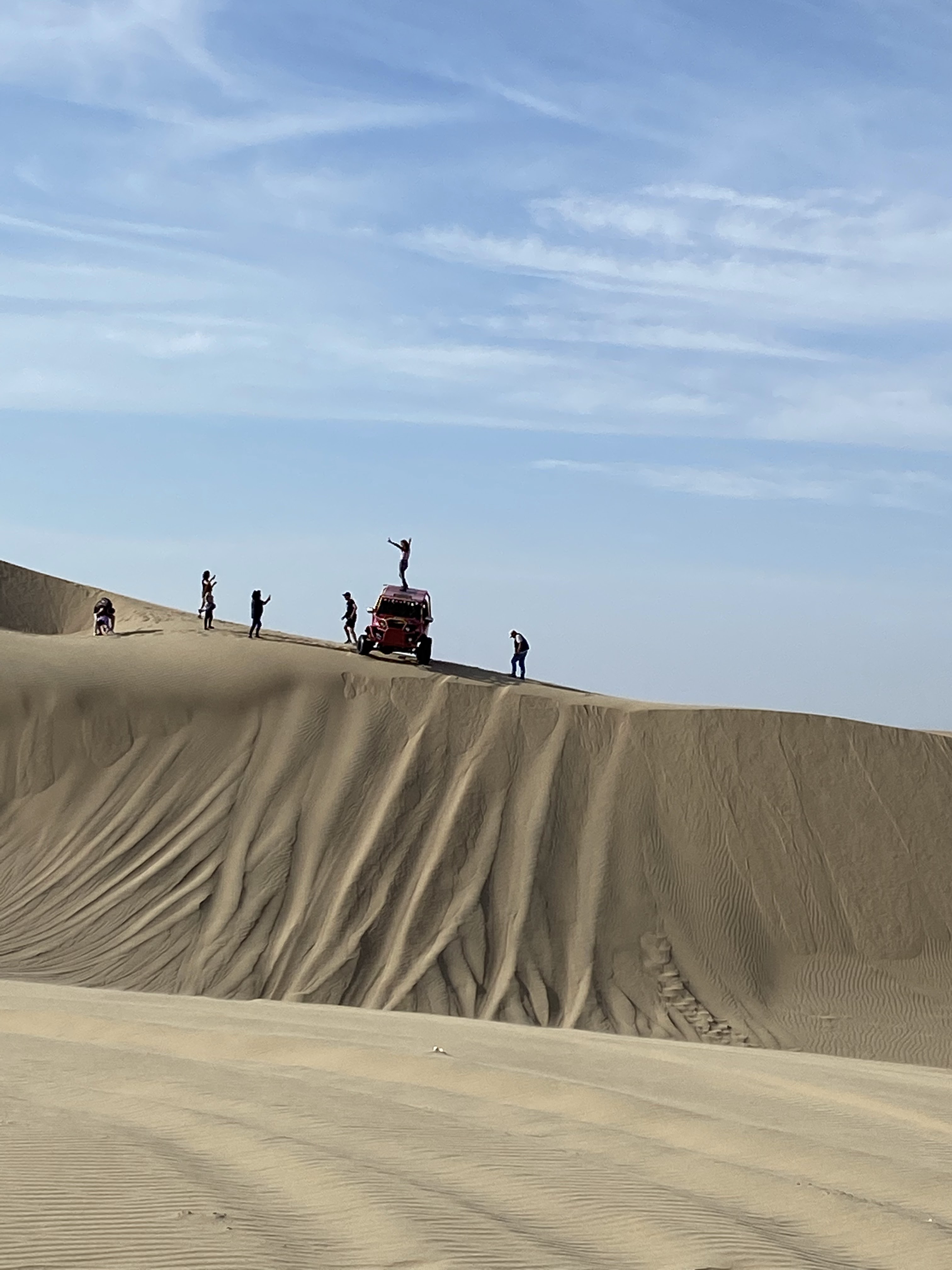
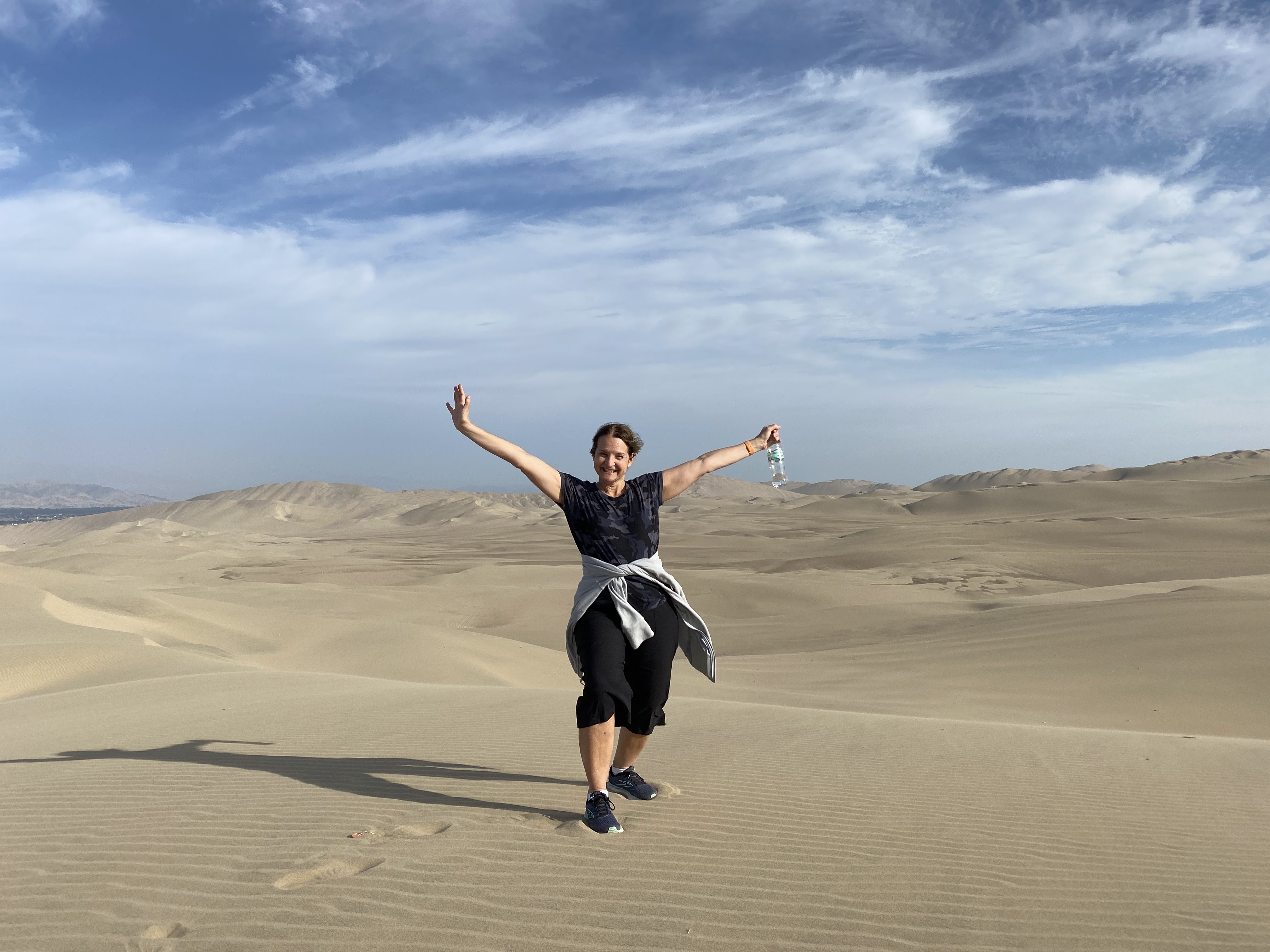
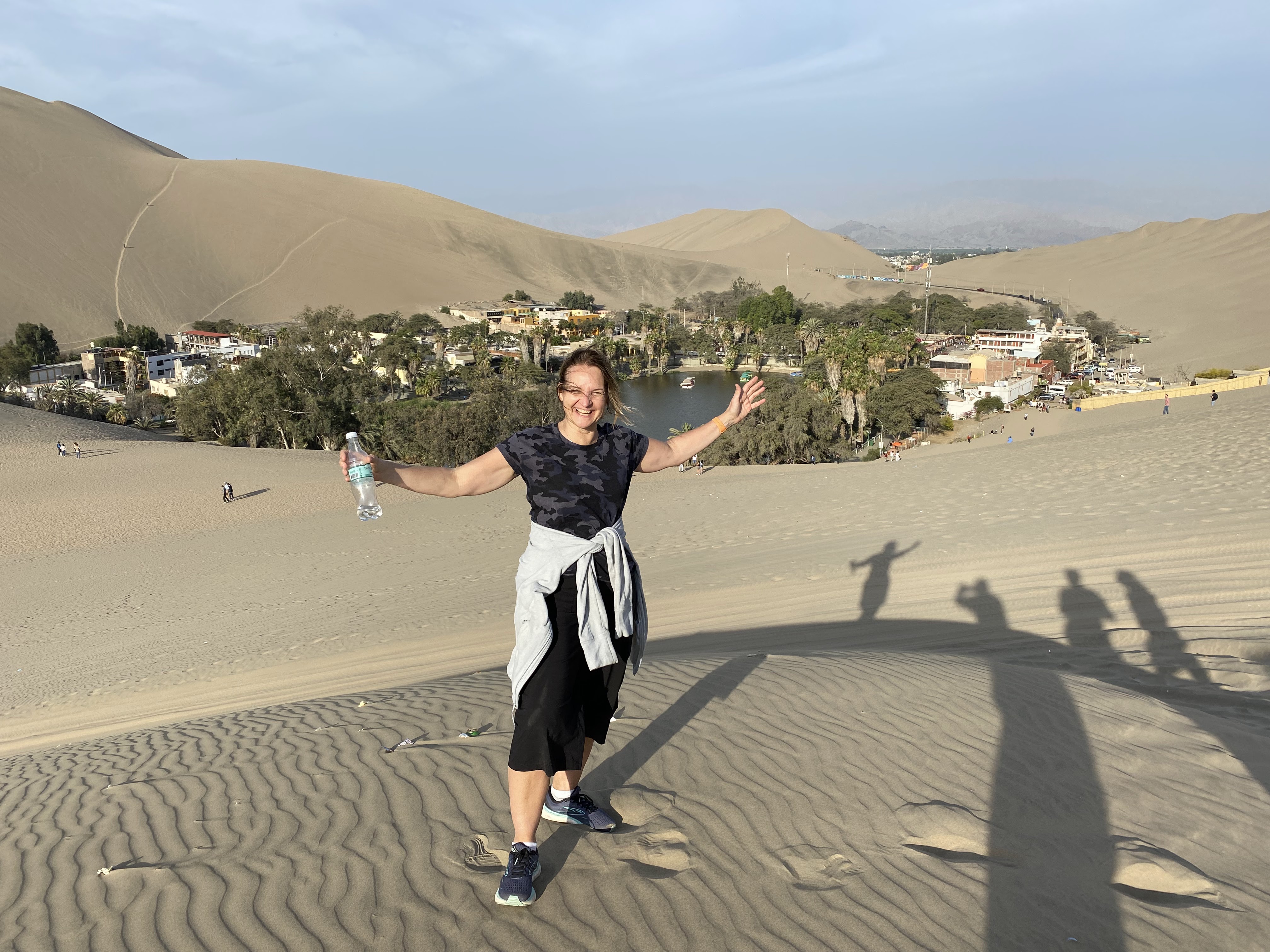
I then transported to Huacachina for a dune buddy ride on the desert sand dunes. I have to admit I was not thrilled about this activity until I DID IT! Oh my gosh it was fun and similar to being on a roller coaster. The Venezuelan driver was a dare devil and certainly wanted to get as many screams out of the passengers as possible.
During the dune buggy ride, we of course stopped to take pictures and then do some sand boarding. This was another activity that I was not excited about. The dunes were so tall and I imagined eating a bunch of sand. But, once again, I did it and LOVED it. It was so much fun. I then headed to another simple, clean, friendly hotel for the evening.
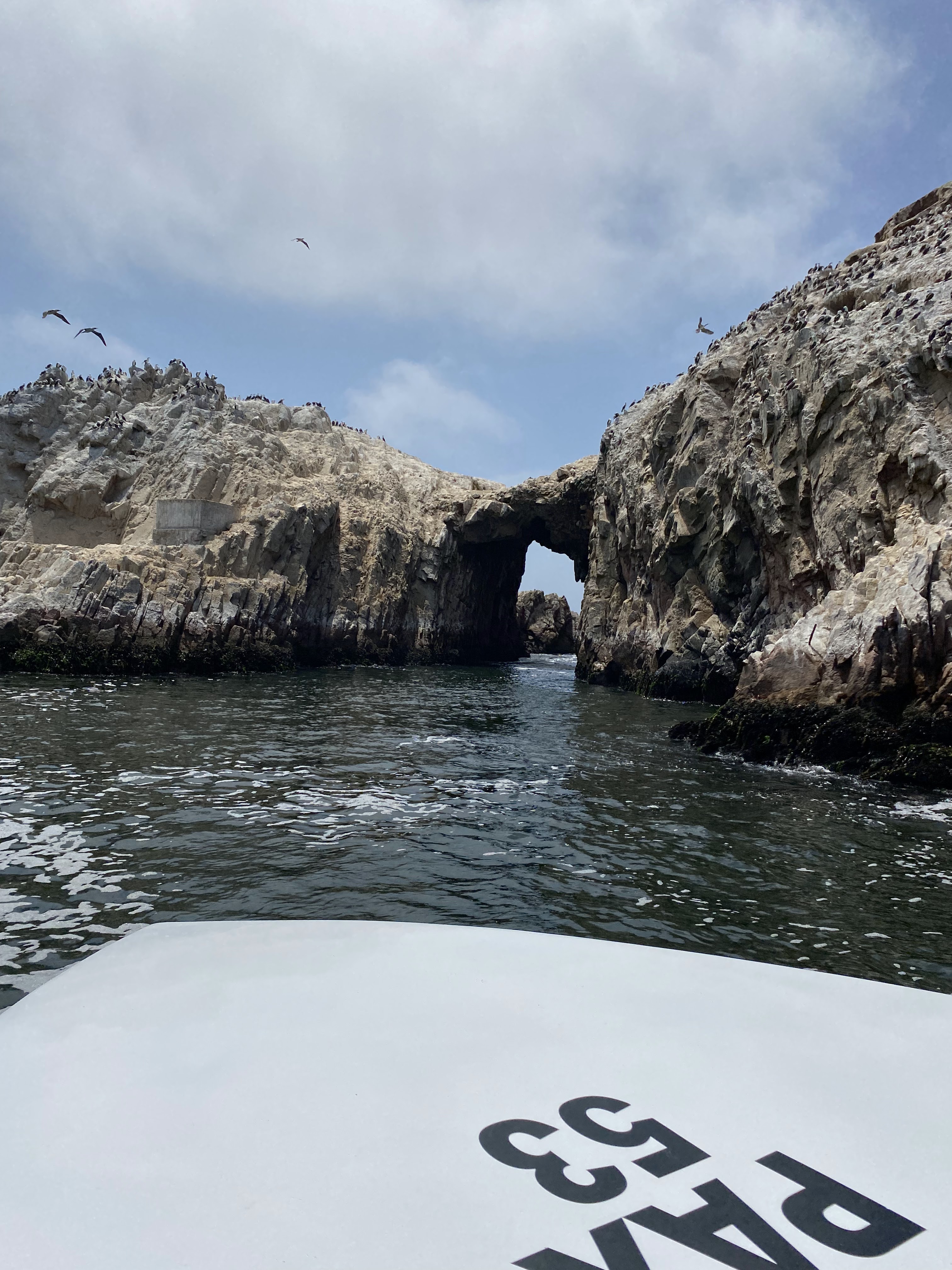
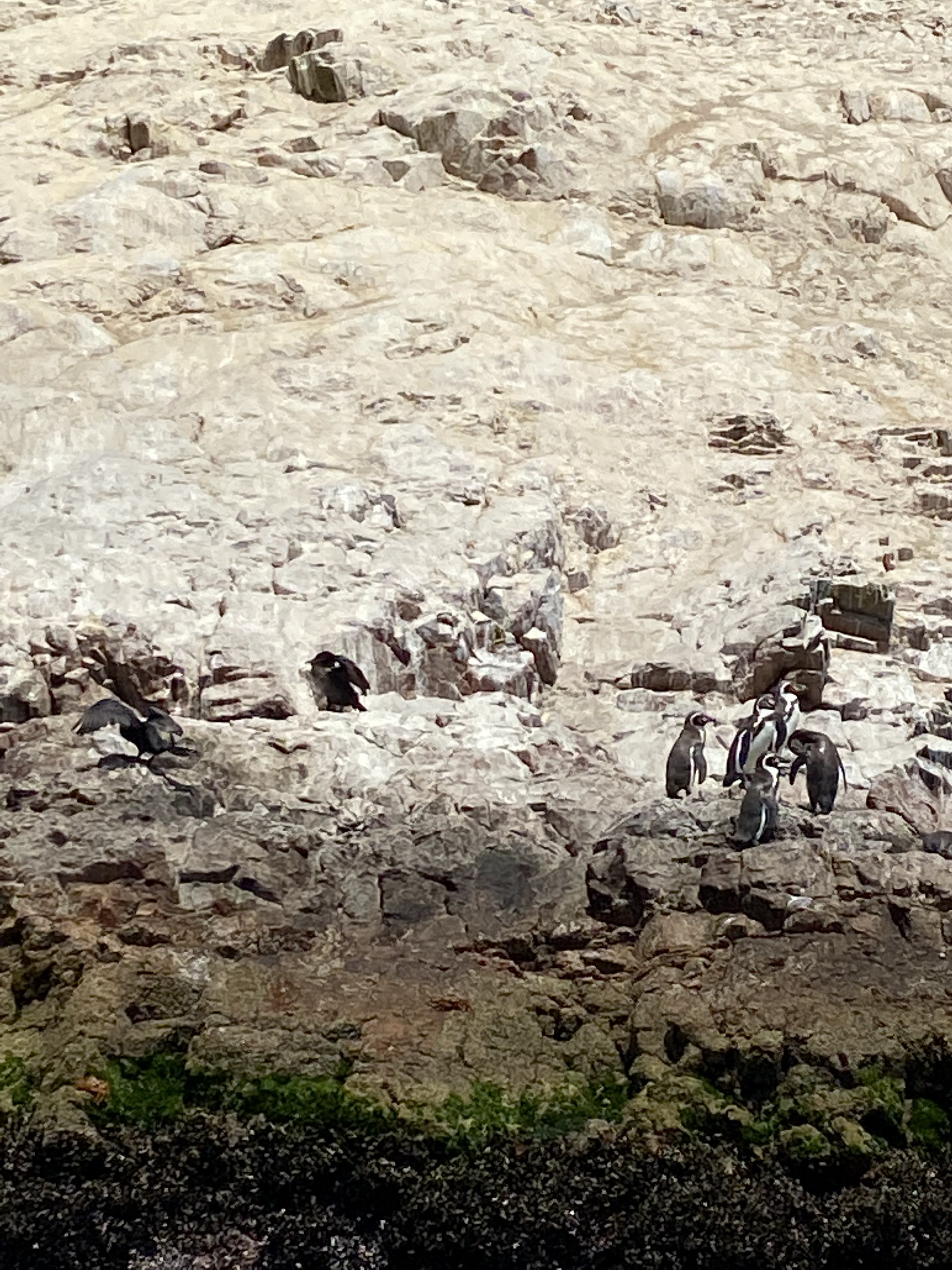
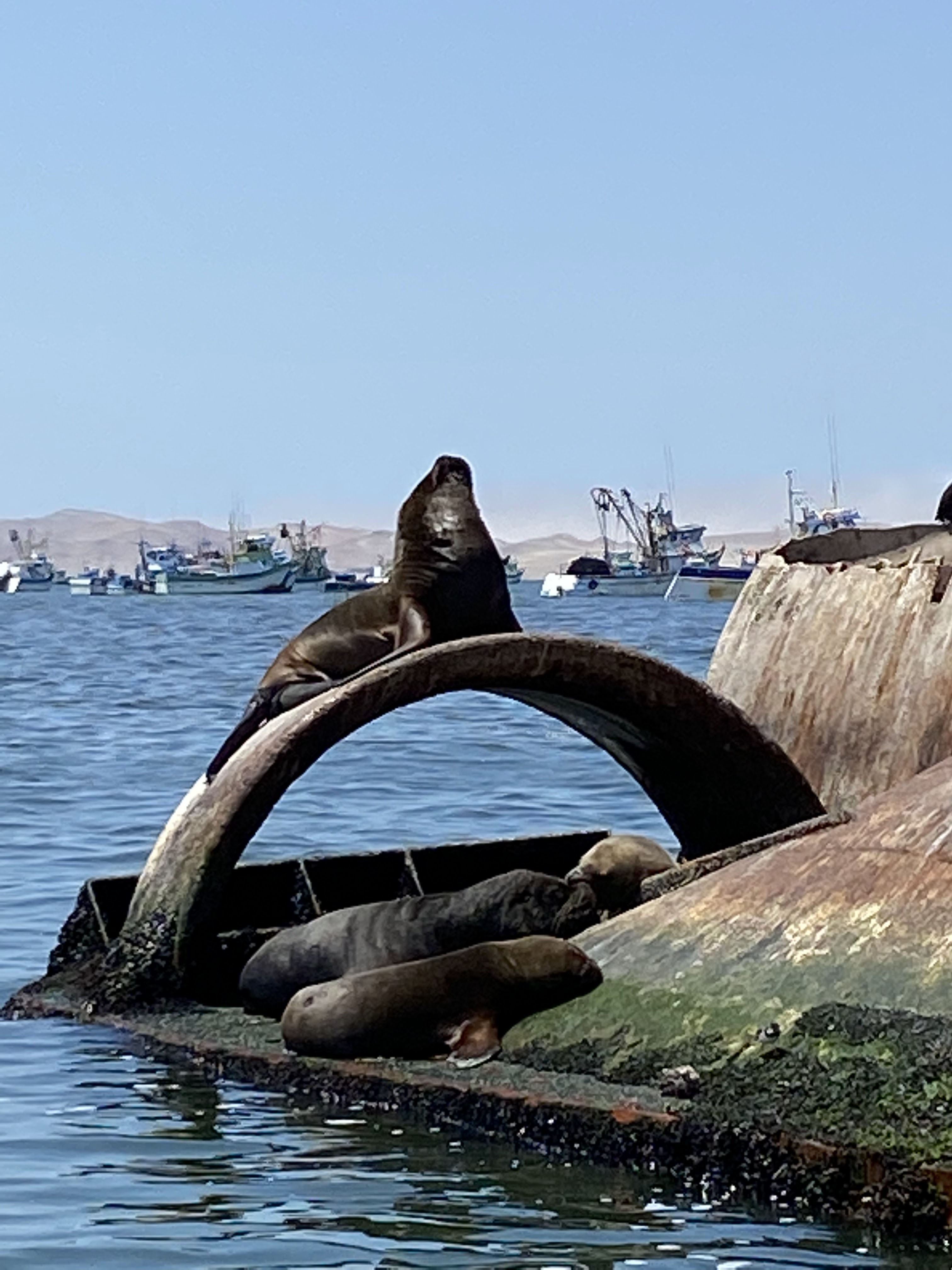
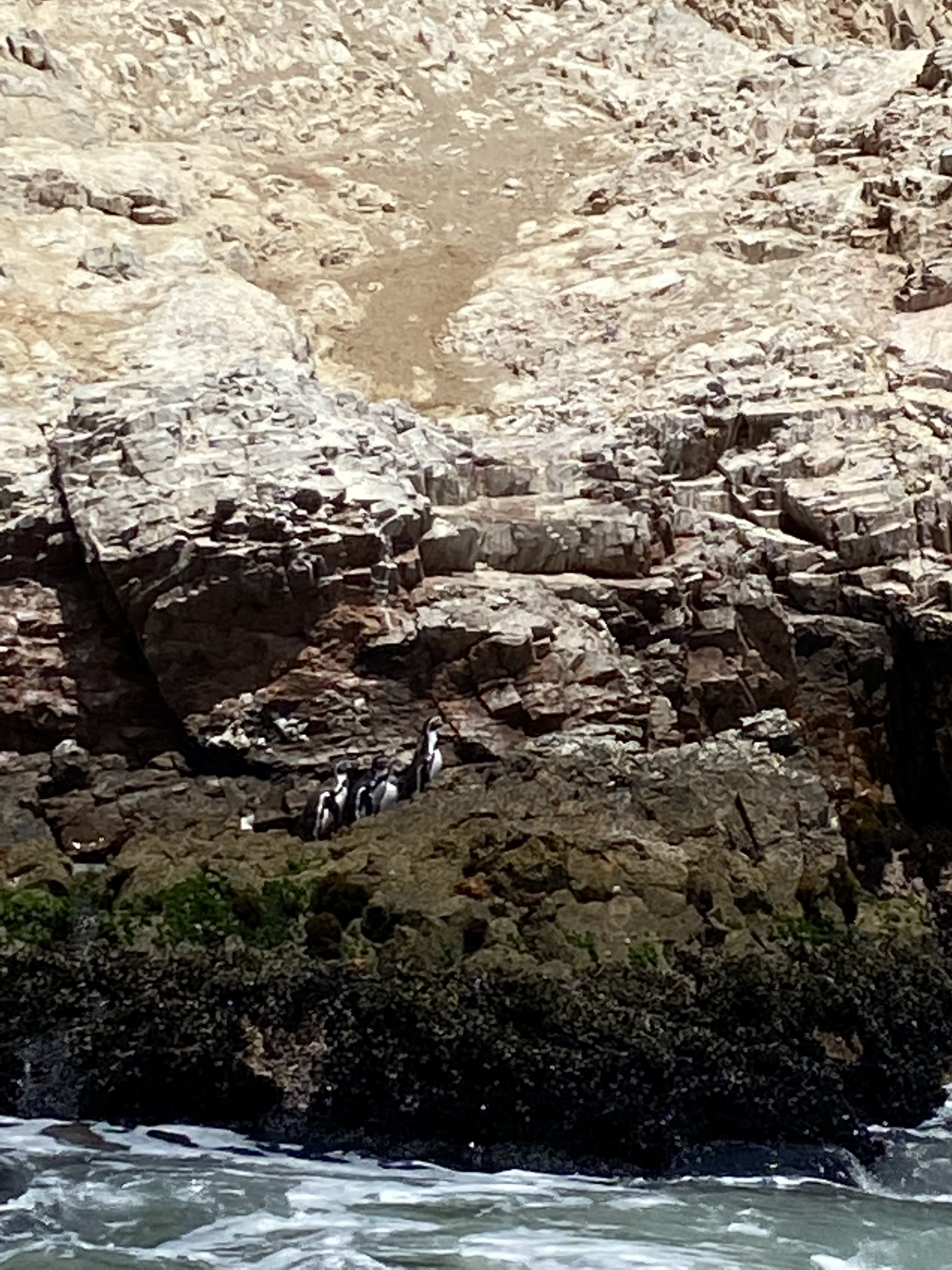
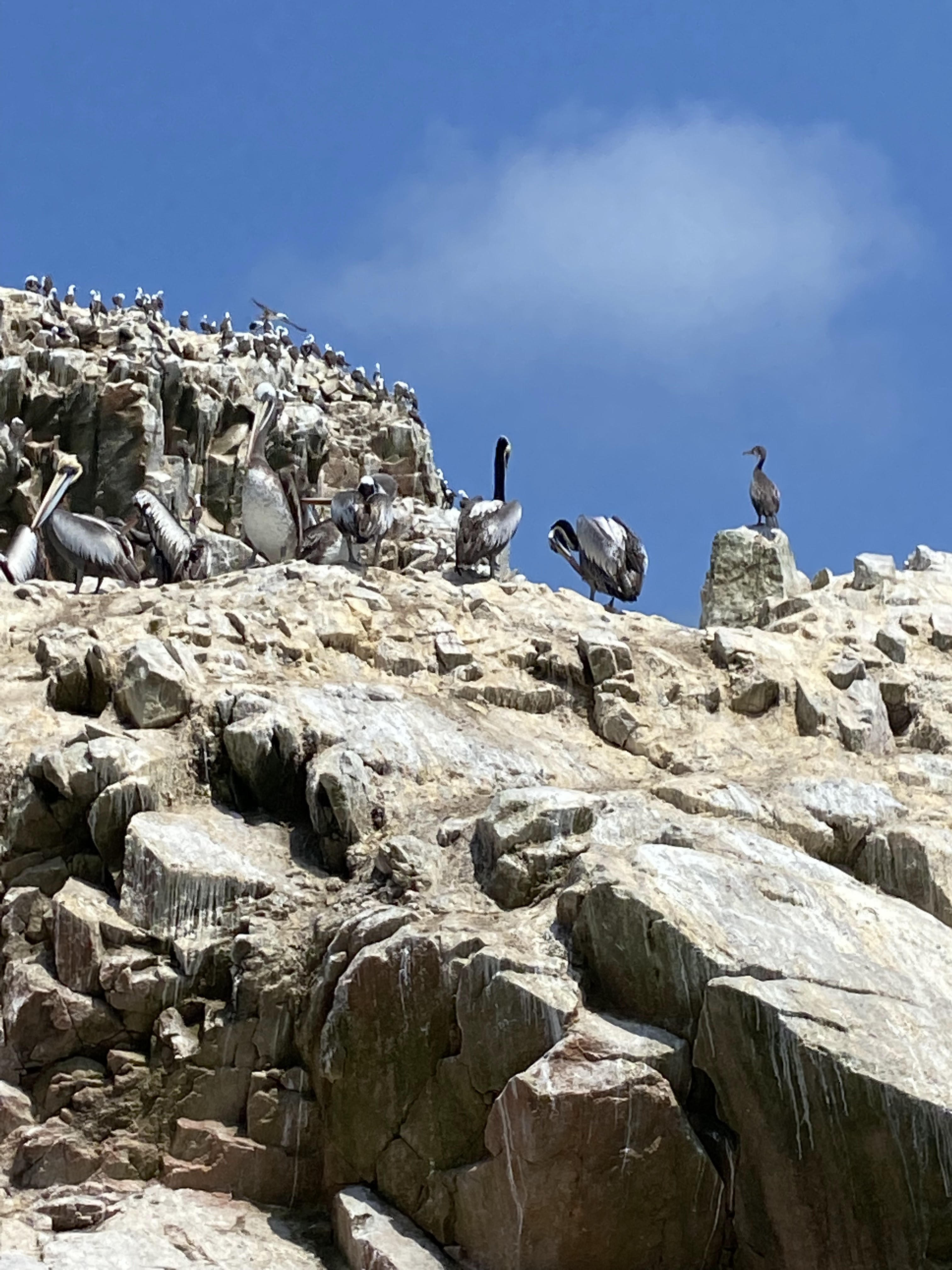
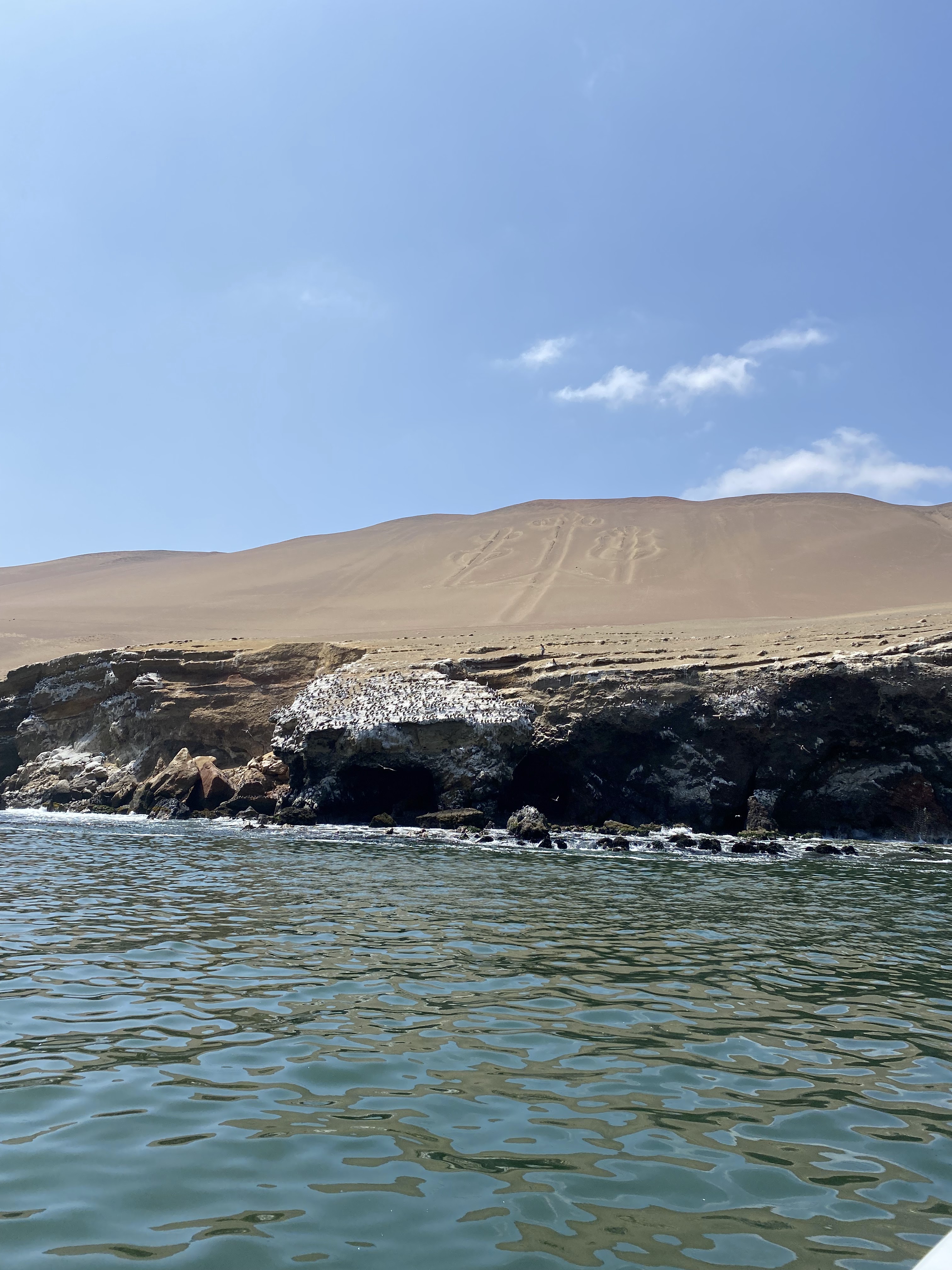
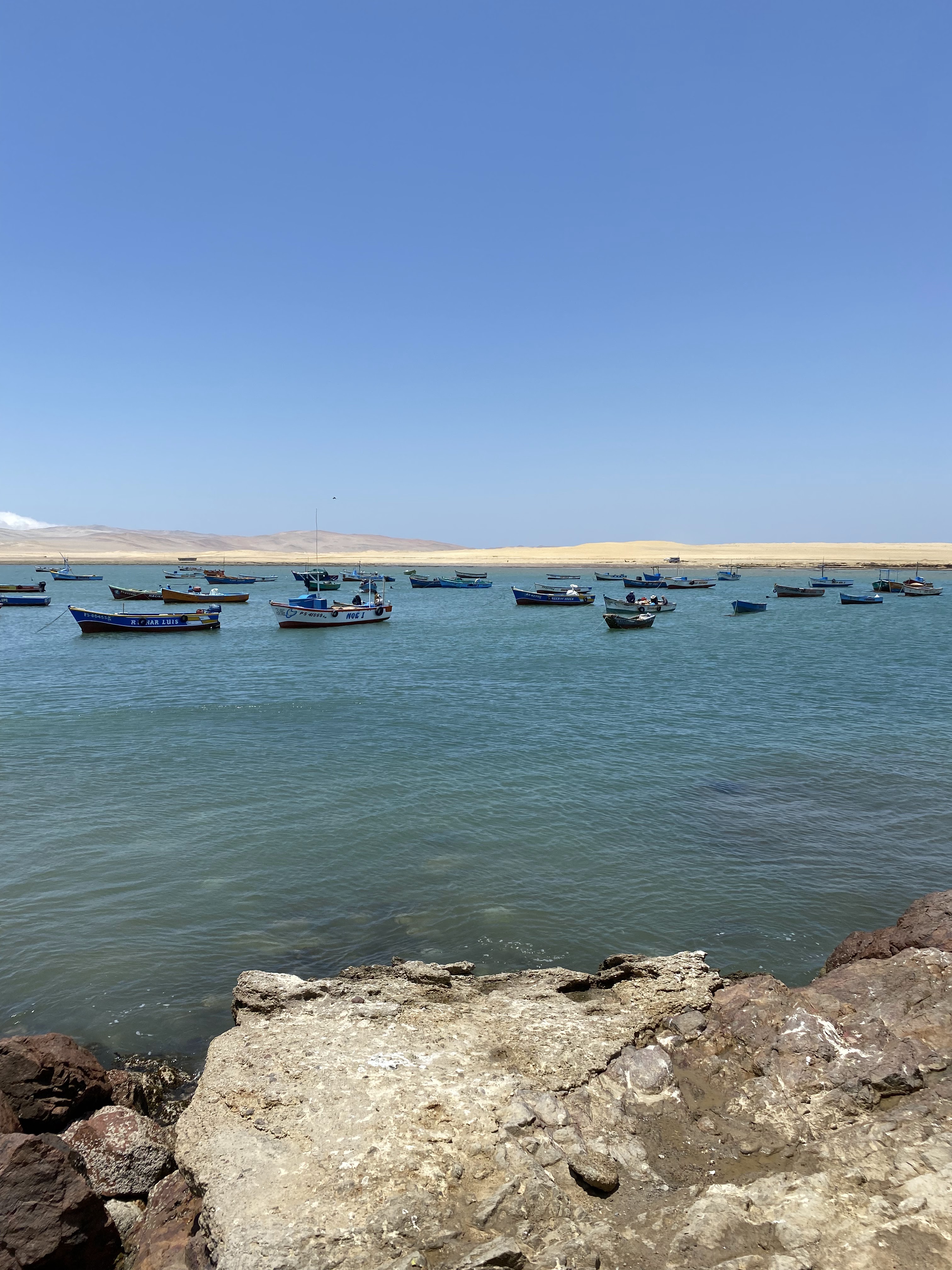
The next morning I had an hour bus ride to Paracas. Paracas is the gateway to a 40 minute boat ride out to Ballestas Island, a natural protected area for wildlife and fauna. We stopped to look at the Candelabra, another unexplained etching in the side of a mountain on the way to the island. I saw plenty of birds, sea lions and Humboldt penguins. It was truly beautiful.
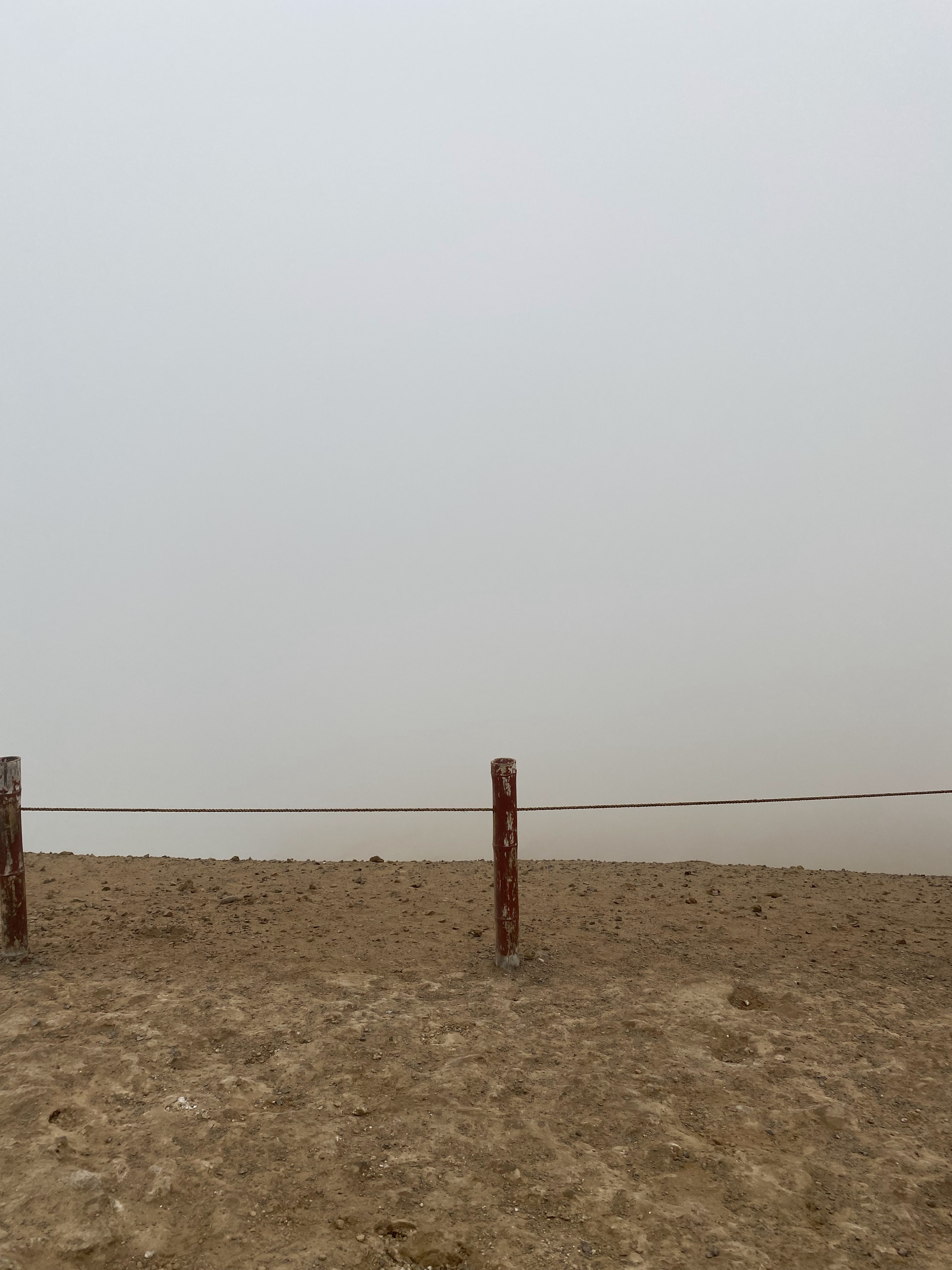
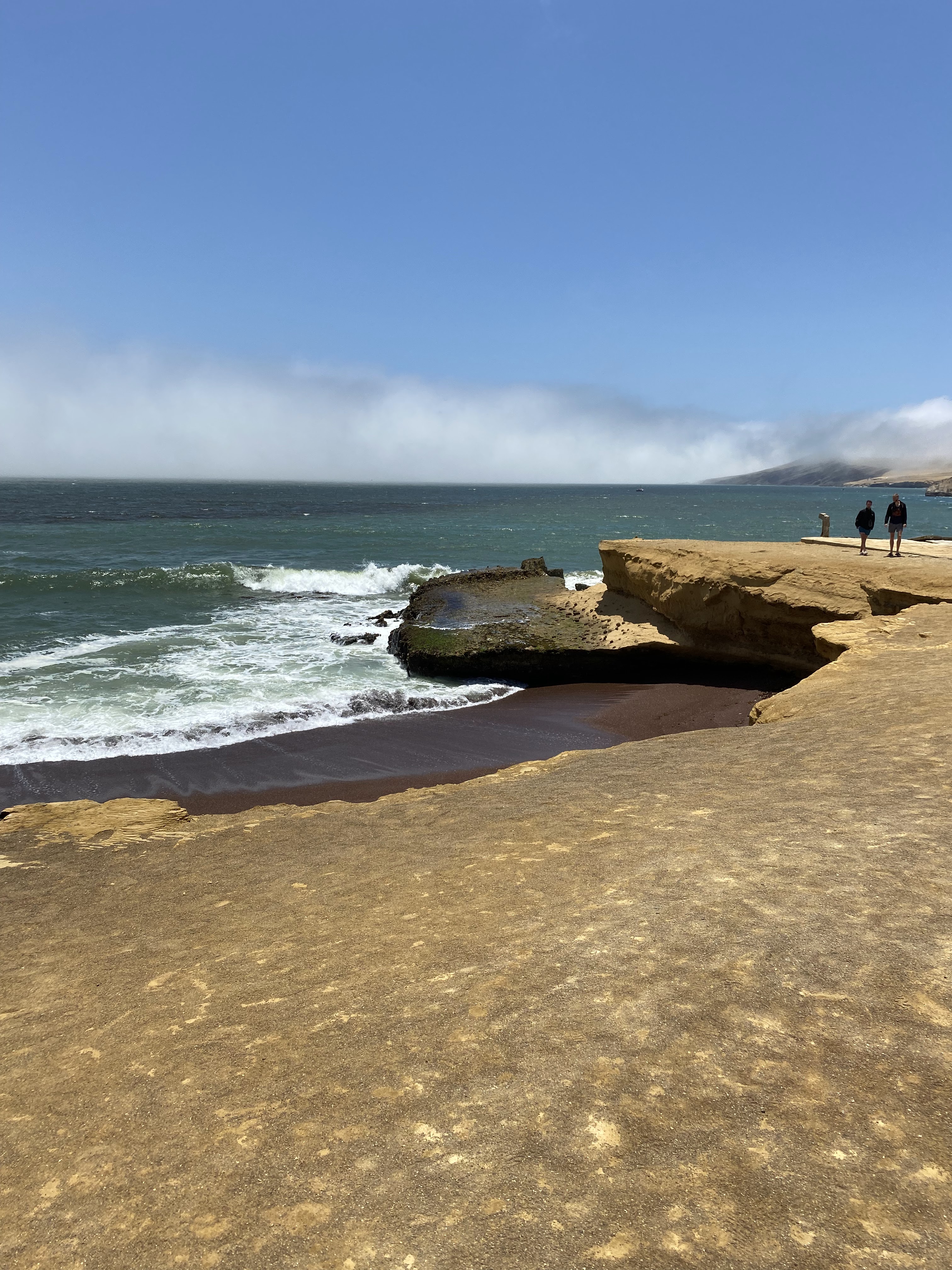
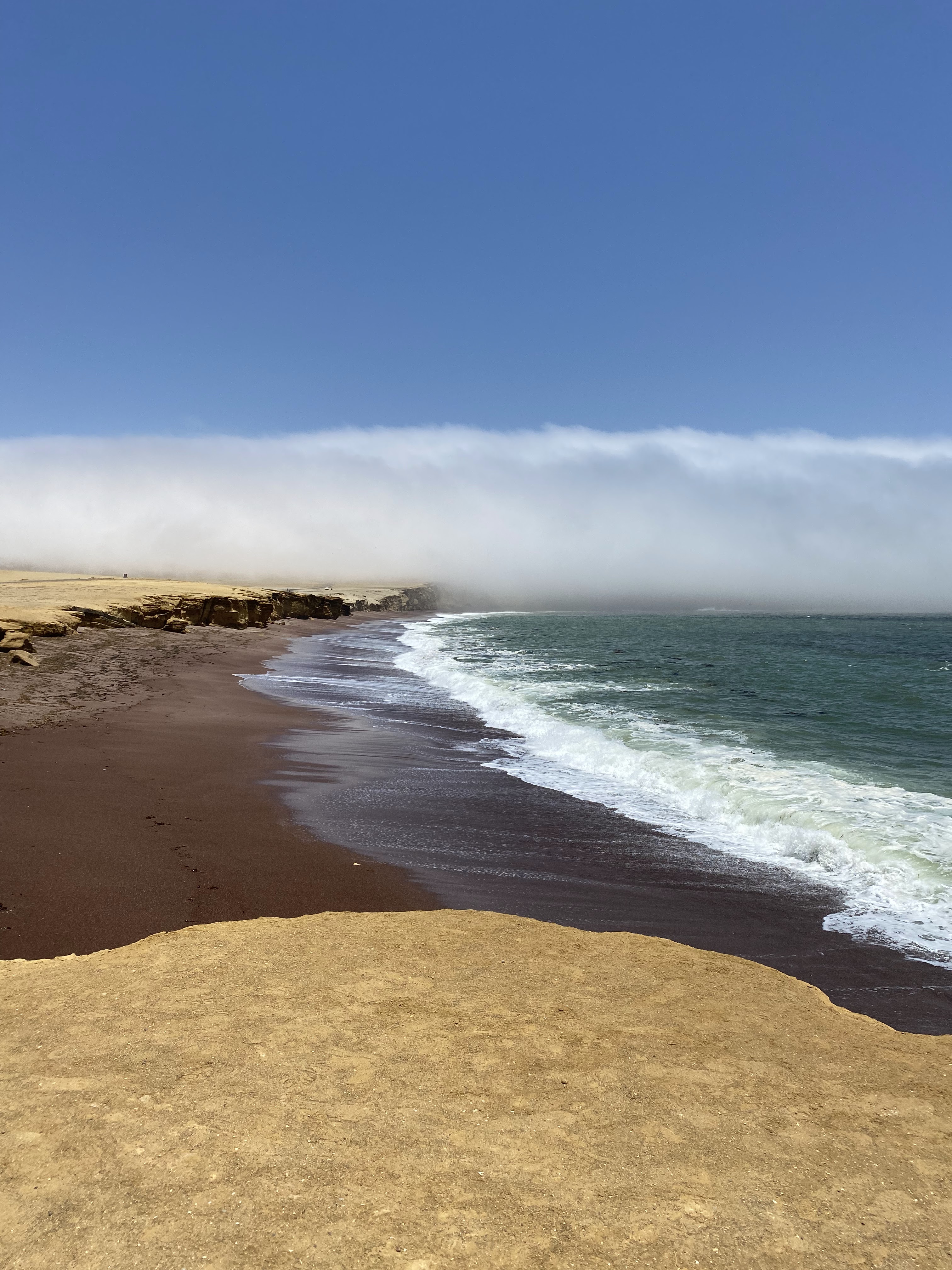
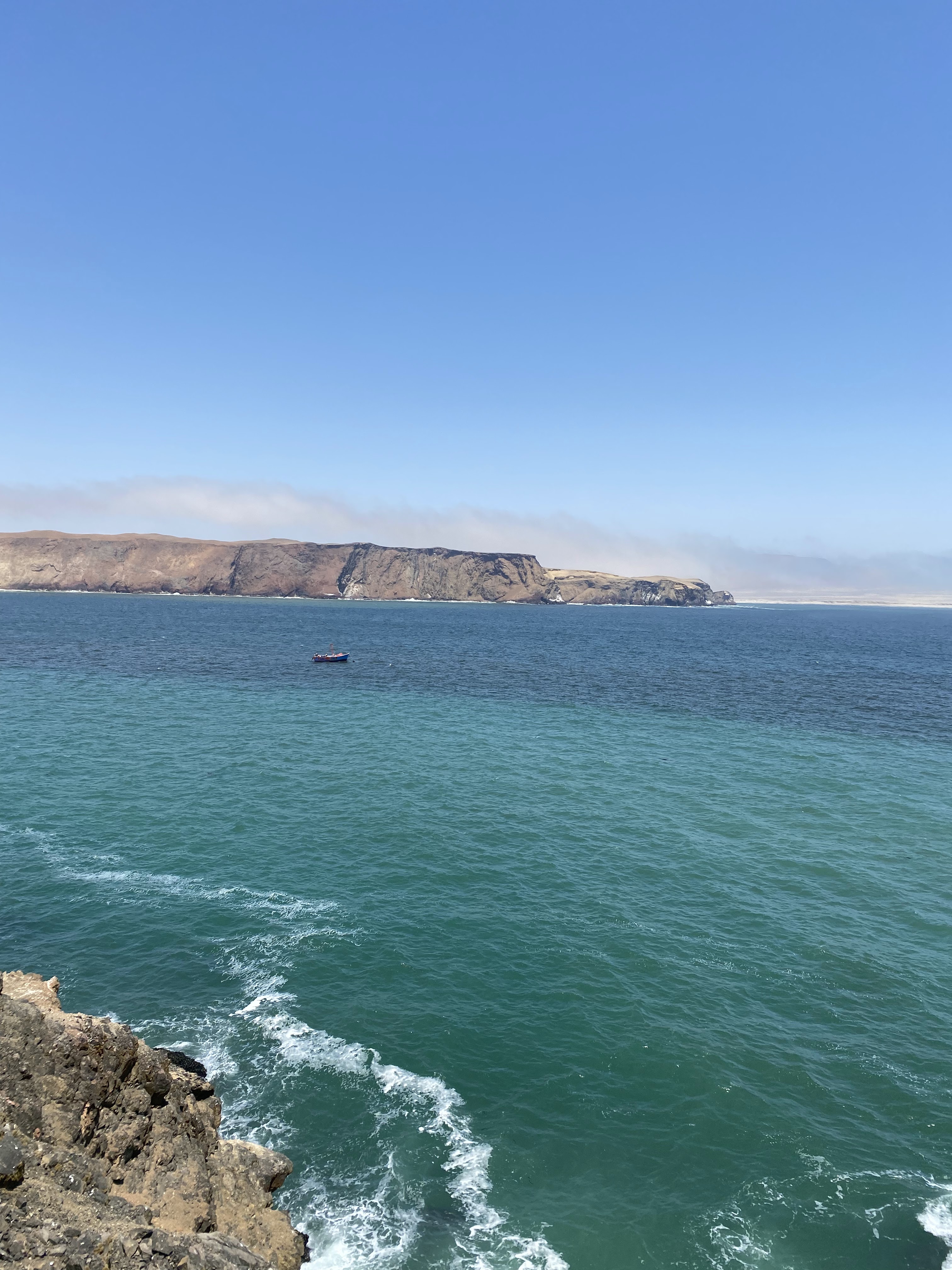
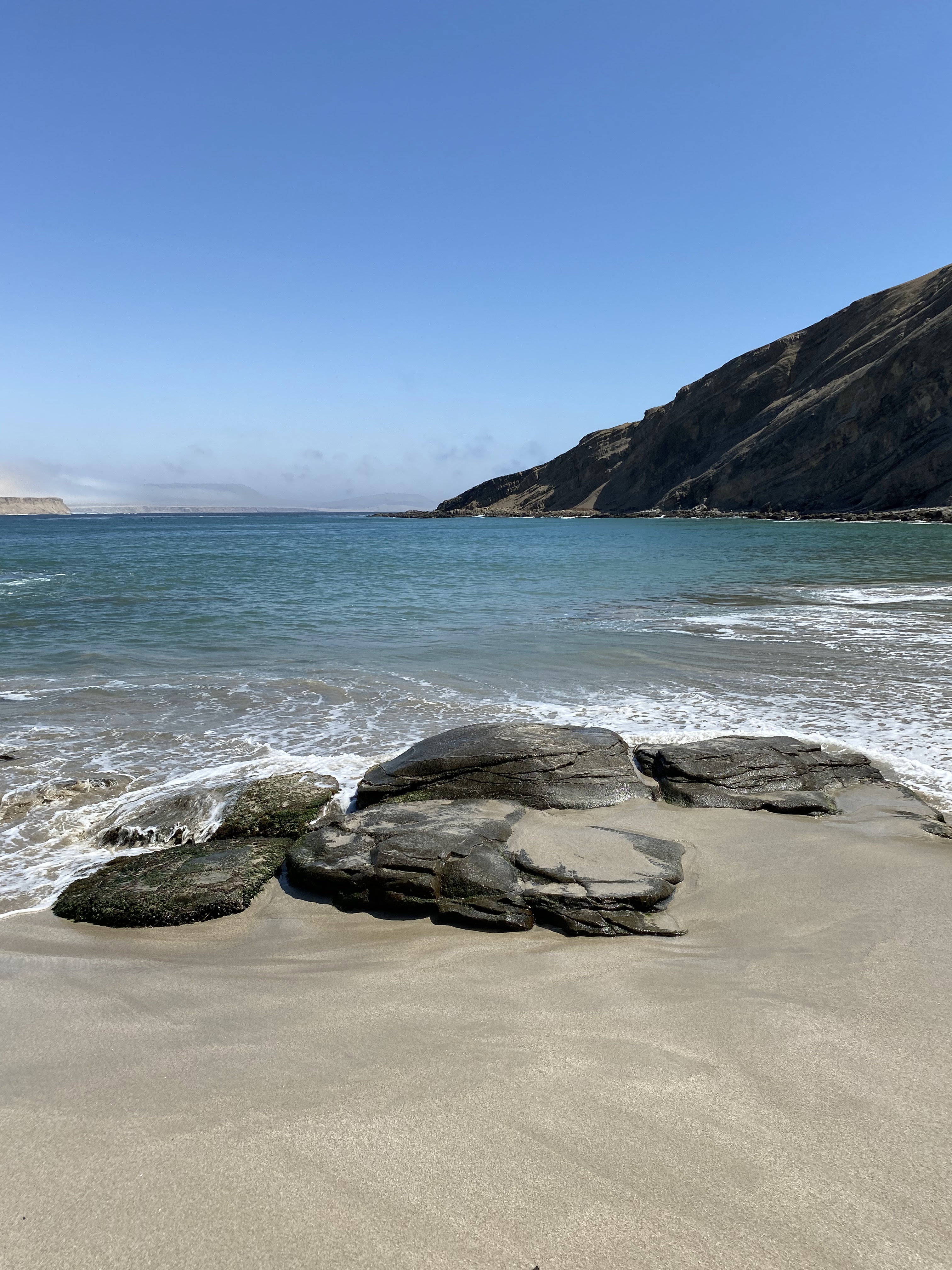
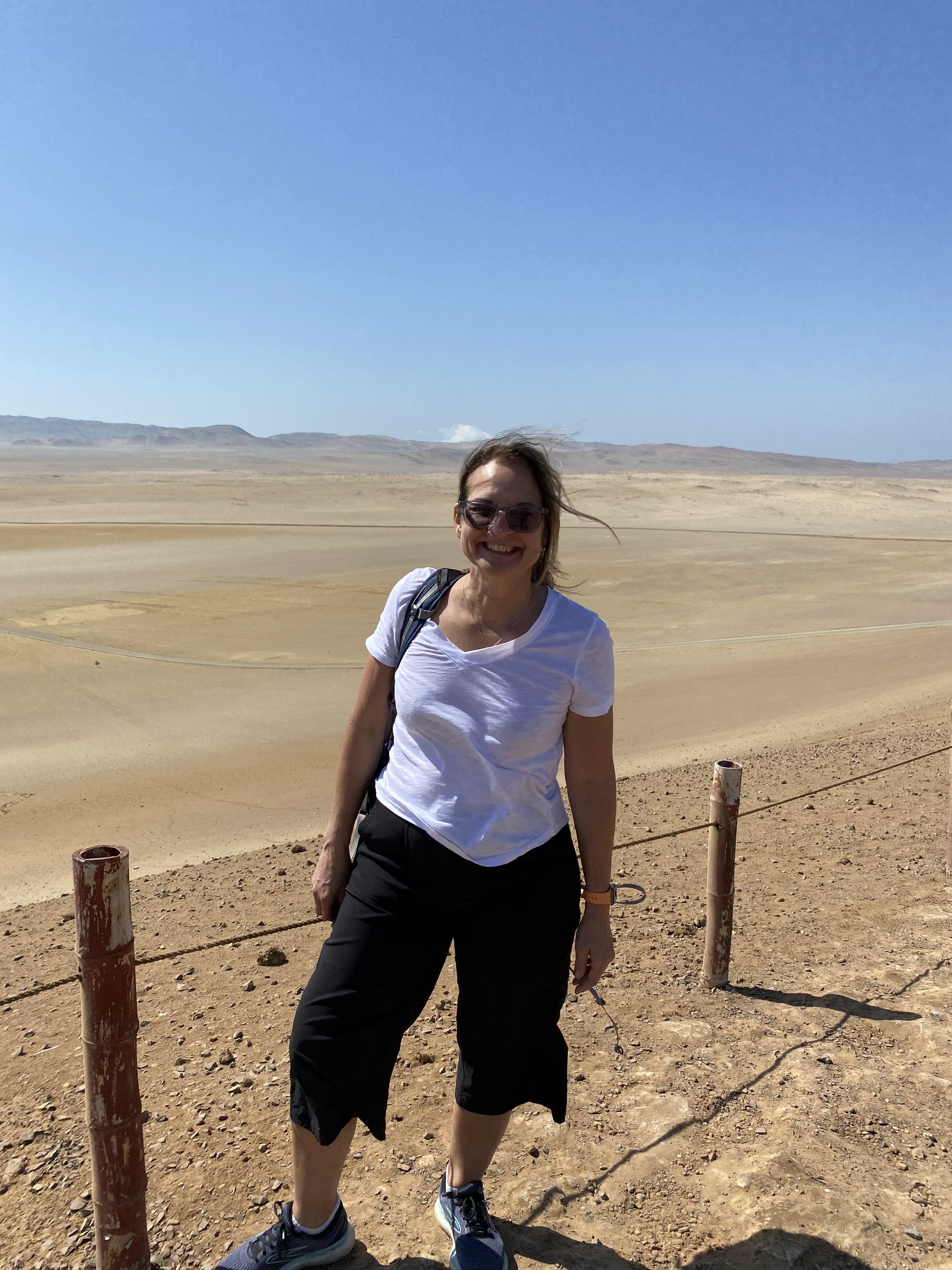
After the boat ride we headed to the Paracas Reserve. This is a huge desert butting up to the ocean. Our first stop was fogged in so we went to another viewpoint, the Red Beach, which was stunning. Then lunch and another stop at Playa La Mina. After this stop and walk along the beach we stopped again at the first stop, which was no longer fogged in. What a gorgeous viewpoint! It was a day filled with beauty, variety, wildlife and then a bus ride back to Lima late at night. I was beginning to realize the beauty and magnificent variety of Peru. The most amazing thing was I was in an enormous desert but also the agricultural heartland of the country. This region grew every fruit, vegetable and nut you could imagine with seeming wasteland. The hard work and ingenuity displayed was mind boggling!
Peru is an amazing place with so much bio diversity…on to Cusco next!
I did not really know what I was going to get when I booked my two week trip to Peru. But what I gained was warm, smiling, seemingly satisfied people. Food that was simple, beautifully presented, cheap and fresh and scenery that was as spectacular as it was varied and inspiring.
Whenever I head out on a solo trip, it always begins with anticipation and anxiousness…Will I be safe? What will I discover? Will it be as I had hoped? What will be the greatest thing I will learn? Will I be the very best guest I can be?
On my flight to Lima I sat next to a recent college graduate. She and some family friends were going to hike the Inca Trail for four days culminating in their visit to Machu Picchu to celebrate her father’s suicide. She had done no homework on what she was getting ready to embark on, but I have to say that now that I have visited Machu Picchu I totally understand why the family would want to honor their father this way.
I landed in Lima at 5:30 a.m. local time and once I arrived at the hotel I dropped my bags and just walked. Diving right in is the best way I have found to overcome jet lag and capitalize on the newness of my destination. I was staying in Miraflores which is a safe, upscale part of Lima. The streets are clean, teaming with walkers and fortified with singing birds and beautiful gardens. I also walked in Barranco, which is considered an artsy neighborhood, right next door to Miraflores. The weather was perfect at 70 degrees and I got to reinvigorate my Spanish!
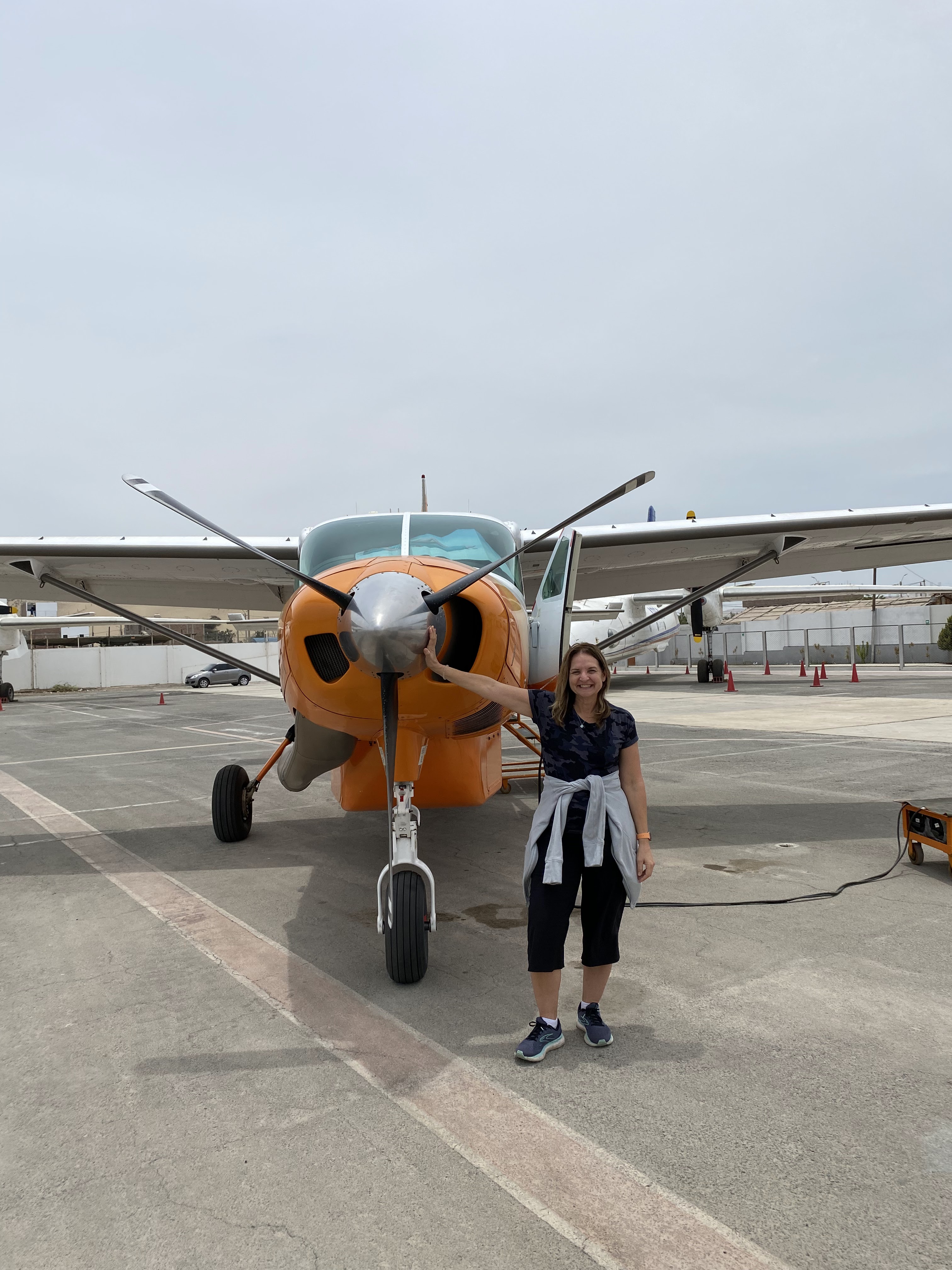
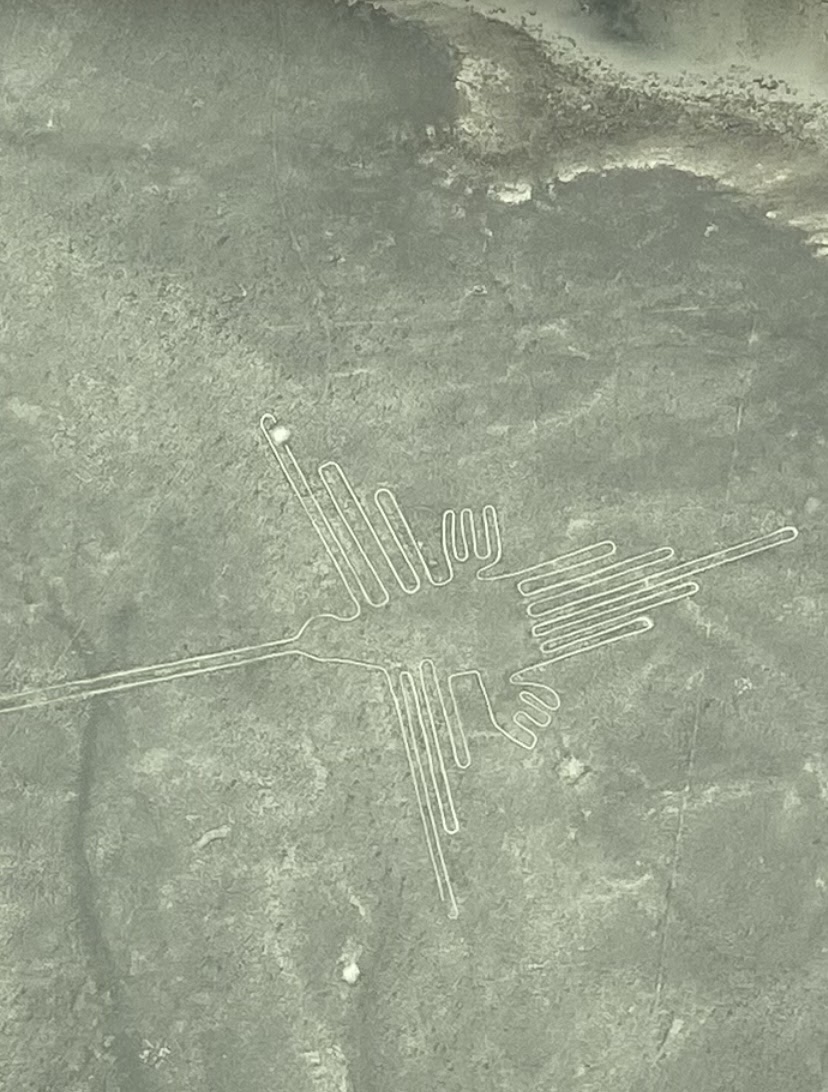
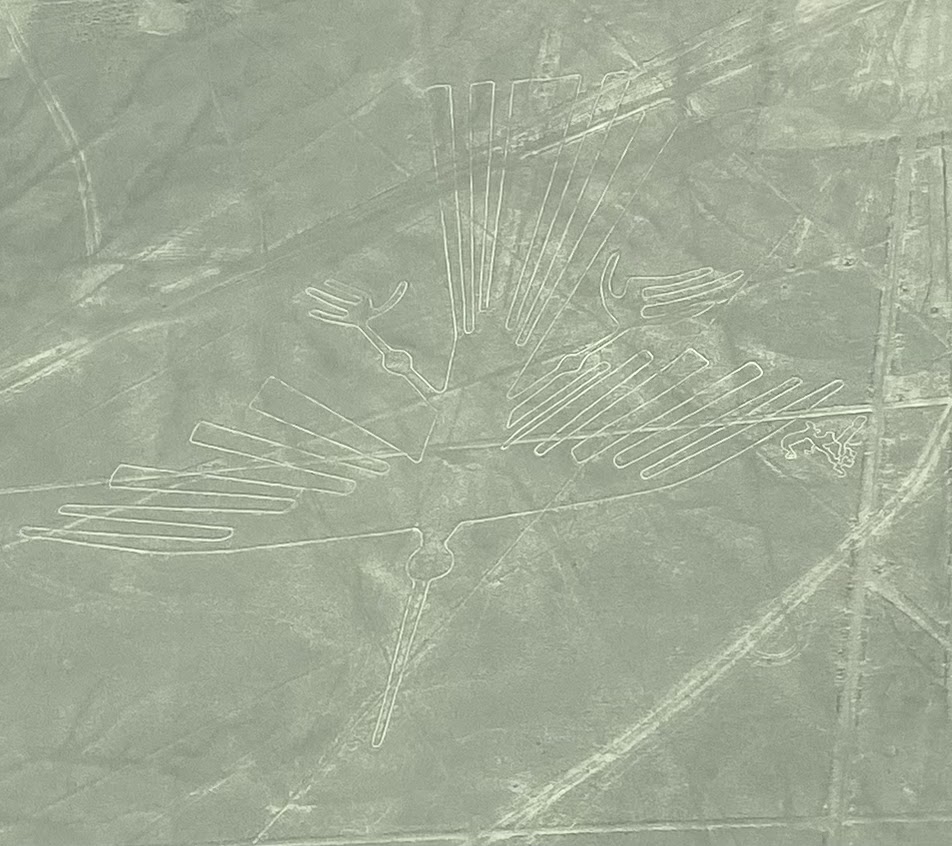
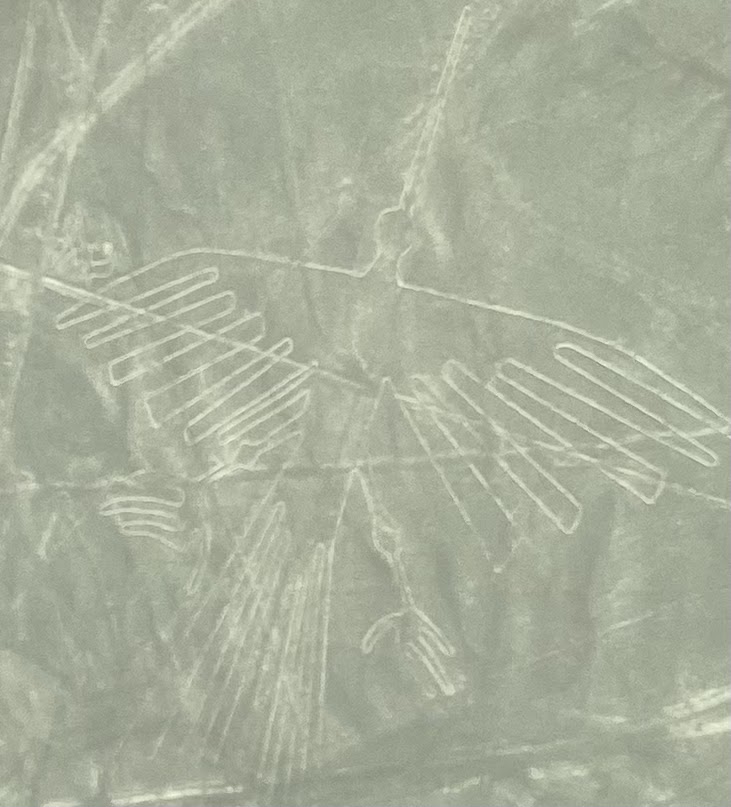
The next morning at 4 a.m. my taxi arrived to take me to the bus station so that I could head south to Ica, Nazca, Paracas and Huacachina. It was a four hour bus ride south to take me to the desert and coast. When I arrived, I was immediately driven to a tiny airport to view the Nazca lines. 17 mysterious etchings in the ground can be viewed best by plane. It is about 30 minute plane ride with then 30 minutes viewing the various drawings. It was fascinating, although the plane ride was a nail biter in a tiny four-seater!
Nordell’s book shared some concepts that I think are worth repeating. I certainly have been penalized for speaking out during my career, but imagine how much more difficult it is for marginalized folks. I loved her thought about seeing differences does not matter but instead, it’s how we react to differences in harmful ways that count. What comes to mind for you? How have you reacted negatively when someone has shared something different from what you believe or think?
Another idea that resonated for me in the book was the idea to “notice when stereotypes arise and actively replace with alternative images.” Wow! In other words, look for situational reasons for a person’s behavior rather than assuming it comes from inherent characteristics. This recently came to life in a conversation with a peer when they were relating a story of a recent interview they held with two candidates. The candidates qualifications were similar (one had more formal education, the other had more hands- on experience) and they ended up choosing the candidate with more education. I asked, “Why?” and then I followed up with, “Perhaps the second candidate did not have access to additional education”. My peer responded with “Funny you say that. When I called the candidate and let him know he was not chosen, he said that exact thing”. It is important to remember that marginalized folks often go to underfunded schools with less resources. It is not intentional on their part to get a subpar education…the system creates this inequity in education.
I love how Nordell distills bias to a choice. A choice that you can change by eliminating automatic thinking and instead use conscious deliberation. So, do I accept my automatic evaluation of people or do I try something new? Do I believe my first reaction or do I stop to look for further evidence?
Stop and scrutinize initial assumptions and envision an alternative explanation. Shift from simply reacting to observing your reaction. Frankly this action could work in many parts of life, not just bias. But, it certainly would be a big WIN if we could do it with our own bias.
“A reader lives a thousand lives before he dies . . . The man who never reads lives only one.”
– George R.R. Martin
Copyright Seniye Groff
I am an avid reader and believe in educating myself. In the last year I have read a few books that have been very impactful to me and so I am sharing below. Let me know what books you would add to the list!
“Caste” by Isabel Wilkerson
“The Conversation” by Robert Livingston
“Inclusion on Purpose” by Ruchika Tulshyan
“The Sum of Us” by Heather McGhee
“The End of Bias” by Jessica Nordell
“How to be an Antiracist” by Ibram X. Kendi
What’s Next?
But reading is one thing and taking action is another. So once you read the book, what should you do? Here are some ideas
Take a few suggestions from the book, and do them!
Share the book with others.
Create a book club and come together to discuss the book to educate each other.
Create a book club at work and meet at lunch time to discuss the concepts in the book.
Volunteer at an organization that would benefit from some of the ideas in the book.
Volunteer in your child’s classroom and share what you learned.
Find contrary ideas and have a respectful discussion.
What other ideas do you have? Let me know and I will add them to this post!
I read recently that DEI professionals have an average of an 18 month lifespan (just a little shorter than Greek ruins). I don’t find this surprising given the many stories DEI peers have shared about being in a DEI-focused role in an environment resistant to change…a system resistant to change…a country and even a world resistant to change. Over and over I hear about DEI professionals with targets on their backs for just trying to do their jobs. Why is that? WTF is more like it! I am pretty confident that DEI professionals are not in their jobs to be a “check the box” role in their organizations. DEI work is emotional work. It is hard work and I know we do this work so that we can MAKE a difference, not just serve in a figurehead capacity.
So how do we determine if our role is just fluff filled with lip service? I have a few suggestions of things to dig deeper on to determine if it is time to move to an organization that actually means what they say. To be fair, the type of change we are all working towards is not fast work. The needle will move slowly but it still needs to move and I want evidence that it is actually moving.
Budget. No project, initiative or role can move forward without money. Having a budget (and being able to use that budget) signals that there is validation for your efforts. A budget allows you to tie strategic goals with money to accomplish those goals.
Positions. You might momentarily feel proud of yourself that the organization finally “put their money where their mouth is” and created a full-time, singularly-focused DEI role. You might say to yourself, “finally the organization realizes this role is critical.” But I say not so fast because you will find that there actually is way too much work for one person. One subtle way to stop progress is to bury the DEI professional with so much work that they cannot see the what’s really going on. So, don’t gloat so quickly and instead determine what roles are needed to really do the WORK and then make the case to get those roles hired.
Authority. Do you have a seat at the proverbial table? If not, you will get mired in layers of approvals and suddenly the simplest thing like a educational article or training event will get stuck in roadblocks and potholes. You basically sit at the red light eternally…or until the article or topic’s essence is no longer current with whatever the issue was that you wanted to highlight.
Diversions. Leadership will throw you a bone and tell you how great you are doing…what an awesome influence you are making on the organization. Don’t be fooled…incremental changes like getting the organization to stop using some male-focused words in not what we are after. Yes, it is great to change the bias vernacular that your organization is using but it will never be more impactful than true, systemic changes like digging deep into your recruiting practices and eliminating bias from the process. For example, where does the organization choose to recruit from to how they interview all the way to how they decide if someone is a “fit”. If we continue to hire folks like what we already have then we continue to live in our bubble of sameness.
Employee Resource Groups (ERGs). Creating an environment where ERGs are not only allowed to form, but actually encouraged, will empower employees with shared identities, characteristics, and/or life experiences to come together to collaborate and support each other. It also will enable other employees to learn how to be come allies, a necessary ingredient for change to happen.
We are overdue to band together as a profession and as human beings. As Brene Brown mentioned in her latest book, Atlas of the Heart, “I’m here to get it right, not to be right.” Let’s get it right by setting ourselves up to successfully do the work and make an impact in this world for generations to come. Frankly the world is evolving and change is a part of evolution.
What does getting it right look like? Please comment and let’s figure out how we can support each other and the systemic change so overdue.




















 seniyegroff