Solo Travel

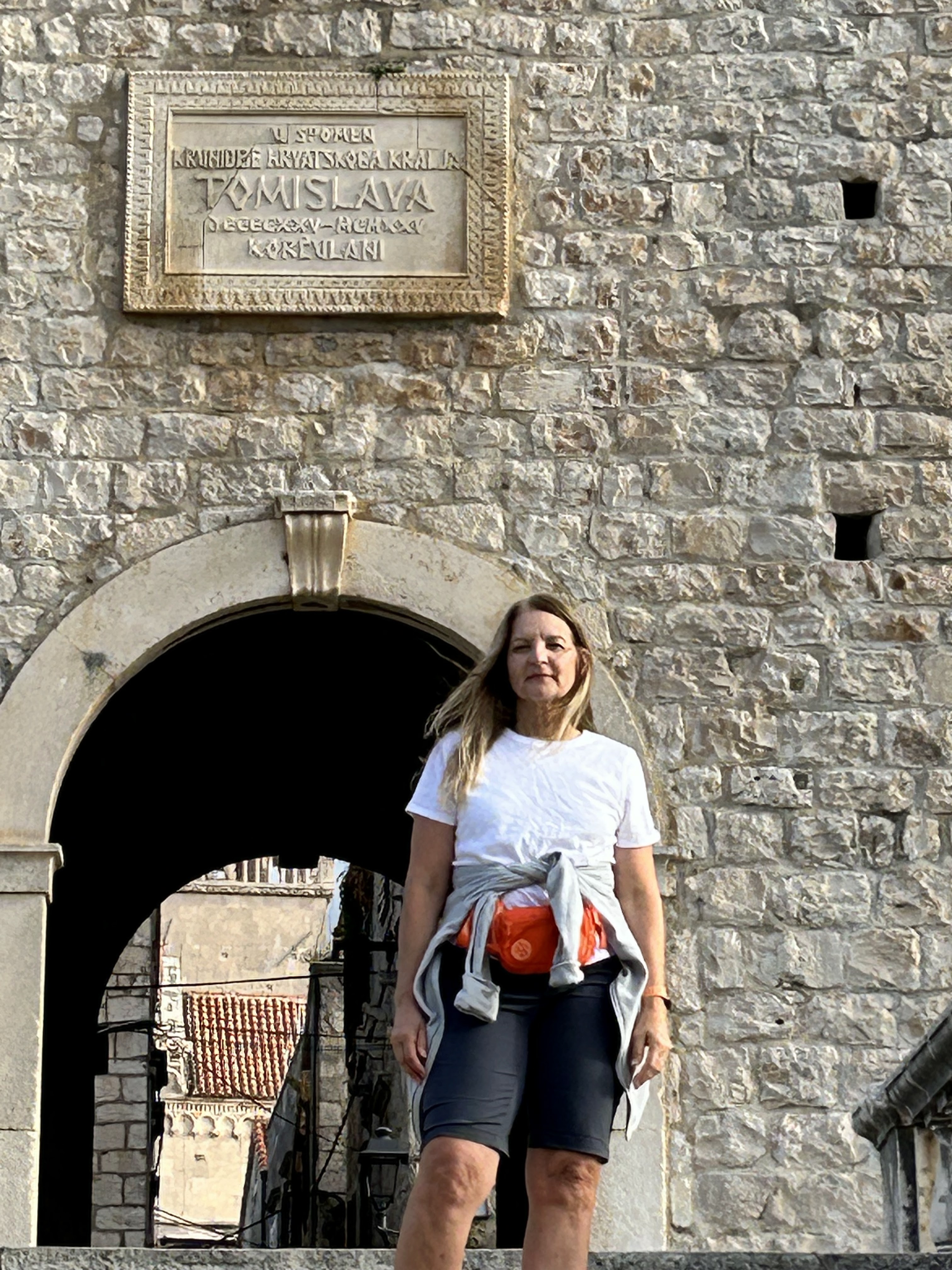
I am fortunate to have completed several solo trips oversees and I often get asked, “What is your favorite trip?”  Solo travel has been empowering and liberating for me. Traveling solo allows for the ultimate flexibility.  If I like a place I stay longer and if I don’t, I can quickly move on.  I think back to my first solo trip and stressing about not having anyone to travel with me.  I had a close friend dying of cancer and she told me, “Seniye if I could travel, I would do it in a minute!  Go travel…it will all work out.”  And she was 100% correct.

My favorite trip so far has been Morocco. It was my first time on the African continent and it did not disappoint.  The Sahara Desert was so beautiful…the sand a brilliant orange and the night sky littered with millions of stars that you just cannot see anywhere else because of the light pollution.  I loved the food, the artisanal crafts and the dizzying mazes that formed the souks.  The riads were charming hotels with sparkling clean rooms, amazing tile work and hearty quintessential Moroccan breakfasts.  I could go on and on.  If I had been too scared to travel alone, I would have missed all of it!

So how can you solo travel?  I have a few tips:

  • Pick safe countries.  There are lots of lists that outline safe travel for single women.
  • Do your homework and have a rough plan but get comfortable with wandering, too.
  • Share you itinerary with your family and friends.
  • Don’t do stupid things.  For example, I do not visit bars nor do I explore late at night.
  • Do your research.  There are Facebook groups with likeminded travelers.  The wealth of information shared has been really informative.  Two groups I like (but there are hundreds) are “Traveling Solo over 50” and “Solo in Style”. 
  • Target your search by country. There are many FB groups that focus on specific locales.  Travelers share their itineraries, tips and even meet up if they are in a location at the same time.

So, what are your solo travel suggestions?  And where do you want to go next?

Inclusion: The Foundation

I am working with a new client on bolstering their inclusion practices with employees and clients. In the most basic form, inclusion is defined as “the act of including” by Merriam Webster. But we all know it is a lot more than that. In fact, all people want to feel included, valued and appreciated…or at least I know for sure that I do! So how do you create an environment where folks feel a sense of belonging, feel heard and feel safe to express their authentic selves?

First, accept that we all have bias. One of the ways to work through our bias is to talk about it. Many DEIB programs hit walls when they focused on blaming and shaming. Blaming and shaming never work, especially when you are asking someone to be open-minded to others that are different from them. Being bold enough to tackle these tough conversations is difficult since you don’t want to be called a racist, you don’t want to be misunderstood, you don’t want to offend someone and you certainly don’t relish is discomfort!

So what can you do to be more inclusive? I like this video on making assumptions and the framework is offers to Pause/Recognize/Question so that you are not misled by your assumptions (bias). Ask yourself, “What assumptions am I making?” and “How do I know these assumptions are true?”

Another tactic is to acknowledge your own preconceived ideas, move beyond generalizations and know the difference between perspective and reality. In other words:

•What messages have I received in my life that may influence my perspectives?

•What identity groups do I have the most exposure to?

•What identity groups do I have the least exposure to?

•How can I check for blind spots?

Other things you can do are expose yourself to new experiences, talk to people with different identities from your own and broaden your worldview. I love it when I talk to someone and I can say, “I never thought of that perspective or view before.” and “Wow, that’s a whole new way of looking at…” I think the American Negotiation Institute’s guiding principle says it best: “The best things in life are on the other side of difficult conversations.”

What have you done to address your blind spots?

This Chair Rocks by Ashton Applewhite

I challenge you to flip the script and believe that you are not OLD, instead you are experienced!  Ageism is stereotyping and discrimination on the basis of a person’s age. Influenced by social movements that were challenging racism and sexism, Dr. Robert Butler coined the word “ageism” in 1968. It is the last socially sanctioned prejudice.  With age comes experience; with youth comes experience.  Both are valuable.

We experience ageism any time someone assumes that we’re “too old” for something—a task, a haircut, a relationship—instead of finding out who we are and what we’re capable of. Or “too young;” ageism cuts both ways, although in a youth-oriented society older people bear the brunt of it.

Like racism and sexism, discrimination on the basis of age serves a social and economic purpose: to legitimize and sustain inequalities between groups. It’s not about how we look. It’s about how people in power assign meaning to how we look.

Stereotyping—the assumption that all members of a group are the same—underlies ageism (as it does all “isms”). Stereotyping is always a mistake, but especially when it comes to age, because the older we get, the more different from one another we become.

No one is born prejudiced, but attitudes about age—as well as race and gender—start to form in early childhood. Over a lifetime they harden into a set of truths: “just the way it is.” Unless we challenge ageist stereotypes—Old people are incompetent. Wrinkles are ugly. It’s sad to be old— we feel shame and embarrassment instead of taking pride in the accomplishment of aging. That’s internalized ageism.

Unless we confront the ageism in and around us, we lay the foundation for our own irrelevance and marginalization. The critical starting point is to acknowledge our own prejudices, because change requires awareness.

Working together we can:

  • Challenge ageism – in ourselves, social practices, policies, and institutions.
  • Create new language and models that embrace the full life journey.
  • Create new paradigms in society so that adults can participate fully consistent with their capabilities and ambitions at all stages of life.
  • Celebrate the contributions of older adults.
  • Create a more compassionate and interdependent society that supports the well-being of people of all ages.
  • Inspire and help develop cross-generational communities where people of all ages enjoy the gifts and capacities they have to offer.

Read Applewhite’s book to learn more.

The Reset Button

For the last six years I have been planning my “reset”. I moved a lot growing up and landed in Portland 30 years ago to take a promotion with Nike. Portland has been a fabulous place to “grow up” but I am ready for a change. The surprising thing is how to figure out where to go next. I created a spreadsheet with my seven most important criteria.

  • Accessible airport with lots of direct flights
  • Good climate
  • Available healthcare
  • Livability (cultural events, diversity)
  • Affordability (taxes, housing prices, living expenses)
  • Vibe (welcoming of outsiders, newcomers)
  • Safety and crime stats.

As I have visited locales and added places to assess, I have returned to my list of criteria over an over again. For example, when considering climate I have come to believe there is no “one” ideal place and perhaps two locations (a summer and a winter one) is more ideal. As far as affordability, what income is taxed and prevailing estate taxes are becoming more important but certainly not a deciding factor.

While looking at new, potential locations, I have also been working on my current location…getting my house ready to sell. I have been paring down my belongings and doing some maintenance on my house so that I am not left with a bunch to do at the eleventh hour.

Another consideration is my dog, Pete. I am not sure how easy it will be to travel with him. Ideally, I would like to travel oversees for a while and then determine my landing spot back in the U.S. There is a wealth of information and online groups on the web.

So my question to you: Where would you go if you were hitting the reset button?  Please add your ideas to the comments.  #makelifehappen